Start with what goes into the hopper
A pellet mill is chosen by its feedstock before anything else. Meal for pigs, cattle and poultry, sawdust or rice husk for fuel, and corn flour for floating fish feed are three different jobs, and each one points to a different machine.
| Job | Machine in our range | Output | Power |
|---|---|---|---|
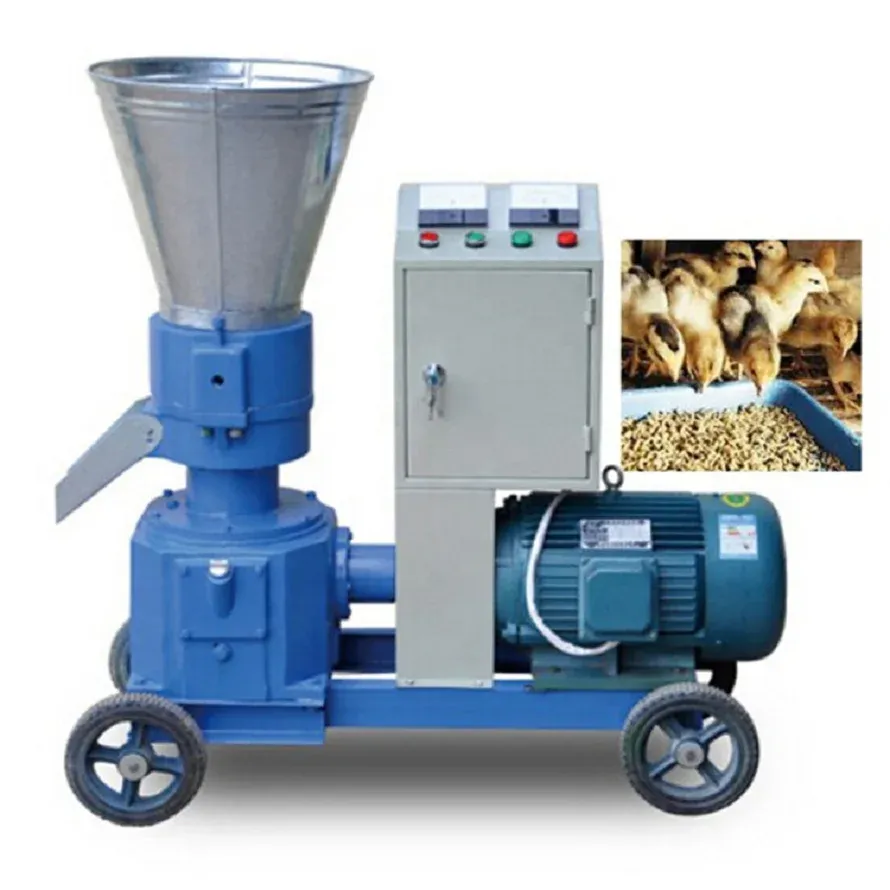
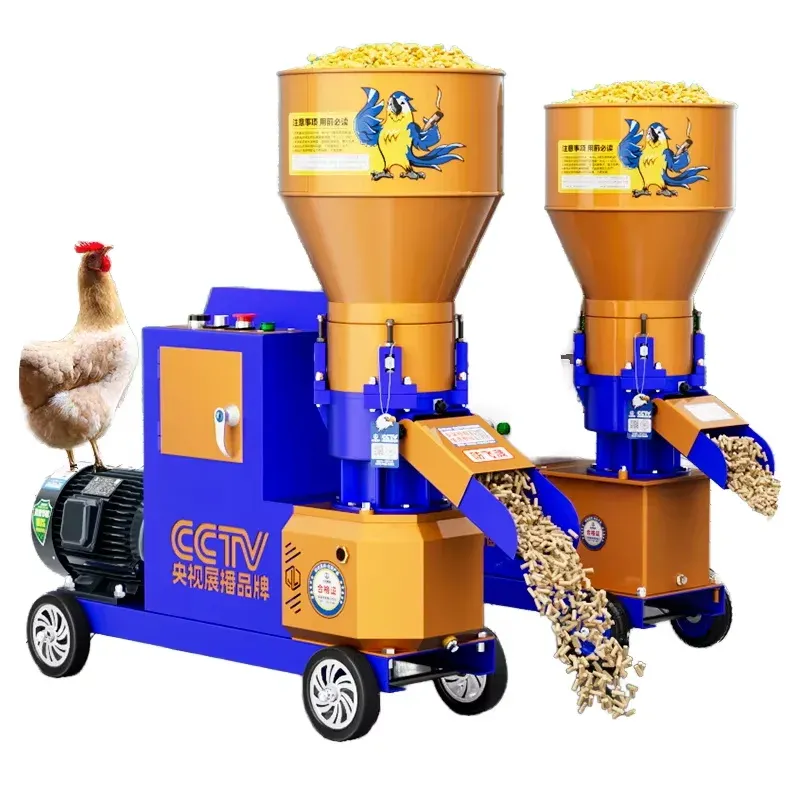
| Farm-made animal feed | Flat die feed pellet machine | 200 kg/h | 4.5-37 kW motor options, 220 V or 380 V |
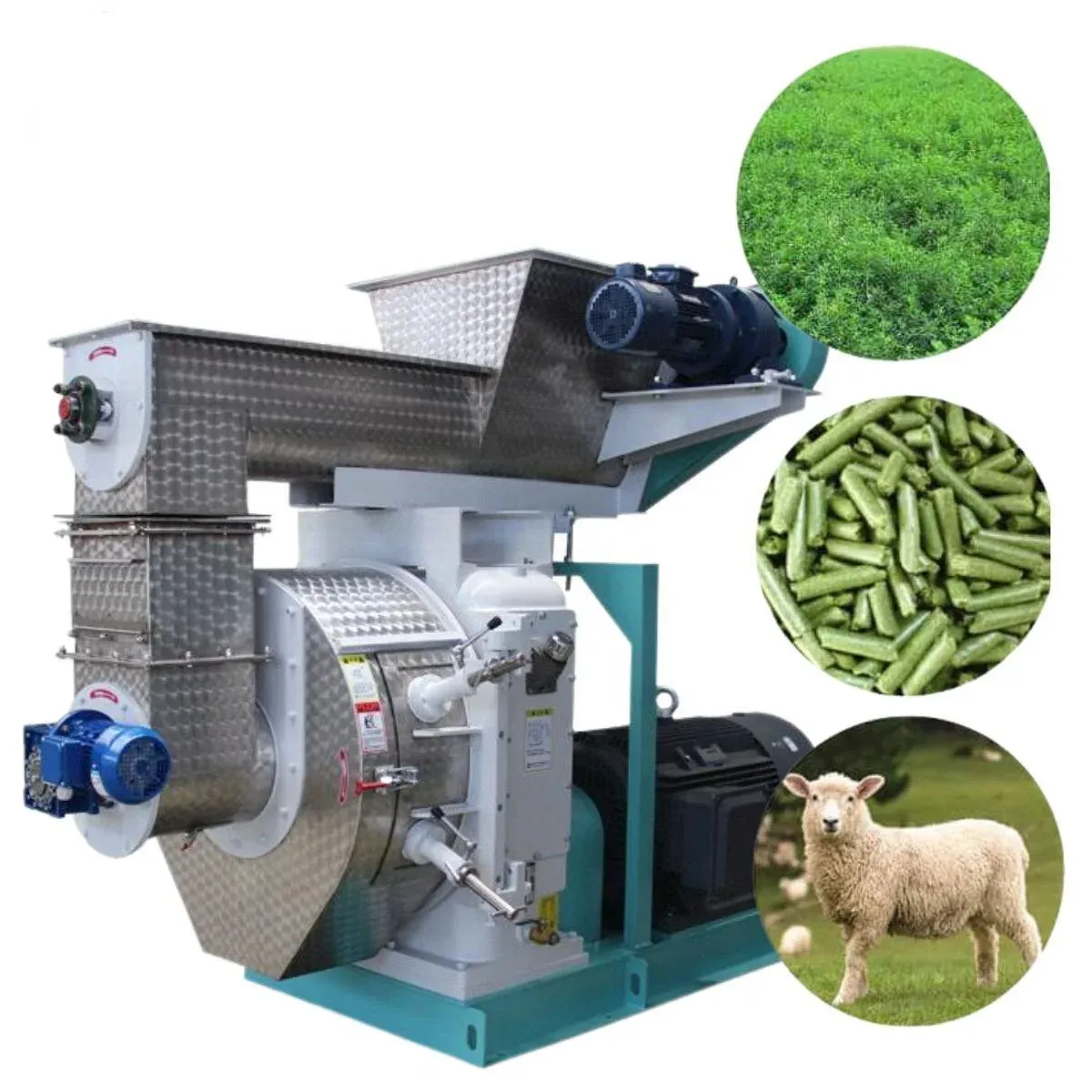
| Feed workshop, forage and alfalfa | 15 kW ring die feed pellet mill | commonly 0.5-1.5 t/h in this power class | 15 kW |
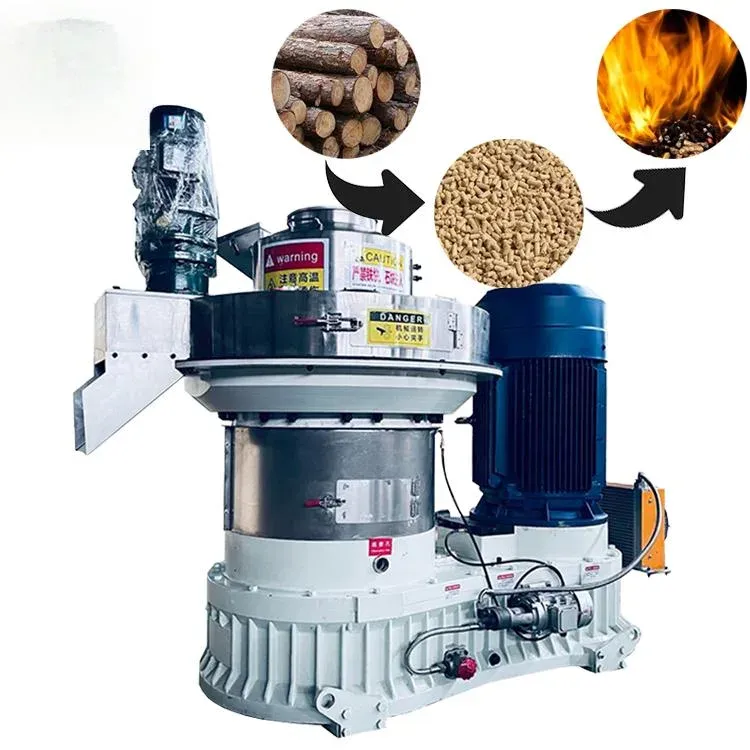
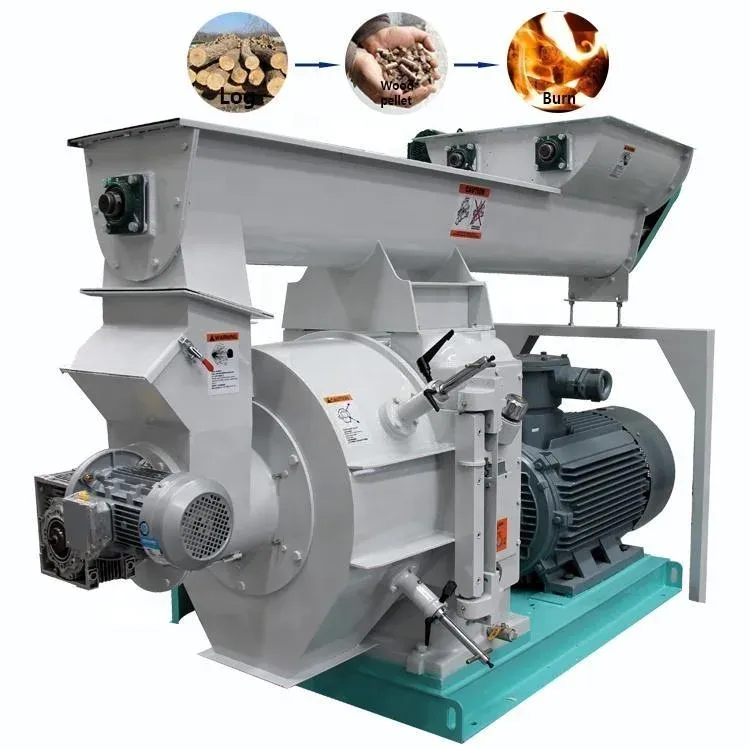
| Wood pellet fuel, small plant | Vertical ring die biomass mill | 1,200-1,500 kg/h | 90 kW, 380 V |
| Industrial fuel pellets | Ring die biomass pellet mill | 500-5,000 kg/h | 55-350 kW, 380 V |
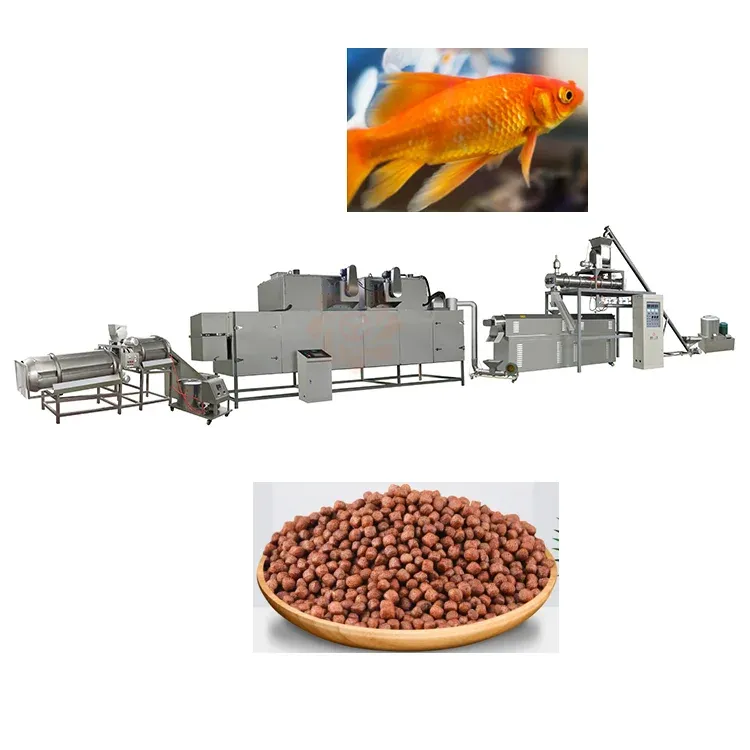
| Floating fish and pet feed | Extruder line | 120-250 kg/h | 22-132 kW |
For the flat die against ring die comparison in detail, including the grinder, mixer and cooler that sit around the press, read our flat die vs ring die guide. This page concentrates on picking across the whole group.
Animal feed mills
The two 200 kg/h machines weigh 90 kg and measure 1,180 x 440 x 1,020 mm, so one person can move them. Dies from about 2 to 8 mm cover chick crumble through to cattle cubes. Diesel drive is available on request where the grid is weak. See the 200 kg/h compact feed pellet machine for the die and cooler options.
The 15 kW ring die feed pellet mill is the next step. It weighs 800 kg and presses 6-12 mm pellets, and a steam or water conditioner ahead of the die helps bind the pellet. Steam or water conditioning before the die is standard on this model; the Kansas State pellet conditioning paper listed below is a good read on why it matters.
Biomass pellet mills
Fuel pellets are a harder duty. Sawdust and husk are abrasive, so die life is measured in hundreds of hours, not thousands. Our industrial biomass pellet mill covers 500-5,000 kg/h with 55-350 kW motors and a stainless and alloy steel body. For a farm or a small plant, the 90 kW vertical ring die mill gives 1,200-1,500 kg/h and weighs 5,800 kg, so plan a concrete base and a lifting route.
Feedstock should be ground to under about 5 mm and held near 12-15% moisture before it reaches the mill. If your sawdust arrives wet, you also need a dryer. A cooler or cooling conveyor follows the press, because pellets leave hot and soft.
Electric, diesel or tractor drive
Small flat die machines come with electric, diesel or tractor power-take-off drive. Electric is quieter and has no exhaust. Diesel suits off-grid sites. Tractor drive makes sense where a tractor is idle between seasons. Output depends on the die and material, not on the power source.
What to send for a quote
- Material to be pelleted and its moisture content
- Required output in kg/h and hours of operation per day
- Pellet diameter, and whether feed or fuel
- Voltage and frequency (for example 380 V, 50 Hz)
- Whether you need a grinder, cooler, sieve or packing scale
- Port of delivery
If you are weighing two outputs, send us both and we will quote them side by side. Back to the Agriculture and Livestock overview for neighbouring groups, such as grain storage and crop drying.