Choose by plot size and soil
Extension guidance puts garden tillers at roughly 3 to 5 HP for front-tine models and 8 to 10 HP for rear-tine ones, cutting 6 to 8 inches (about 15 to 20 cm) deep in good conditions. Our farm machines sit one step above that: air-cooled single-cylinder units of 7 to 9 HP, and a water-cooled diesel two-wheel tractor up to 35 HP. The table puts them side by side using the figures on our product pages.
| Machine | Power | Working width | Depth | Field capacity | Weight |
|---|---|---|---|---|---|
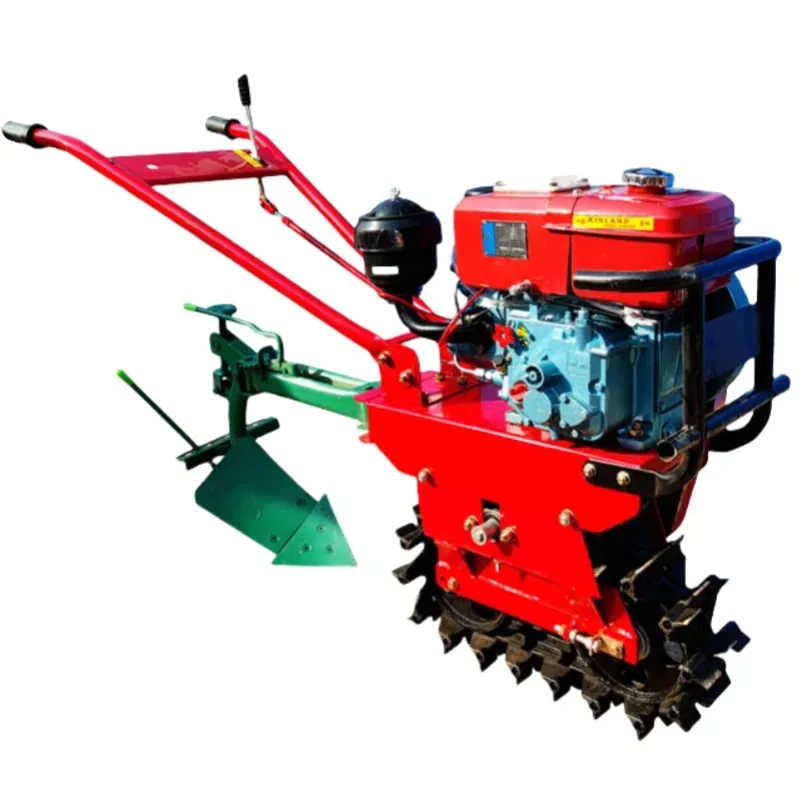
| 9 HP power tiller with plough and seeder | 7-9 HP | about 40-60 cm | about 8-15 cm | 0.03-0.06 ha/h | 80 kg |
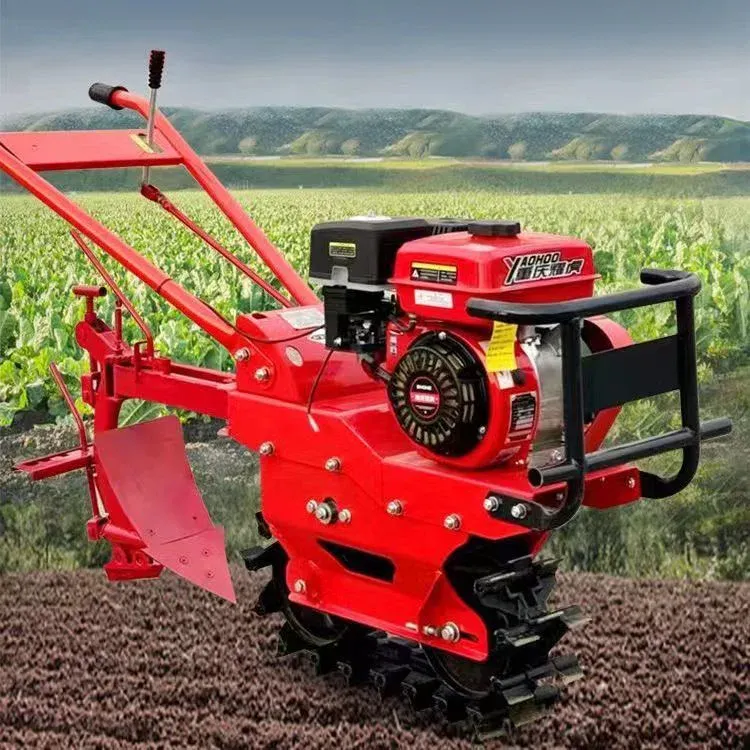
| Chain-rail mini power tiller | 7-9 HP | about 40-70 cm | 10-30 cm | 0.05-0.1 ha/h | 100 kg |
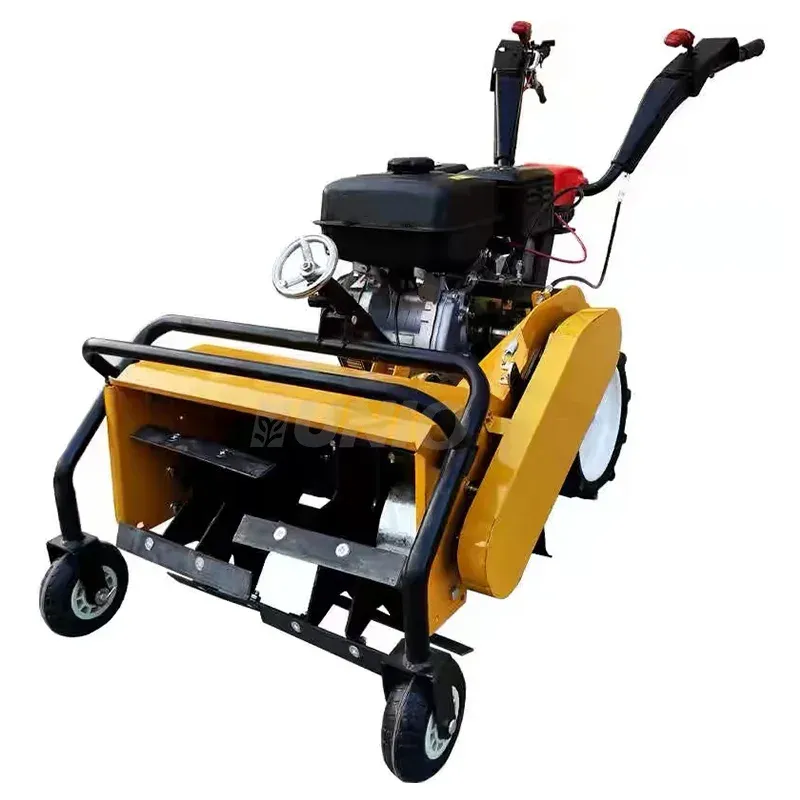
| Gasoline tiller and weeder, 50-60 cm | 170/177 petrol engine | 50 or 60 cm | about 8-15 cm | 0.04-0.08 ha/h | 130 kg |
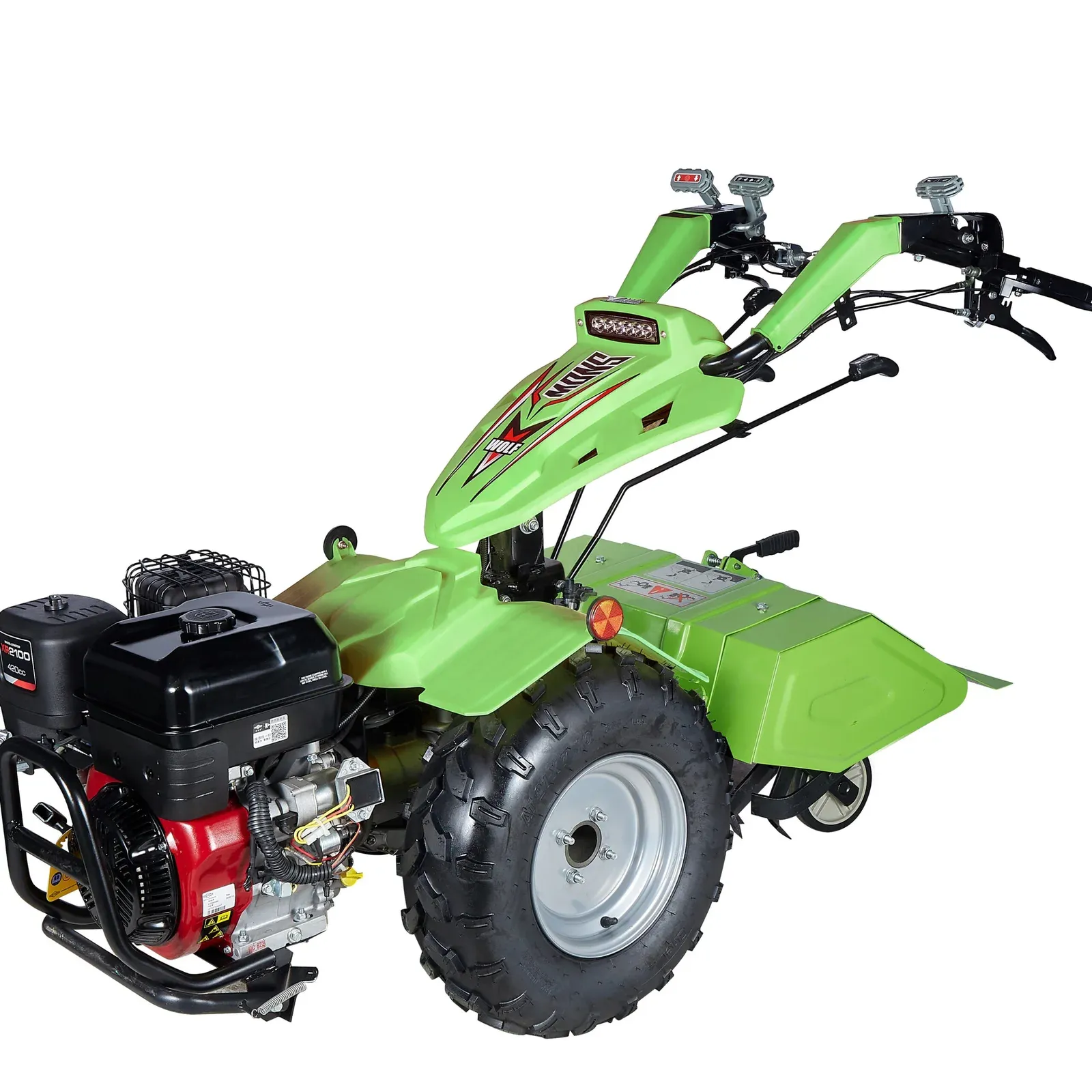
| Diesel two-wheel tractor | 8-35 HP | about 70-120 cm | 10-15 cm | 0.1-0.3 ha/h | 170 kg |
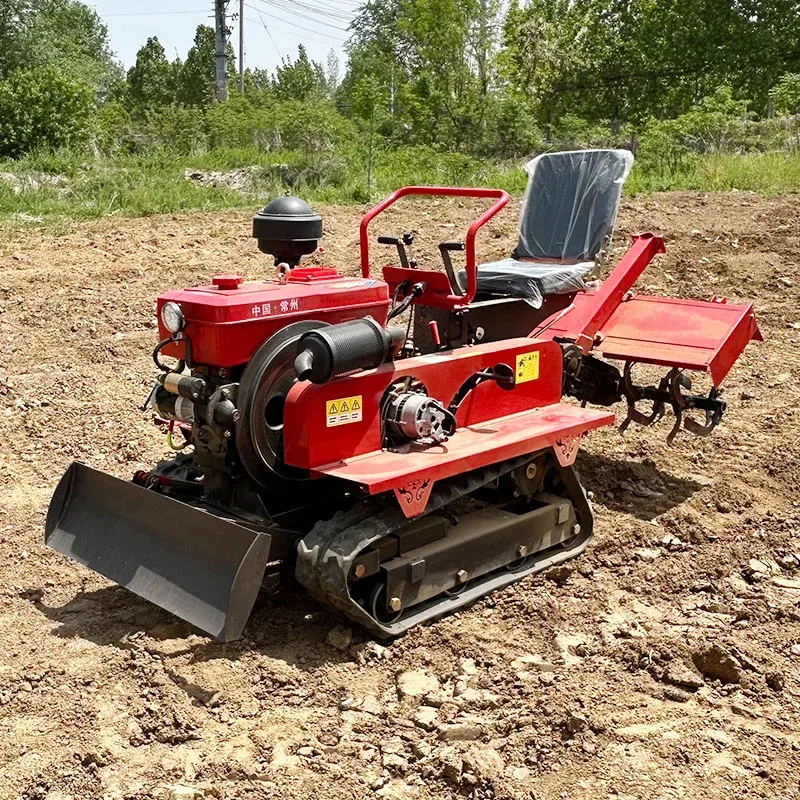
| Mini crawler tractor | 25 or 35 HP | 0.8-1.2 m | trenching 20-40 cm | 0.13-0.33 ha/h | 650 kg |
Capacity figures are typical and depend on soil and operator.
Which one for which land
- Vegetable beds and greenhouse rows: the 50-60 cm petrol weeder, with four driven wheels and a folding handle.
- Terraces, tea and orchard rows: the chain-rail model. Track contact helps on slopes and soft ground, and the small turning radius suits narrow rows.
- Paddy and mixed small farms: the diesel two-wheel tractor, which also tows a seat trailer on the road and takes pneumatic or iron cage wheels.
- Hilly holdings with trenching and bulldozing jobs: the mini crawler, which brings a rotary tiller of 0.8 to 1.2 m and trenching to 20-40 cm.
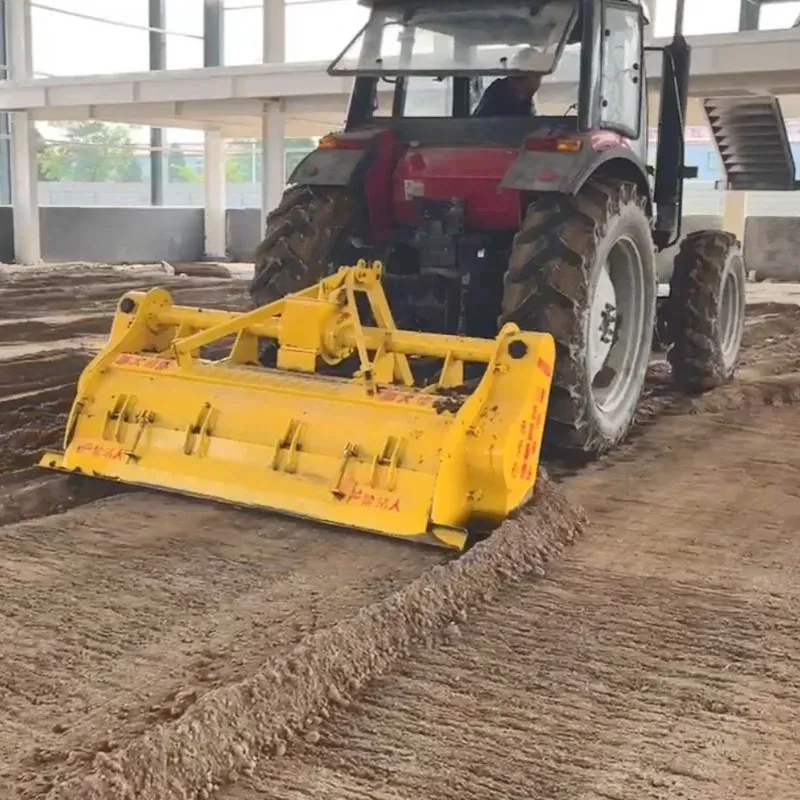
If your plots are over a few hectares, a compact tractor with a mounted rotary tiller is usually the faster route. For track and road work behind a 50 HP tractor, there is also the soil stabilizer mixer, 1.0 to 2.2 m wide, mixing to 400 mm deep.
Cultivator versus rotary tiller
Mahindra’s comparison separates light cultivators, used for shallow weeding and aeration, from rotavators that turn and chop soil deeper. In practice, ask the seller for tine type and depth, because a machine named cultivator may only scratch the top 8 cm. Heavy clay and sod need more weight and power than the 80 kg garden-class unit offers.
Fuel, noise and operating notes
Petrol units start easily and cost less to buy; diesel units lug better in wet soil. The chain-rail tiller lists about 85-95 dB(A) at the operator’s ear, so plan hearing protection. Tank sizes are small (3-6 L on the 7-9 HP units), which is a reason to carry spare fuel on long days.
What to send for a quote
- Plot size, soil type and wet or dry land
- Required width and depth
- Fuel preference and start method
- Attachments needed: plough, seeder, fertiliser unit, ridger
- Quantity and destination
See also Seeders and Planters and the full agricultural machinery overview.