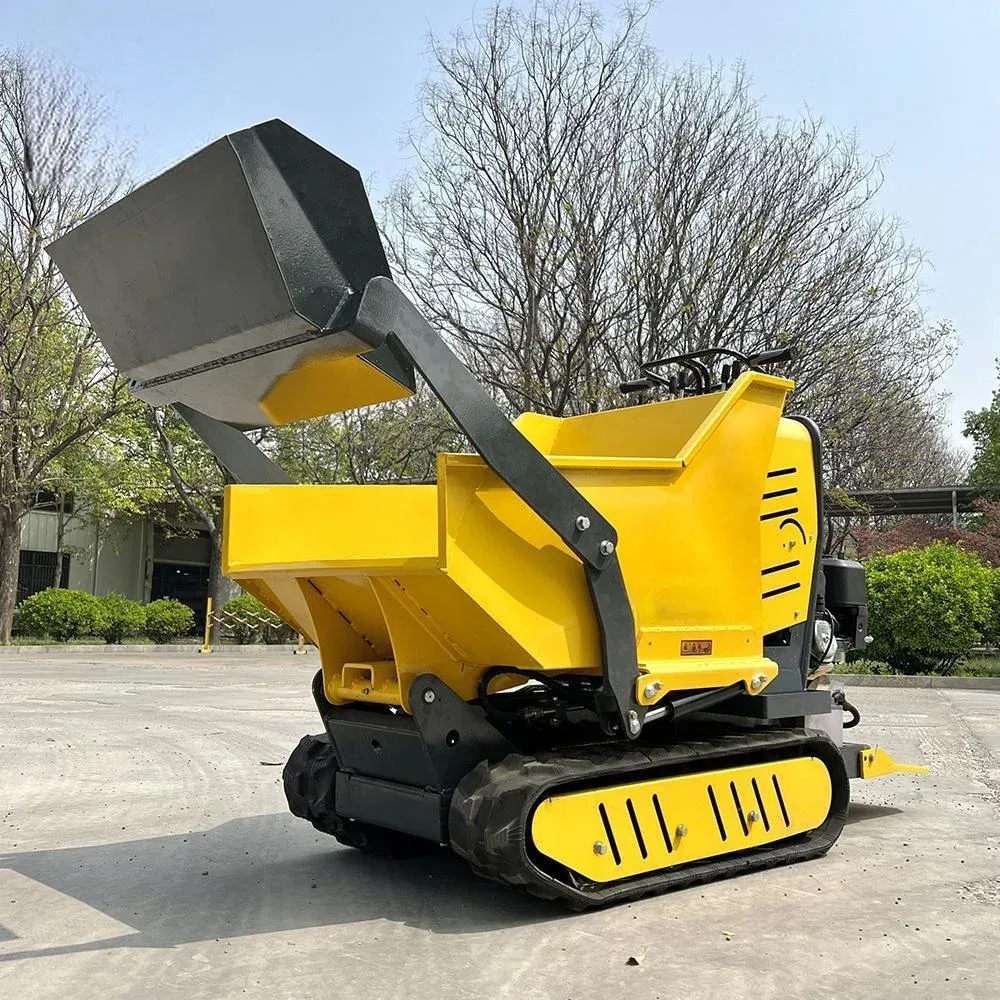
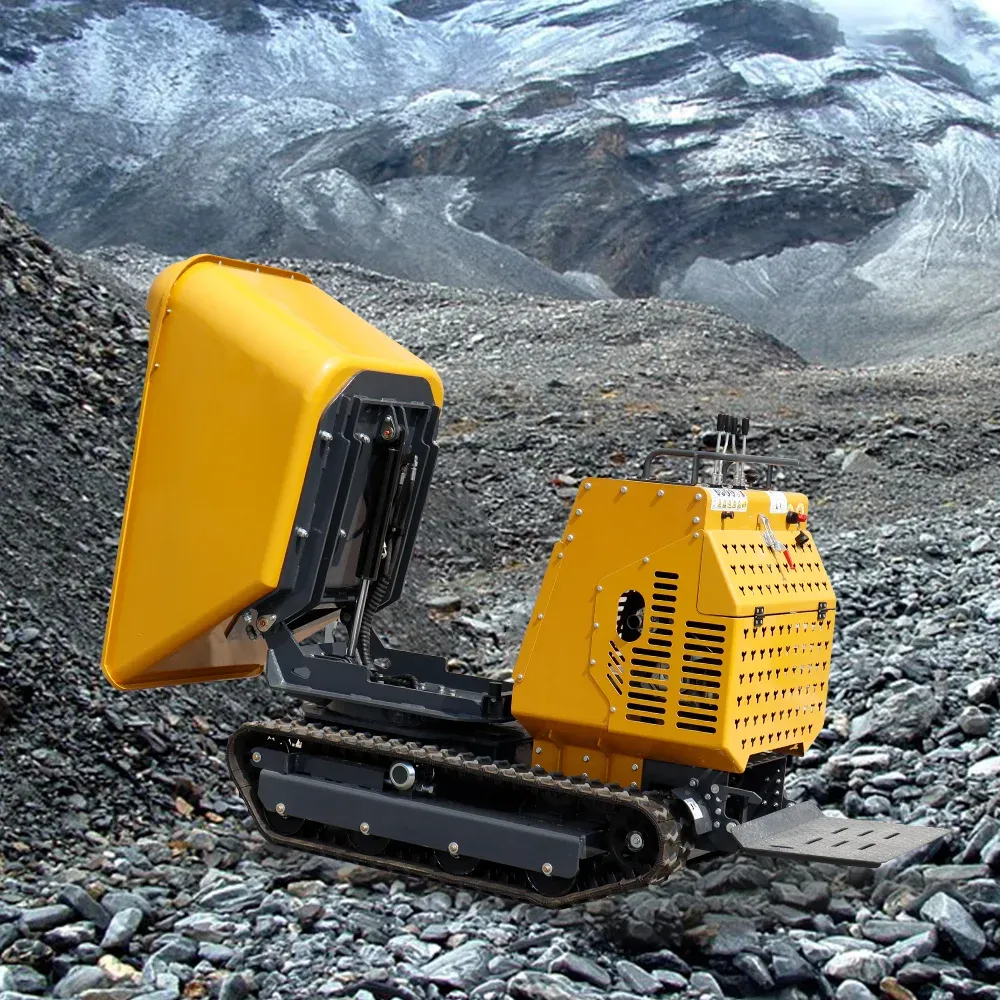
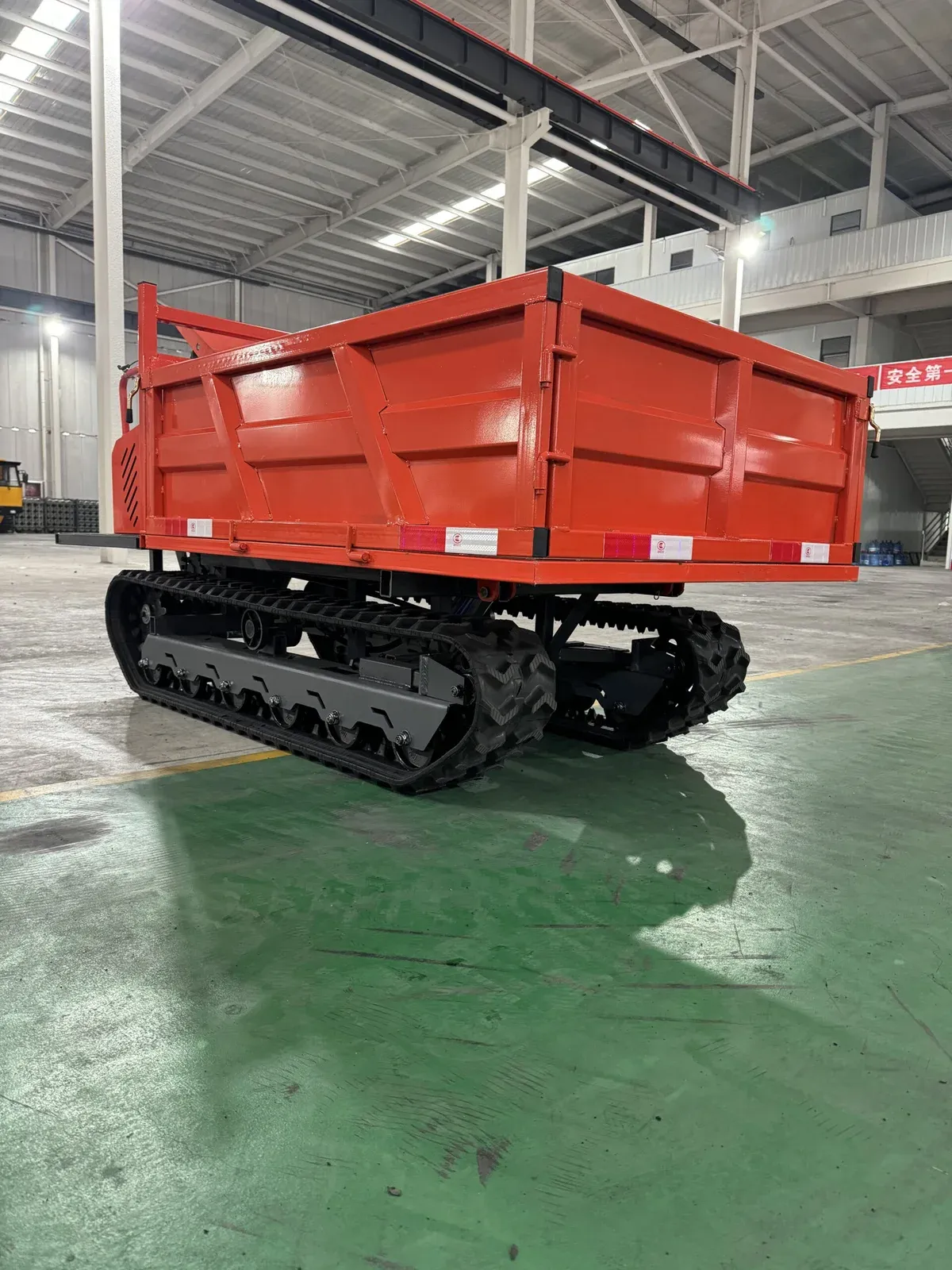
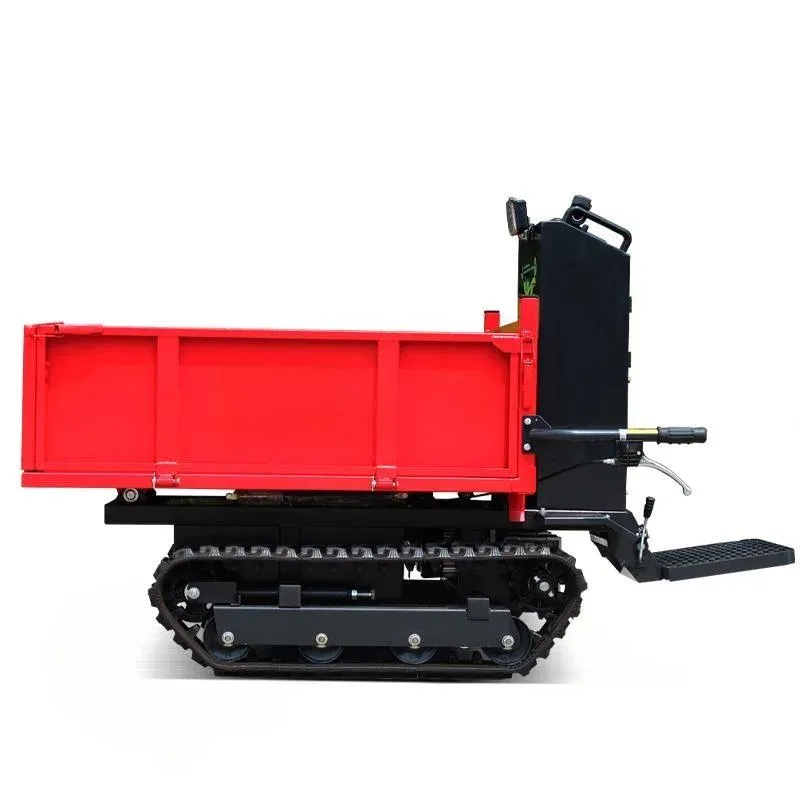
Why tracks in an orchard
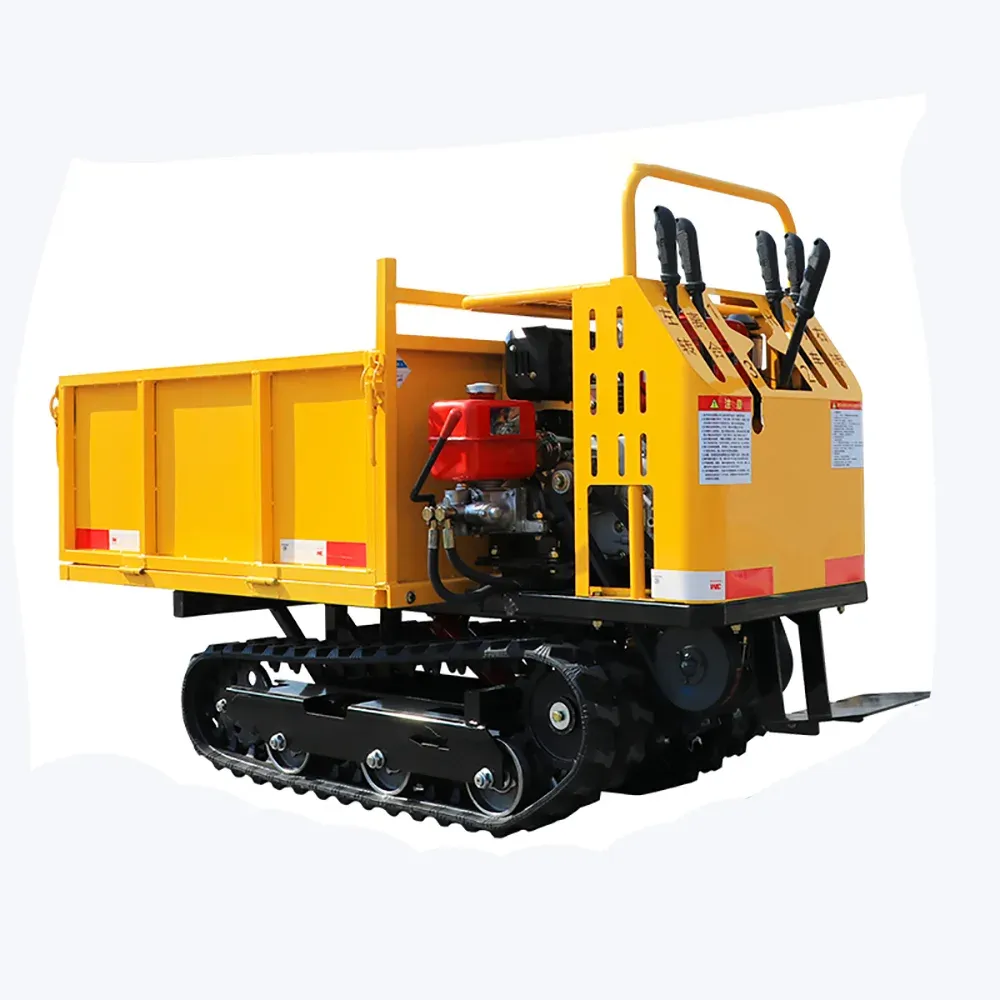
Rubber tracks spread the machine weight over a larger area, which is why listings from other manufacturers stress passability on mud, rice-field edges and hill roads. In an orchard that means the carrier can follow tree rows after rain without cutting ruts, and can turn in a headland only slightly wider than the machine. Speed is low, usually 2-8 km/h, so the design target is a short haul with a heavy or awkward load: fruit crates, manure, soil, pruning waste, young trees.
The six models side by side
| Model | Power | Load class | Distinguishing point |
|---|---|---|---|
| 6 kW electric crawler dumper | 6 kW battery | about 200-300 kg | 252 kg machine, 700 mm wide, quiet |
| 10 kW diesel mini dumper | 10 kW (13.5 HP) diesel | about 300-500 kg | 0.4 m3 bucket, 4-8 km/h, 20 degree climb |
| 13.5 HP forward-tip | 13.5 HP | about 500-800 kg | 850 kg machine, 90 degree tip, 260 degree rotation |
| 22 kW heavy-duty | 22 kW diesel | 1,500 kg rated | 2,000 kg machine, mountain orchards, estates |
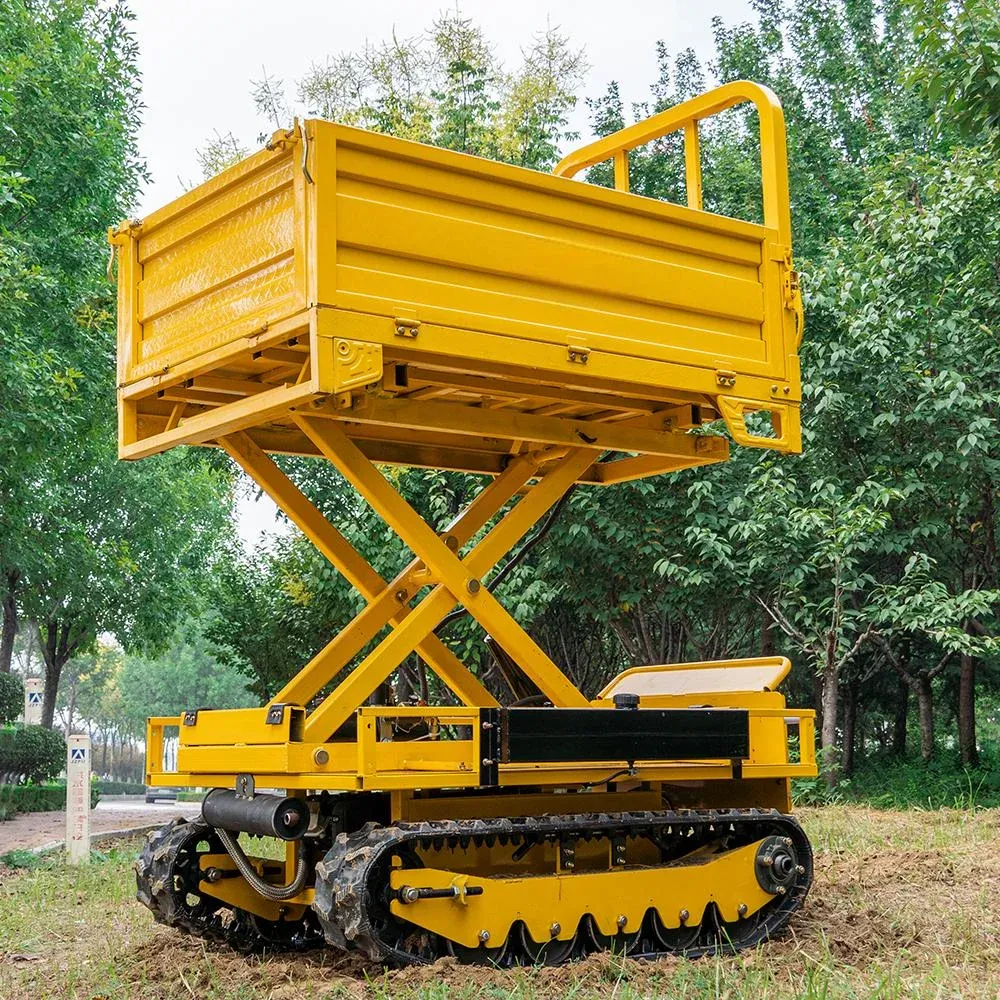
| Climbing crawler transport vehicle | about 4-15 kW | about 300-1,000 kg | tipping bed, flat bed or lifting platform |
| Remote-control transporter, 1.5 t | 48 V battery plus 5 kW extender | 1.5 t | operator walks beside it, up to 20 degree slope |
The load classes marked “about” are typical values for the class; the page states what is firm for each model.
Choosing by slope, width and load
- Slope. Climbing is limited by grip and by centre of gravity. A loaded machine on a 25 degree wet bank is a different problem from an empty one on dry soil. Give your worst section.
- Width. A narrow carrier fits terraces and older plantings; a wider one is stabler on side slopes.
- Tip type. A hydraulic side tip is common on small units, a forward tip is easier to place at a pile or trench, and a flat or lifting bed suits crates.
- Power. Battery suits low noise and short shifts. If the carrier works all day on steep rows, diesel or gasoline runs longer.
Remote control matters where the slope is too steep to walk behind safely: the remote-control model has an emergency stop on the transmitter and on the machine. If your jobs are mainly construction and you want wheels, compare with our site dumpers; for orchard digging, see the other agriculture and livestock groups.
Quick example
An orchard moves 60 crates of about 20 kg each, 1.2 t in total, down a 150 m lane. A 500 kg carrier needs about three trips; a 1.5 t unit needs one. On a 3 km/h machine each 300 m round trip is about six minutes plus loading. This is an illustration only.
What to send for a quote
- Worst slope and surface (dry, wet clay, sand, snow)
- Narrowest gate or lane width
- Load per trip and what it is (crates, soil, manure, trees)
- Electric, diesel or gasoline preference and local mains voltage for charging
- Dump or flat bed, and whether remote control is wanted
- Port of delivery