Two storage jobs, two designs
Dry grain and wet root crops fail in different ways. Grain spoils when it warms up and takes on moisture, so it needs a sealed steel bin with controlled airflow. Potatoes and onions are alive: they breathe, sweat and sprout, so they need a ventilated insulated building. Our group has one product for each job.
| Flat-bottom steel silo | Ventilated crop store | |
|---|---|---|
| Crop | Wheat, maize, soybean, rice, feed | Potatoes, onions |
| Size | 100-15,000 t; 4.57-32 m diameter | Designed to your tonnage |
| Key equipment | Aeration fans, sweep and unloading augers | Ducts, fans, dampers, humidifier |
| Control | Temperature cables, level indicator | Temperature and humidity controller |
| Suits | Farm, feed mill, depot, port | Growers and packing houses |
Choosing a grain silo
The first number is tonnage, and a useful check is that 1,000 bushels is about 25.4 t, a unit that appears in a lot of imported specifications. Size the silo for one crop, with a margin for a good harvest year.
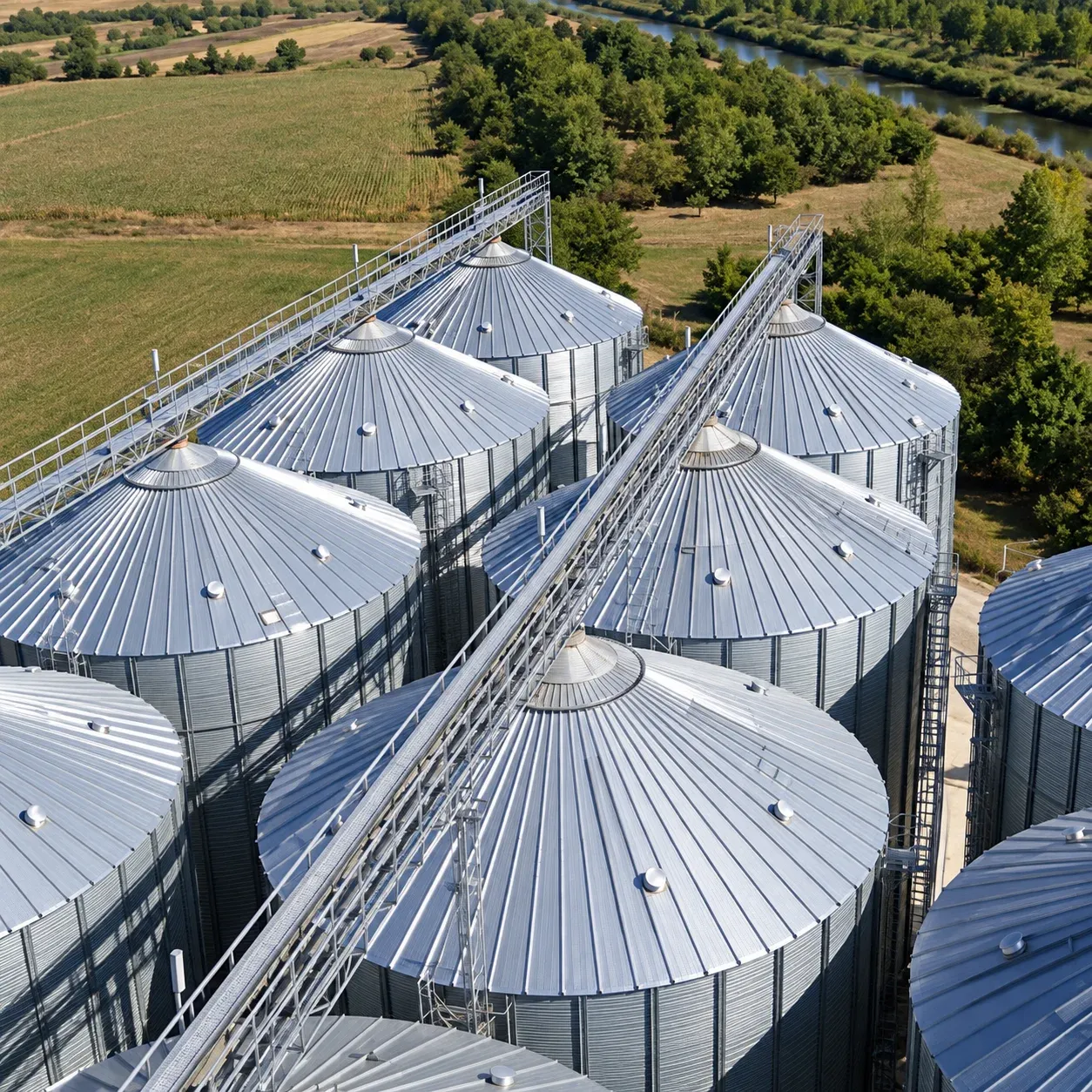
The flat-bottom steel grain silo system uses corrugated galvanised sheets, with wall thickness commonly 1.5-4 mm rising toward the base and a zinc coating typically 275 g/m2 or higher. The roof slope is commonly 25-30 degrees, with a roof manway, ladder and safety cage. A bolted corrugated silo goes up faster than a welded one and can be taken down and moved, which is one reason it dominates grain storage.
Flat or hopper floor is the main structural choice. A flat floor suits large volumes held for months, but it needs a sweep auger and some labour to clean out the last grain. A hopper floor empties by gravity, which helps if you load and unload often, such as a feed mill or a trading terminal. The trade-off is a raised steel stand and a smaller practical size.
Aeration matters more than size. Fans, an optional perforated floor, and temperature cables let you cool the grain after harvest and spot hot spots early. Wind and snow loads, and local seismic rules, set the wall thickness, so give us your site conditions.
Potato and onion stores
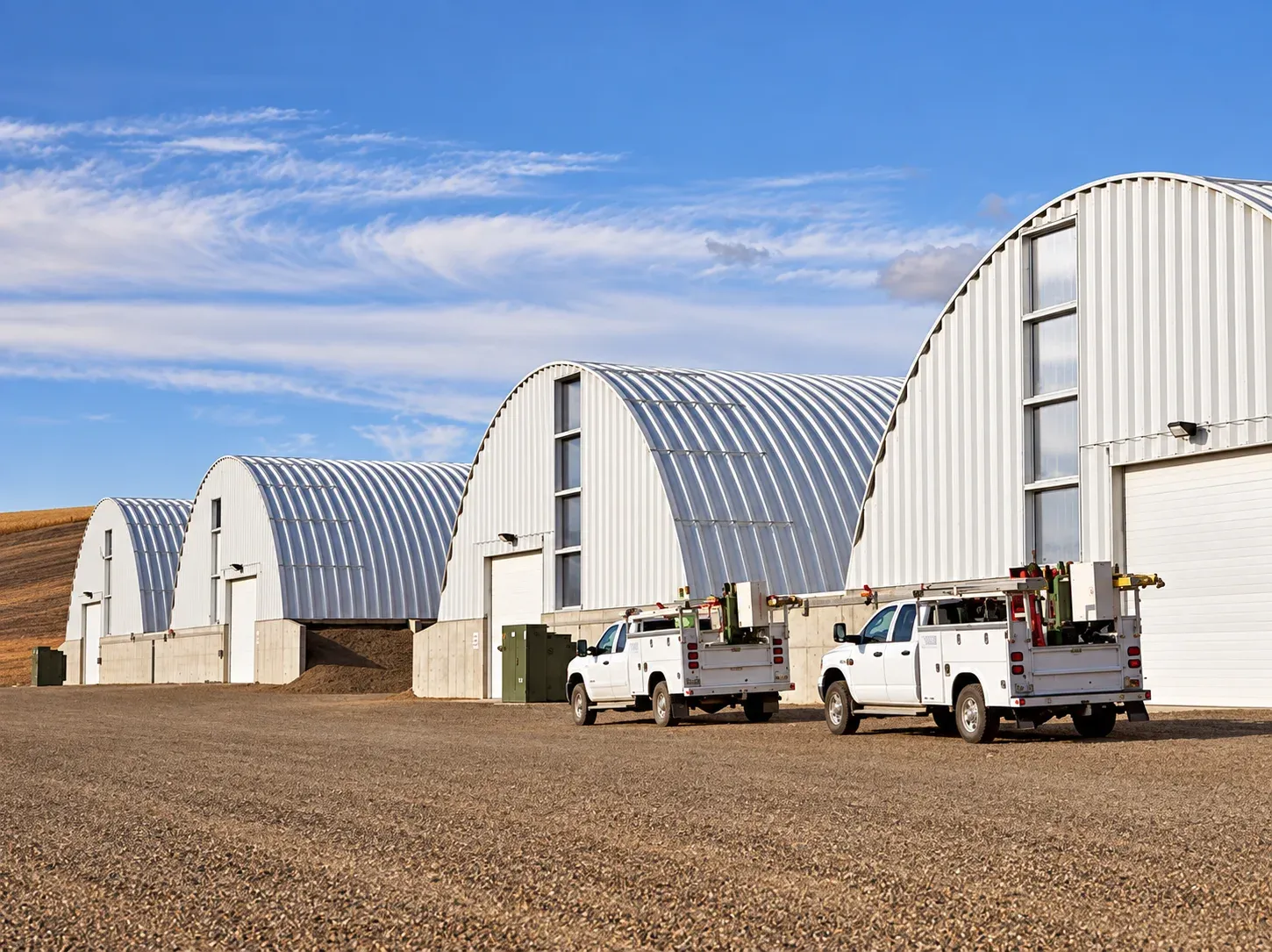
Roots need building physics. The potato and onion ventilated storage system is designed around your crop, your climate and your handling method, either bulk piles with sloped walls or boxes in a straight-wall store. Typical design points are a pile height of 3-5 m, an airflow of 10-20 m3/h per tonne for potatoes, and polyurethane wall panels 100-150 mm thick. A curing period of 1-3 weeks after harvest comes first. Cold climates need a heating option for frost protection. Warm ones need refrigeration.
What to send for a quote
- Crop, tonnes to store and harvest peak per day
- Site: ground conditions, wind, snow, seismic zone
- Flat or hopper floor preference, and unloading rate
- Aeration and monitoring wishes
- Power supply (voltage, 50 or 60 Hz)
- Port or destination
Silos often sit next to a crop dryer or a feed mill; see also pellet machines and the Agriculture and Livestock overview.