Two groups, one question each
Environmental equipment sounds like one category, but a buyer rarely wants “environmental equipment”. They want to stop dust escaping a process, meet a sulfur limit, or reduce the number of waste collections they pay for. Our two groups split on exactly that.
| Group | What it handles | Products | Typical buyer | Page |
|---|---|---|---|---|
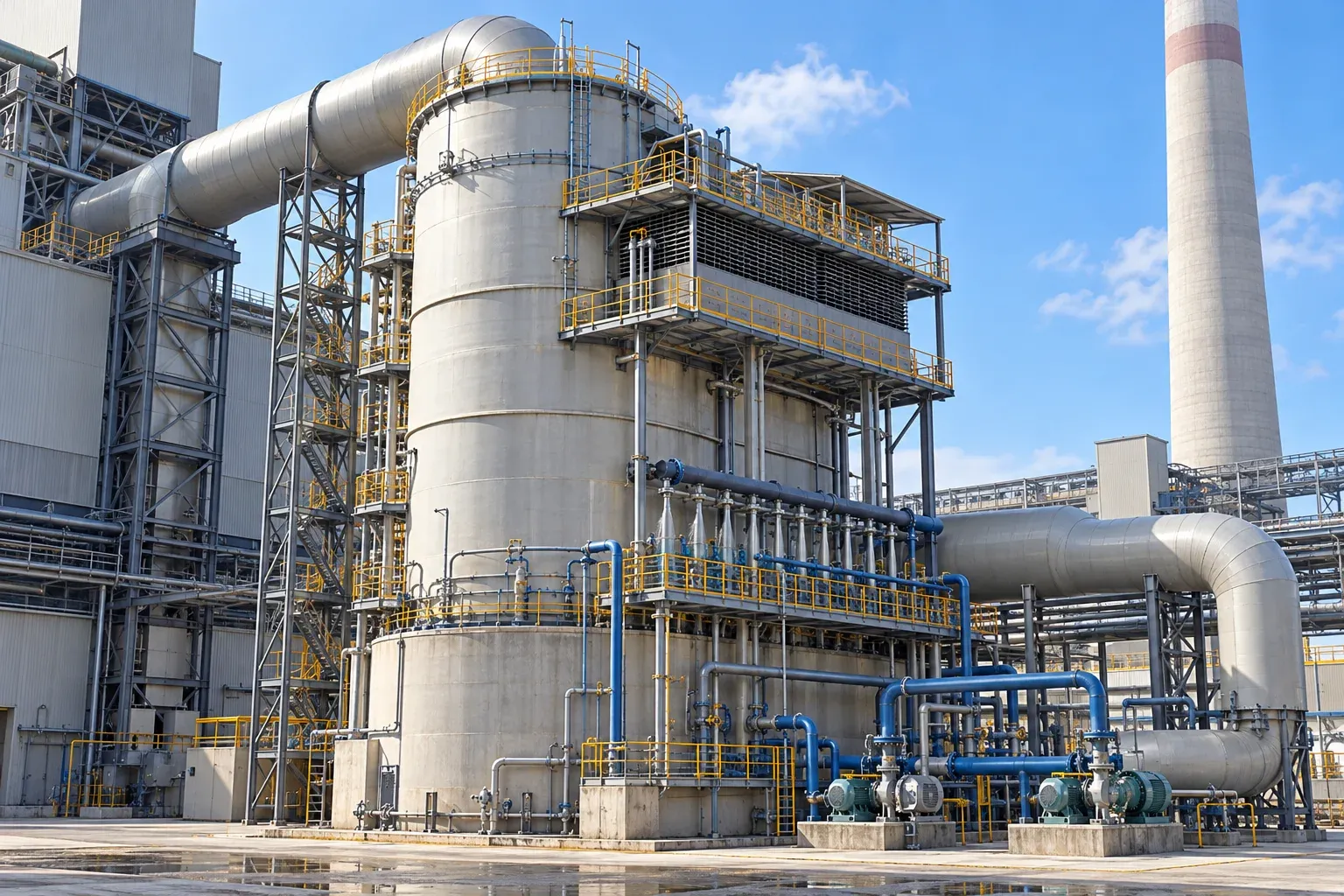
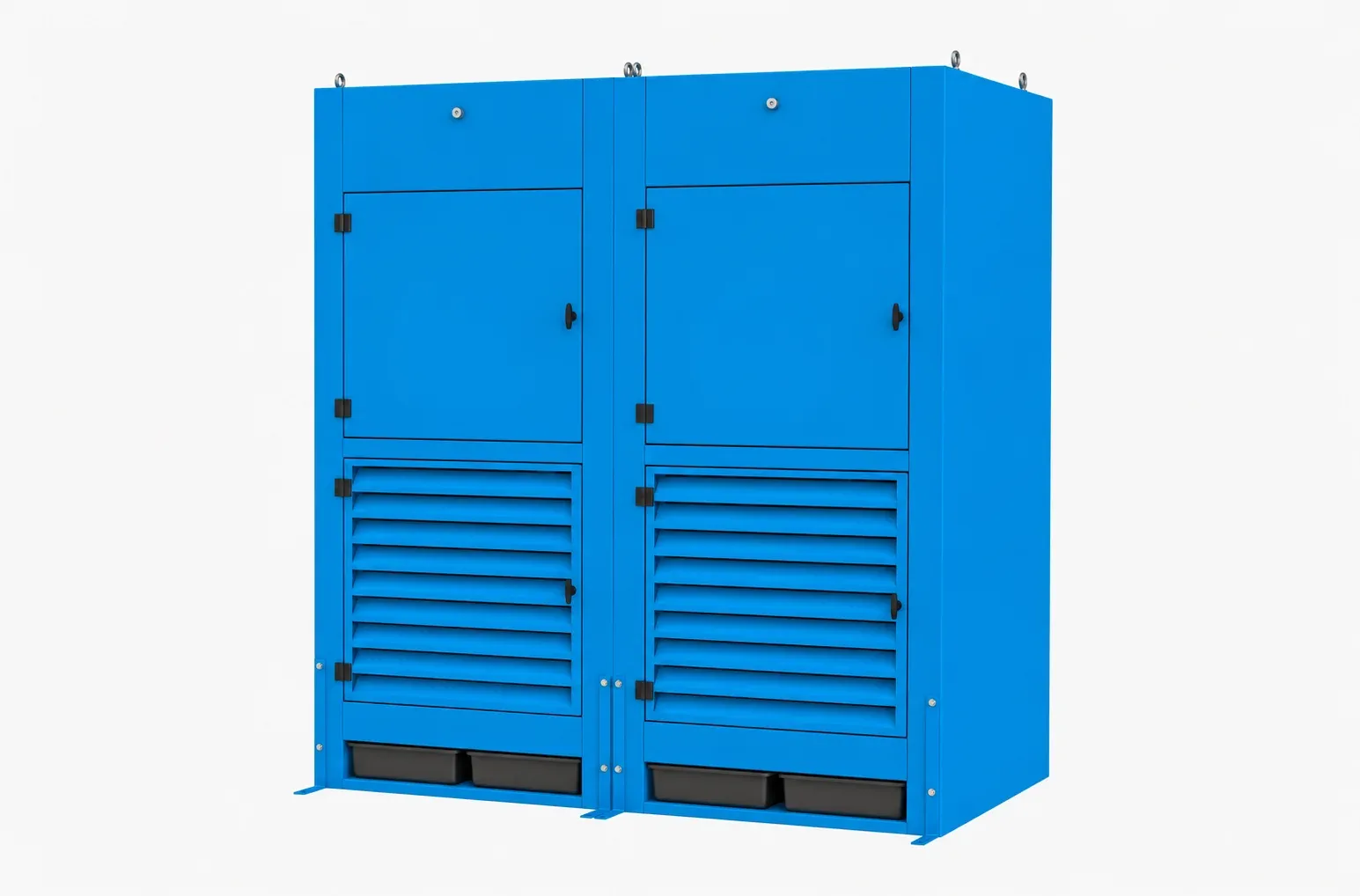
| Air pollution control | Dust, fume and sulfur dioxide in exhaust | Cartridge dust collector; wet limestone-gypsum or seawater FGD | Fabrication shops, processing plants, boiler and furnace operators | Air pollution control equipment |
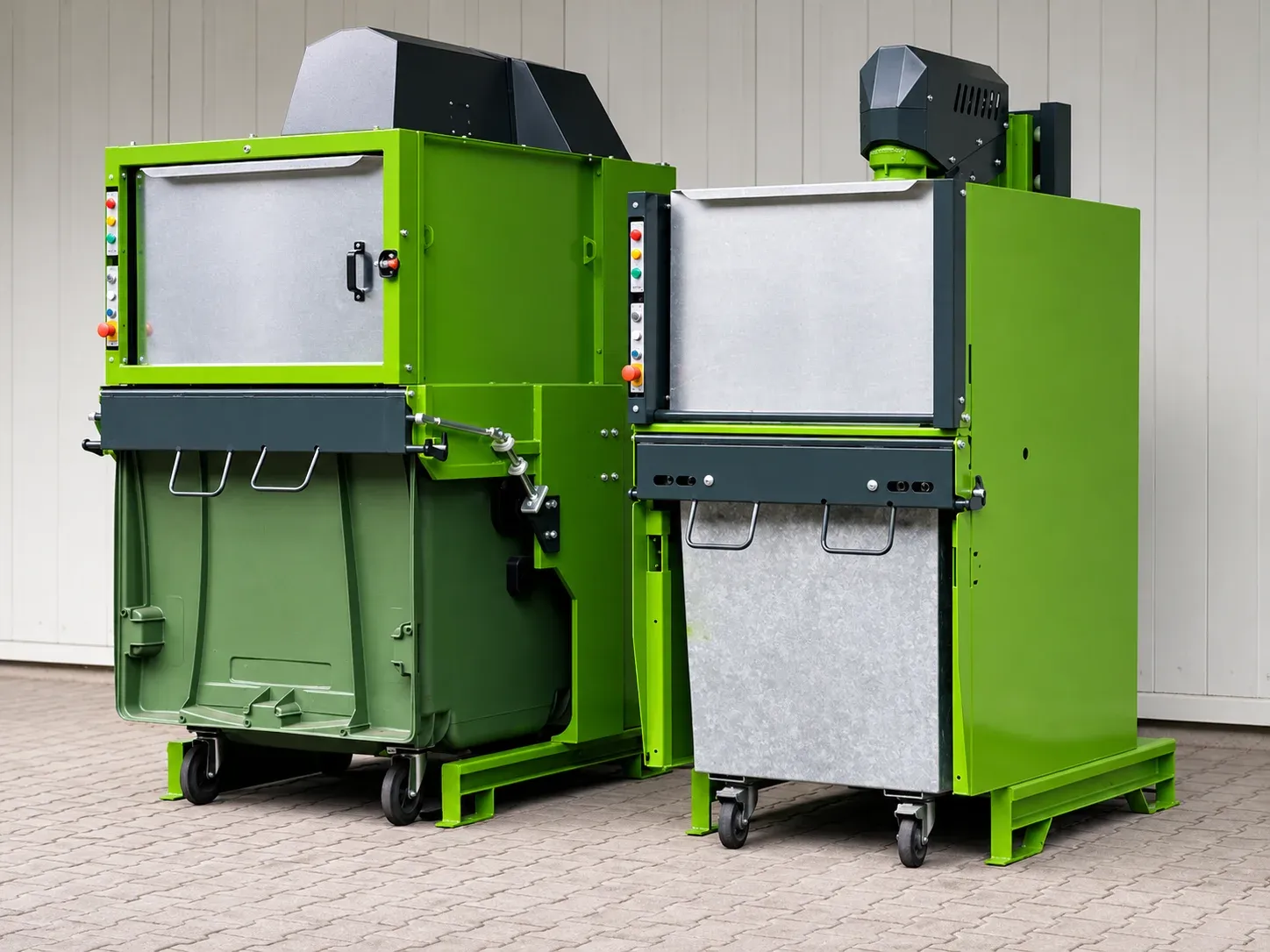
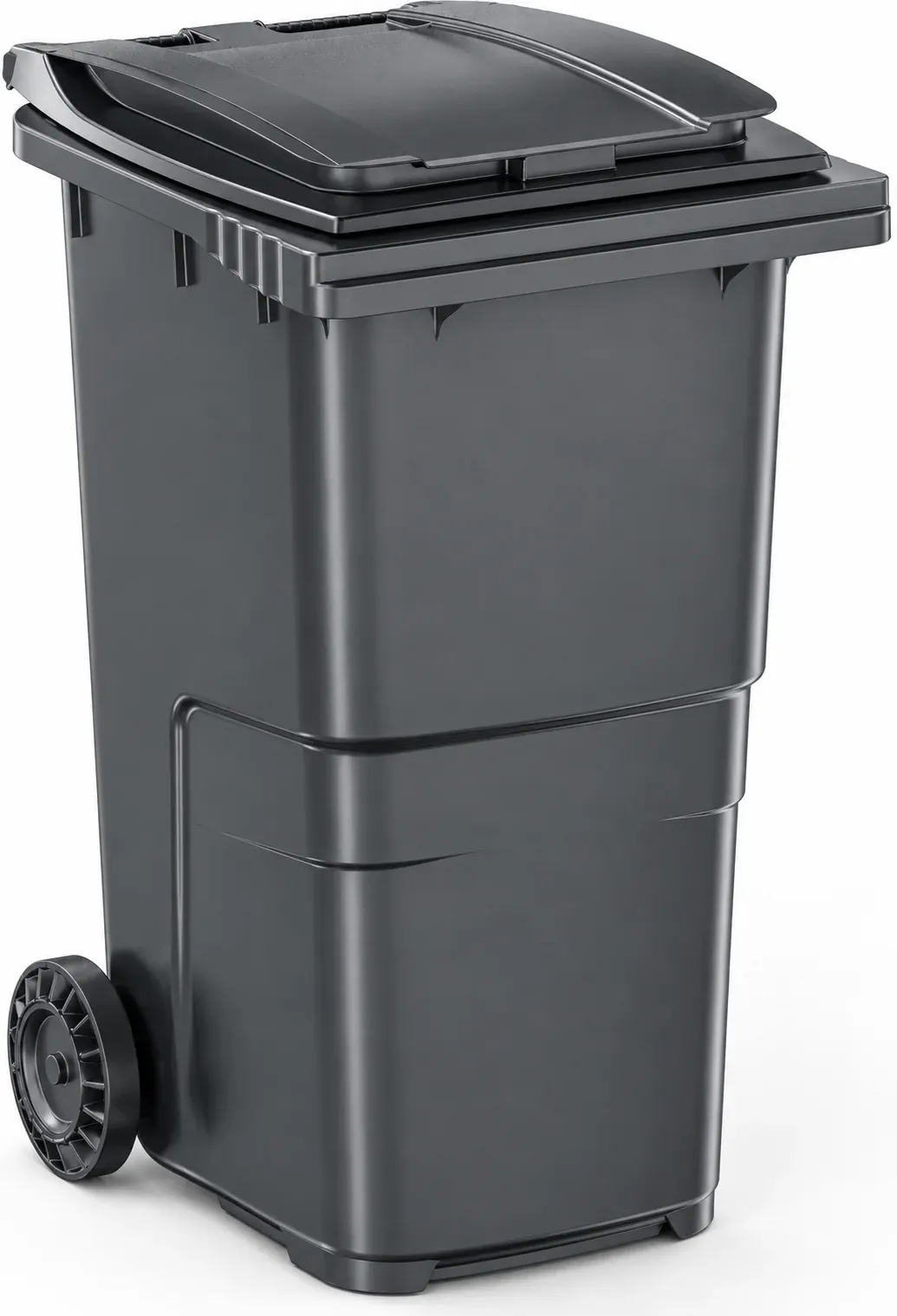
| Waste recycling | Solid waste collection and compaction | 240 L two-wheel bin; 1100 L roller-bin compactor station | Municipalities, hotels, supermarkets, apartment blocks | Waste recycling equipment |
Choosing for air emissions
Solids and gases need different tools. Dust and fume go to a filter collector; sulfur dioxide needs a scrubber that absorbs it into a liquid. For dust, the real decision is cartridge or bag filter, which depends on dust type, temperature and airflow; our guide to cartridge vs baghouse dust collectors explains the trade-offs. For boilers and furnaces, the wet FGD system is a project designed from your gas data, not a catalog unit. The cartridge dust collector is a configurable series.
Choosing for solid waste
If bins are cheap to collect and rarely full, more 240 L wheeled bins are the simple answer. If collection is a cost line you want to cut, a 1100 L roller-bin compactor fits more waste into each bin. Waste type matters: dry packaging compacts well, wet waste needs sealed equipment.
Mistakes we see in enquiries
The first is sizing from the machine instead of the problem: asking for a collector by motor power without giving airflow or dust type. The second is skipping the combustibility question; a fine dust that can burn changes the filter media, the venting and where the unit may stand. The third, on the waste side, is ordering bins without checking the truck lifter, which leaves a container of bins that cannot be emptied. Each of these is cheap to fix on paper and expensive after delivery, so the quote checklist below is worth five minutes.
Power and site notes
The dust collector series runs on fan motors from about 1.5 kW up (typical class values); the compactor station needs 400 V three-phase, 50 Hz plus neutral, 3 kW. Wheeled bins need none. FGD plants need process water, compressed air and a power supply sized to pumps and fans. Tell us your local voltage and frequency, and whether equipment will be indoors or outdoors, since that changes weather covers, noise and drainage requirements.
What to send for a quote
- The pollutant or waste stream, with its source
- Quantity: airflow or flue gas flow, or bins per week and waste volume
- The emission limit or collection arrangement you work with
- Site space, power supply and indoor or outdoor placing
- Whether you want equipment only or a wider scope
Use the contact page and an engineer will reply with a written scope.