Two products, two jobs
Waste handling usually starts with a container and, when volume grows, adds compaction. Our range here has exactly one of each, so this page is a plain guide to which suits your site.
| 240 L two-wheel bin | 1100 L roller-bin compactor station | |
|---|---|---|
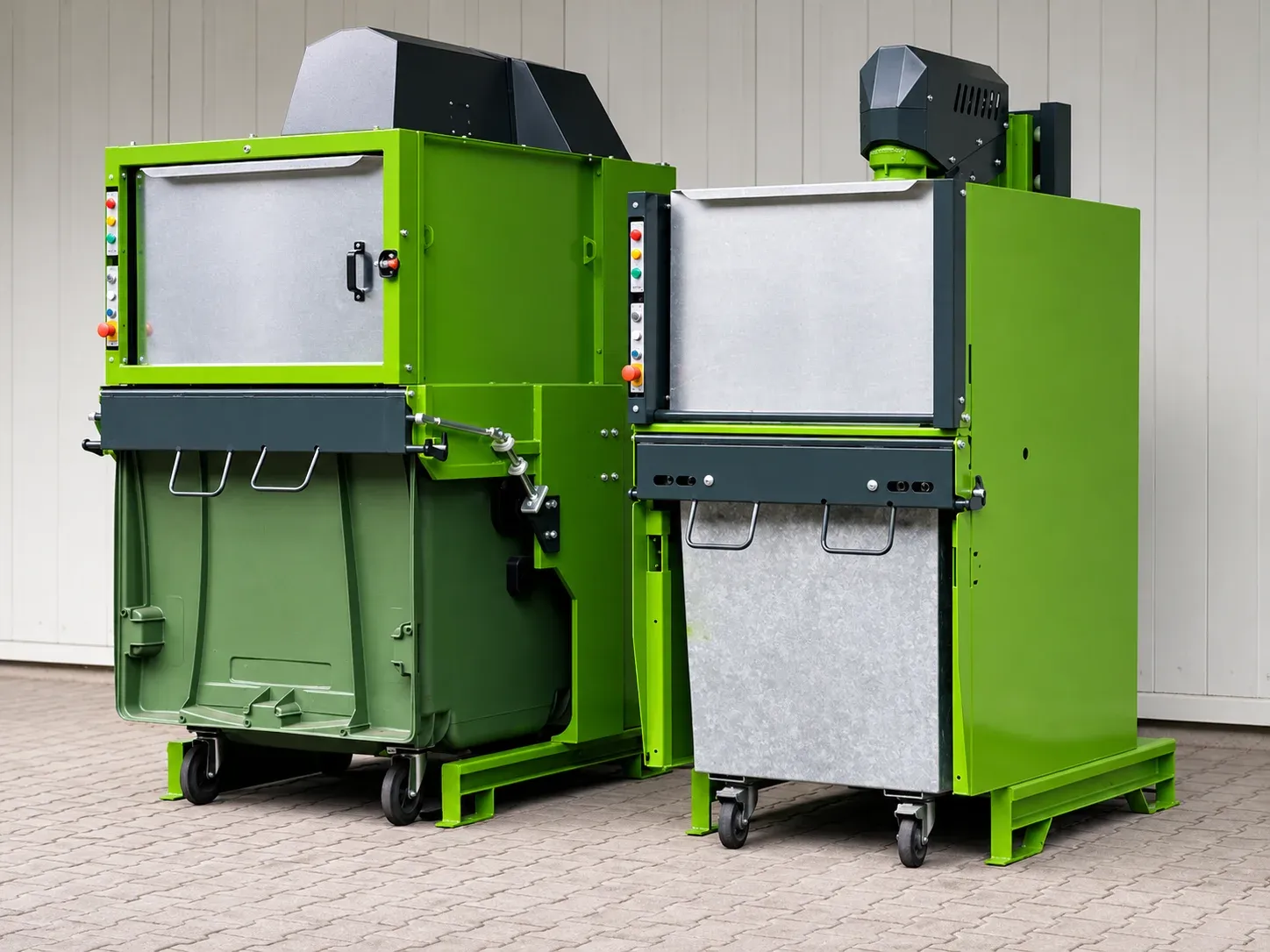
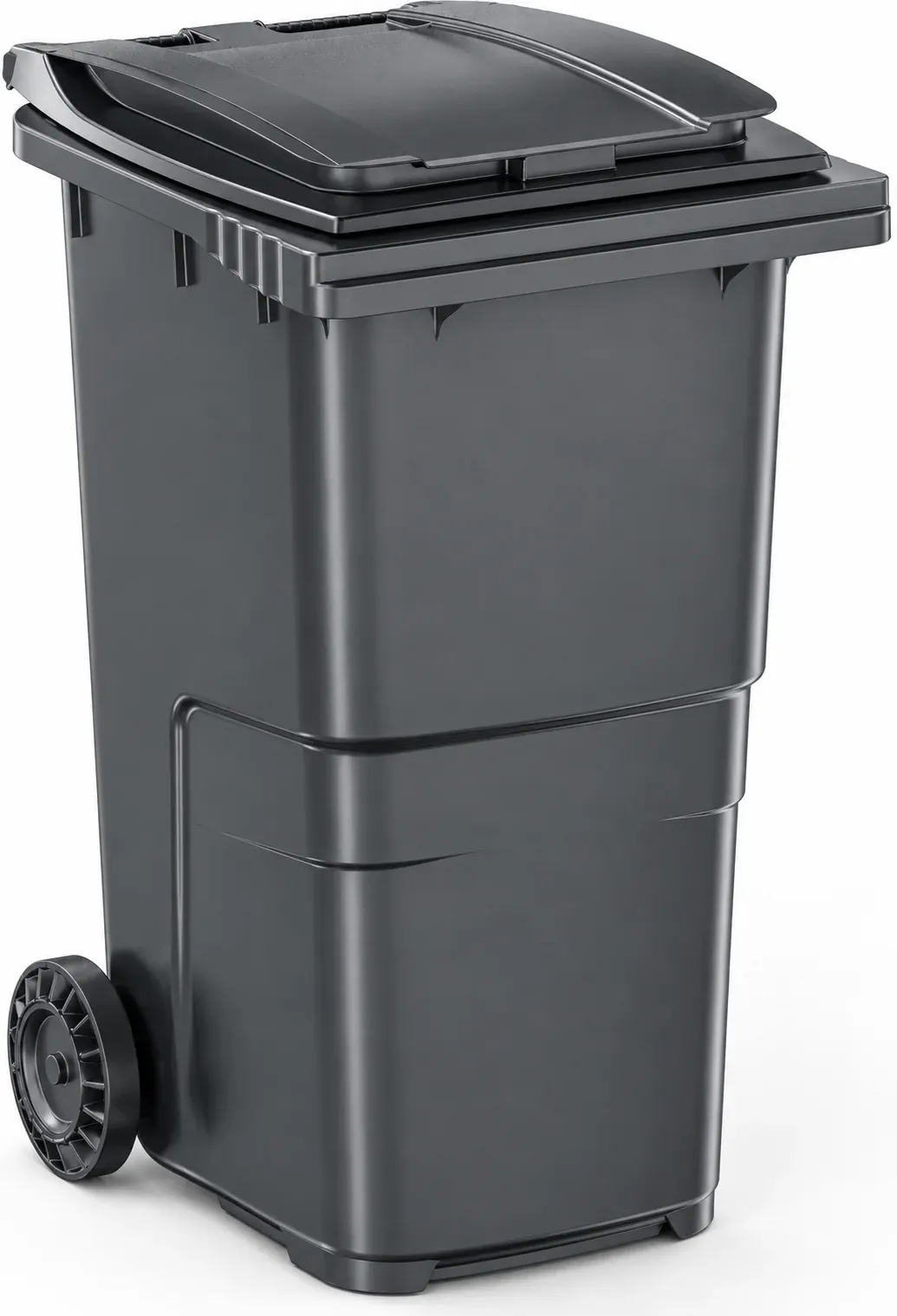
| What it is | HDPE wheeled bin with hinged lid | Fixed electric compactor pressing into a standard 1100 L bin |
| Key figures | 240 L; empty about 10.2 kg; max load 96 kg | Compaction up to 10:1; 1,450 x 1,730 x 2,580 mm; about 1,130 kg |
| Power | None | 400 V, three-phase, 50 Hz plus neutral, 3 kW |
| Moves | Tilted and pulled by one person | Fixed; the bin rolls out and is replaced |
| Suits | Households, small shops, offices, schools, municipal rounds | Hotels, markets, supermarkets, apartment blocks, hospitals |
| Decision driver | Lifter fit, colors, markings | Bin type, truck lifter, site dimensions, power |
The bin: 240 L two-wheel plastic waste bin
This is the standard municipal-size bin. Maximum total weight is 110 kg, so check your truck’s lifting limit too. Options include lid colors for sorting schemes, a lid lock, a chip holder for waste tracking, quiet wheels and hot-stamped logos or street names. Bins nest into each other for shipping, and most buyers order by the container with mixed lid colors.
The one fact that decides whether it works is the lifter: the rim must match the comb on your collection trucks.
The compactor: 1100 L roller-bin waste compactor station
A hydraulic ram presses waste from a hopper into a standard 1100 L bin; when the bin is full you roll it out and put in an empty one, and your normal truck empties it. Independent buying guides make the same point about compaction in general: sizing to your peak week rather than the average matters, and the waste type controls the result. A UK supplier guide gives 1,100 L of mixed commercial waste a typical weight of 100 to 200 kg, a useful benchmark when you convert bins per week into volume.
Plan for a level floor, door and ceiling clearance for the machine, a three-phase supply and room for operators to change bins. A nearby drain makes cleaning easier.
How to choose
- Count current bin lifts per week and the price per lift.
- If lifts are few and waste is light, add 240 L bins and skip power work.
- If a 1100 L bin fills in a day or two, price a compactor against the collections it saves.
- Most projects mix both: small bins at the point of use, a compactor at the collection point.
For the wider range see Environmental & Recycling, or see air pollution control equipment if your site also has dust or flue gas.
What to send for a quote
- Waste type (dry packaging, mixed, wet or food) and daily volume
- Bin type and size you use now, and the truck lifter type
- For bins: quantity, destination, lid and body colors, lock, chip or logo needs
- For the compactor: site dimensions, door size, indoor or outdoor, power supply
- Whether recycled material content is required
You can send this through the contact page.