Environmental & Recycling · Single machine
Environmental & Recycling · Complete line
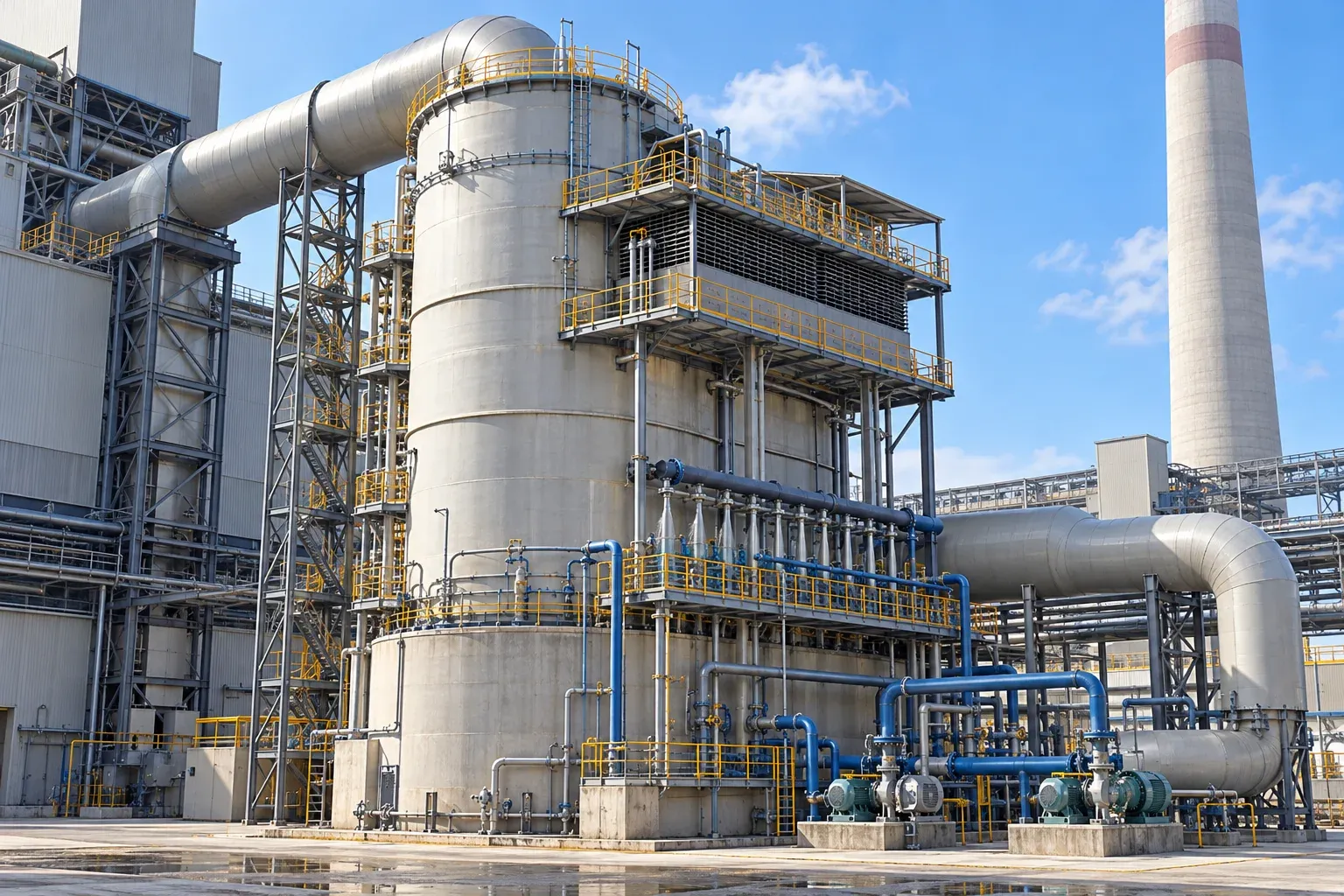
Wet Flue Gas Desulfurization (FGD) Systems
Wet flue gas desulfurization plants that remove sulfur dioxide from boiler and furnace exhaust, with the process route and absorber designed from your gas conditions and emission target.
- Model
- MM-WFG
- Product group
- Dust Collectors & FGD Systems
- Process routes
- Wet limestone-gypsum, seawater
- Limestone-gypsum and seawater process routes
- Absorber designed from gas conditions
- Oxidation air, slurry circulation and gypsum dewatering
- Heat exchange and wastewater treatment options
- Scope fixed in the project contract
Overview
What a wet FGD system does
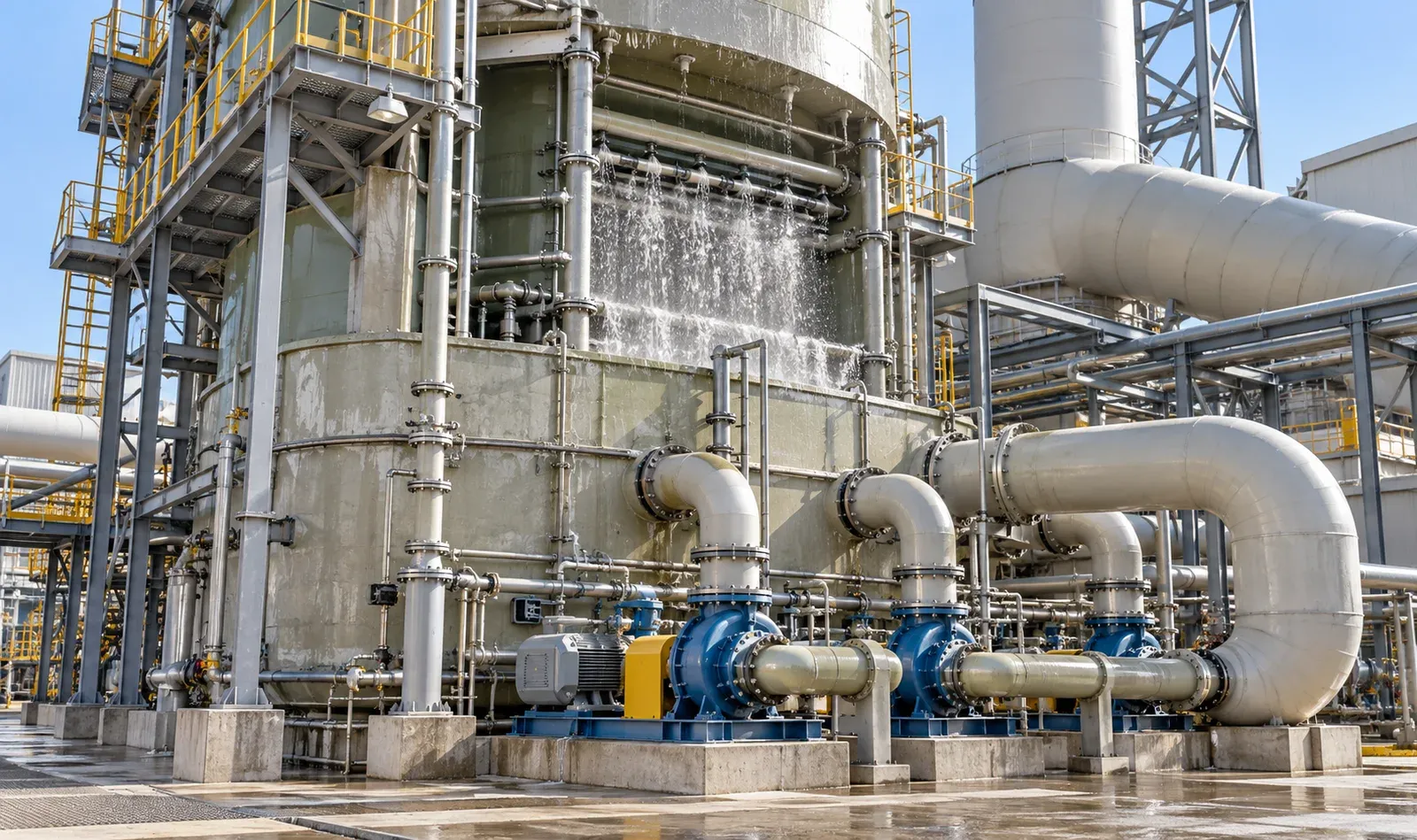
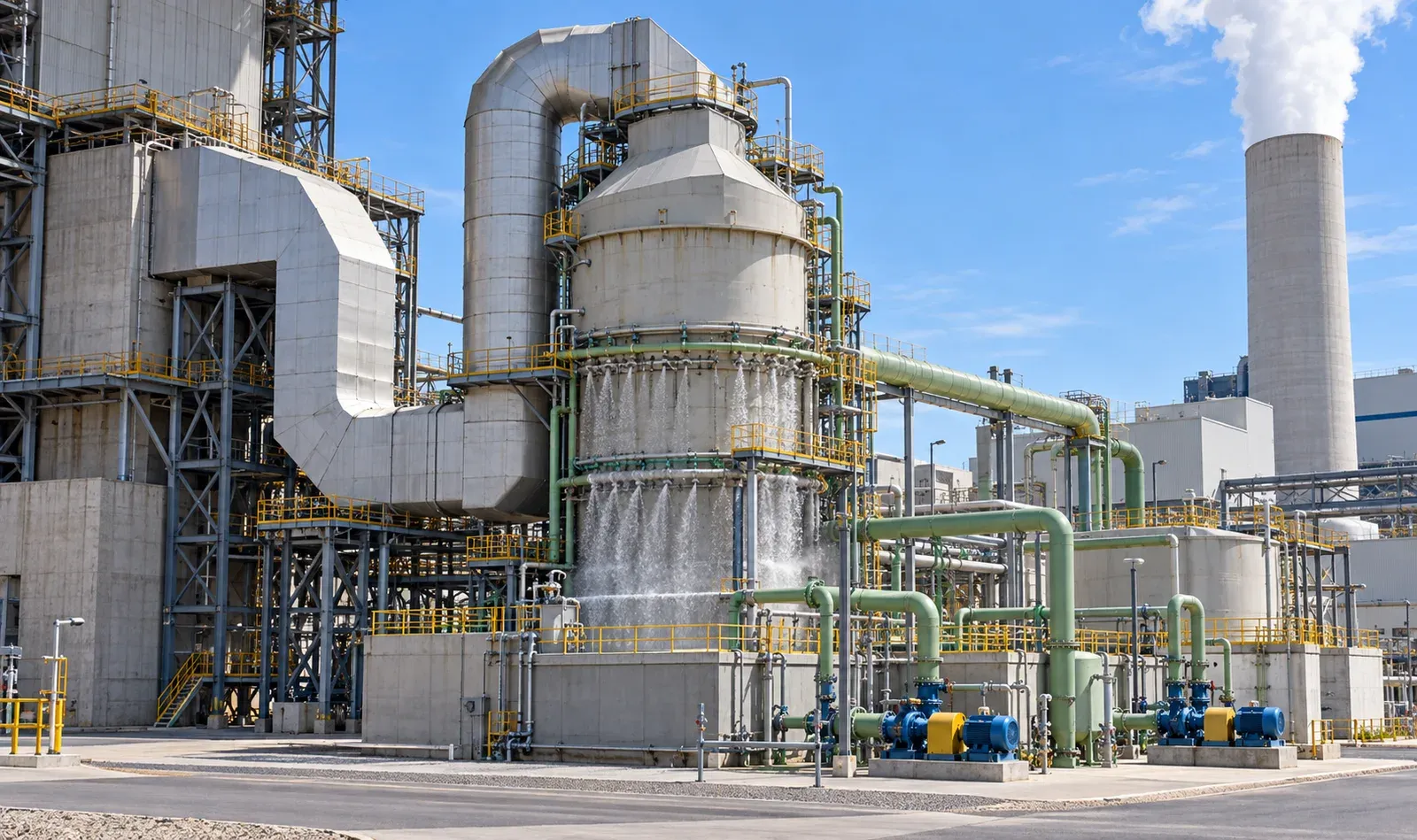
Burning coal, oil or other sulfur-bearing fuel releases sulfur dioxide into the flue gas. A wet scrubber brings the gas into contact with a liquid that absorbs the SO2 and converts it to a stable by-product. Our systems use either the wet limestone-gypsum process or a seawater process, depending on what the site offers.
Limestone-gypsum route
Ground limestone is mixed with water into slurry and sprayed through the gas in an absorber tower. Sulfur dioxide reacts to form calcium sulfite, which is oxidized with blown air into gypsum. The gypsum is dewatered and can be sold or landfilled, subject to local rules. This route suits sites with limestone supply and space for slurry handling.
Seawater route
Coastal plants can use seawater, whose natural alkalinity absorbs sulfur dioxide. The used water is treated and returned to the sea in line with local discharge requirements. It avoids limestone handling, but needs suitable marine conditions and permits.
Designed from your gas, not from a catalog
Gas flow, temperature, sulfur content, dust loading, layout space and the emission limit you must meet decide the absorber size, materials and the number of spray levels. Removal efficiency and pressure drop are set by the design and written into the contract for your gas conditions, not taken from a general figure.
Subsystems and scope
The scope can include absorber, circulation pumps, oxidation air, gypsum dewatering, gas heat exchange, wastewater treatment, electrical and controls. The boundary of supply is defined at the start so nothing is left unassigned.
Delivery
Large vessels may be fabricated locally to our drawings; pumps, instruments and internals are shipped from our factory. Commissioning support is part of the project plan.
Quotation
Use the quote checklist below and our engineers will reply with a written scope, drawings or a specification, and a clear list of what is and is not included. Questions on shipping, spare parts and installation are answered in the same reply.
Typical installation and site requirements
A wet FGD plant is built around the boiler or furnace it serves, so the site survey comes before the drawings. The absorber is a tall vessel, often 15 to 35 m including the outlet, and needs a foundation sized for the full slurry load. Plan floor space beside it for the limestone silo or day tank, slurry pumps, oxidation blowers and the dewatering skid, plus a drain pit that can take washdown water.
Utilities decide running cost: process water for makeup and mist-eliminator washing, compressed air for instruments, and a power supply for pumps and fans. Gas ducting should be short, with room for expansion joints and a drain at the lowest point. Material choices follow chloride level and temperature, so send a flue-gas analysis early. Also decide where gypsum goes: sale, landfill or a stockpile, because that sets the dewatering and conveying design. We review all of this against your drawings before quoting a layout.
Specifications
| Model | MM-WFG |
|---|---|
| Process routes | Wet limestone-gypsum, seawater |
| Sulfur dioxide removal | commonly 95–99% for limestone-gypsum absorbers |
| Liquid-to-gas ratio | about 8–20 L of slurry per m³ of flue gas |
| Absorber gas velocity | about 3–4.5 m/s in a spray tower |
| Slurry pH | about 5.0–6.0 in the absorber |
| Limestone fineness | ground to roughly 250–325 mesh |
| Gypsum moisture after dewatering | about 8–15% |
| System pressure drop | about 1,500–3,000 Pa across the absorber and mist eliminator |
Configurations
| Optional subsystems | Absorber, oxidation air, slurry circulation, gypsum dewatering, gas heat exchange and wastewater treatment, defined by contract scope |
|---|
Standard equipment
- Spray absorber tower with mist eliminator
- Slurry circulation pumps and spray levels
- Oxidation air blowers
- Limestone slurry preparation and feed
- Gypsum dewatering unit
- Control system with pH and density instruments
Options
- Booster fan
- Gas-to-gas heat exchanger or reheater
- Wastewater treatment unit for the bleed stream
- Bypass and isolation dampers
- Online emission monitoring connection
- Seawater route in place of limestone-gypsum
- Rubber or flake-glass lining upgrades
Frequently asked questions
Which route is better, limestone-gypsum or seawater?
It depends on your site. Limestone-gypsum needs limestone and slurry handling; seawater needs a coastal location and discharge permission. We compare both if both are possible.
Can you guarantee a removal efficiency?
Efficiency and emissions are fixed through the design and contract for your gas conditions. We do not quote a general figure.
What happens to the gypsum and wastewater?
Gypsum is dewatered and handled per local rules. Wastewater treatment can be included in our scope if needed.
How much space does a wet FGD system need beside the boiler?
It depends on gas flow and route, but the absorber tower, a slurry tank, pump house and dewatering area are the main blocks. The footprint scales with gas flow, and we draw the layout on your site plan.
Request a quote: Wet Flue Gas Desulfurization (FGD) Systems
Send your requirement and our engineers reply with the configuration, lead time and a quotation.
Related products
Environmental & Recycling · Single machine
1100 L Roller-Bin Waste Compactor Station
Environmental & Recycling · Single machine
240 L Two-Wheel Plastic Waste Bin