Four kinds of dumper, four kinds of site
A dumper is the machine that moves bulk material between where it is dug and where it is needed: soil, sand, aggregate, rubble, wet concrete. Most buyers think in tonnes, but the layout of the site decides the type long before the payload does.
| Type | Load class | Best on | Our models |
|---|---|---|---|
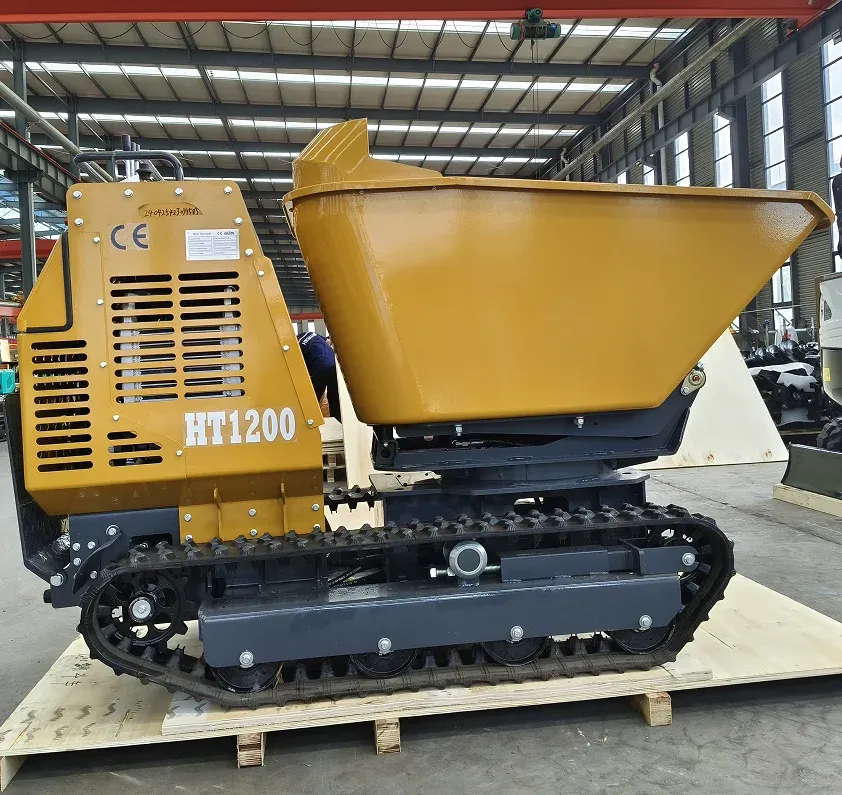
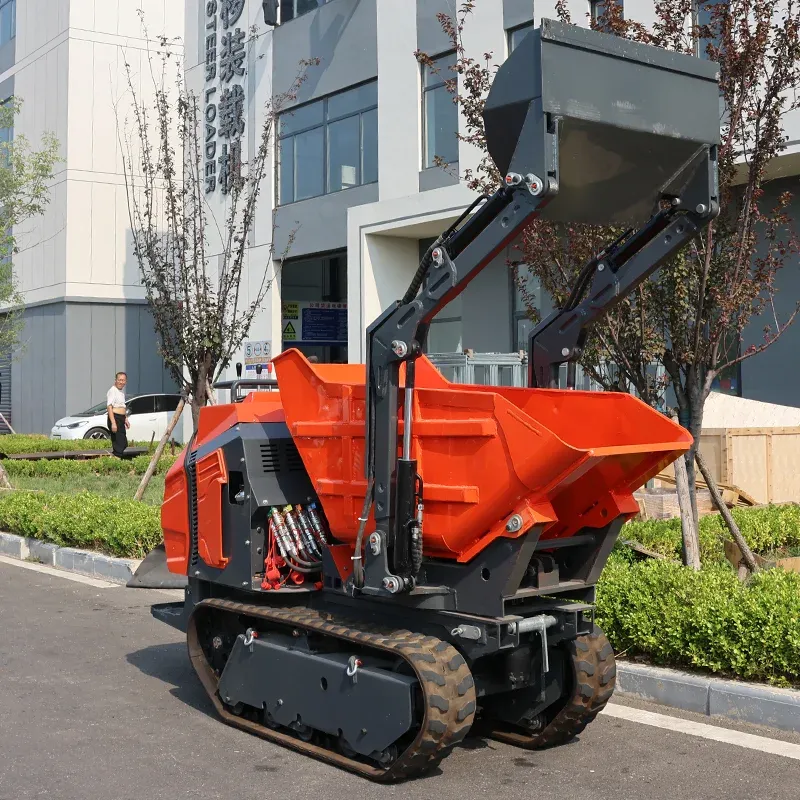
| Mini crawler carrier | about 0.3–1.5 t | Soft ground, gardens, narrow passages | 1.2 ton crawler dumper, front-shovel crawler dumper |
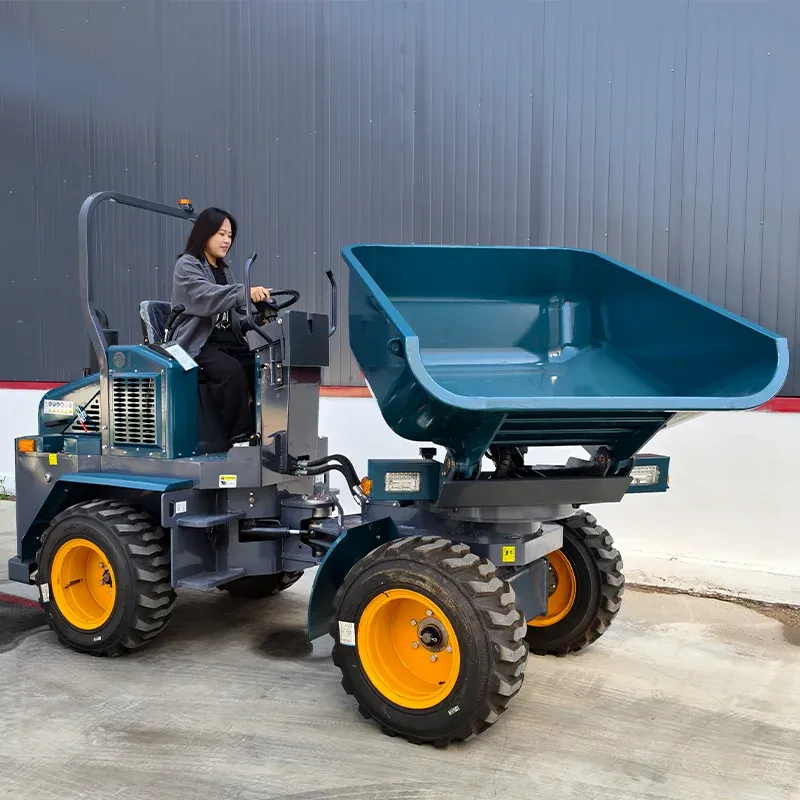
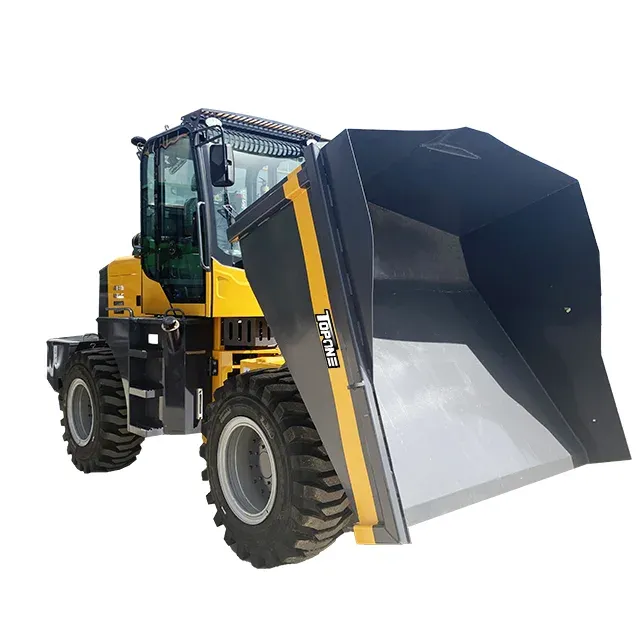
| Mini wheeled dumper loader | up to a 2 m³ bucket | Building plots, farms, mixed loading and hauling | 25 HP 4×4 dumper loader, 5 ton 4×4 with A/C cabin |
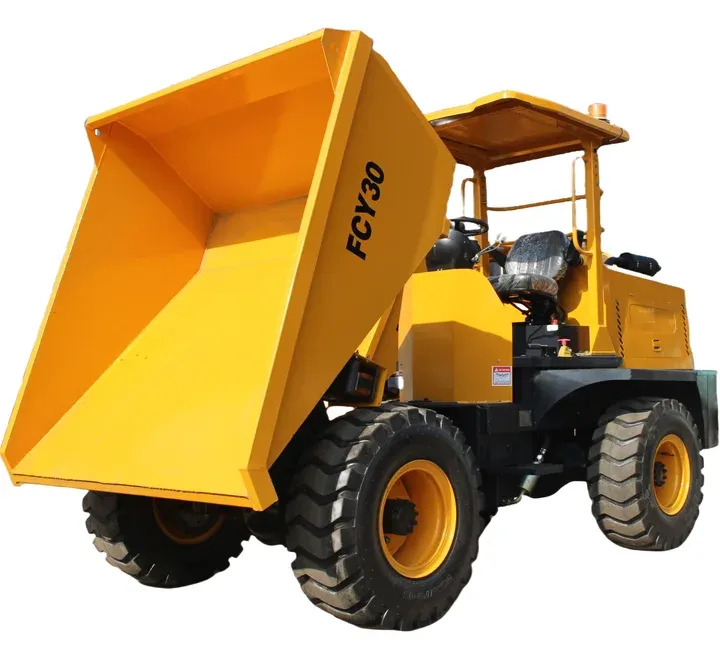
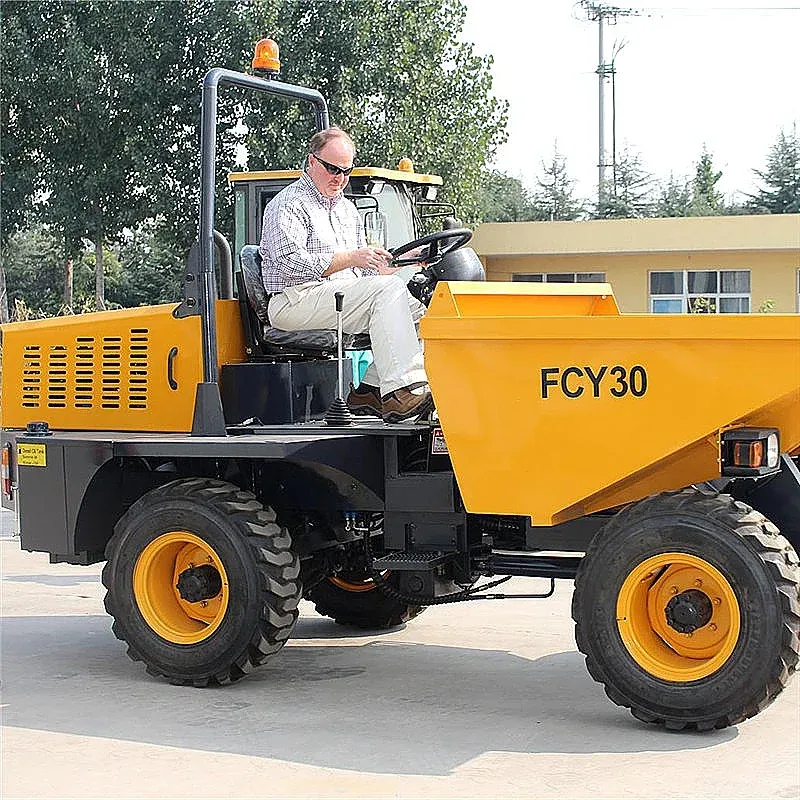
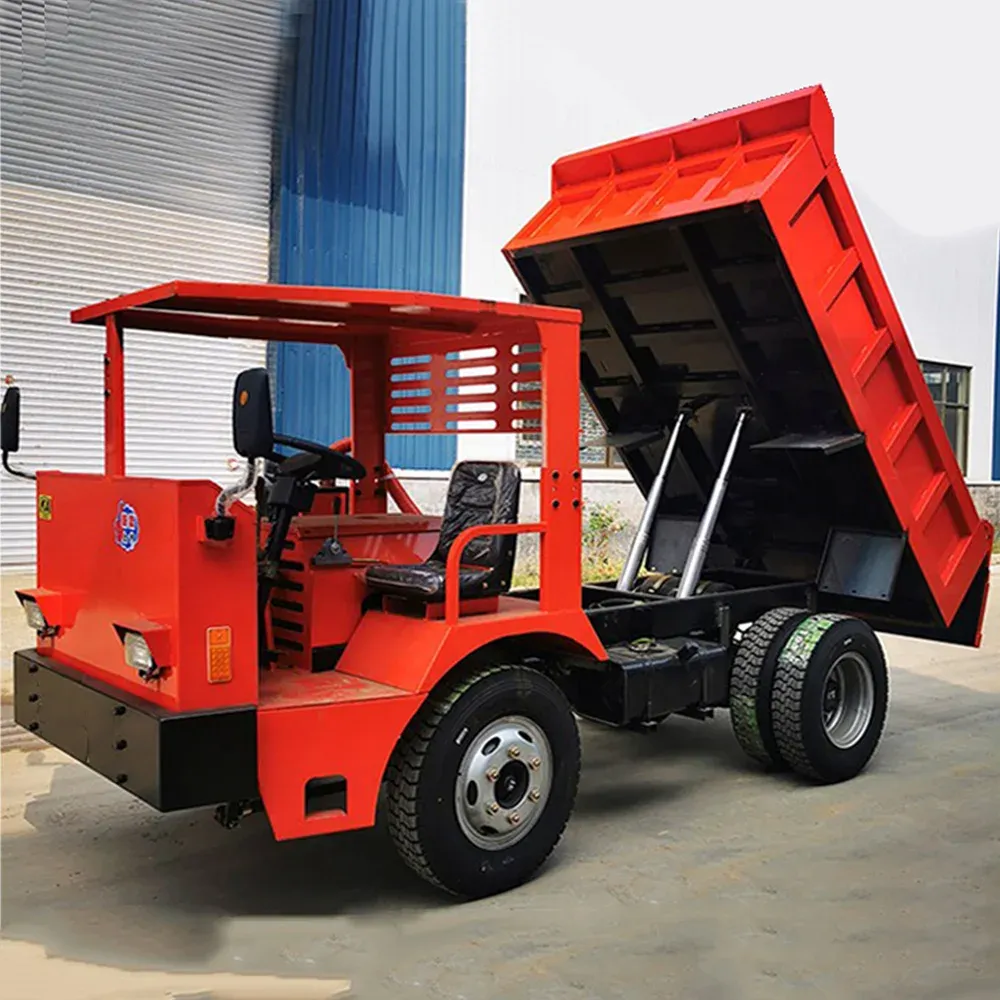
| 4×4 hydraulic dumper | 1.5 m³ to 5 m³ skip | Construction sites, earthmoving, aggregate | 1.5 m³ mini dump truck, 6 ton 4×4 forward-tilt |
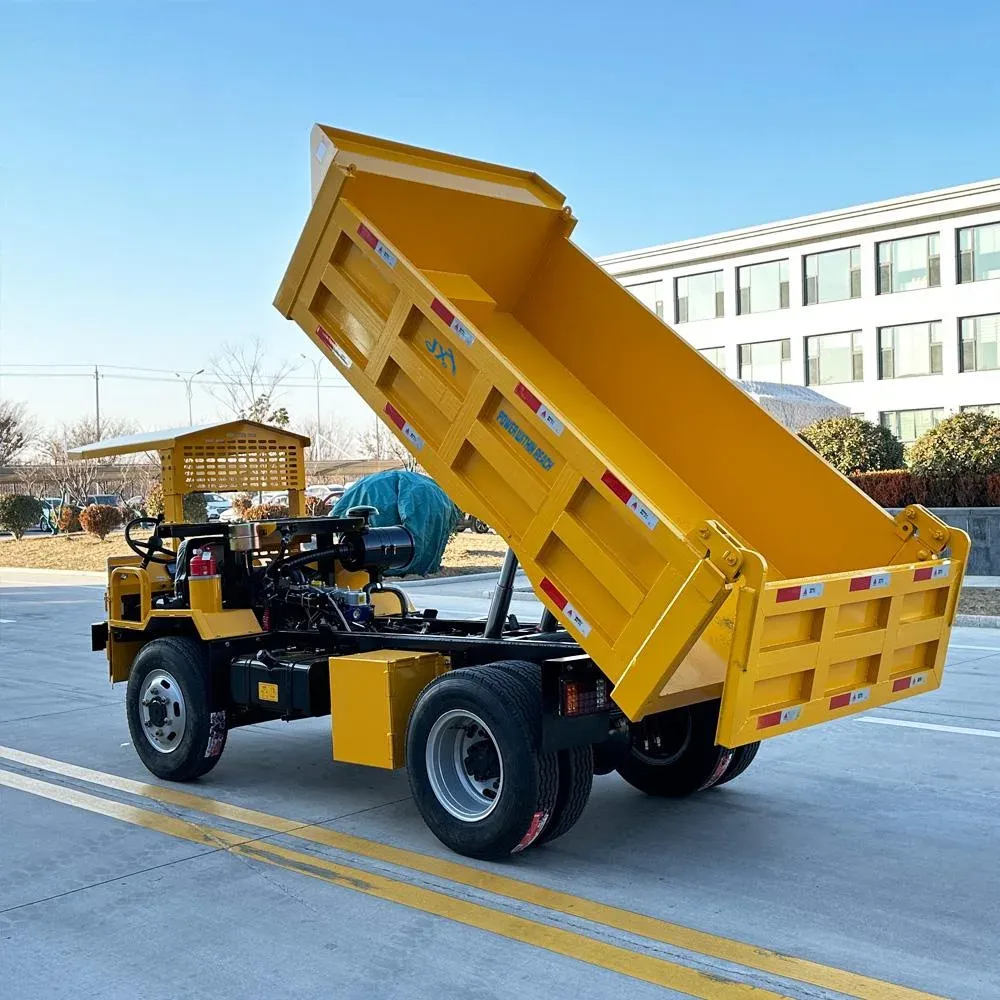
| Heavy and tunnel dumper | 5–8 t | Tunnels, mines, quarries | 5 ton underground dumper, 6–8 ton heavy-duty |
Our range covers eight models, all diesel. The smallest weighs 500 kg; the largest is rated at 6,000 kg with a build available up to the 8 t class.
Wheels or tracks
Rubber tracks spread the weight and let a dumper carry a heavier load over mud, snow or loose sand; the trade-off is speed, since small crawler dumpers typically travel at about 3–6 km/h. Wheeled 4×4 dumpers cover a long site in a fraction of the time. A practical rule: if a trip is longer than a couple of hundred metres on a firm surface, choose wheels. If the dumper must cross a finished lawn, a floor slab or a swamp, choose tracks.
Tipping and loading
- Forward tip is the standard layout, with the skip in front of the driver and the load dropped ahead. It is simple and cheap.
- Self-loading (front shovel or loader arms) removes the need for a second machine on small jobs. Both the front-shovel crawler dumper and the 25 HP dumper loader work this way.
- Swivel or three-way tip discharges to the side, useful when backfilling a trench alongside the machine. Ask if you need it; it is not on every model.
How big a dumper do you need
Work back from daily tonnage and cycle time, not from the headline load. Dense materials such as wet soil or wet concrete reach the weight limit well before the skip is full, so check the density as well as the volume. A 6 t model loaded by an excavator should fill in three to five buckets; if it needs ten, the dumper is too big for the loader.
Gradient matters as much as load. The underground model lists a 14° gradeability, and a typical figure for a loaded heavy-duty site dumper is 20–25°, but steep, wet or loose slopes cut that sharply. State your steepest ramp when you ask for a quote.
Hot, dusty and underground work
For long shifts in hot climates, the 5 ton 4×4 dumper with an air-conditioned cabin keeps the operator working at full speed. Dust blocks air filters quickly, so plan filter spares. For tunnels, headroom decides everything: the underground dumper is 1,450 mm high, or 1,920 mm with its safety shed fitted. Exhaust treatment and approvals follow your national mine rules, and we do not claim approval that has not been issued.
What to send for a quote
- Material and its density, and the load you want per trip.
- Haul distance, steepest gradient and ground condition (hard, muddy, sandy).
- Narrowest gate, passage or tunnel width and any height limit.
- Loader or excavator you will use, with bucket size.
- Wheel or crawler preference, and whether a cabin or canopy is needed.
- Climate, destination port and any emission standard you need.
If you also need to mix, look at the concrete equipment group; for loading, the mini excavators and skid-steer loaders are the usual partners. The whole construction and mining range is listed together, and you can send us your site details for a model recommendation.