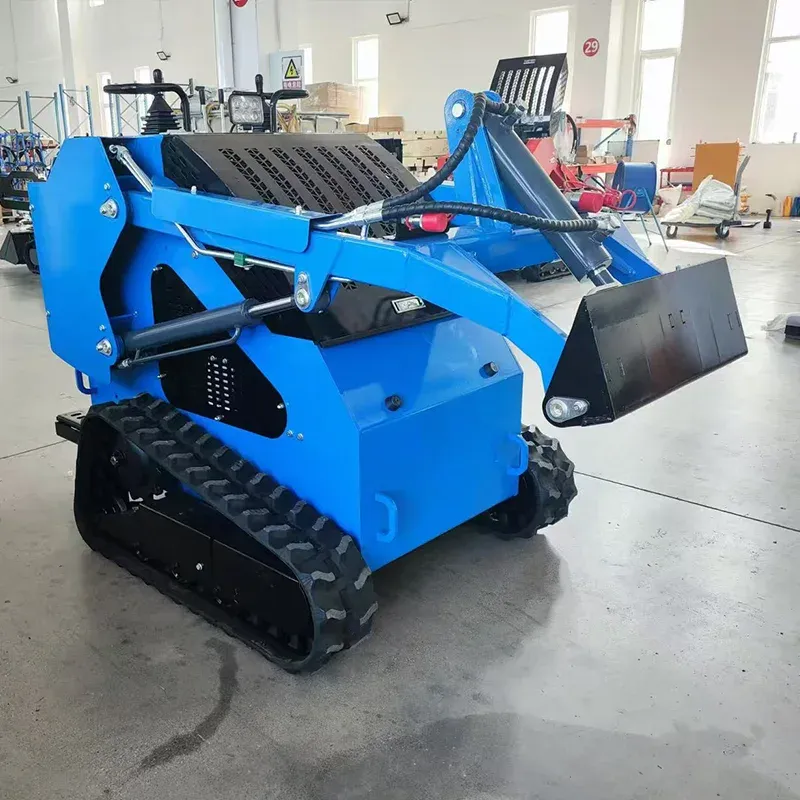
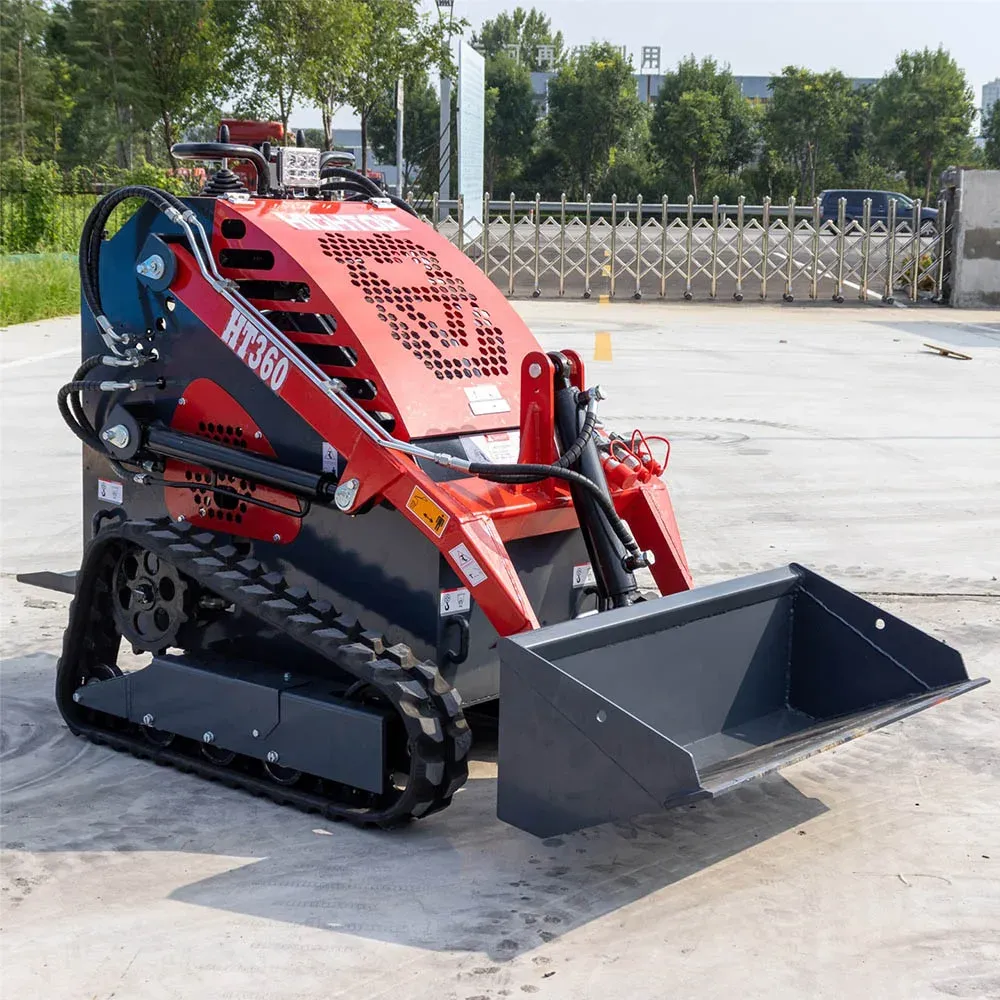
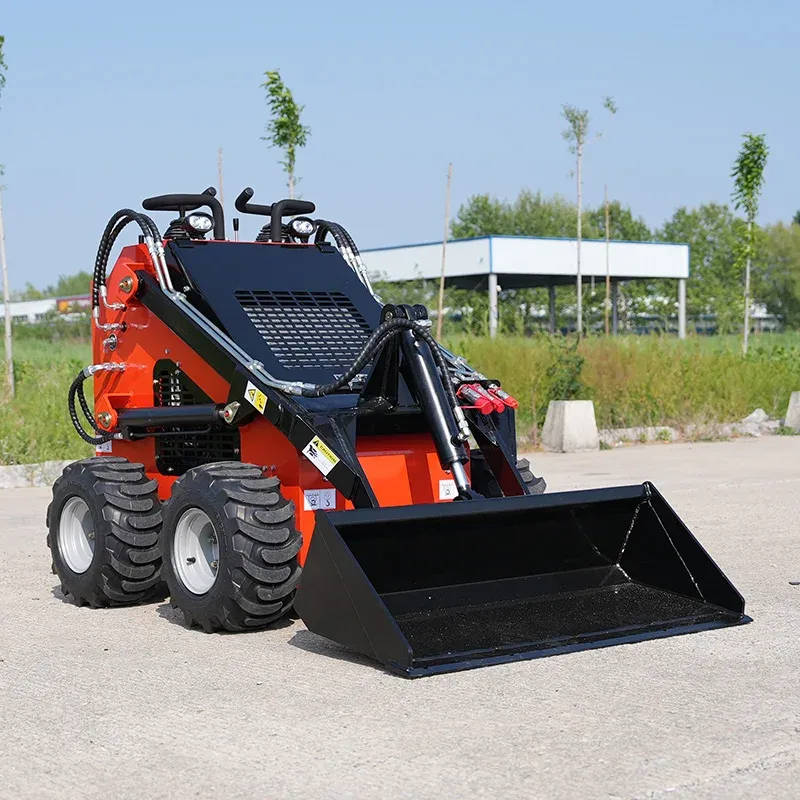
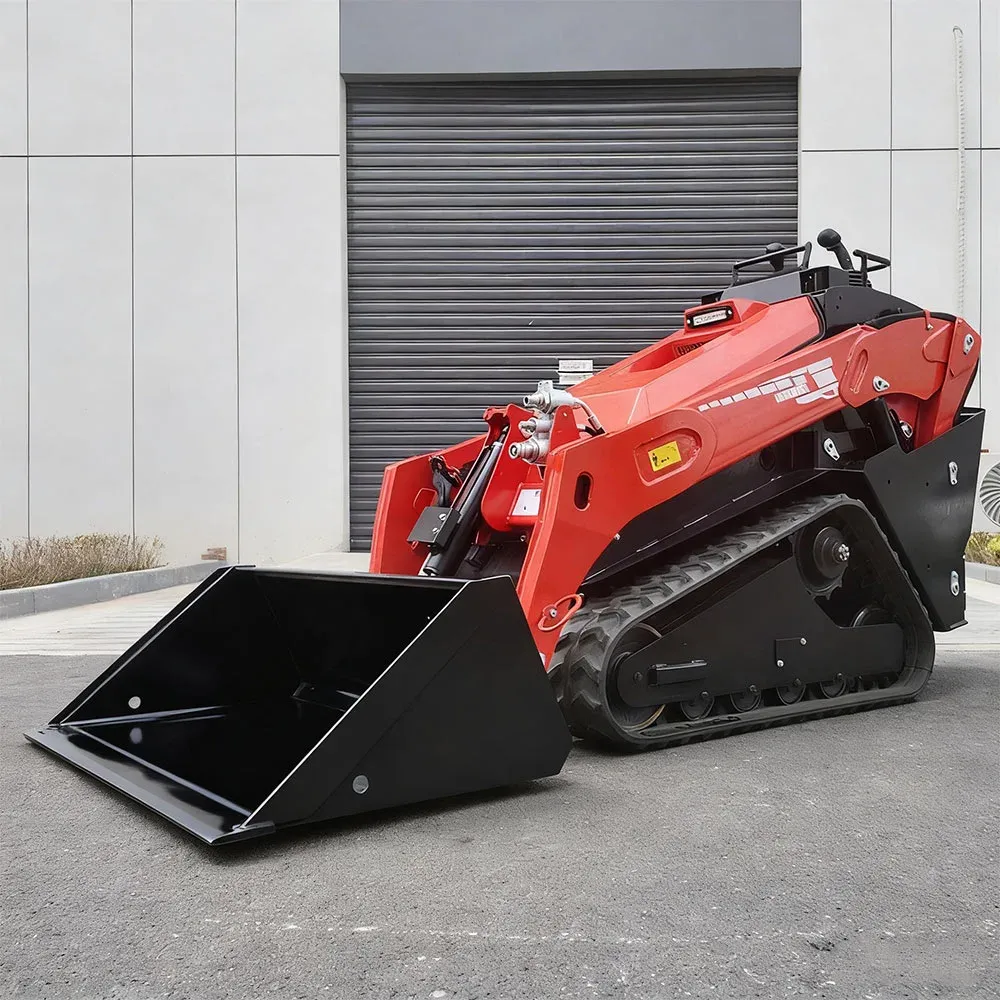
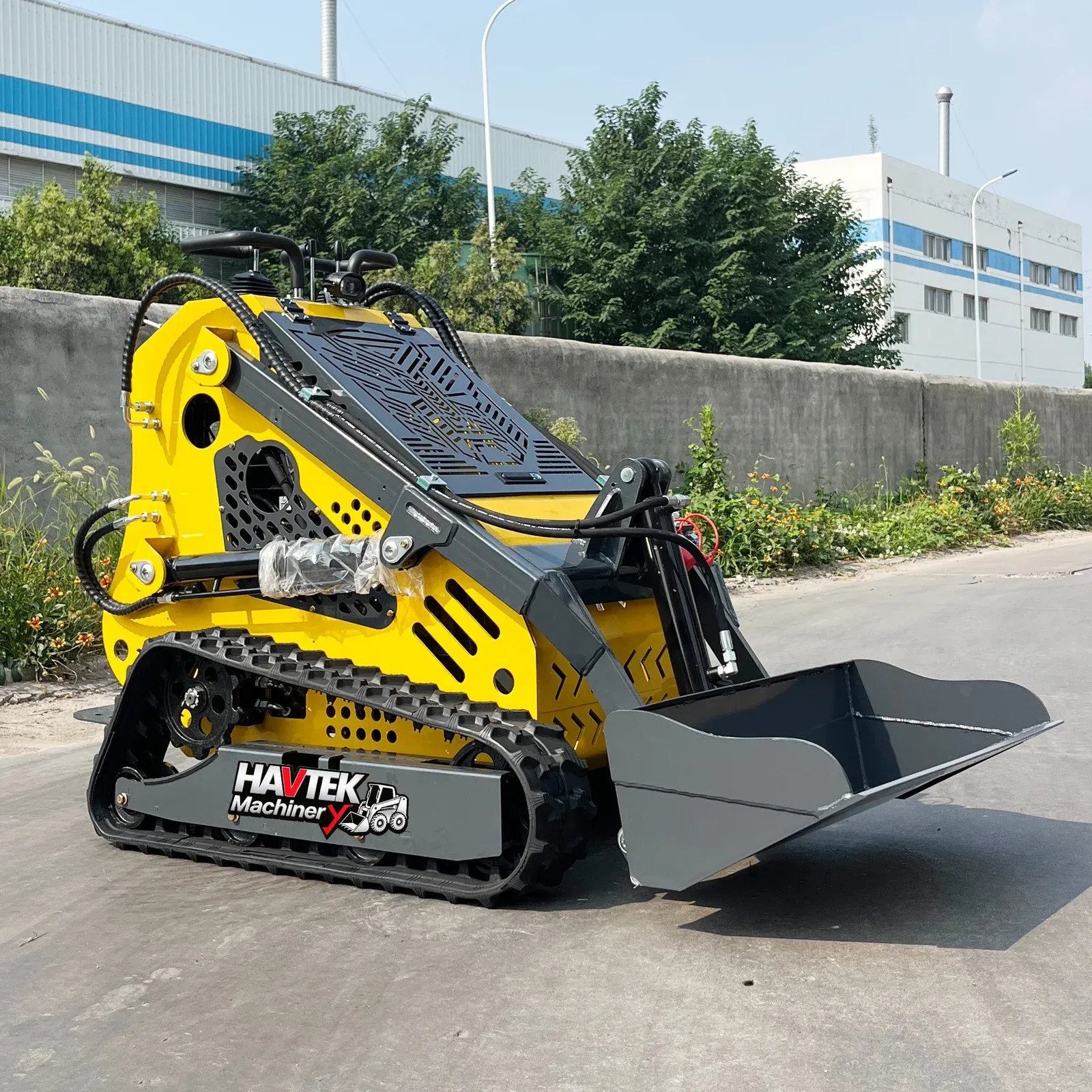
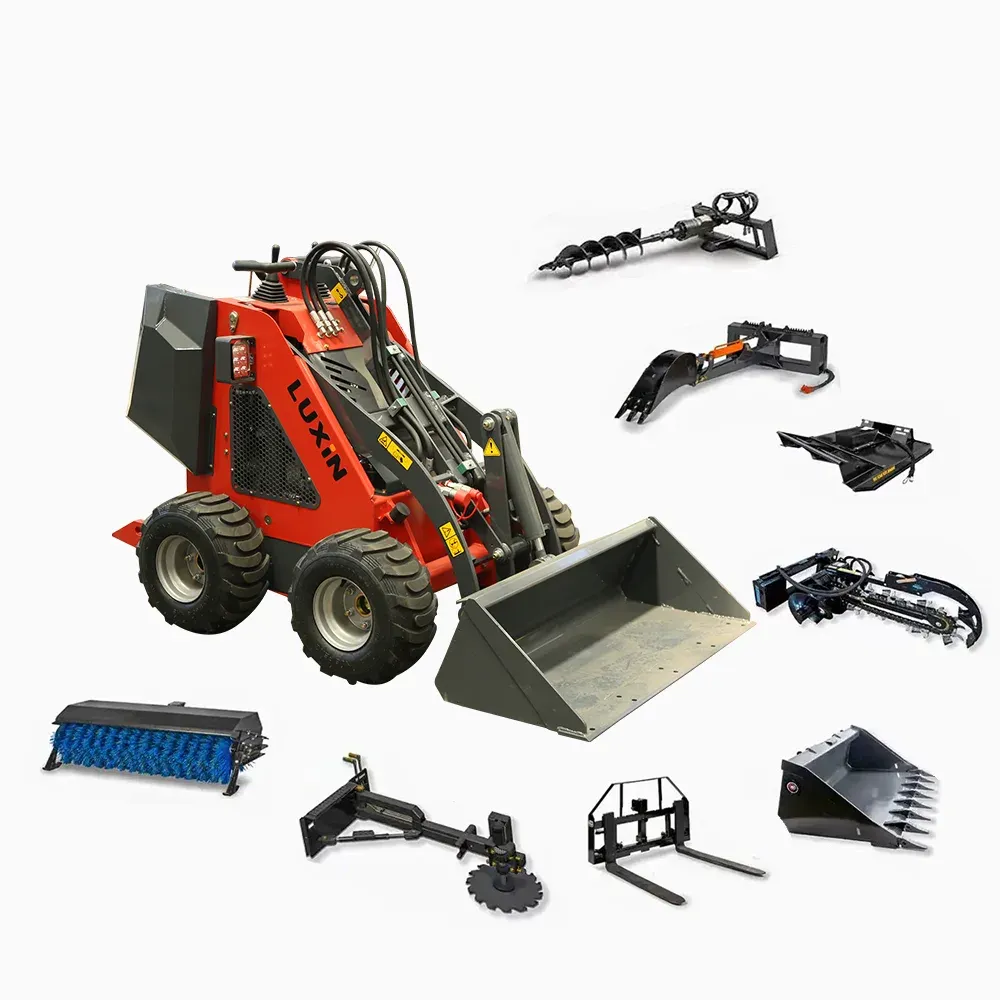
Where our range sits
Published frame-size guides put a small-frame skid steer at a rated operating capacity under roughly 1,750 lb (about 800 kg), with larger frames above that. Every machine in this group sits below that line. That makes this a mini-loader range: narrow enough for a greenhouse door or a farm gate, light enough for a small trailer, and honest about its limits. If you need to load trucks with tonne-class buckets all day, this is not that machine.
| Model | Drive | Power | Load figure | Notes |
|---|---|---|---|---|
| 375 kg multi-function | Tracks or wheels | 8.6–9.9 kW | 375 kg max | 940 mm wide, electric start, 0.08 m³ bucket |
| 380 kg class | Wheels | 13.5 HP (7.5–20 kW options) | 380 kg class | 0.3 m³ bucket, 1,951 mm pin height |
| 13.5 HP crawler | Rubber tracks | 13.5 HP | 300 kg bucket load | 900 kg machine, 30° climb |
| 17.2 kW 4×4 | Wheels, four-wheel drive | 17.2 kW diesel | 300 or 500 kg | 890 kg, 0.15 m³ bucket |
| 18.5 kW crawler | Rubber tracks | 18.5 kW | 560 kg rated, 600 kg max | 1,417 kg, 25° climb, CE / EPA / Euro 5 stated |
| 1,500 kg crawler | Rubber tracks | 7.5–18.6 kW | See product page | 0.22 m³ bucket, CE / EPA / Euro 5 stated |
Wheels, tracks or stand-on
Ground pressure drives this choice more than any other spec. A tracked machine floats on mud, sand, snow and lawn; a wheeled one is quicker on hard surfaces and tends to be cheaper to keep running because tyres cost less than a track undercarriage. Typical travel speeds for this size are about 8–12 km/h on wheels and 4–7 km/h on tracks. Our deeper comparison is in skid steer vs compact track loader.
For narrow access, the smallest units matter more than anything else. The 375 kg multi-function loader is 940 mm wide, which is what greenhouse and garden access calls for.
Power, hydraulics and what you attach
Engine power across the group runs from about 8.6 kW to 20 kW, diesel or gasoline depending on the model. For attachments the number to ask about is hydraulic flow. Typical values for loaders this size are around 15–45 L/min: enough for an auger, sweeper or snow blade, but not for every breaker. The 18.5 kW mini crawler is the strongest of the small crawlers; the 17.2 kW 4×4 wheeled loader is the quicker choice on hard yards.
If your main task is trenching rather than carrying, compare these with mini excavators. For carrying heavier loads over rough ground, look at site dumpers. The whole family sits under construction and mining equipment.
Operator position and safety
Mini loaders differ from full-size ones in how you ride them. Some of ours use a stand-on platform or a seat with a lap bar and safety frame, and the model page states which. Stand-on units are lighter and fit tighter spaces, but a seat is easier on the operator over a full shift. Whichever you pick, load the bucket low, keep the arms down while driving, and never exceed the listed load on a slope, because the safe figure drops when the machine tilts. Standard equipment on these models includes a safety frame, operator seat or platform, and work lights; a closed cab is listed as an option on most.
What to send for a quote
- Surface: concrete, gravel, mud, sand, snow or slope angle.
- Heaviest regular load in kilograms, and the lift height required.
- Narrowest door or gate and the transport vehicle.
- Attachments and how often you will change them.
- Fuel preference, and whether the emission marks on the model page matter in your country.
A short message through our contact page with those five points is enough to shortlist two models.