The three plant types we supply
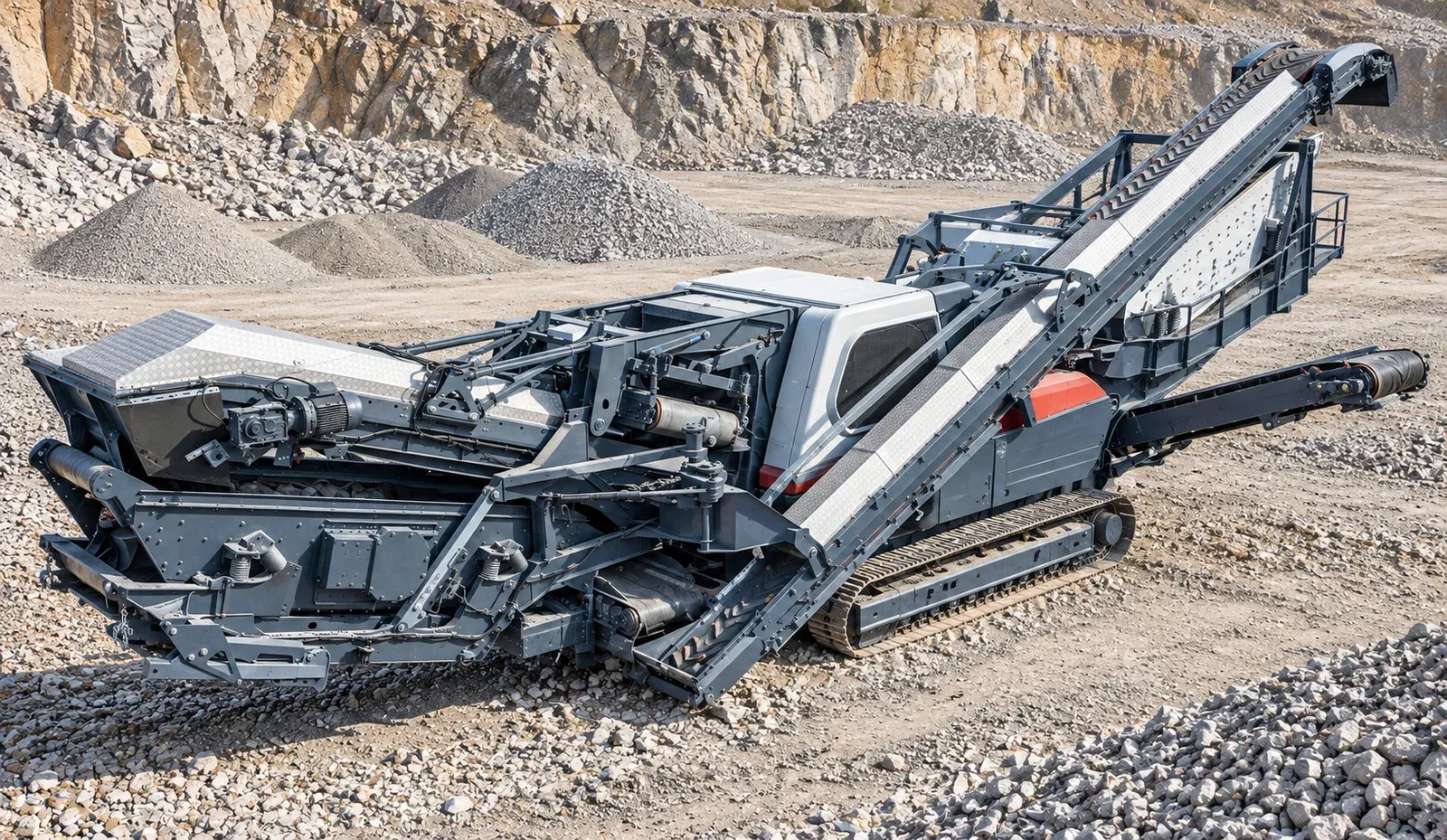
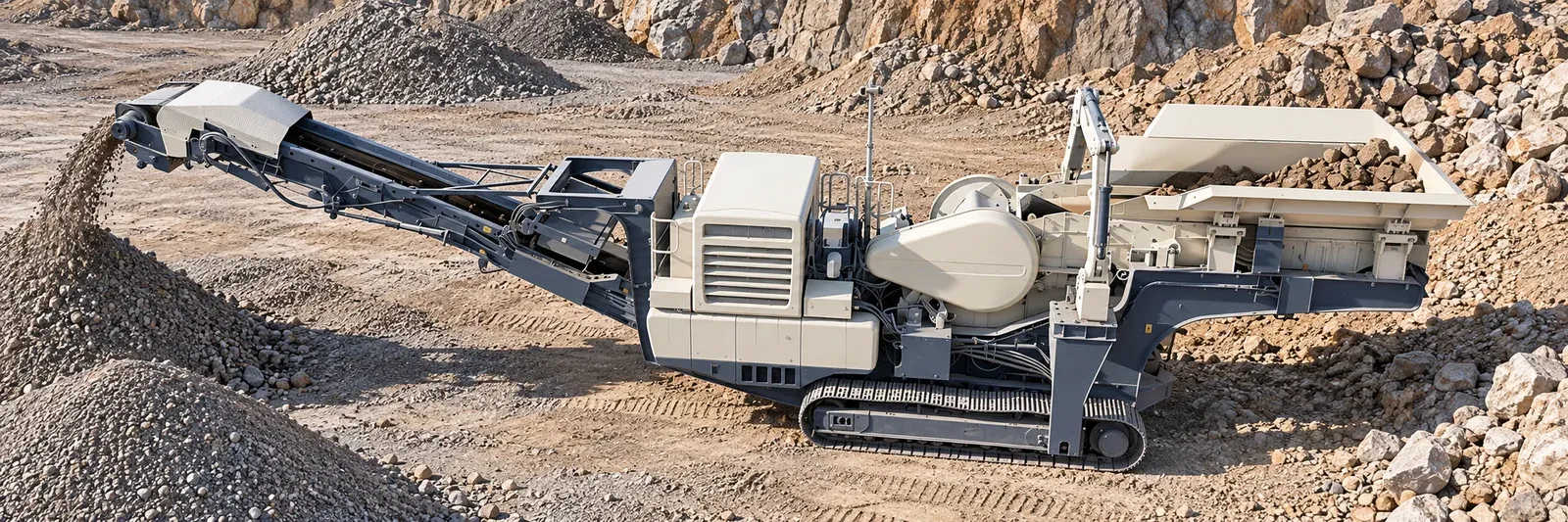
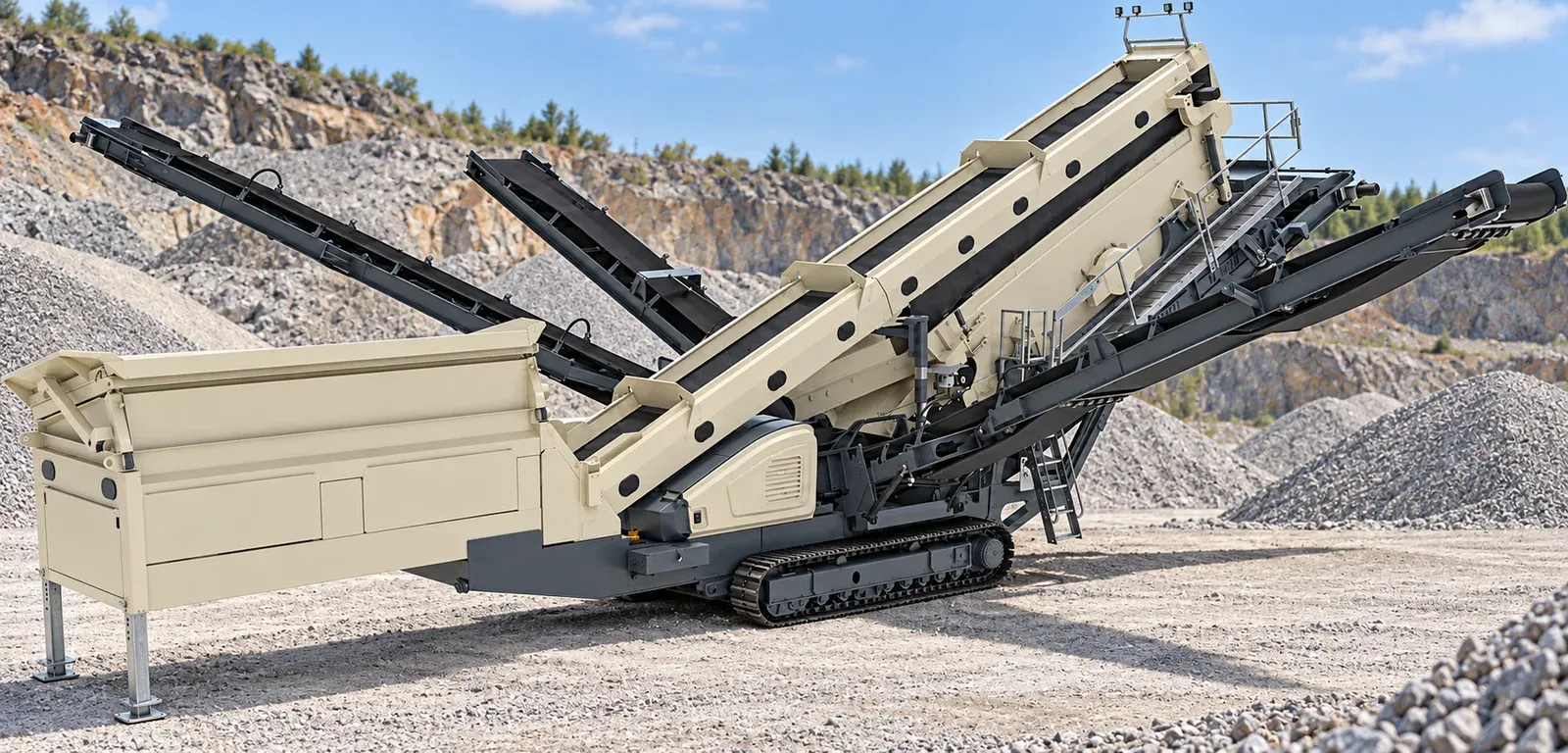
A mobile crushing plant puts the feeder, crusher, conveyors and engine on one chassis, so the machine goes to the material instead of the material going to a plant. We build ours on crawler tracks. They move themselves around a quarry face or a demolition site, and load onto a low-loader for longer trips.
| Plant | Role in the circuit | Typical feed | Typical output* |
|---|---|---|---|
| Crawler jaw crusher plant | Primary crushing | Quarry rock, mine rock, demolition concrete | about 100–400 t/h |
| Crawler impact crushing and screening plant | Crushing plus sizing | Concrete, asphalt, limestone, construction waste | about 80–300 t/h |
| Crawler screening plant | Grading, no crushing | Crusher product, sand, soil, recycled material | about 100–400 t/h |
*Typical class values; actual output depends on feed, setting and screen cut.
Choosing by material
Hard, abrasive rock. Granite and basalt wear impact hammers quickly. A jaw plant takes the first reduction, with the discharge setting adjusted from roughly 40 to 200 mm, and a secondary stage follows if you need finer product.
Concrete, asphalt and soft stone. The impact plant is the usual answer for recycling because it crushes and screens in one pass. Its magnetic separator pulls rebar out of demolition concrete, and the screen returns oversize to the crusher.
Already-crushed or loose material. If you only need to grade sand, soil or crusher product into sizes, a screening plant is cheaper to buy and run than another crusher. Mesh from about 5 mm to 100 mm changes in the field.
Our jaw crusher versus impact crusher guide goes through wear parts, product shape and running cost in more detail.
Sizing the plant
Three numbers drive the specification:
- Maximum lump size. This sets the feed opening. Typical openings run from 600 × 900 mm up to 1,000 × 1,300 mm.
- Target product size. Aggregate for road base is often 0–40 mm. Say whether you need one product or several; the number of screen decks decides this.
- Hourly output. Work out the tonnes you must produce per shift, then allow for realistic availability rather than the nameplate figure.
Engine power on plants of this class is often 150–300 kW, and operating weight roughly 30–60 t for the crushers and 15–40 t for the screen. Weight matters for shipping, so confirm it before you book a vessel.
Mobile or fixed?
A tracked plant is ready to work within hours of arrival and needs no foundations. That fits short contracts, multiple pits and demolition work where the rubble is created on site. A permanent quarry feeding the same plant for decades, at very high tonnage, can justify a fixed circuit. The wiki entry we used as a reference describes the same split between portable and stationary plant.
What to send for a quote
- Feed material, moisture and maximum lump size
- Product sizes and how many separate products
- Required tonnes per hour
- Rebar, metal or clay contamination
- Power: onboard diesel or site supply
- Site altitude and temperature
- Shipping limits: width, height and weight
Send those to our engineers through the contact page and we will propose a configuration. For the wider range of site machines, see construction and mining equipment, including our drilling rigs.