Short answer: For one farm or a small feed business pressing up to a few hundred kilograms an hour, a flat die feed pellet machine is the sensible start: cheaper, lighter and simple to run. When you need long daily runs, steady higher output or sales to other farms, move to a ring die pellet mill. In both cases budget for the grinder, mixer, conditioner and cooler around it, and for spare dies and rollers.
Flat die and ring die: how they differ
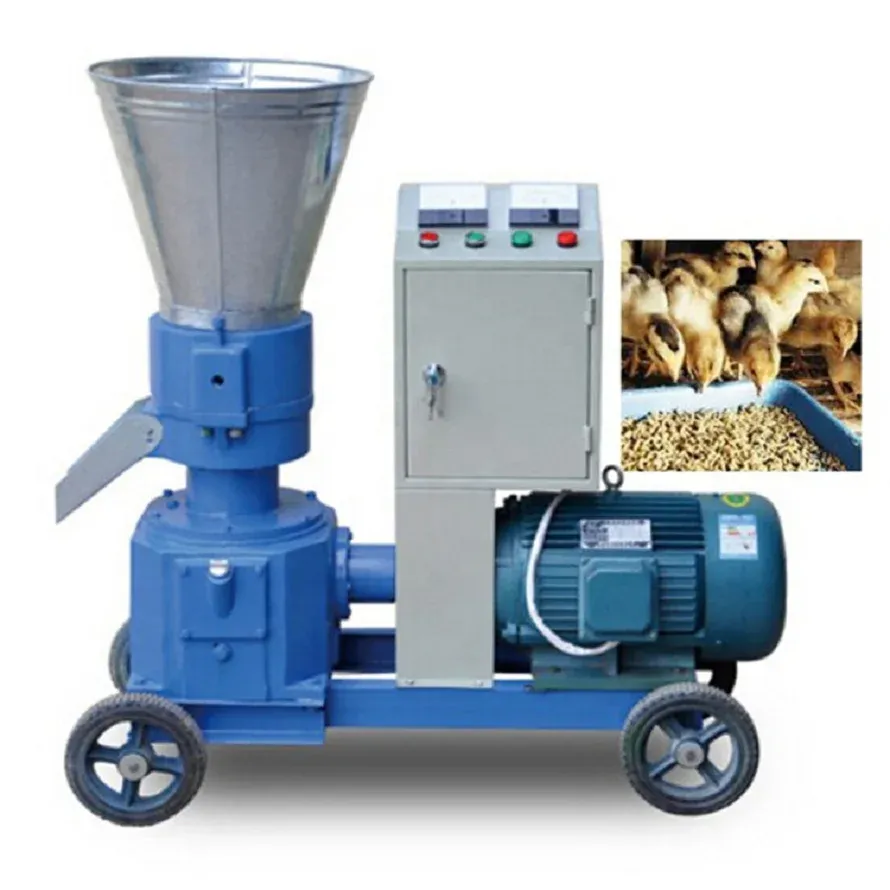
In a flat die machine the die is a horizontal plate and the rollers run on top of it. Meal drops in from the hopper by gravity. The machine is compact and mechanically simple, and the die can be changed by one person.
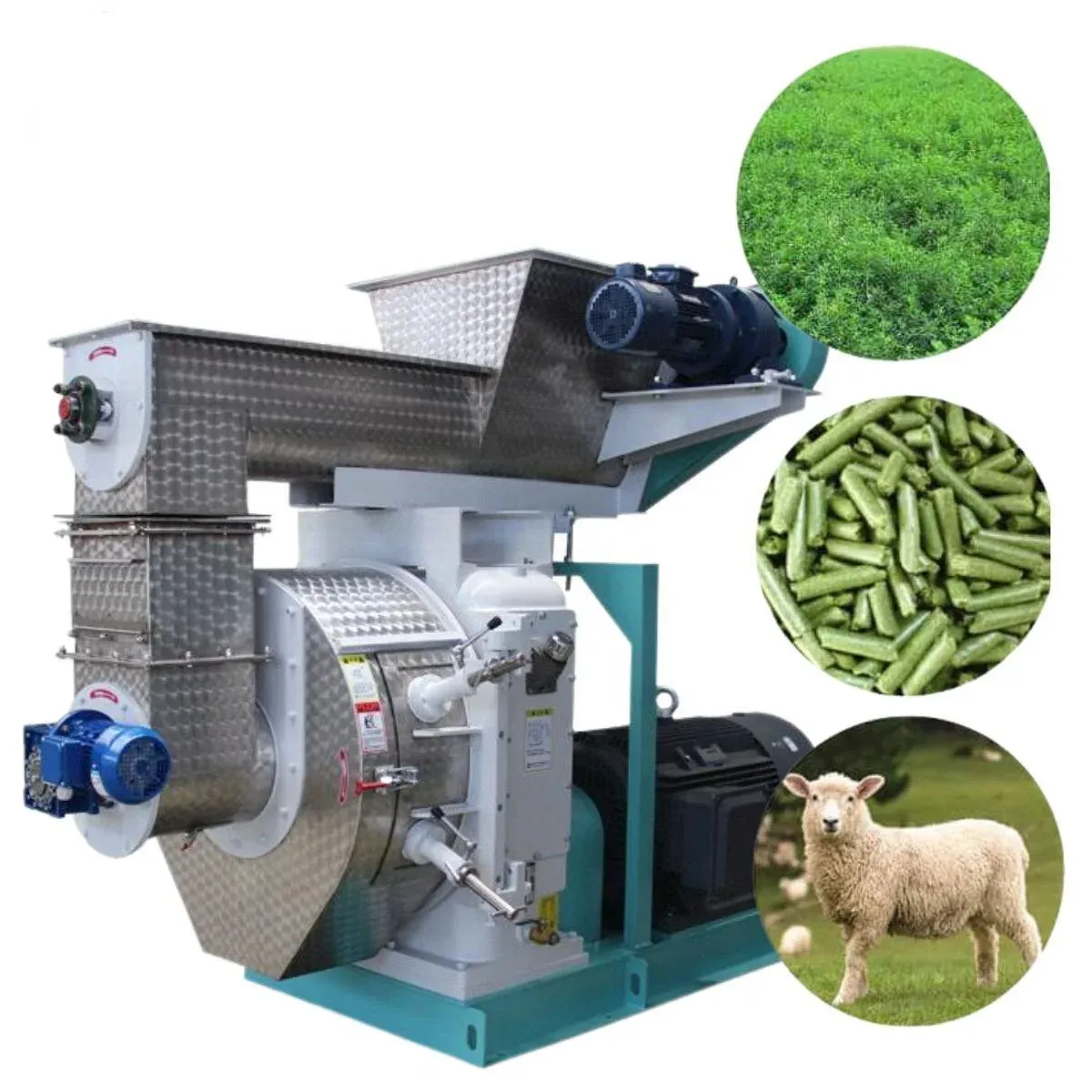
In a ring die mill the die is a hollow ring, the rollers press from the inside, and a variable-speed feeder pushes meal in at a controlled rate. There is more working die area and the load is shared, so the machine can run harder for longer. It is also bigger, heavier and costs more to buy and install.
| Flat die | Ring die | |
|---|---|---|
| Feeding | Gravity from hopper | Forced feeder with speed control |
| Typical user | One farm, small feed shop, start-up | Feed workshop, large farm, cooperative |
| Our example | 200 kg/h, 90 kg, 1,180 mm long | 15 kW, 800 kg, 2,800 mm long |
| Pellet diameter | Commonly 2-8 mm by die choice | 6-12 mm on our 15 kW mill |
| Power supply | 220 V or 380 V, motor 4.5-37 kW in the series | Three-phase for 15 kW |
| Learning curve | Short | Longer, plus conditioner and cooler |
Vendor guides disagree on whether flat or ring die pellets come out harder. In practice, hardness depends far more on the formula, particle size, moisture, steam conditioning and die compression ratio than on the die layout, and small flat-die roll-type mills can reach high durability: a Philippine evaluation of a 2 hp roll-type mill (about 76 kg/h, 4 mm pellets) recorded a pellet durability index of about 95.8% on its own mash.
Choosing by farm size
Match the machine to the hours you will really run it, not to a peak day.
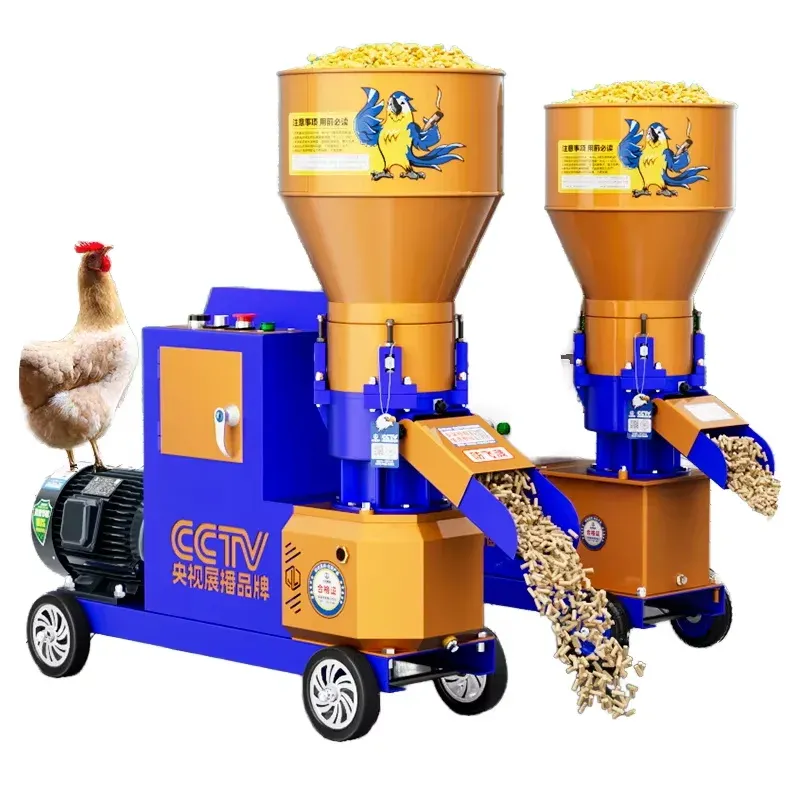
- A few hundred birds or pigs, or a mixed smallholding: a flat die machine such as our farm animal feed pellet machine covers it, with different dies for each species.
- A larger farm or a small feed business: a flat die machine can still work, but you may need two shifts, spare dies and a cooler. A compact 200 kg/h feed pellet machine with a cooler or crumbler option is a typical set-up.
- Daily output of a tonne or more, cattle or sheep forage pellets, or sales to neighbours: look at a ring die mill, for example the 15 kW ring die feed pellet mill.
Example: a farm wants 1.5 tonnes of pelleted feed per day. A 200 kg/h machine running 8 hours gives 1.6 t on paper. Real output is below the rating because of the recipe and pellet size, so assume 70% of it (our assumption, to be checked on your feed): 200 x 0.7 x 8 = 1,120 kg a day. To reach 1.5 t you would run about 10.7 hours, or press in two shifts. If that is the normal pattern, a larger machine is cheaper to run than a stretched small one. If the 1.5 t is only the busy-season peak, the flat die machine plus a few extra hours is fine.
What else you need around the pellet machine
The pellet machine is one station in a line. A typical farm set-up is:
- Hammer mill (grinder). Grain and forage must be ground to a consistent size. Oversize particles make weak pellets and wear the die.
- Mixer. Blends grain, protein meal, premix and minerals evenly so every pellet carries the same ration.
- Conditioner. Steam or water added before the die helps the meal bind and eases its passage through the holes. Small farms can start with water and add steam later; the ring die mill includes a conditioner chamber. In a Kansas State University trial on nursery pig feed, raising the conditioning temperature from 130 to 160 F (54 to 71 C) increased both pellet durability and pellet hardness, so conditioning is worth planning for even on a small line.
- Pellet machine. Press, cut, collect.
- Cooler and sieve. Pellets leave warm and soft. Cooling and drying them before bagging prevents mould in humid climates, and a sieve removes fines.
- Crumbler (optional) for starter feed, then a bagging scale and a dry store.
Die and roller wear
On both types the die and rollers are the wear parts. Abrasive material (sand, bone, stones) and metal fragments accelerate wear, so clean the raw material and keep a magnet in the line. Clean the die holes after each shift, check the roller gap, and grease bearings at the points the manual lists.
Order a spare die and roller set with the machine, and measure how many tonnes the first set presses on your own feed.
Power supply and climate
- 220 V single-phase or 380 V three-phase: our small machines are supplied for 220 V or 380 V or customized, with the motor matched to your supply. A 15 kW ring die mill needs three-phase. Tell us the voltage, phase and frequency (for example 380-415 V 50 Hz or 460 V 60 Hz) before we quote.
- Weak grid or no grid: the small flat die machines can be quoted with a diesel engine drive instead of an electric motor.
- Hot, humid sites: cooling and drying matter more than the press; warm pellets bagged in a humid store go mouldy.
Honest trade-offs
- A flat die machine is the cheaper start, but at long daily hours its die wears faster per tonne and output stays limited.
- A ring die mill runs harder and longer, but costs more and needs three-phase power, a conditioner and lifting gear.
- Too big a machine sits idle; too small means overtime.
Buyer checklist
Tell the supplier:
- species and the feed formula, or at least the main ingredients
- target output per hour and hours per day
- pellet diameter for each species
- voltage, phase, frequency, and whether grid power is reliable
- whether you already have a grinder, mixer and cooler
Check on the quote:
- the motor power and the output rating, and what formula that output is measured on
- how many dies are included and what diameters
- the spare die and roller set, and whether it is in the price
- whether the conditioner, cooler and crumbler are listed or separate
Fish feed and fuel pellets
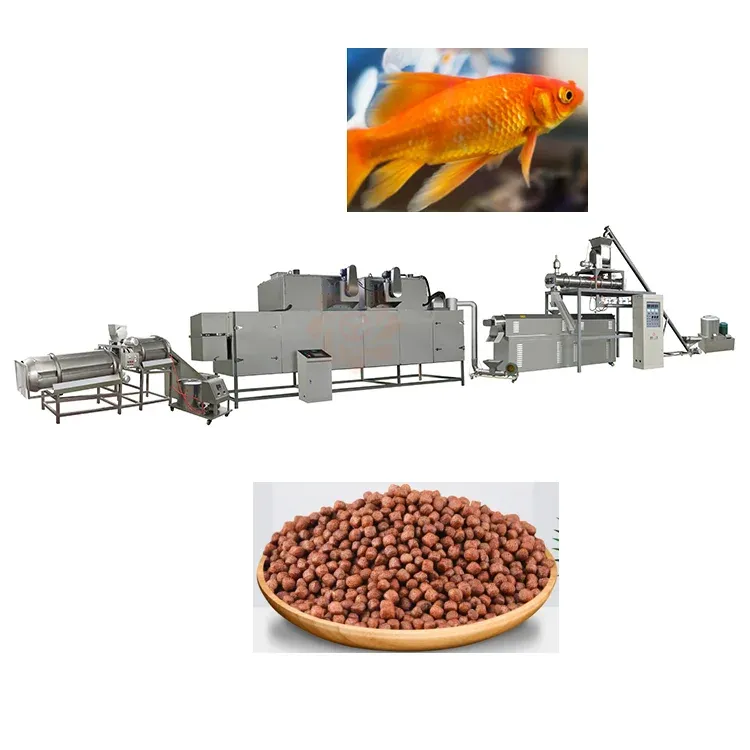
Floating fish feed needs an extruder: see our fish and pet feed extruder line. Fuel pellets are a different machine class and are not covered here.
If you tell us your species, daily tonnage and local power supply, our engineers can suggest a flat die or ring die set-up and list the other machines it needs. You can also browse the full range under Agriculture and Livestock.