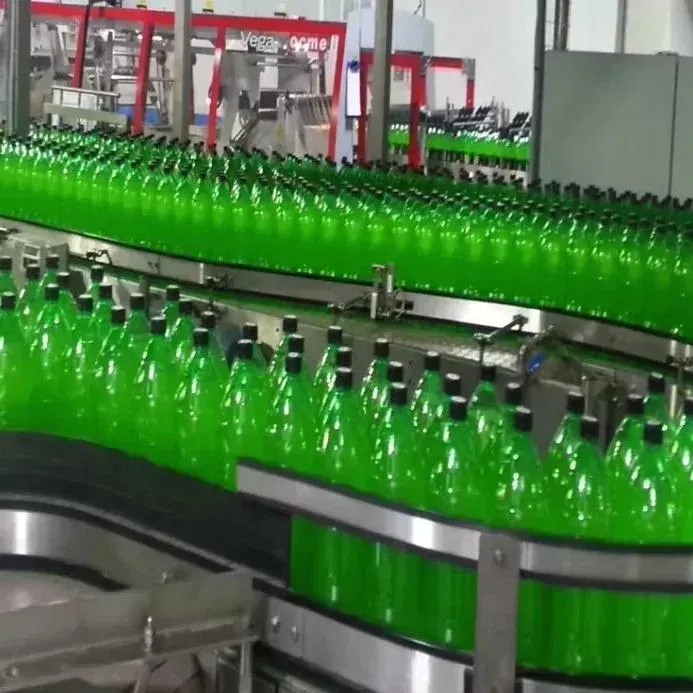
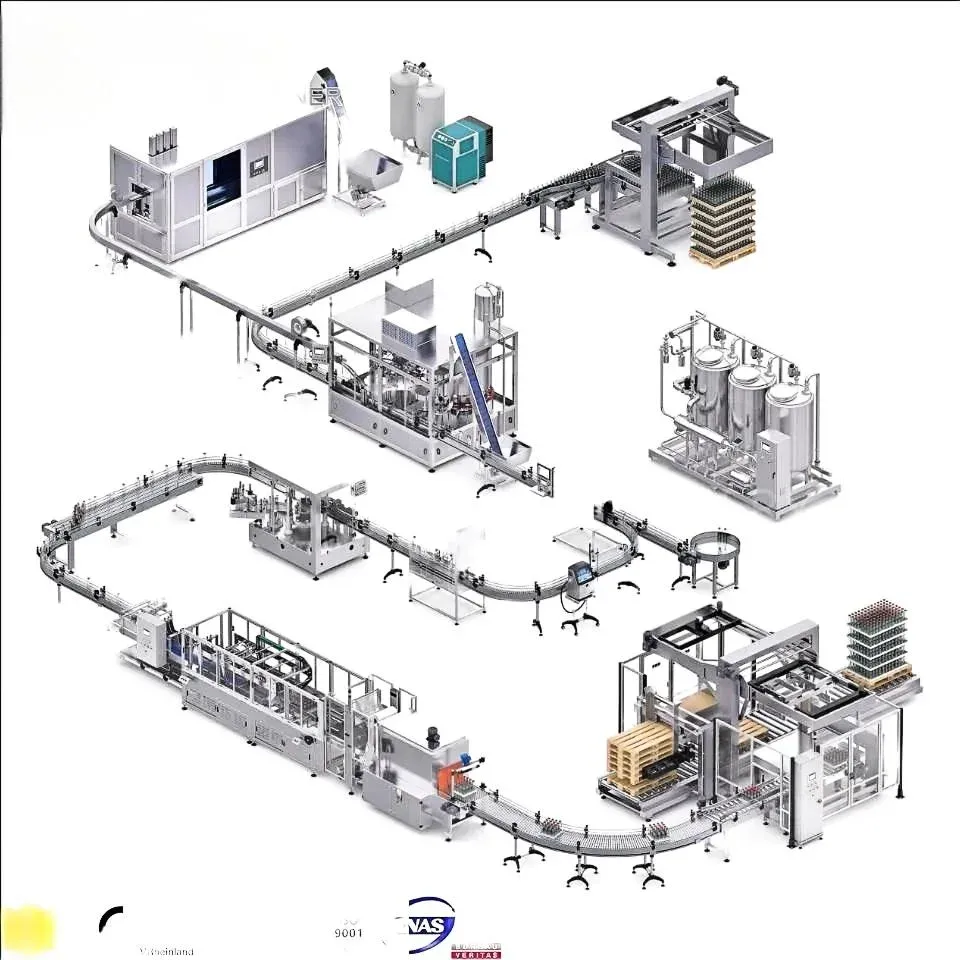
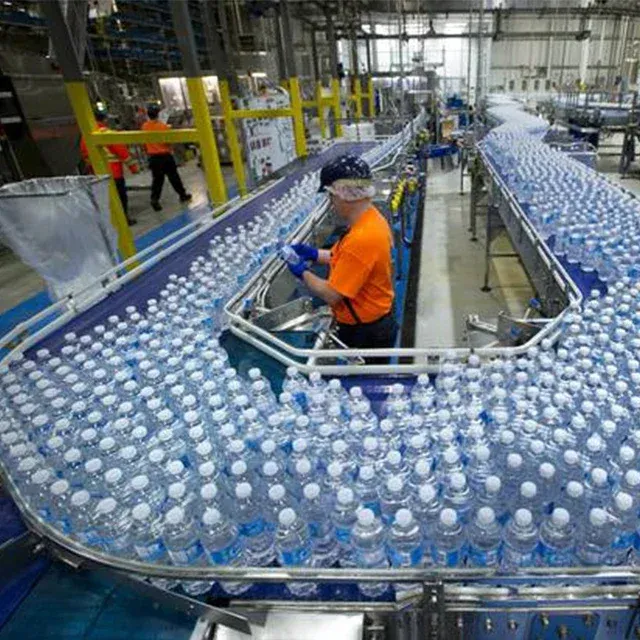
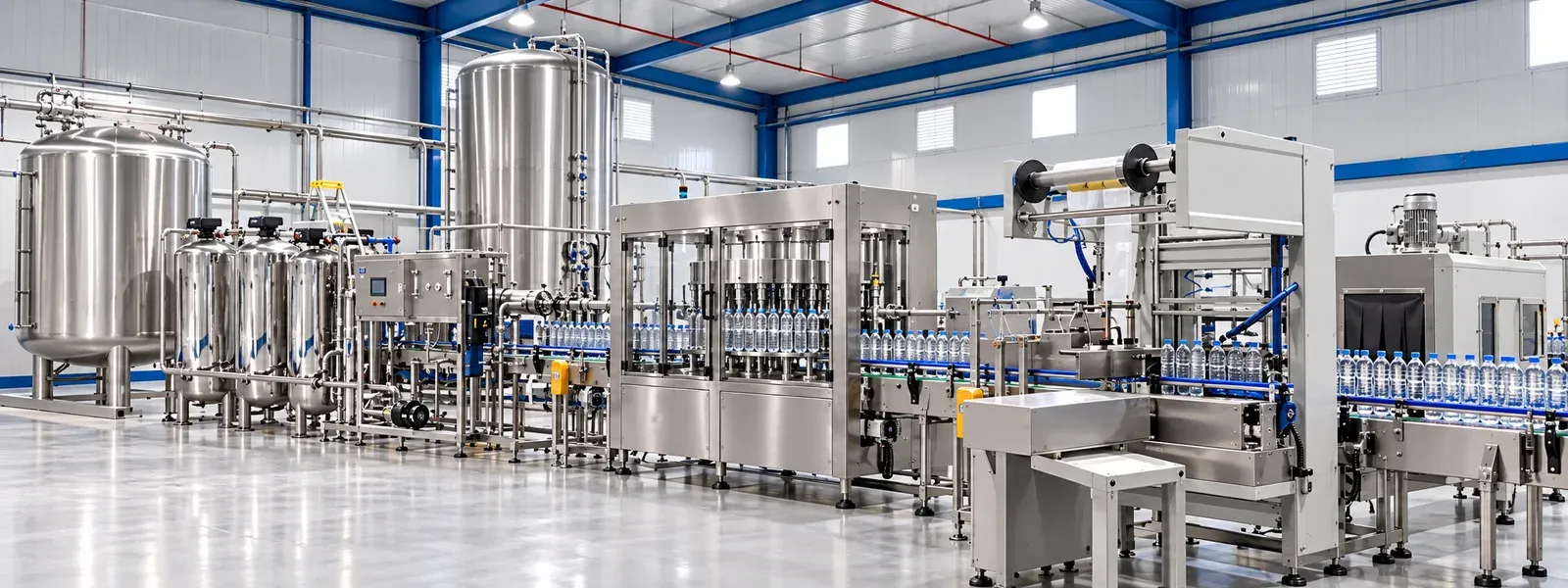
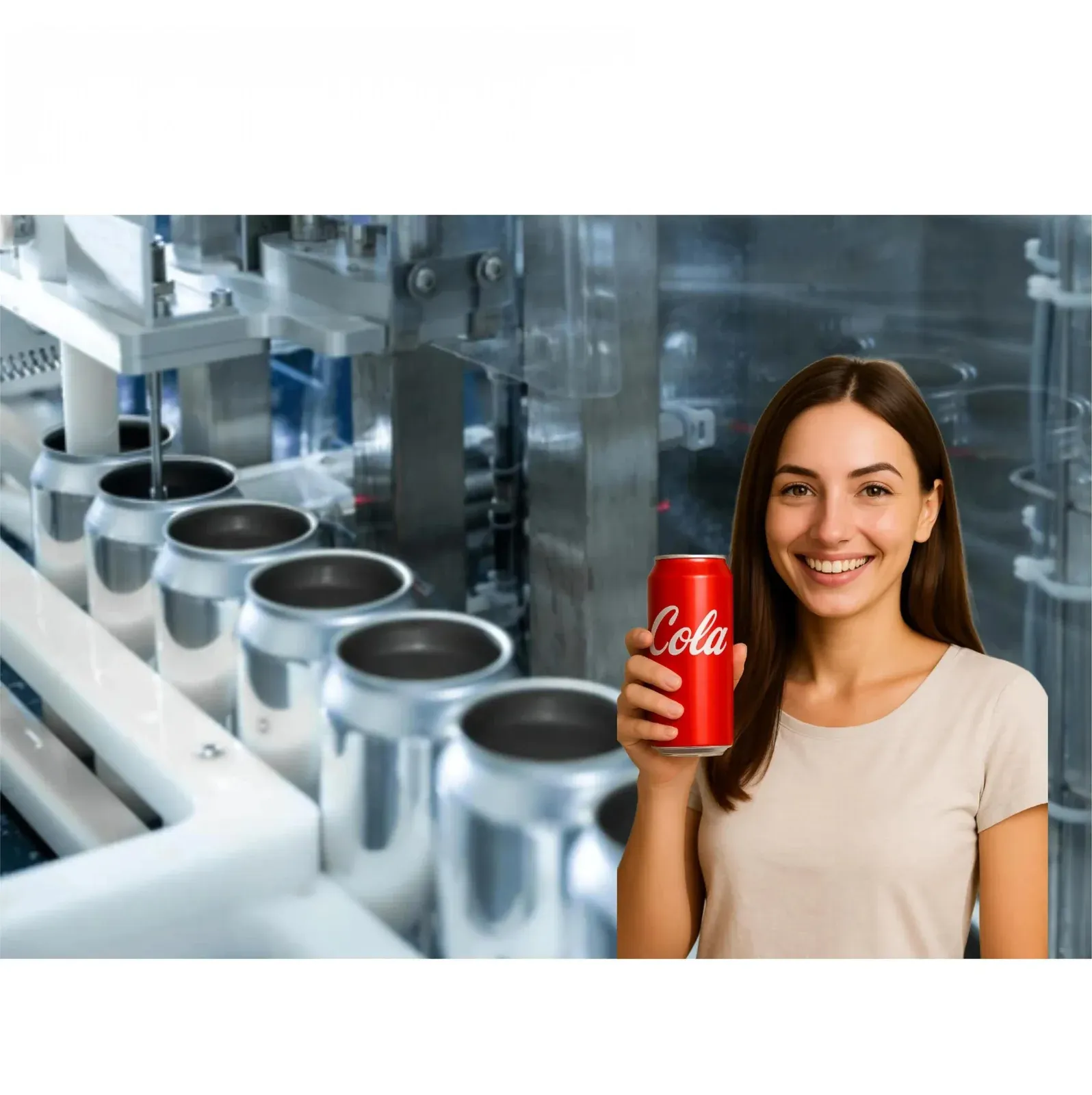
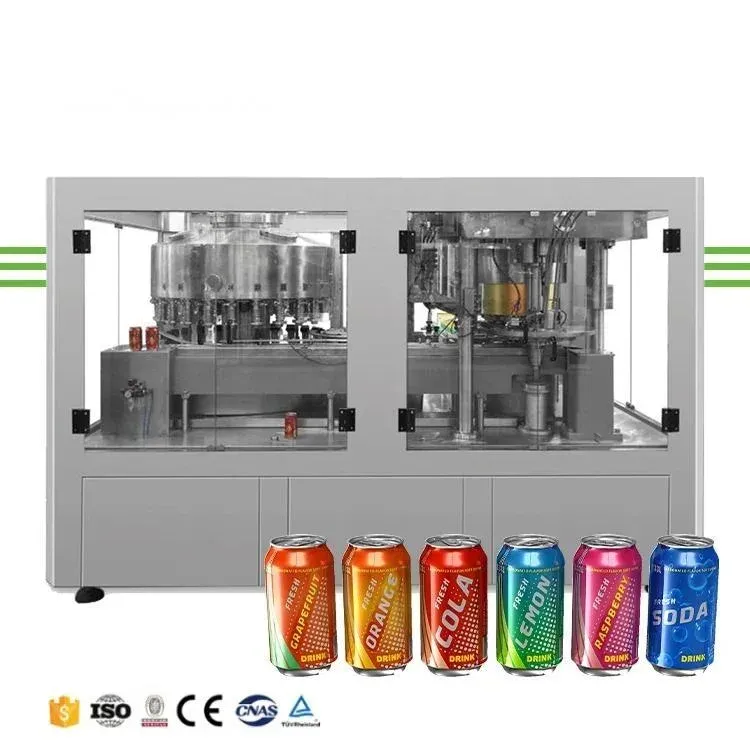
Search results for bottling lines are mostly single machines with a rated speed and no hint of what surrounds them. A working line is a chain: water or syrup preparation, container supply, rinse-fill-cap, then labelling and packing. The filler is only the middle link, and the drink decides how it is built.
Choose by drink and container
| Line | Drink and container | Capacity in our range | Voltage |
|---|---|---|---|
| PET water filling line | Mineral or purified water, 200-2,000 ml | Typically 18-32 fill heads | 380/415 V |
| Complete PET water plant | Drinking water, treatment to packing | Reference 6,000 BPH | Set by project |
| Carbonated PET line | Soda and juice, 200-2,000 ml | 4,000 / 6,000 / 8,000 / 12,000 BPH | 380 V |
| Carbonated soft drink line | CSD in PET | 7,500 BPH, +/-1 mm fill level | 220/380/415 V |
| Glass bottle line | Juice, flavoured water, milk | 4,000 / 8,000 / 12,000 / 16,000 BPH | 220/380 V |
| Can filler | 250 and 330 ml cans | Typically 3,000-10,000 cans/h | Per customer |
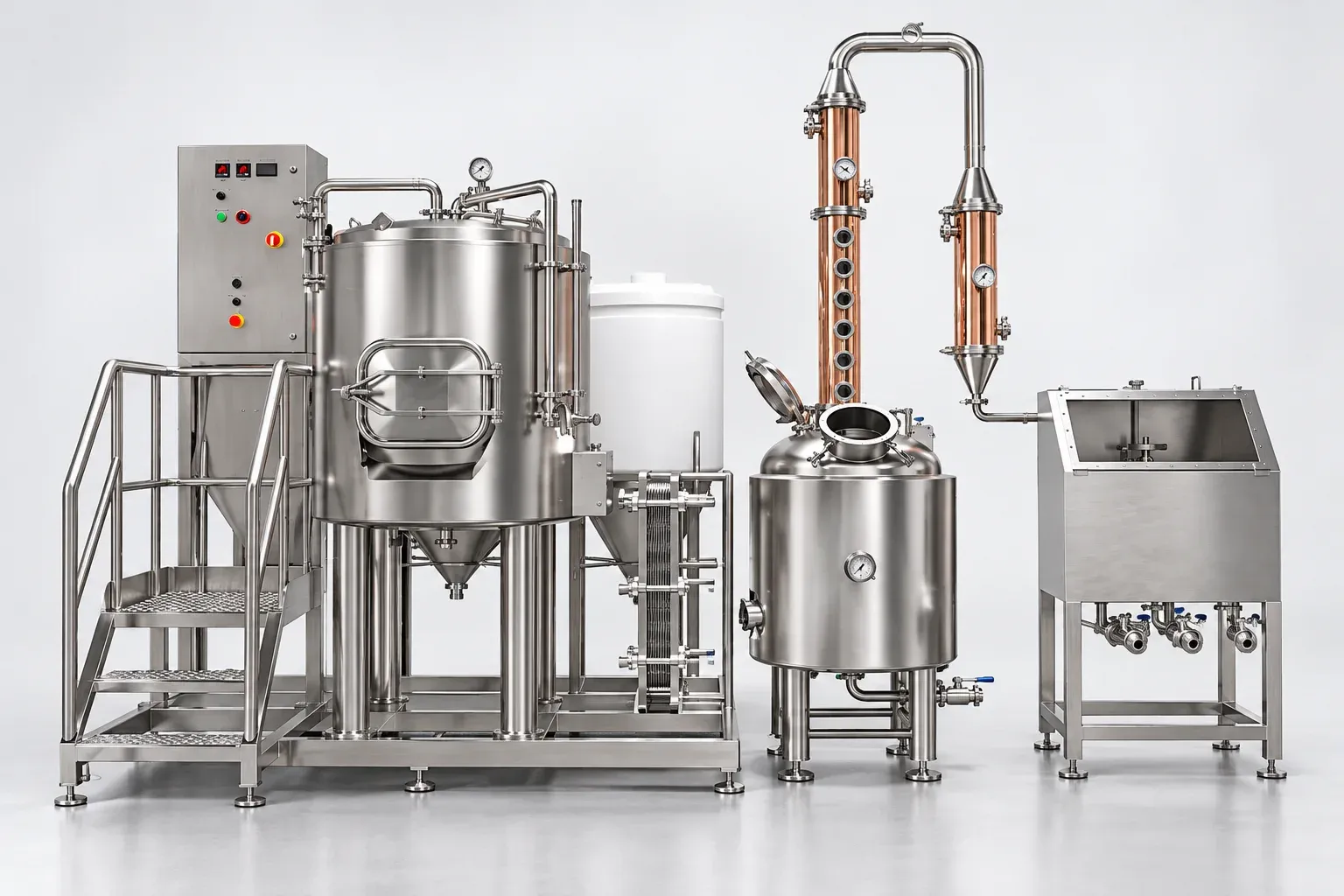
| Micro-distillery | Whiskey, vodka, gin, rum | Up to 6,000 US gal a year | Three-phase |
Why carbonated is the hardest
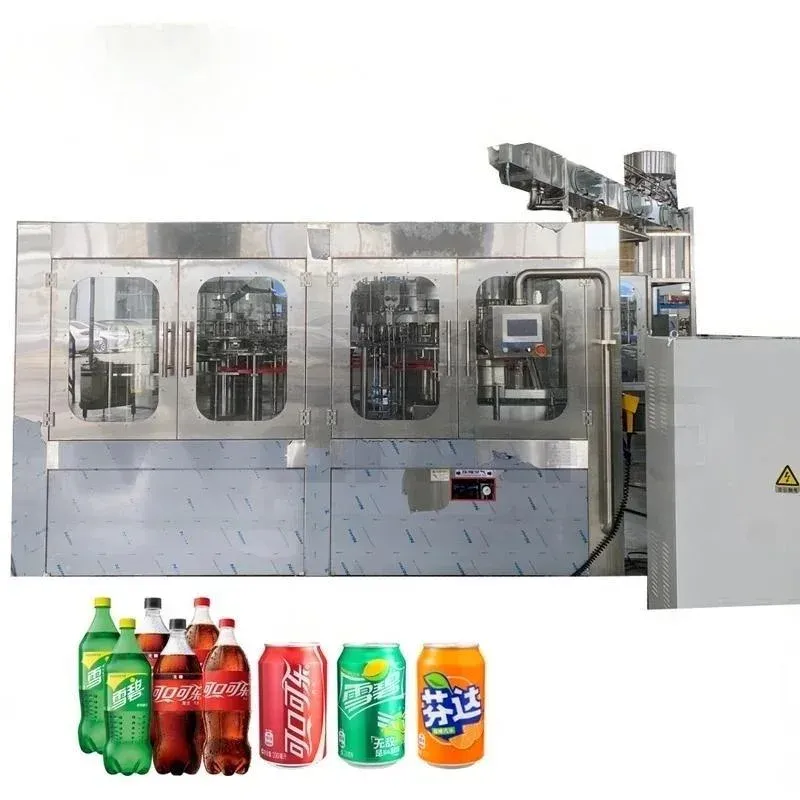
Fizzy drinks hold about 2.5-4 volumes of CO2 and lose it quickly when warm or agitated. Isobaric filling equalises pressure between tank and bottle. Published listings for compact three-in-one carbonated fillers show 4,000-6,000 BPH and fill accuracy near 99.7%. That is why the product is chilled, why a CO2 supply is on your quote checklist, and why a carbonated line costs more per bottle-per-hour than water.
Still, hot-fill and glass
Water is easy on the filler but strict on hygiene upstream, and the water treatment train is the larger part of the project. Juices hot filled at about 85-92 degrees C need a cooling tunnel after capping, and our glass line washes bottles in hot caustic around 60-80 degrees C. Glass volumes on that line run about 200 ml to 1 L.
Worked example
You plan 3 million litres a year of bottled water in 500 ml bottles, running about 2,500 hours. That is 1,200 litres an hour, or 2,400 bottles an hour. A 4,000 BPH line leaves room for growth, while a reference 6,000 BPH water plant would sit well under half used. This is a planning example only, and your real operating hours decide it. Raw water use is roughly 1.2-2 litres per litre sold when reverse osmosis is in the train.
Small batches and thick liquids
For honey, syrups or mixed container sizes, a multi-nozzle filler with 8, 12 or 16 heads is more flexible than a rotary line. Our liquid filling machine guide explains piston, gear pump and gravity types. Other formats are under filling machines.
What to send for a quote
- Drink or drinks, and carbonation level.
- Container: PET, glass or can, with sizes and neck finish.
- Target bottles per hour, and hours per day.
- Water analysis, or the source if you want treatment included.
- Syrup, CO2 and compressed-air arrangements.
- Voltage and frequency, plus hall dimensions.
Share those and we will propose a line sized to your output and site.