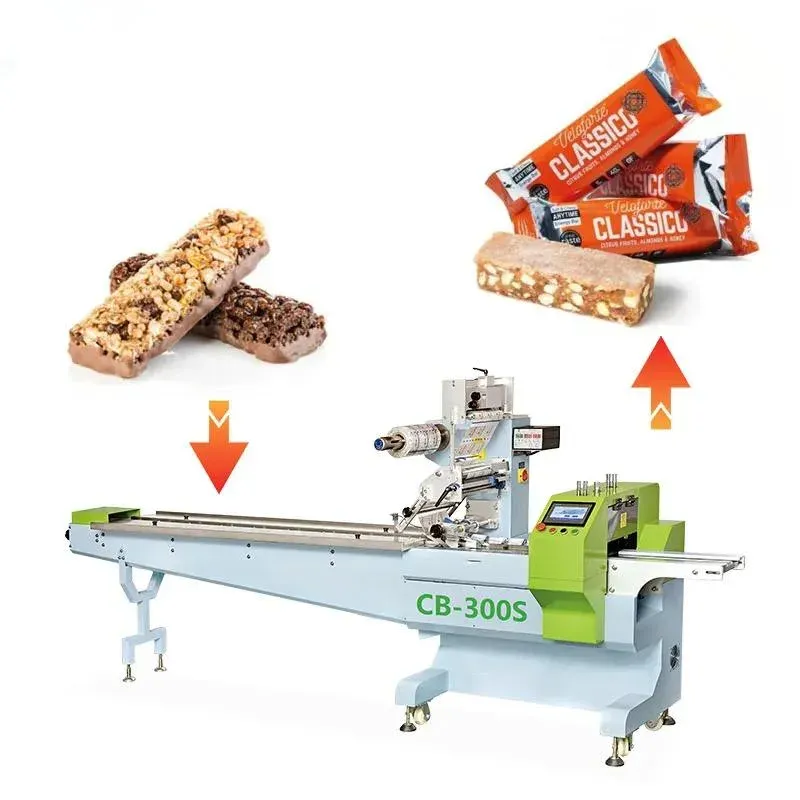
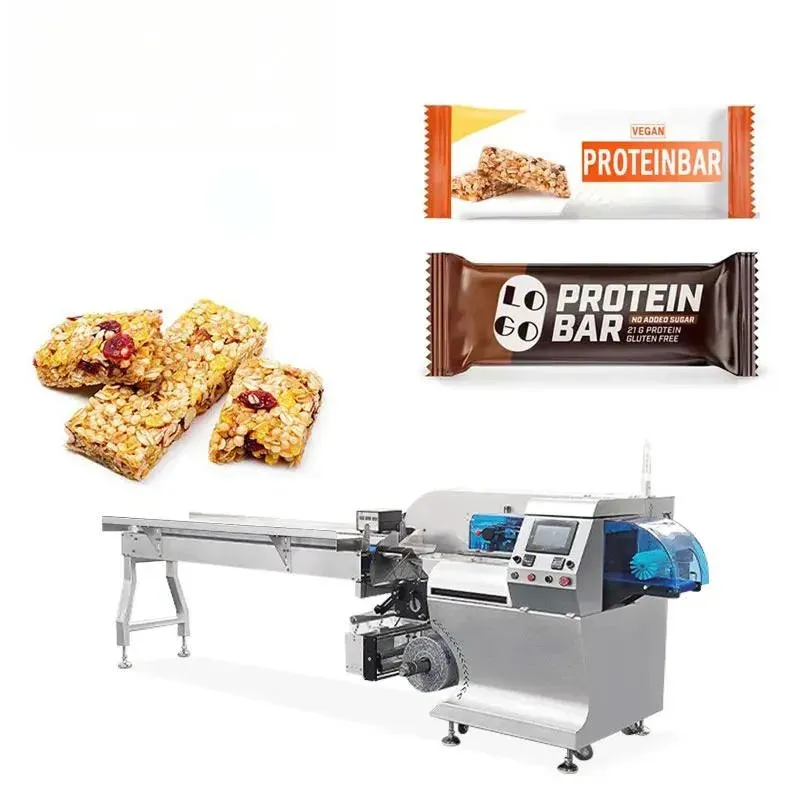
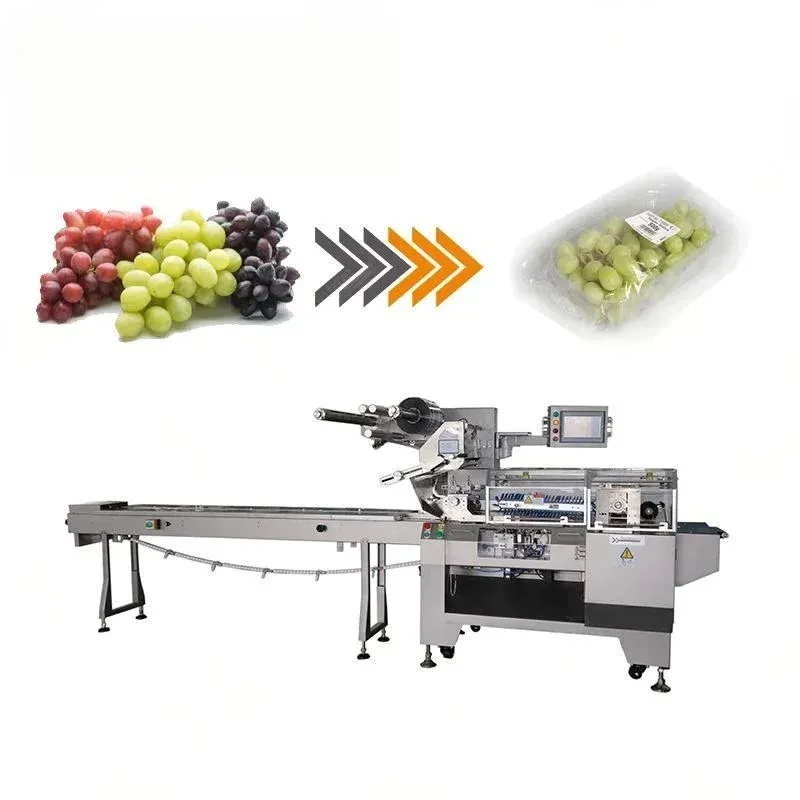
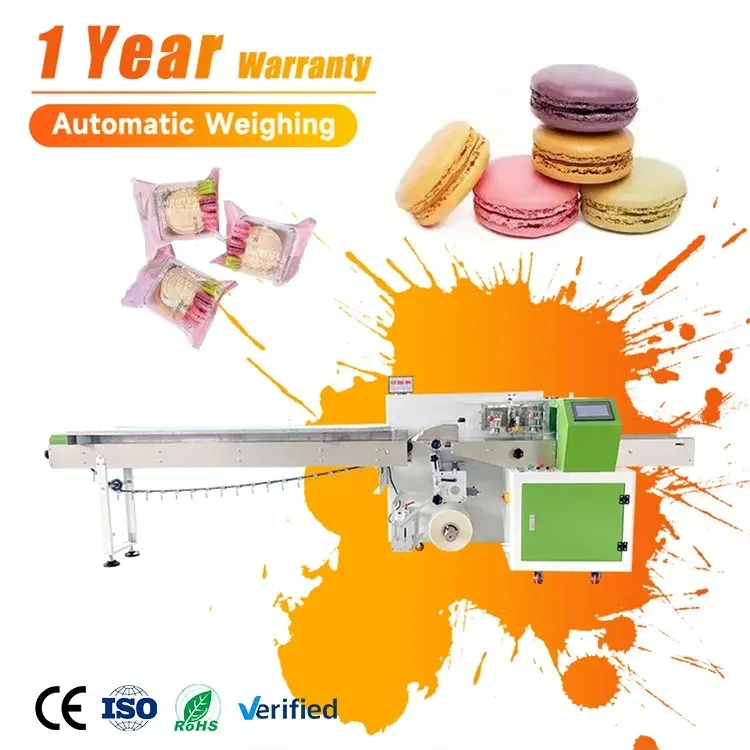
What a flow wrapper is for
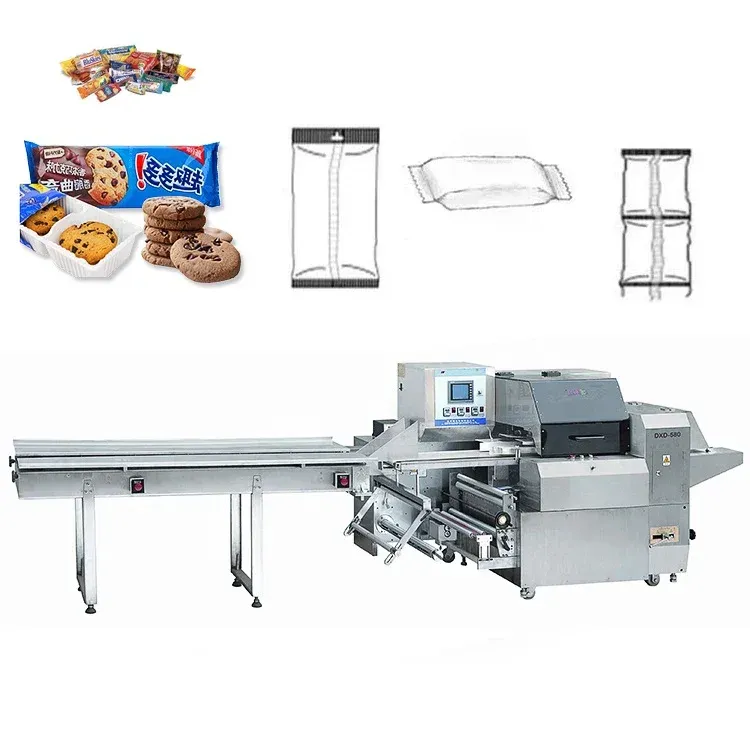
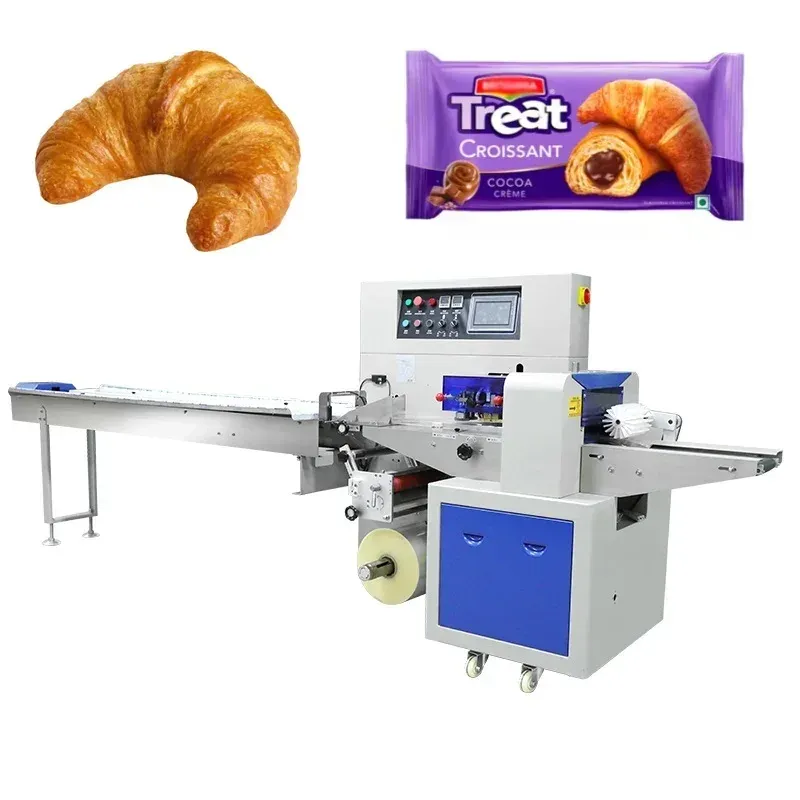
A pillow pack is a flat tube of film with a fin seal on the back and a crimp at each end. The machine forms the tube around products as they pass, so each item must keep its shape and arrive in sequence. That is why flow wrappers pack biscuits, cereal bars, wafers, soap bars, bread and hardware parts, and why they leave pourable products to bagging machines.
Models side by side
| Model | Product size | Speed | Notes |
|---|---|---|---|
| Compact flow wrapper | up to about 250 mm long | 30–80/min | 110–240 V, 2.5–3.5 m long |
| Servo pillow packer for soap, bread, biscuits | 50–300 mm long, to 100 mm high | 30–100/min | servo film pull and end seal |
| Candy and cookie pillow packer, stainless 304 | bag length 60–300 mm | 40–150/min | 220 V or 380 V |
| Biscuit and wafer packer | bag 45–330 x 25–110 mm | 40–150/min | 4.4 m long, optional nitrogen |
| Bar and biscuit flow wrapper | 50–250 mm long | 80–120/min | servo jaws, chain infeed |
| Large pillow bag wrapper | up to about 450 x 200 x 80 mm | 20–60/min | mechanical drive, CE stated |
Speed and length trade off. The top speed of the bar wrapper is for short products; the large pillow wrapper, which accepts 450 mm items, runs at the low end. If you will wrap two very different products, size the machine for the longer one and accept the slower rate.
Feeding the machine
A wrapper is only as fast as its infeed. A chain with pushers spaces products at an even pitch, a stack feeder suits biscuits, and a short manual loading station works for low volumes of soap or bread. If products arrive touching or tilted, the jaws will cut through them, so many buyers add a small accumulating conveyor upstream. Keep product height inside the limit in the table: the servo unit takes products up to about 100 mm high, and the big pillow-bag model is the one for long items, up to about 450 mm.
Servo or mechanical drive
Servo-driven wrappers set pack length on the screen and change over in minutes, which suits a bakery with several pack sizes. Mechanical cam machines are simpler to maintain and cheaper per pack for one product at one size. A vendor guide notes that servo control has become the usual choice for modern wrappers, and that is the direction of the range above.
Footprint, power and sealing in warm climates
Distributors point out that horizontal wrappers are much longer than vertical baggers, so measure the room before choosing. Our six machines run on 220 V, with 380 V on one model and 110–240 V on the compact unit. In hot, humid weather chocolate-coated bars soften and seals take longer to set, so add cooling or slow the line. Photocell eye-mark control keeps printed film aligned.
Not sure it is a wrapper job?
Powder, granule and nuts belong on a vertical form fill seal machine. Liquids and pastes go to a sachet or pouch filler. If you are planning a whole biscuit line, our biscuit line guide shows where the wrapper sits.
What to send for a quote
- Product length, width and height, and a sample
- Packs per minute and how many hours a day
- Film type and reel width, printed or plain
- Whether you need date coding, gas flush or an infeed conveyor
- Local voltage and frequency