The four machines and where they sit
A meat plant is a line of rooms, and each of our machines belongs in one of them. Small processors who share their favourite equipment online keep naming the same finishing steps: smoking, vacuum tumbling, link cutting and packaging.
| Machine | Our range covers | Stage | Suits | Power |
|---|---|---|---|---|
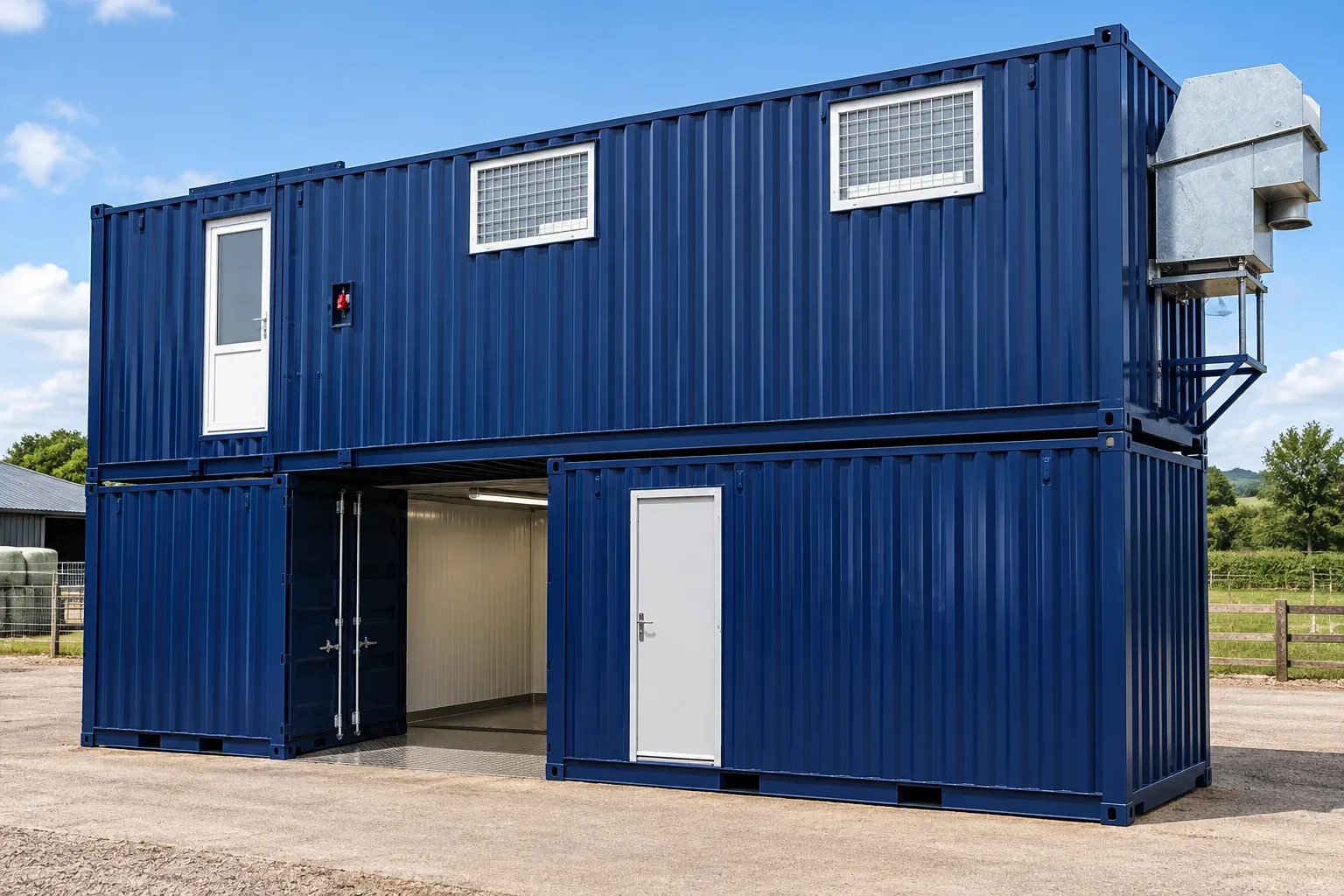
| Containerized mobile slaughter unit | 20 ft or 40 ft container, two for larger units; about 10 to 30 cattle or 50 to 150 sheep and goats per shift | Receiving, bleeding, dressing | Remote farms, markets without an abattoir | About 15 to 40 kW with chiller |
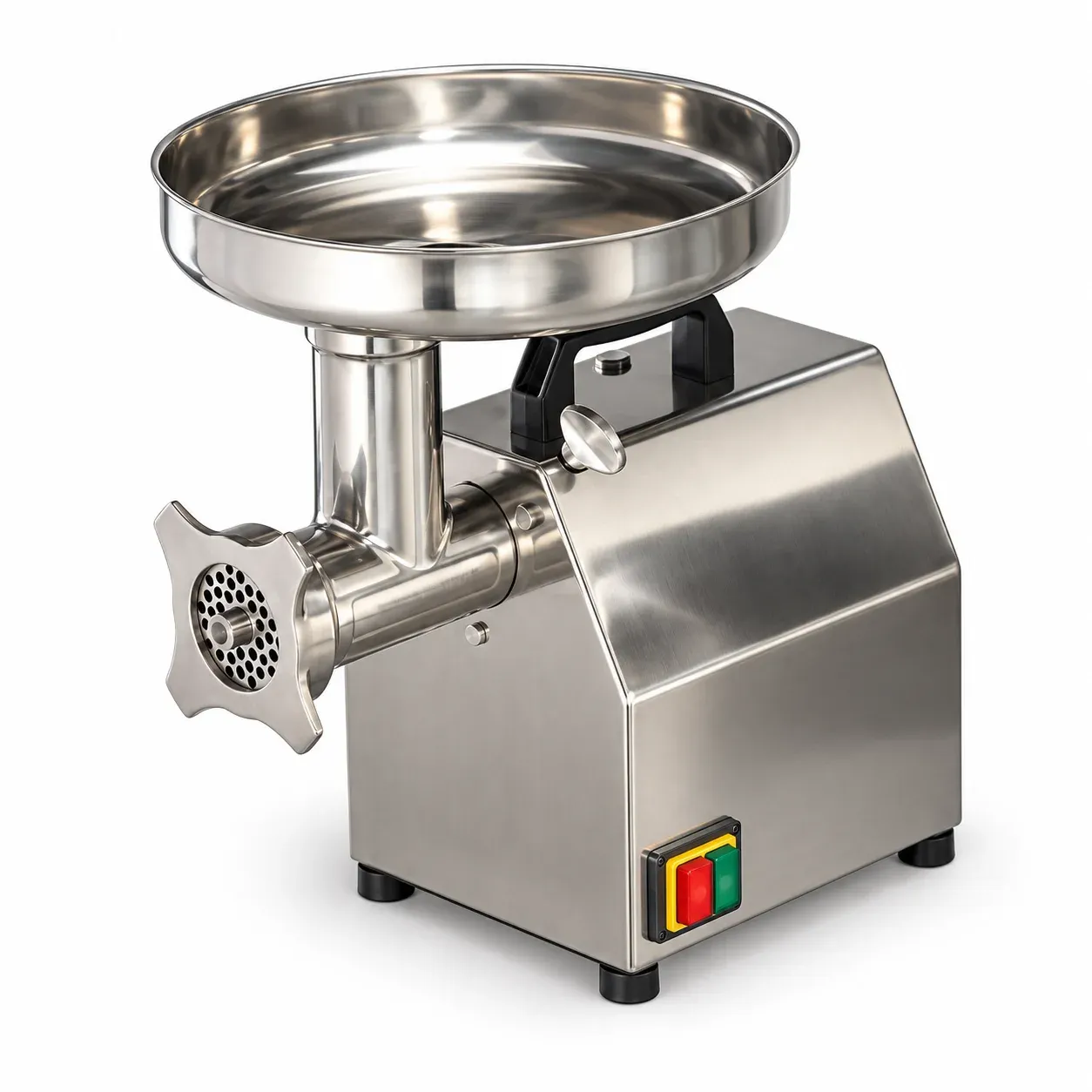
| Commercial meat grinder | About 220 kg/h (1 hp); larger family model about 400 kg/h (1.5 hp); plates 3, 5, 8, 10 mm | Cutting room | Butchers, restaurants, small plants | 220 V single phase |
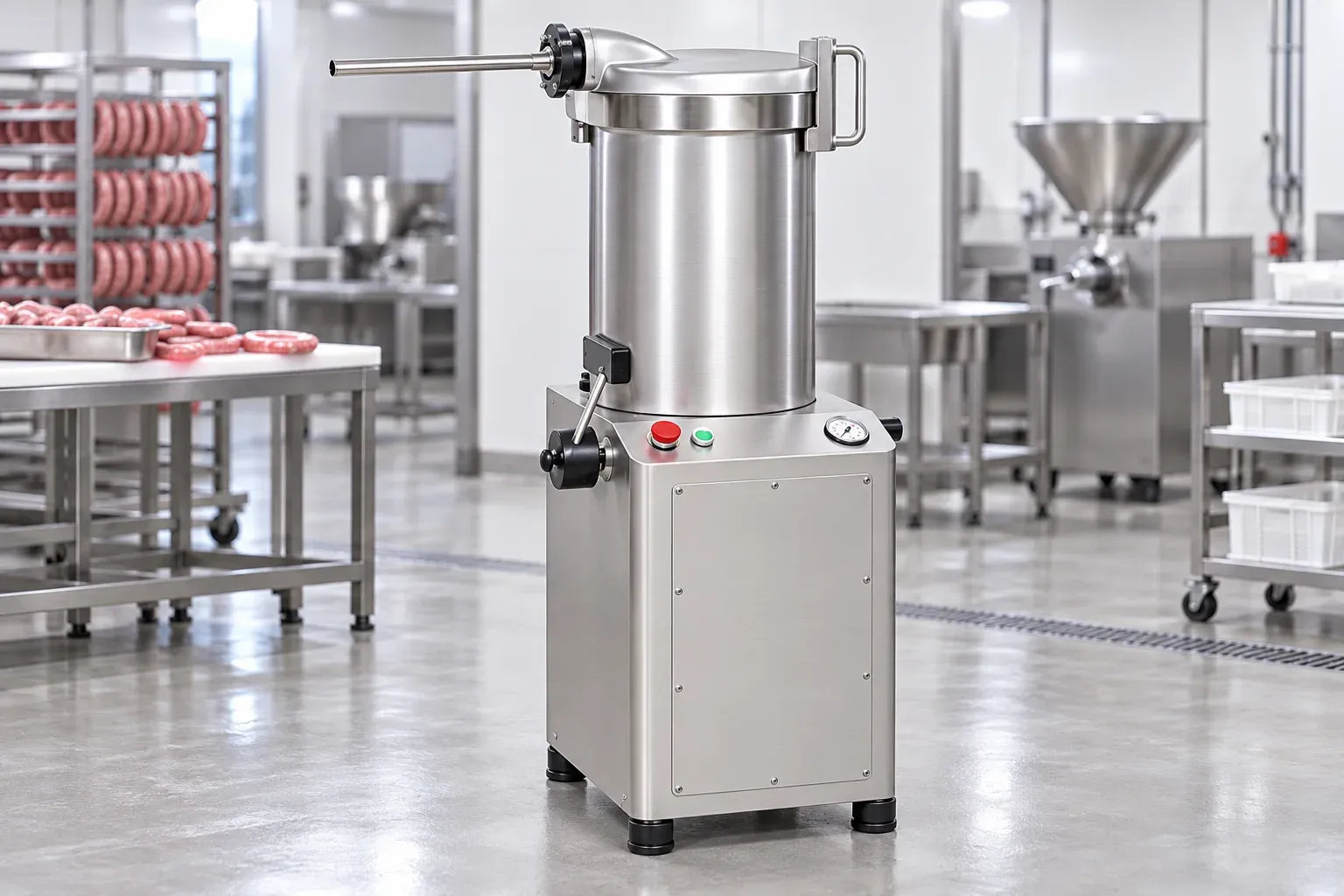
| 20 L hydraulic sausage filler | 20 L cylinder, about 18 kg per fill, nozzles about 10 to 40 mm | Sausage room | Butchers filling casings in batches | About 0.37 to 0.75 kW |
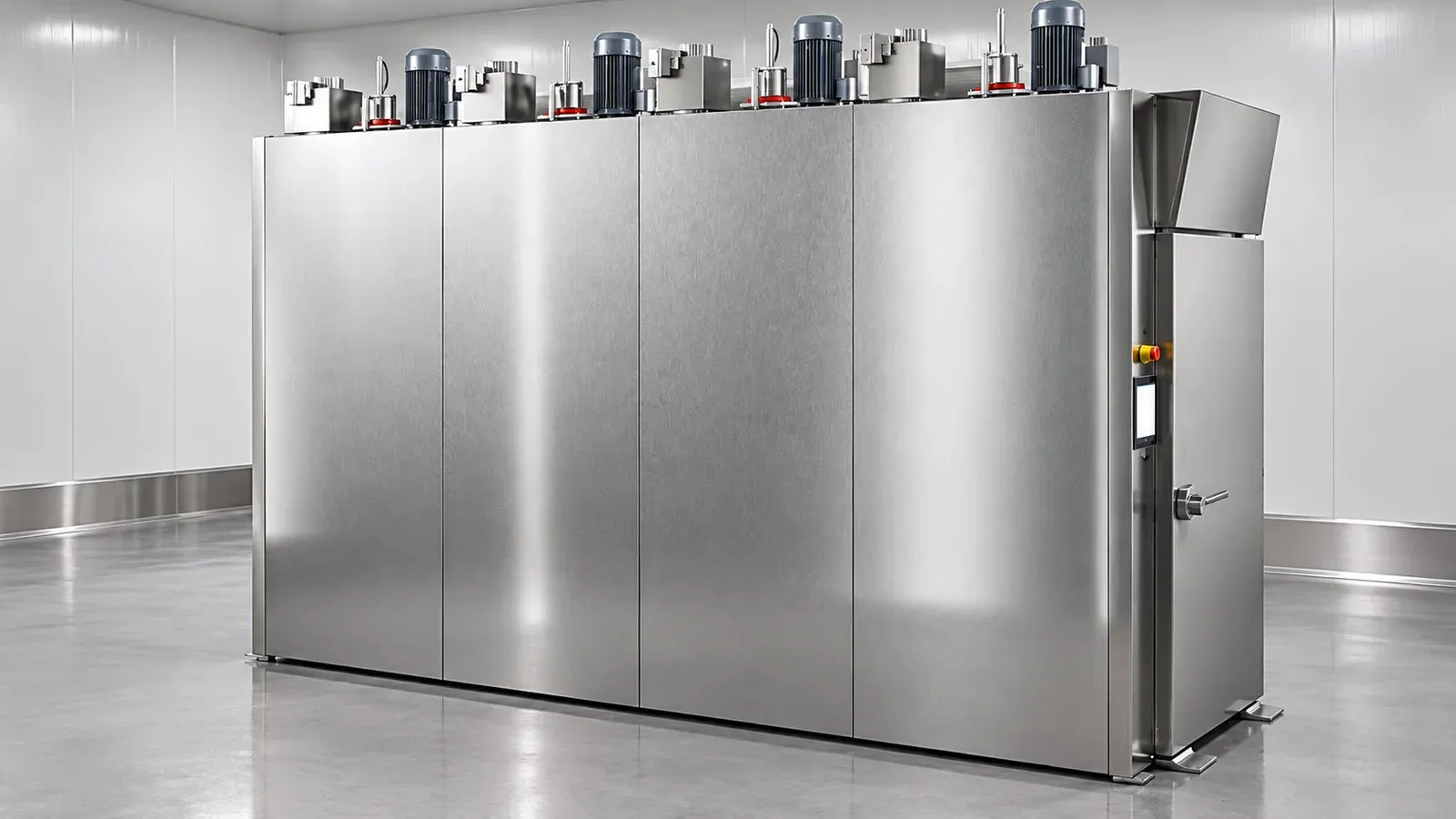
| Smokehouse and maturing chamber | 90 to 270 kg per batch, about 30 to 110 degrees Celsius | Thermal processing | Smoked, cooked and dried products | About 6 to 20 kW |
Sizing by daily output
The grinder and filler are rarely the bottleneck. Worked example (illustrative): a workshop making 200 kg of sausage a day fills the 20 L cylinder about 11 times (200 kg divided by roughly 18 kg), and grinds 200 kg in under an hour at 220 kg/h. The smokehouse is what sets the day: at 270 kg per batch and one cycle of 2 to 6 hours for smoking and cooking, two batches give about 540 kg, but maturing cycles run for days and block the chamber. Plan a second chamber when you add dry-cured products.
For a slaughter unit, throughput is stated per shift, and water use is the number people forget. Our data gives about 300 to 1,000 L per large animal, so 20 cattle can need 6,000 to 20,000 L on the day. Check that the site supply and the drain or waste water tank can cope before you choose the container size.
Choosing by the product you sell
- Fresh minced meat and burgers: grinder plus cold room; add a mixer if you blend spices.
- Fresh and cooked sausage: grinder, filler, smokehouse. Pick nozzle sizes by casing diameter; natural, collagen and synthetic casings all work with the filler.
- Smoked or dried meats and fish: smokehouse with the heating you have (electric, gas or steam) and humidity control of about 20 to 95 percent.
- Whole carcass supply to a local market: slaughter unit first; everything else follows once carcasses move.
Whatever you buy, cold storage links the stages. The FAO meat cold store manual is a plain-language reference for that side; our sizing guide for rooms is walk-in cold room size and cooling load.
Hygiene and power
Product-contact parts on the grinder and filler are stainless steel and come apart for washing. Wet rooms need washable floors and drains, which the container unit carries as insulated panels with a non-slip epoxy floor. Single-phase 220 V runs the grinder in most markets; if your mains is 110 V or three-phase 380 or 415 V, say so early. Heating for the smokehouse can follow your cheapest energy: electric, gas or steam.
What to send for a quote
- Species and animals or kilograms per day.
- Product list: fresh, cooked, smoked, dried.
- Voltage, frequency and phase; available gas or steam.
- Floor plan or container site with water, power and drain points.
- Local inspection and welfare rules.
- Casing sizes and plate hole sizes.
Browse the rest of the food line in Food & Beverage Processing, or see Dairy, Butter & Ghee Lines if you also handle milk.