Food & Beverage Processing · Complete line
Food & Beverage Processing · Complete line
Micro Distillery System for Craft Spirits
A modular small-batch distilling system for whiskey, vodka, gin and rum, offered as a pilot still, a still skid or a mash skid.
- Model
- MM-MDS
- Product group
- Beverage, Water & Distilling Lines
- Annual capacity
- Up to 6,000 US gal per year, depending on configuration and shifts
- Footprint
- Under 500 sq ft (layout designed per project)
- Up to 6,000 US gal per year
- Footprint under 500 square feet
- Pilot still, still skid and mash skid options
- For whiskey, vodka, gin, rum and similar spirits
- Modular, can grow with your production
Overview
How it works
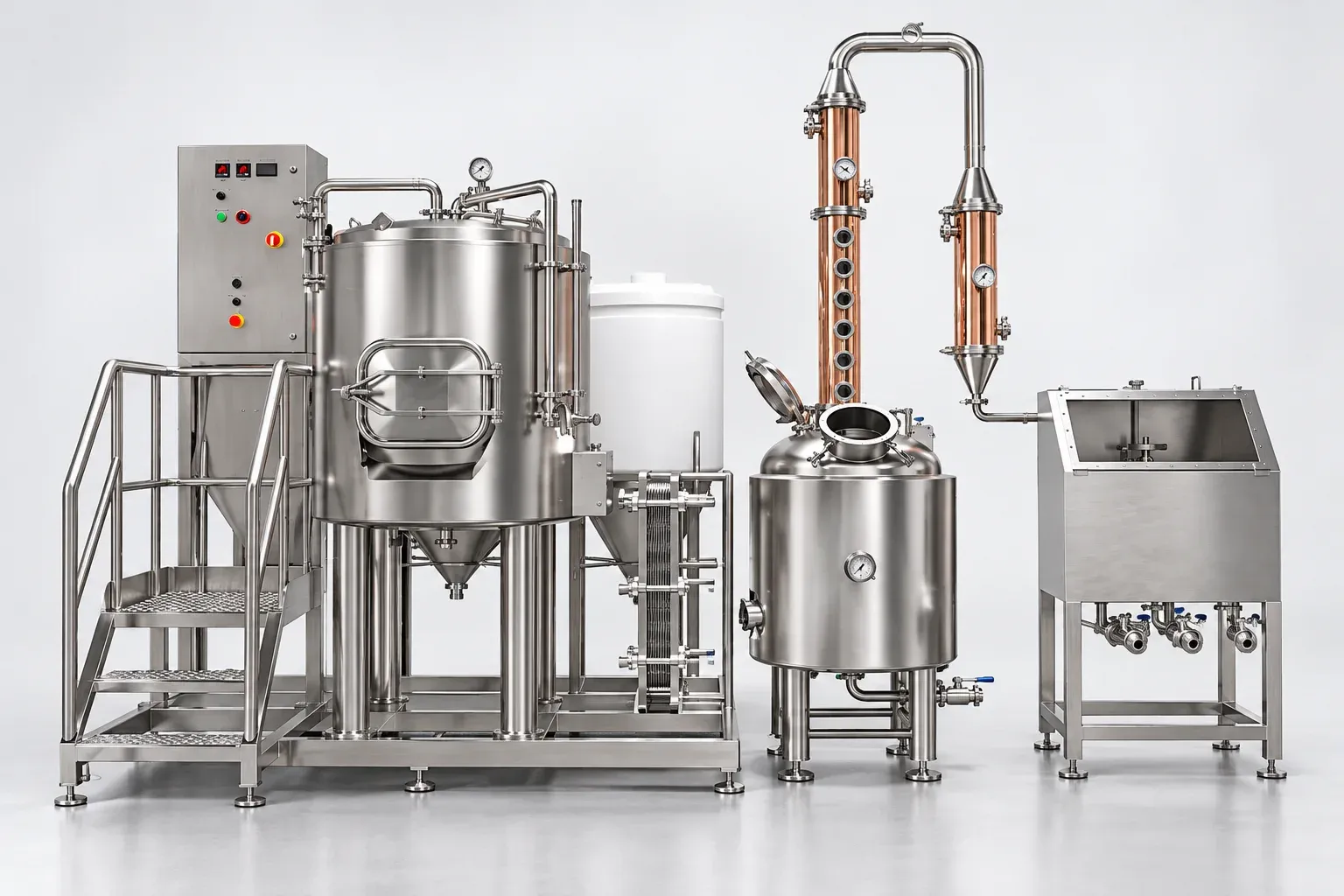
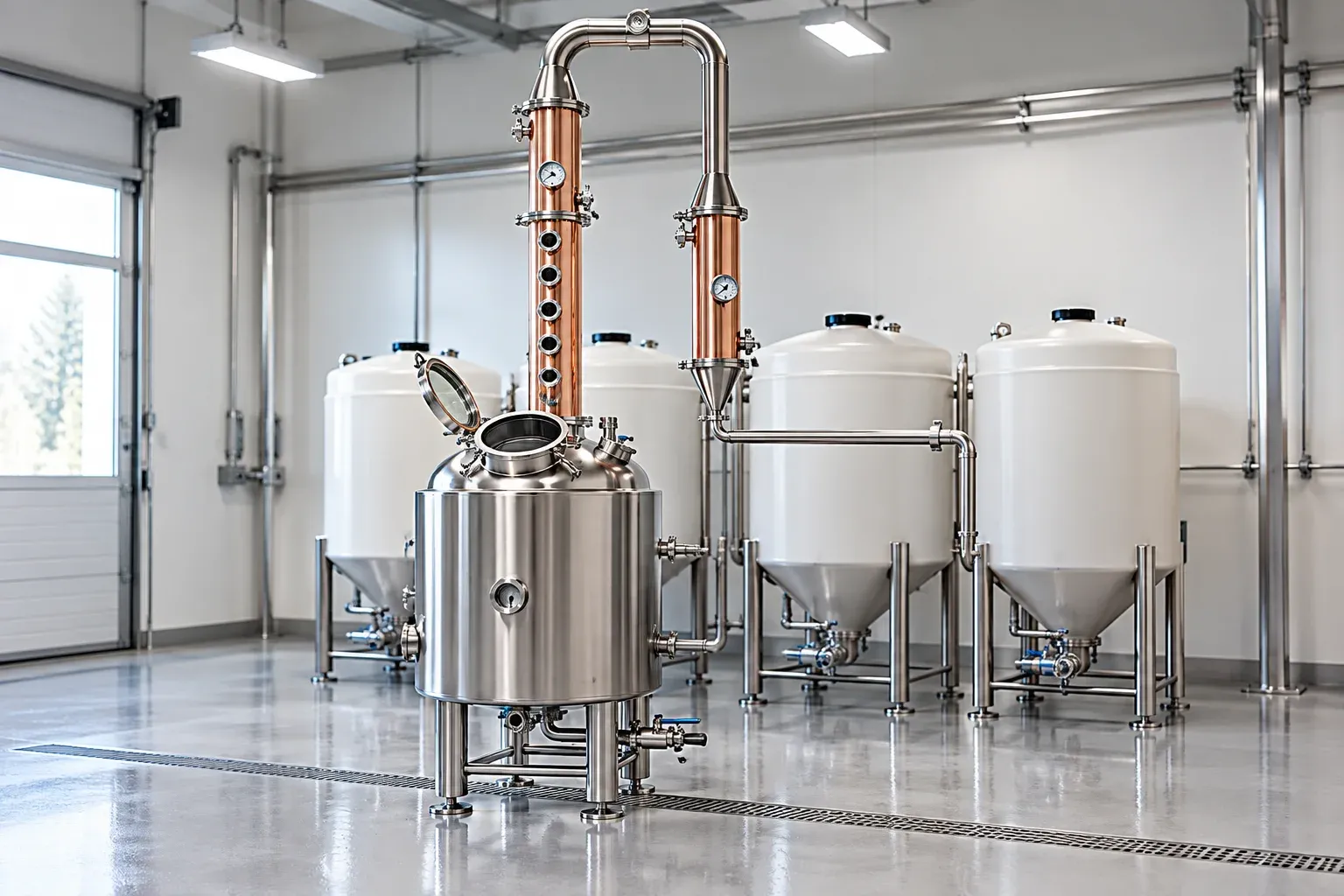
Distilling starts with a mash of grain or other sugar source, which is cooked and cooled, then fermented. The fermented wash is heated in a still, where alcohol vapor rises through the column, is condensed and collected as spirit. A small system lets a start-up run the whole process at batch sizes between a pilot and a craft brand.
Three entry points
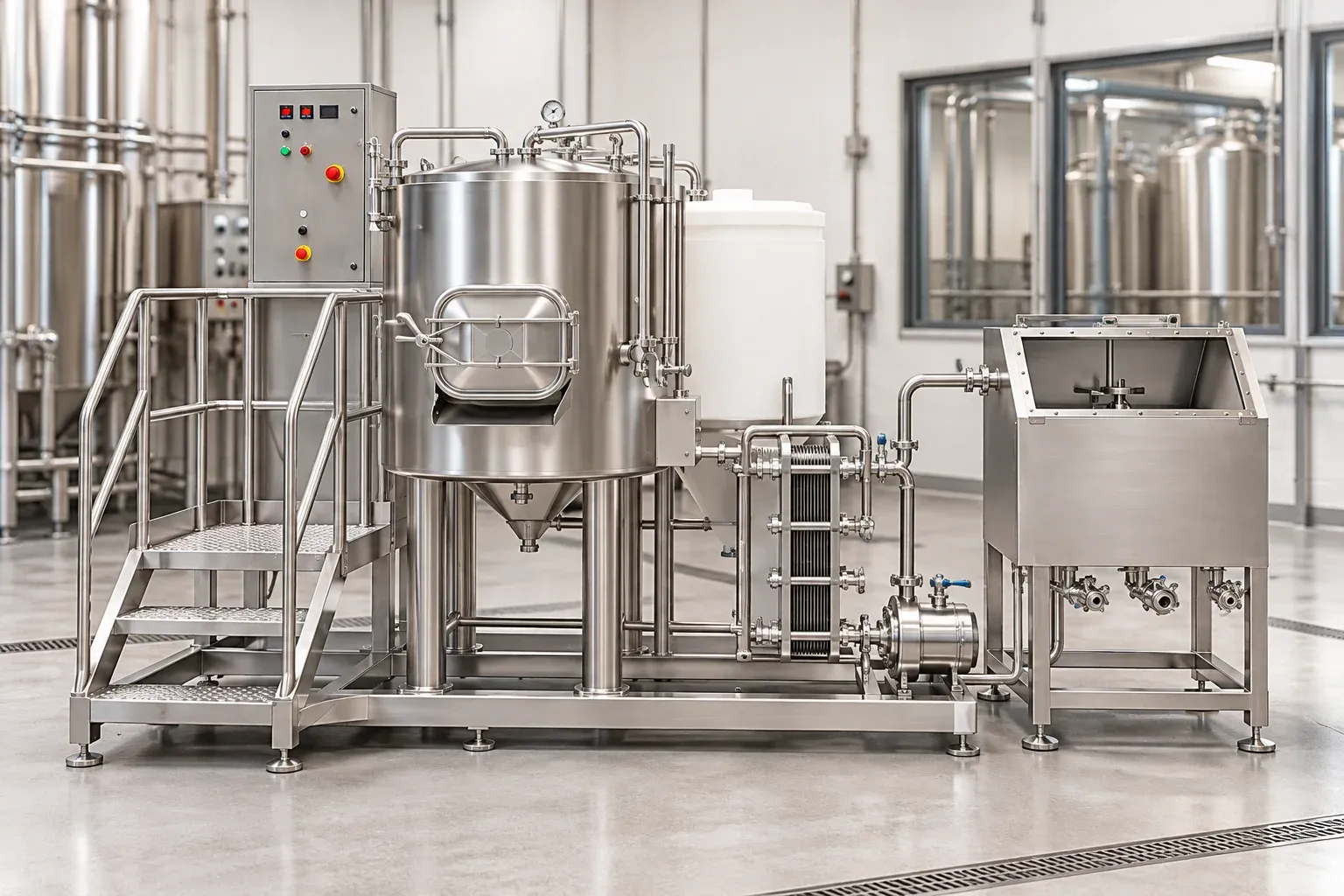
The system is modular. A pilot still is the smallest entry, based on a 200 L insulated stainless steel still with electric or steam heating. A still skid adds a larger still, an alcohol safety enclosure and fermenters, with a typical example of a 50 gal still and three 100 gal fermenters. A mash skid prepares the mash and includes a 100 gal mash tun with heat exchange. Configurations can be combined.
Capacity and space
The system is designed for up to 6,000 US gallons per year and a footprint under 500 square feet. Actual output depends on the configuration, recipes and the number of shifts, and layout is designed for each room.
What this system is not
It is a craft-scale system. It is not meant for fuel ethanol or large continuous neutral spirit plants.
Safety and licensing
Spirit production involves flammable vapor. Hazardous area classification, ventilation, heat source, fire protection and licensing differ by country, and must be handled with qualified local engineers and authorities.
What you can specify
- Spirit types and batch size
- Electric or steam heating
- Number of fermenters and mashing equipment
- Room dimensions and utilities
- Safety enclosure and control options
Installation and training
We build and test the equipment, and our engineers help with installation guidance and operator training.
Choosing a configuration
Our micro distillery comes in three starting configurations: a pilot still with condenser, a still skid with safety enclosure and fermenters, and a mash skid with heat exchange. They are different levels of investment. The pilot still is for recipe development and very small runs. The still skid is the base for a working craft distillery. The mash skid is added when you want to cook your own grain instead of buying wash.
Annual capacity is limited by the number of fermenters and by how many batches you can run each week, not only by still size. A 50 gal still with three 100 gal fermenters can be loaded in rotation, which keeps the still working while other batches ferment.
Because alcohol vapors are flammable, site layout matters: ventilation, electrical classification and local rules for spirit production. The intended spirit, such as whiskey, rum, vodka or gin, and your floor plan decide the layout.
Specifications
| Model | MM-MDS |
|---|---|
| Annual capacity | Up to 6,000 US gal per year, depending on configuration and shifts |
| Footprint | Under 500 sq ft (layout designed per project) |
| Pilot still | Insulated stainless steel still, 200 L; electric or steam heating |
| Still skid example | 50 gal still with 3 x 100 gal fermenters |
| Mash skid example | 100 gal mash tun |
| Fermentation time | about 3–7 days for grain mash, depending on yeast and temperature |
| Wash strength | about 6–10% alcohol by volume before distilling |
| Spirit run strength | about 65–80% alcohol by volume from a pot still |
| Heating method | Electric elements or steam jacket |
| Cooling water | Continuous flow to the condenser, with a cooling tower or mains water |
| Fermenter fill level | about 75–85% of vessel volume to allow for foaming |
| Utilities | Three-phase power, cold water, floor drain, ventilation |
Configurations
| Configuration 1 | Pilot still with condenser |
|---|---|
| Configuration 2 | Still skid with alcohol safety enclosure and fermenters |
| Configuration 3 | Mash skid with heat exchange and water components |
Standard equipment
- Mash tun or kettle
- Fermenters with temperature control
- Pot still with condenser
- Product receiver
- Hydrometers and thermometers
- Pumps, hoses and fittings in stainless steel
Options
- Alcohol safety enclosure
- Column or reflux section
- Steam boiler
- Barrel filling and storage racking
- Bottling and labeling equipment
- Explosion-protected electrical parts
Frequently asked questions
Can I start small and expand later?
Yes. The modular approach lets you start with a pilot still or a still skid and add mashing and fermentation equipment later.
Can it make fuel ethanol?
No. This system is for craft beverage spirits at small batch sizes. Fuel ethanol needs a different plant design.
Who is responsible for permits?
You and your local authorities. We provide drawings and technical documents to support your application.
Can I make several spirits on one still?
Yes. Pot stills handle whiskey, rum and brandy, and a column or botanical basket can be added for gin or vodka. Clean thoroughly between spirits and plan cuts for each.
Request a quote: Micro Distillery System for Craft Spirits
Send your requirement and our engineers reply with the configuration, lead time and a quotation.
Related products
Food & Beverage Processing · Complete line
Carbonated Drink PET Bottling Line, up to 12000 BPH
Food & Beverage Processing · Complete line
Glass Bottle Juice Washing-Filling-Capping Line
Food & Beverage Processing · Complete line
PET Bottled Water Filling Machine, 200-2000 ml