Part one: cable extrusion lines
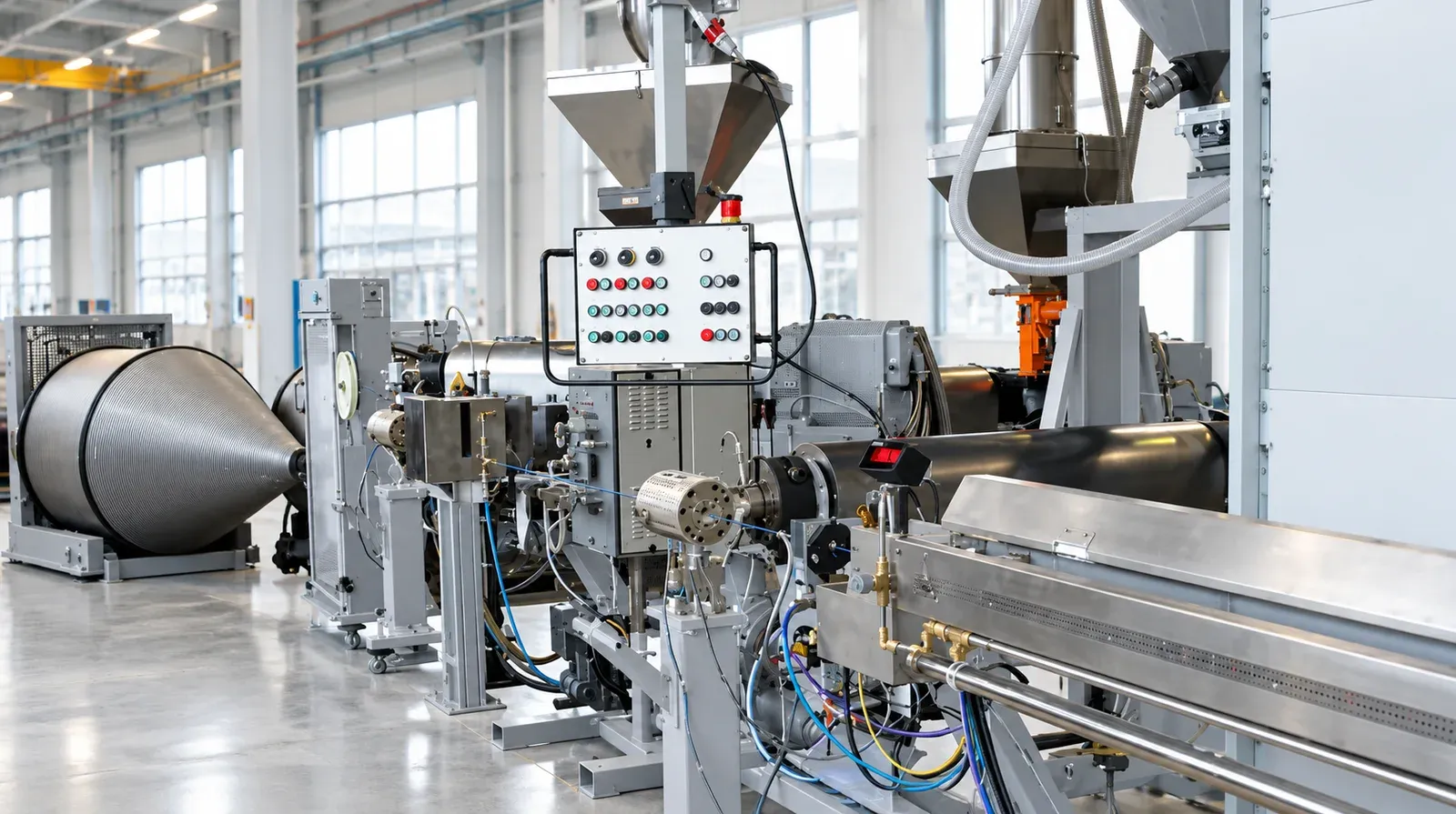
An insulation line applies a plastic layer over a bare or stranded conductor. Two numbers define the job: the conductor cross-section and the wall thickness. Our Low-Voltage Cable Insulation Extrusion Line covers conductors of 0.5 to 10 mm², which is the building wire and control cable range. Larger power-cable conductors are a different class: one line maker lists 16 to 300 mm² with wall thickness typically 0.7 to 2.4 mm and a line speed up to 300 m/min, so do not compare small and large lines on speed alone.
| Compound | Typical use | Line consequence |
|---|---|---|
| PVC | General building wire | Screw L/D about 20:1 to 26:1, melt about 150 to 190 °C |
| LSOH / HFFR | Cables for public buildings, tunnels | Narrower processing window, tighter temperature control |
| XLPE | Higher temperature rating, power cores | Longer screw, cross-linking, slower line |
On our line the extruder screw is about 50 to 90 mm, drive power about 22 to 75 kW, cooling trough about 15 to 40 m, and speeds about 50 to 300 m/min, falling for thicker walls or cross-linked material. Wall thickness runs about 0.5 to 1.2 mm. A longer trough lets you run faster, which is why trough length belongs on the first call. For a feel of scale: wire at 200 m/min is 12,000 m an hour, or roughly 96,000 m per 8-hour shift before stops. That is a worked example, not a rating.
Part two: battery plate equipment
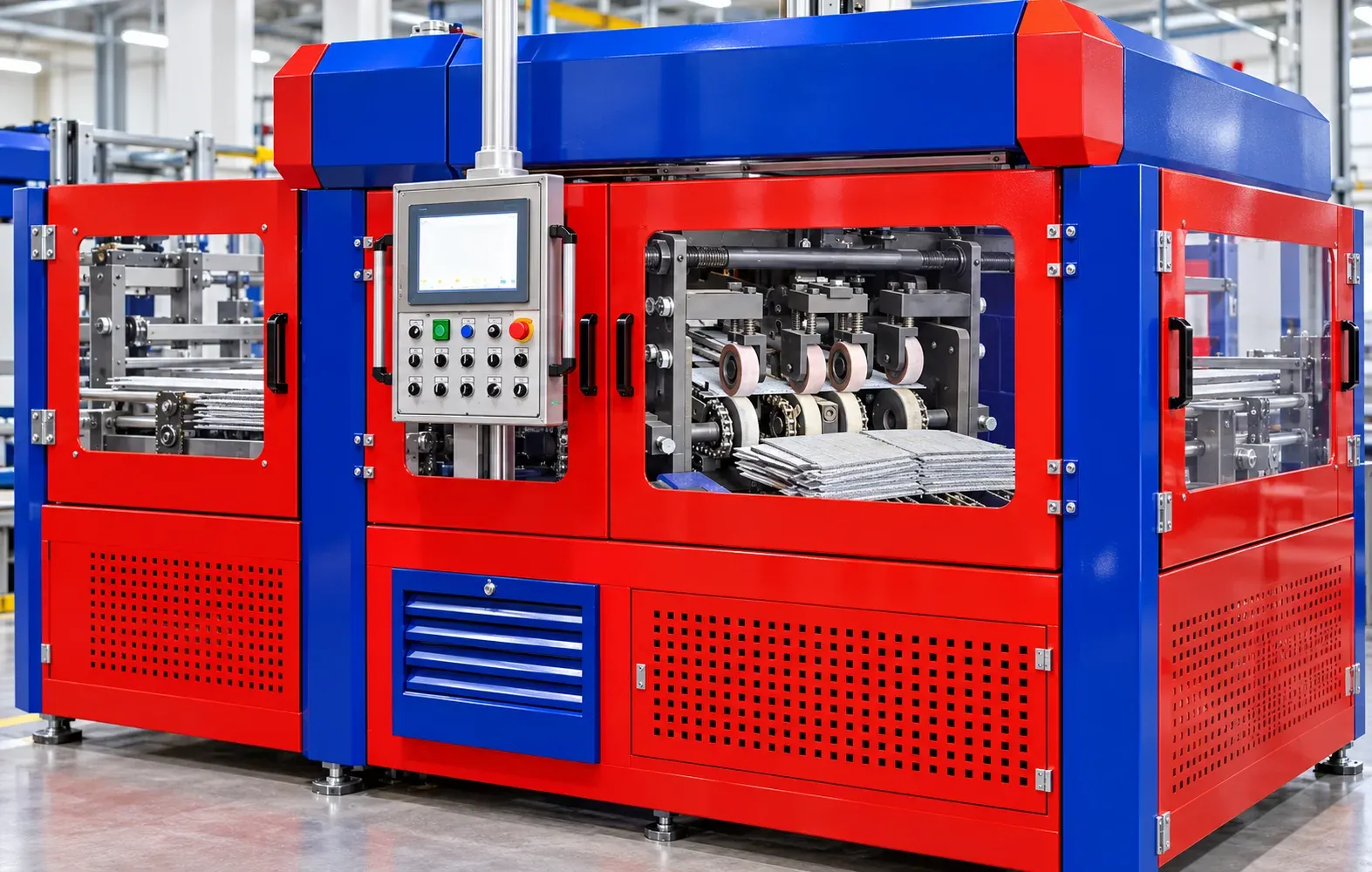
A lead-acid factory is a chain of stages, and the plate section is where capacity is set. The Lead-Acid Battery Grid & Plate Production Equipment listing is organised by stage:
| Stage | Machine | Typical figures from our listing |
|---|---|---|
| Grid making | Casting machine | Lead pot about 450 to 520 °C; grid thickness about 0.9 to 2.5 mm |
| Pasting | Paste mixer and pasting machine | Paste density about 4.0 to 4.5 g/cm³ |
| Curing | Controlled-humidity chamber | About 24 to 72 hours |
| Formation | Tanks and chargers | About 18 to 48 hours |
Starter batteries use thin grids; traction and standby types need thicker ones, which changes casting and pasting settings. Curing and formation are the bottlenecks: if a plate spends 48 hours curing and 36 hours forming, daily output is set by chamber and tank volume, not by how fast the pasting machine runs. Size those two areas first.
Choosing between them
If you make wire, ask your compound supplier for processing data before you ask for a line. If you make batteries, decide the battery type and the daily plate count before you talk about machines. Lead handling also needs fume and dust extraction at casting, pasting and cutting, and acid-mist control at formation; local emission limits drive that scope.
What to send for a quote
- Cable: conductor material and cross-sections, compound, product standard, target speed, reel or drum type, measuring equipment
- Battery: battery type, plate dimensions and thickness, lead alloy, daily output, stages needed beyond grid and plate
- Local supply voltage and frequency, and available hall length
- Environmental and safety rules that apply to the plant
See the wider range on the Industrial Manufacturing page, or building wire itself under Building Wire & Power Cable.