Two lines, two logics
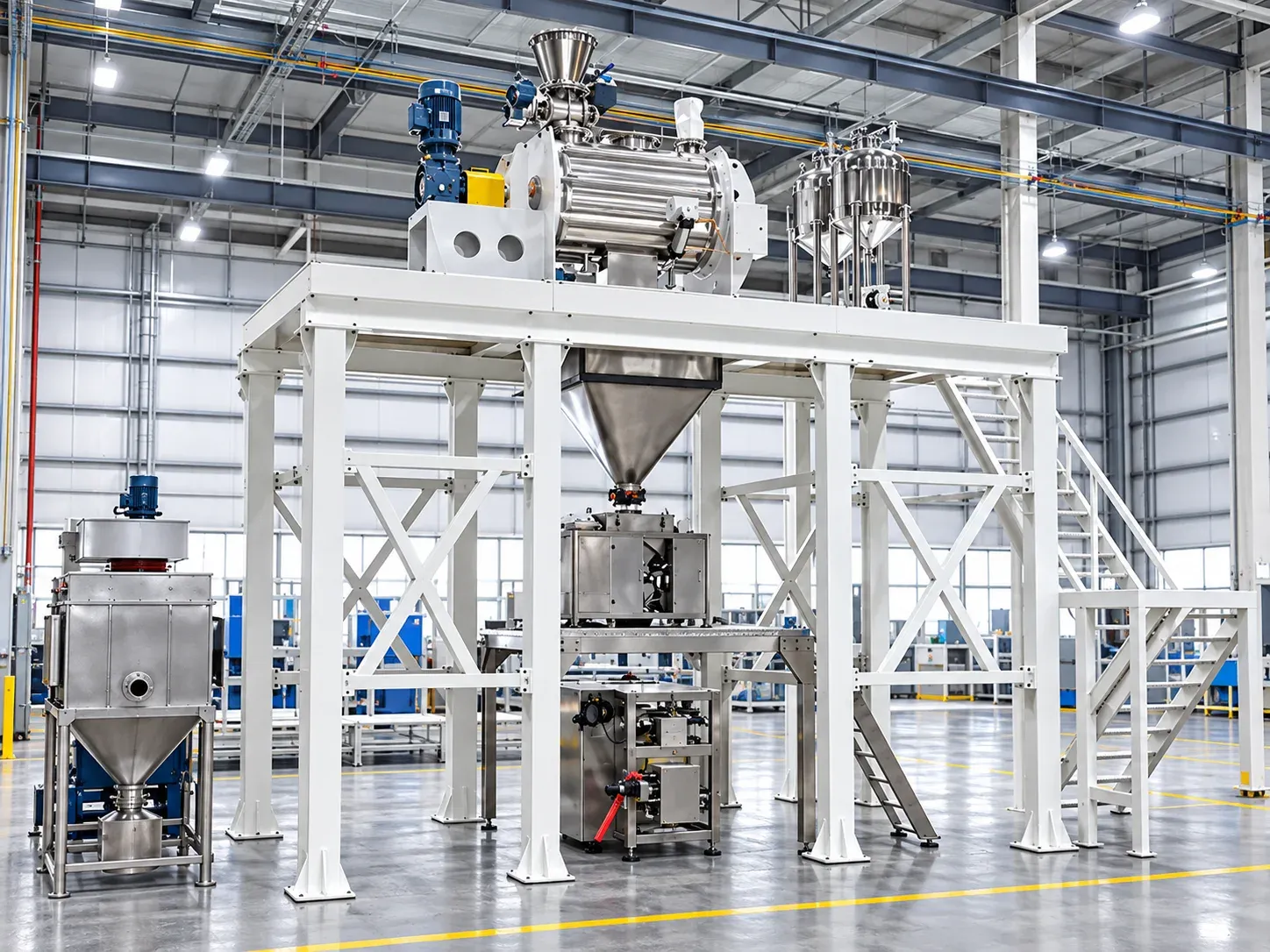
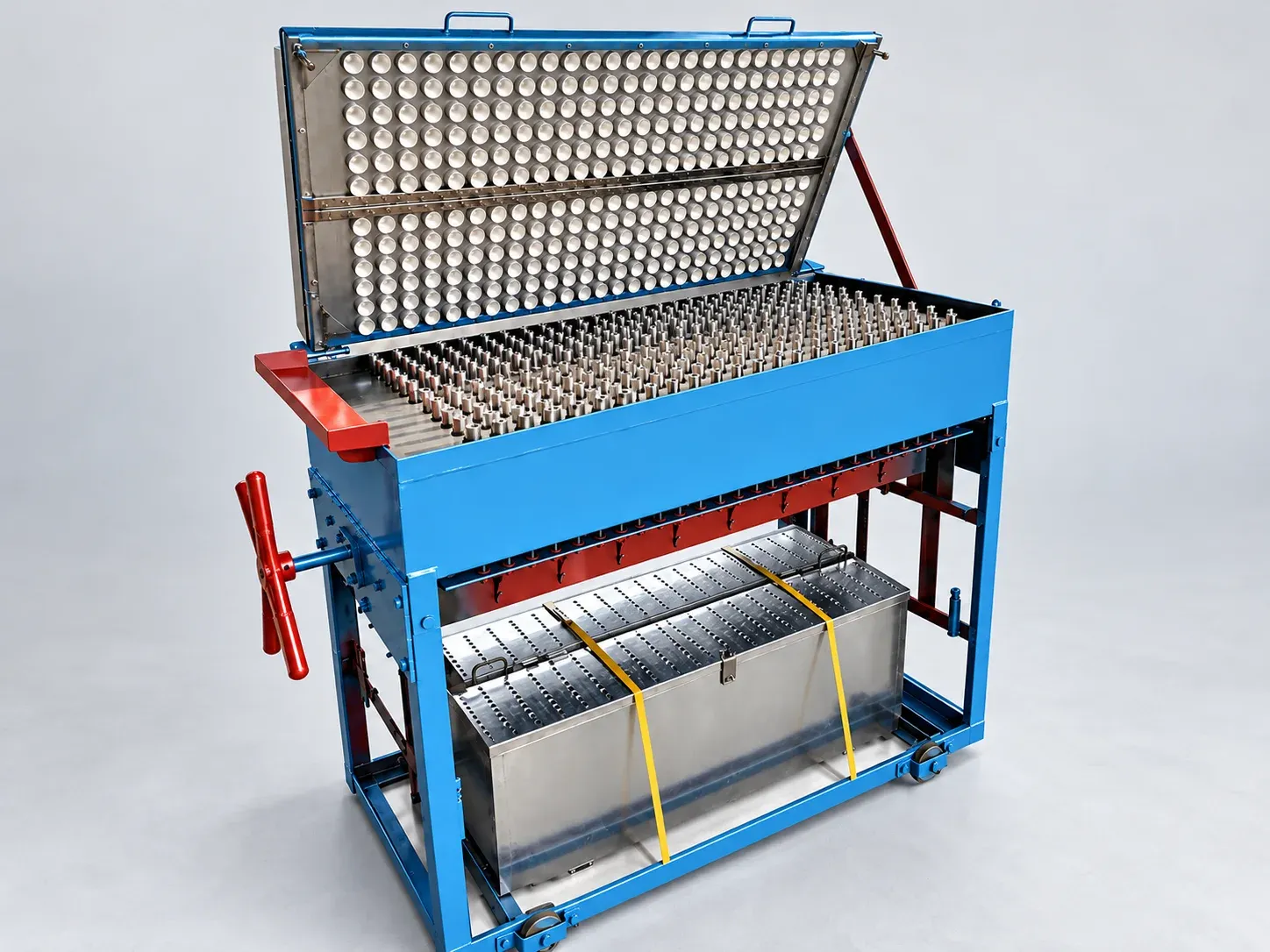
| Detergent powder mixing and packing line | Clamp-tray candle molding machine | |
|---|---|---|
| Process | Feed, vacuum convey, plow-mix, store, pack, dust-collect | Pour wax into a molding tray, cool, release |
| Our range | Mixer about 0.5–6 m³ per batch; line about 0.5–5 t/h | 160–600 candles per cycle; diameter about 15–80 mm; length 120–400 mm |
| Output limit | Packing speed, about 30–80 packs/min | Cooling time, about 10–60 min per cycle |
| Power | Motor data sent per project | About 2–8 kW |
| Page | Detergent line | Candle machine |
Detergent powder: which route
Powder detergent is made by two broad routes. Spray drying makes light, free-flowing granules in a tower and needs heavy investment. Dry mixing blends the powders and liquids in a mixer, a lower-cost route that suits new plants and private-label makers. Our MM-LPL line is a dry-mix route and does not include a spray tower. Supplier listings online show everything from a 100 kg batch mixer to plants of several hundred kg/h, which tells you how loosely the word “line” is used. Compare the scope before the price.
A plow-type horizontal mixer handles the blend, with liquid nozzles for perfume or color and optional chopper blades for lumps. Mixing takes about 3–8 minutes a batch. The formula sets bulk density, typically about 350–800 g/L, so the same mixer holds very different weights.
An output example
Take a 2 m³ mixer and a formula at 600 g/L. A batch is about 1,200 kg. With 5 minutes of mixing and about 5 minutes of charging and discharging, that is six batches an hour, in theory over 7 t/h. Now check the packer: 500 g sachets at 60 packs/min is 30 kg/min, or about 1.8 t/h. The packer, not the mixer, sets the line output, so buying a bigger mixer would change nothing. This is a worked example, not a quotation.
Dust is the other site issue. Plan the dust collector, a duct route outside or to a filter room, a flat dry floor for the silo, and compressed air at about 0.6–0.8 MPa. Explosion venting is an option for fine organic powders.
Candle molding
The MM-CCM casts candles in a clamping tray that holds the wicks in place. Wax is poured at about 65–85 °C for paraffin, then cooled with a chilled water circuit, usually 10–20 °C. A small worked example: a 30-minute cycle at 400 candles per cycle gives about 16 cycles in 8 hours, so roughly 6,400 candles per shift, assuming no changeover. A thicker candle with a 50-minute cooling time cuts that to about 9 cycles. A chiller is the cheapest way to shorten the cycle in a hot climate.
Color and fragrance are mixed into the wax before it reaches the tray, but they change the pouring temperature and cooling time. Melting, feeding and packing sections can be added to the quotation.
What to send for a quote
- Detergent: powder formula, output per hour or shift, sachet size, batch or continuous, building height and layout, dust rules, power supply
- Candles: diameter and length, daily output, wax type, color and fragrance, wick size, ambient temperature, upstream and downstream sections wanted
The wider category is Industrial Manufacturing, and a plant that makes both products can also look at industrial steam generators for wax melting and process heat.