Buyers searching for “rebar rolling mill” and for “ceramic tile line” rarely overlap, so this page keeps the two sections separate. Use the one that applies and skip the other.
At a glance
| Mini rebar rolling line | Ceramic tile line | |
|---|---|---|
| Input | Steel billet, about 100-130 mm square | Clay, feldspar and other powders |
| Output | Rebar 8-25 mm, flat bar, angle | Wall, floor, porcelain tile and large slabs |
| Scale | About 10,000-50,000 t/year (scheme range) | About 3,000-30,000 m²/day |
| Heat step | Reheating furnace at about 1,100-1,250 °C | Roller kiln at about 1,100-1,230 °C |
| Installed power | About 1,500-5,000 kW | Set by press and kiln |
| Product page | Rebar rolling line | Tile line |
Rebar rolling mill
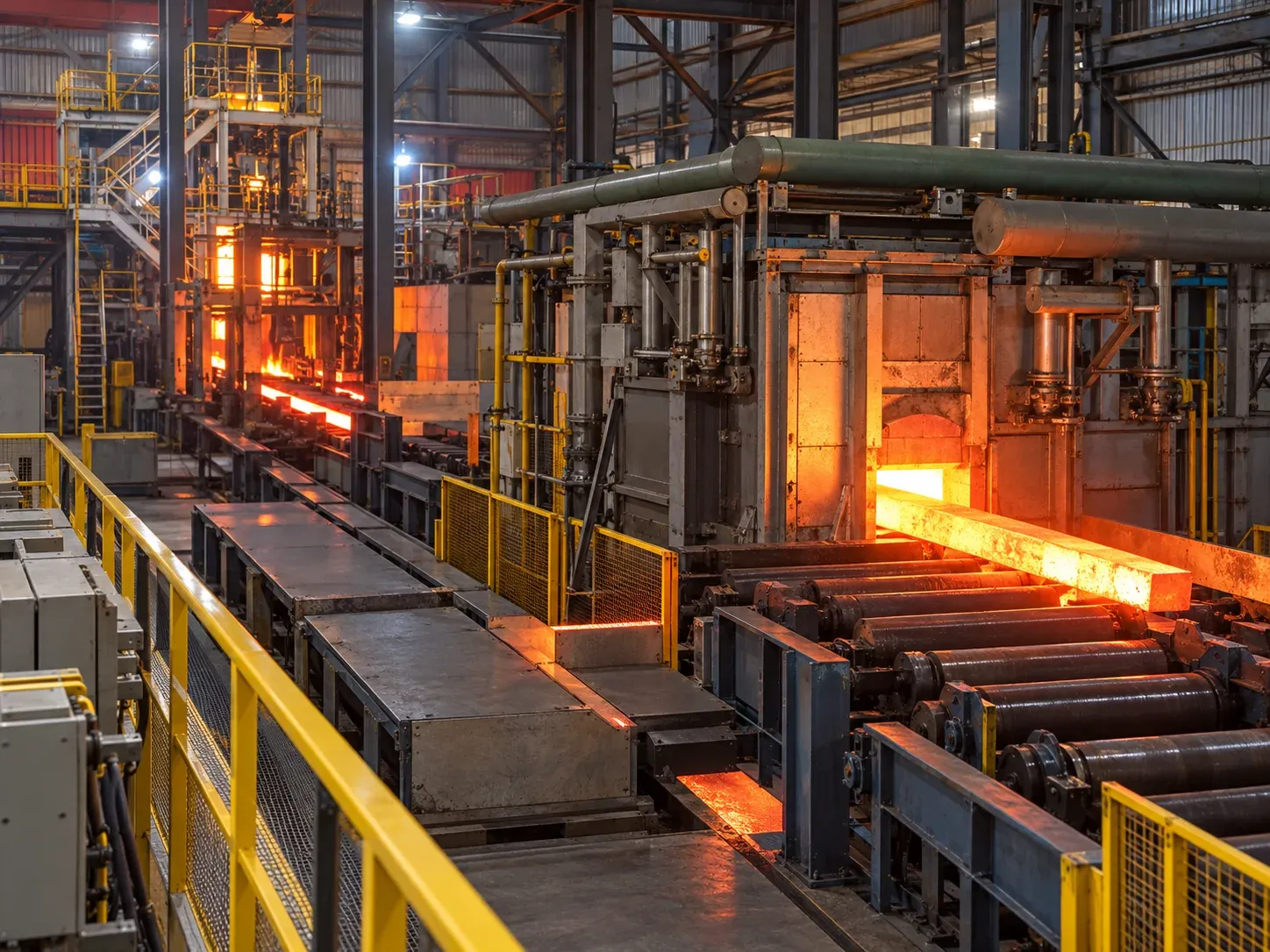
A small rebar line is a chain: pusher-type reheating furnace, roughing, intermediate and finishing stands, cooling bed, shear and bundling. Our line uses about 9-17 stands, with finishing speed of about 4-12 m/s. Billets are typically 3-12 m long. The 10,000-50,000 tons per year is a reference scheme, not a guarantee, and the real figure depends on bar size mix, billet quality and furnace heat.
Two choices move the price and the result most. First, the billet source: a mill that buys billet is a rolling plant; one that melts steel needs a furnace, caster and environmental systems, and can use hot charging from a caster, which the rolling-plant literature, for example this note on endless casting and rolling, describes for a much larger plant. Second, the bar spec: tempering or heat-treatment cooling gives higher strength grades, and local standards (for example grades and rib patterns) must be stated before the roll design.
Small-mill makers publish capacity figures from tens of thousands to hundreds of thousands of tons (an example guide), so always compare plants on billet size, stands and furnace type rather than on a headline tonnage.
Ceramic tile line
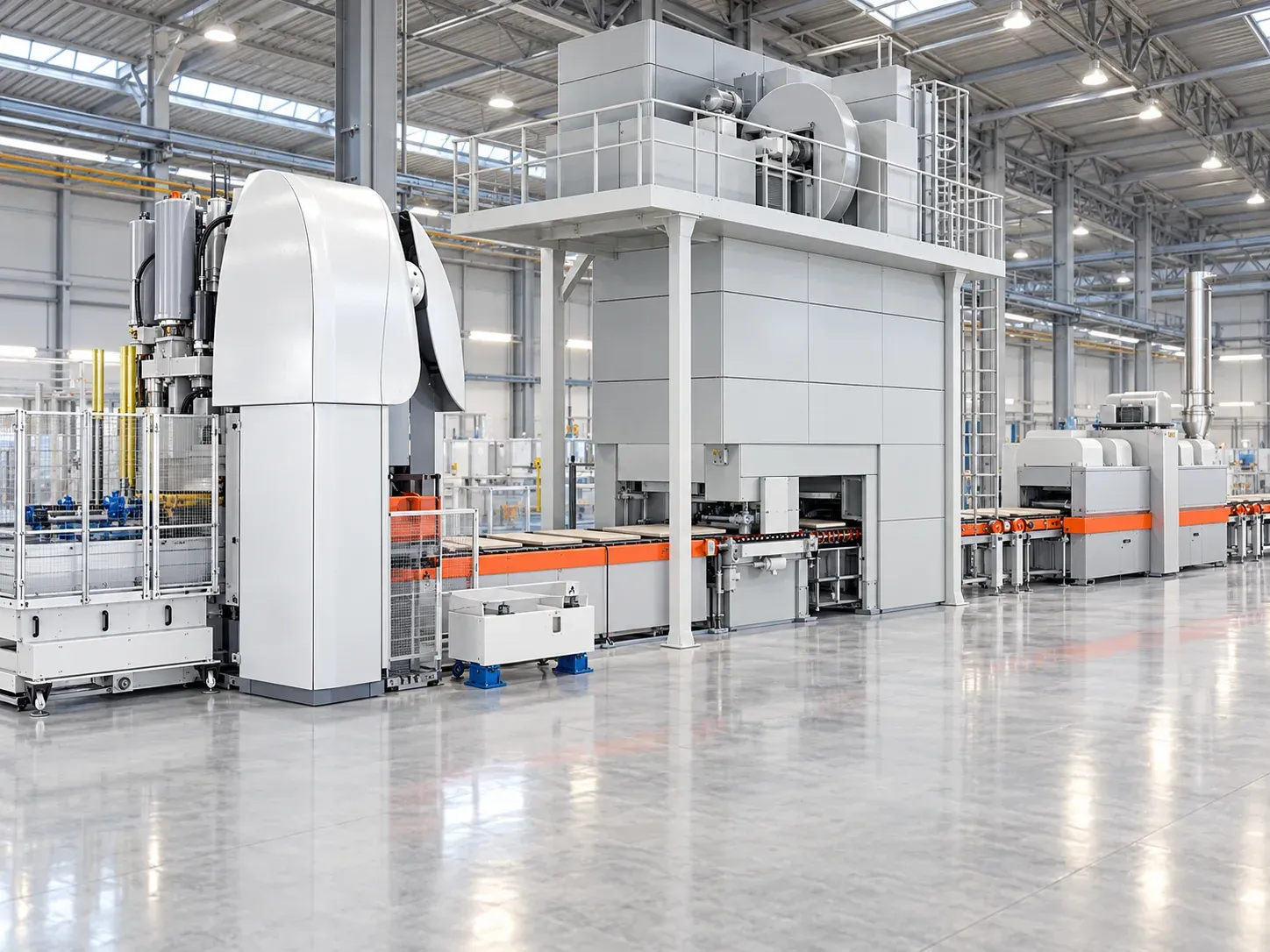
A tile plant runs in a fixed order: raw-material feeding and ball mill, spray dryer with powder silos, hydraulic press, dryer, glaze or digital decoration, roller kiln, sorting and packing. Press force rises with tile size, about 1,500-8,000 t in our range. The roller kiln is the heart of the plant: about 100-350 m long, with a firing cycle of roughly 35-70 minutes cold to cold, and the dryer outlet moisture should stay below about 0.5%.
Fuel and powder quality come first. A kiln fired on natural gas, LPG or other fuel is designed for it, so tell us what you have. Spray-dried powder moisture in our description is about 5-7%. Options include digital inkjet decoration, a large-slab continuous press, edge rectifying and polishing, waste-heat recovery from kiln to dryer and kiln flue-gas dust and fluoride treatment.
How to choose
Rebar suits a buyer with a billet supply and a local construction market; tile suits a buyer with clay sources and a decorating plan. Both are capital projects that need a site plan, a power connection of several megawatts at the upper end and a utilities check (water, compressed air, fuel). Power is typically three-phase at 380-415 V 50 Hz or the 60 Hz equivalent, with medium-voltage supply for the bigger drives.
What to send for a quote
Rebar line:
- Billet source, size and steel grade.
- Product list with sizes, and target annual output.
- Fuel and power availability; whether melting is in scope.
Tile line:
- Tile types, sizes and thickness.
- Daily output target and raw-material analysis if available.
- Fuel type, floor plan, and new plant or upgrade.
Send whichever list applies and we match the equipment to it. Both sit within our industrial manufacturing range, next to sawmills and wood processing and paper and board machines.