Cutting room first
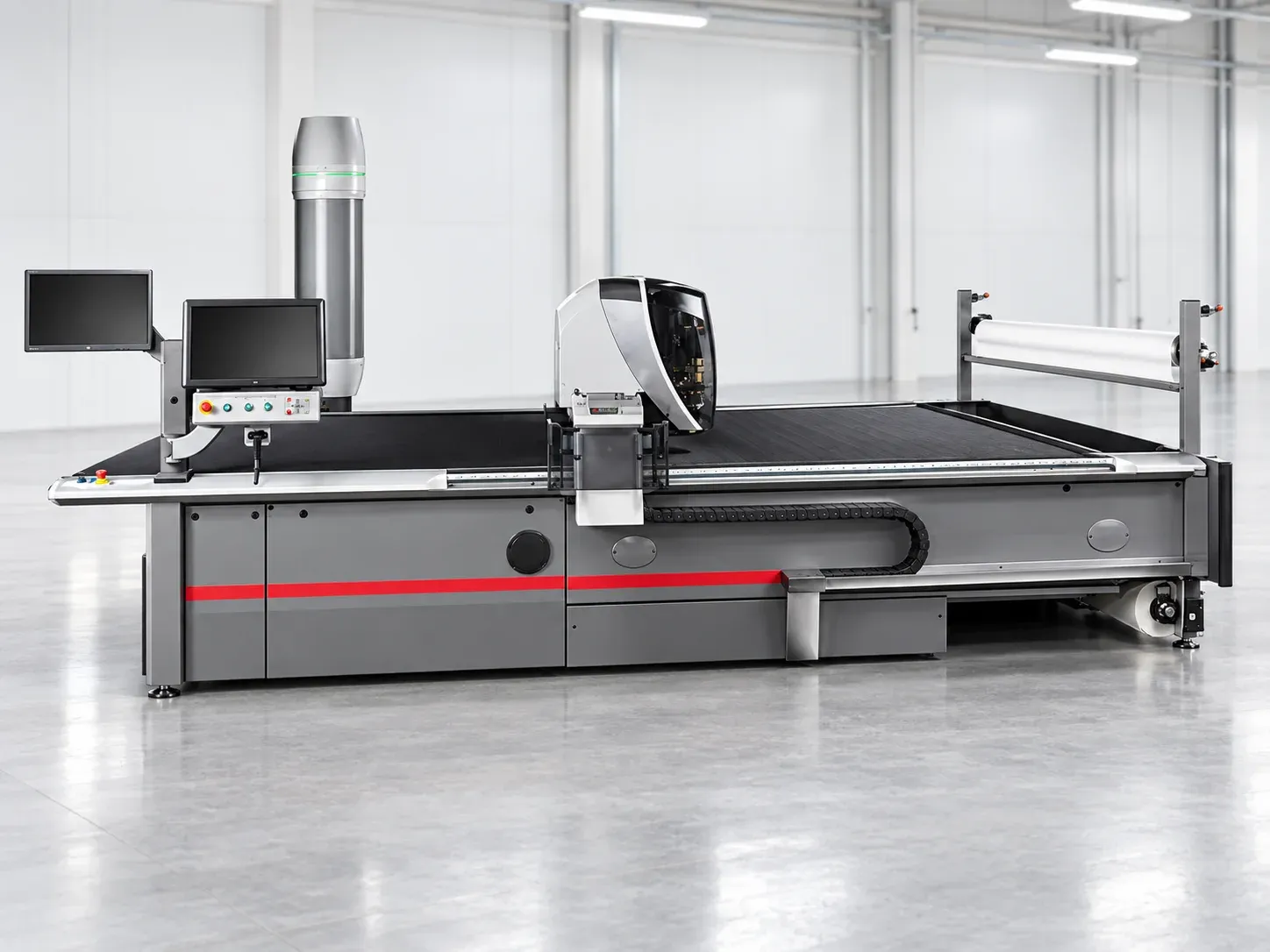
An automatic cutter reads a marker from your CAD system and cuts the fabric lay with a reciprocating blade, so nobody draws the marker on the cloth. Industry write-ups list the practical gains as higher cutting accuracy, less fabric waste and fewer people in the cutting room. Some factories also use a vibrating knife with a vacuum table, which holds soft or slippery material still.
Our Automatic Fabric Cutting Systems for Garment Factories come in entry, mid-range and high-volume classes. The numbers to compare:
| Item | Our range | Why it matters |
|---|---|---|
| Cutting width | about 1.6 to 2.2 m | Must exceed your widest marker |
| Table length | about 1.8 to 10 m, extendable by conveyor | Longer tables cut while the next lay is prepared |
| Compressed lay height | about 30 to 90 mm | Sets layers per cut |
| Accuracy | about ±0.5 to 1 mm | Pattern matching, size consistency |
| Installed power | about 8 to 25 kW with vacuum pump | Check the plant supply |
The product page lists cutting head speed up to 8 m/min as a series maximum; real throughput depends on fabric, ply count and marker complexity.
Entry machines suit small batches and mixed styles. High-volume cutters pay off when the lay is thick and the same fabric runs all day, usually with a spreader ahead of the table. Denim and technical fabrics wear blades faster than knits, so ask about the sharpening system and spare blade supply. Ask for a spreader or vacuum table only if you do not already have one.
Footwear assembly
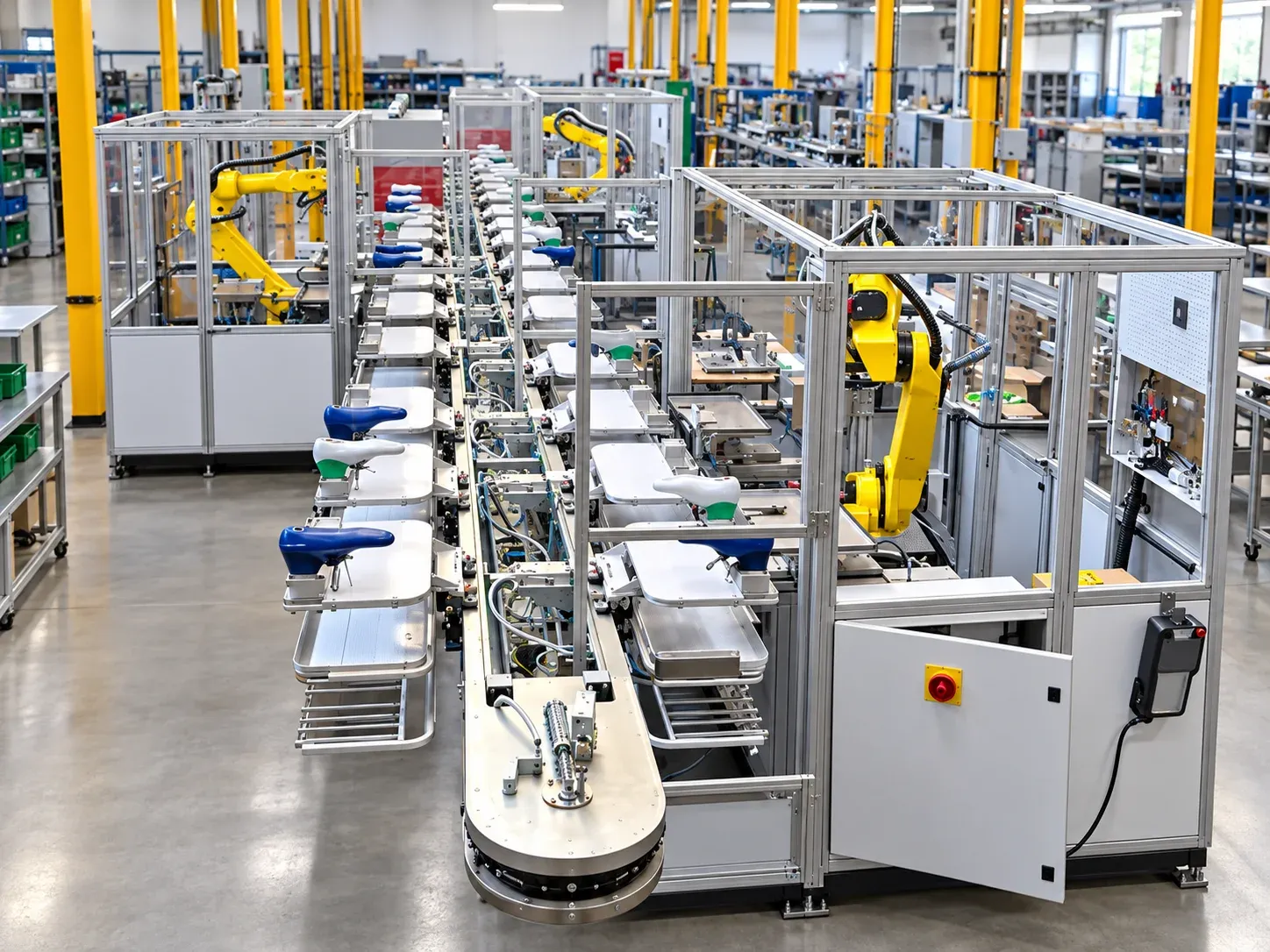
The Shoe Assembly Timed Conveyor Line with Robot Stations moves shoes by timed chain conveyor between robot and manual stations: pounding, roughing, upper and sole cementing, then heat steps like steaming, adhesive reactivation and cold setting. Typical figures: line length about 40 to 100 m, 30 to 80 stations, 25 to 70 operators per shift, 600 to 2,500 pairs per day, adhesive activation about 60 to 80 °C, compressed air 0.6 to 0.8 MPa and installed power about 60 to 200 kW including ovens and chillers.
Dividing those ranges gives roughly 20 to 40 pairs per operator per day. Use that as a planning figure only, because shoe construction changes everything. A cemented sports shoe and a safety boot with a welted sole do not share the same station count.
Which one do you need?
If you cut fabric today by hand or with a straight knife, the cutter is usually the first, lowest-risk step. A footwear line makes sense when you already have stable styles and enough floor length for a 40 to 100 m layout. Check your floor plan and ceiling height before choosing; a long line fits poorly in a building with columns every six metres.
What to send for a quote
- Cutter: fabric types, typical layers, cutting width and table length, daily fabric use, CAD or marker software
- Line: shoe types and sizes, steps to automate, daily pairs, floor plan with dimensions, operators planned
- Local voltage, frequency and air supply
Related lines are on the Industrial Manufacturing page.