Industrial Manufacturing · Complete line
Industrial Manufacturing · Complete line
Mini Steel Mill & Rebar Rolling Lines
A compact steel plant concept for small rebar and long products, with reheating, rolling, cooling and cutting sections set by your billet source and target sizes.
- Model
- MM-MBM
- Product group
- Ceramic Tile & Steel Rolling Lines
- Products
- Small rebar, flat bar and angle
- Compact plant for rebar and long products
- Reheating furnace, mill stands, cooling bed and shear
- Small rebar, flat bar and angle
- Layout from billet source and target sizes
- Automation level chosen per project
Overview
A compact plant for long products
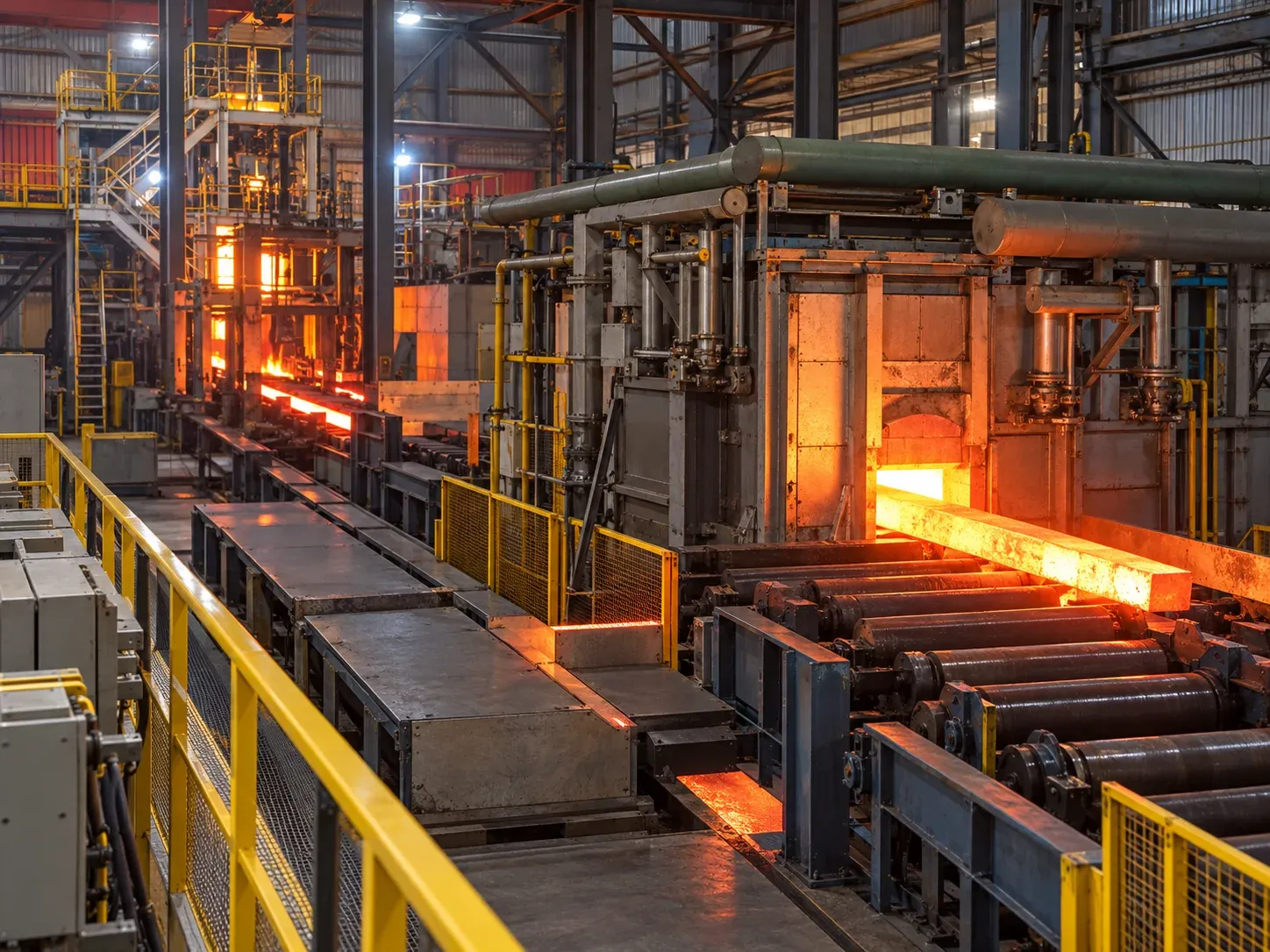
A mini mill rolls steel billets into bars and sections. Our scheme covers the reheating furnace, rolling stands, cooling bed, shear and bundling area, arranged tightly so the plant can fit on a modest site. It is aimed at producers who want to make small rebar, flat bar and angle for local construction markets.
Plant scale is a project decision
Published scheme ranges for plants of this kind run from about 10,000 to 50,000 tons per year. That is an orientation only. The real output of a line depends on the billet size, the products you roll, how many stands you install, furnace capacity and the shifts you work. We calculate it again for your case instead of promising a number from the range.
What we need to design it
The most important input is your billet source: size, grade and whether you buy billets or plan to melt. Then the product list with sizes, the annual tonnage you want, the fuel available for the furnace and your power and water supply. Environmental permits and emission limits at your site also shape the design.
Sections in detail
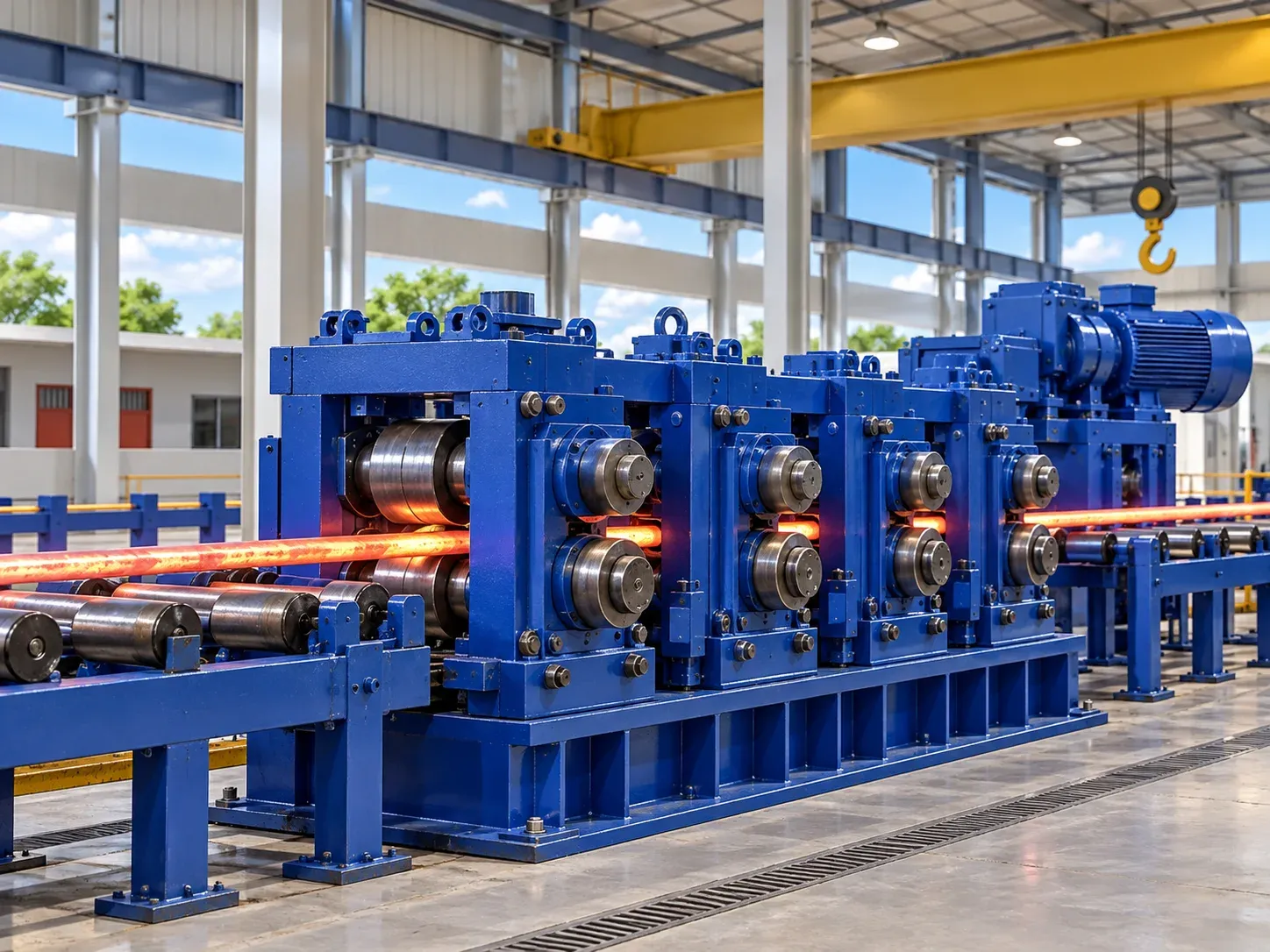
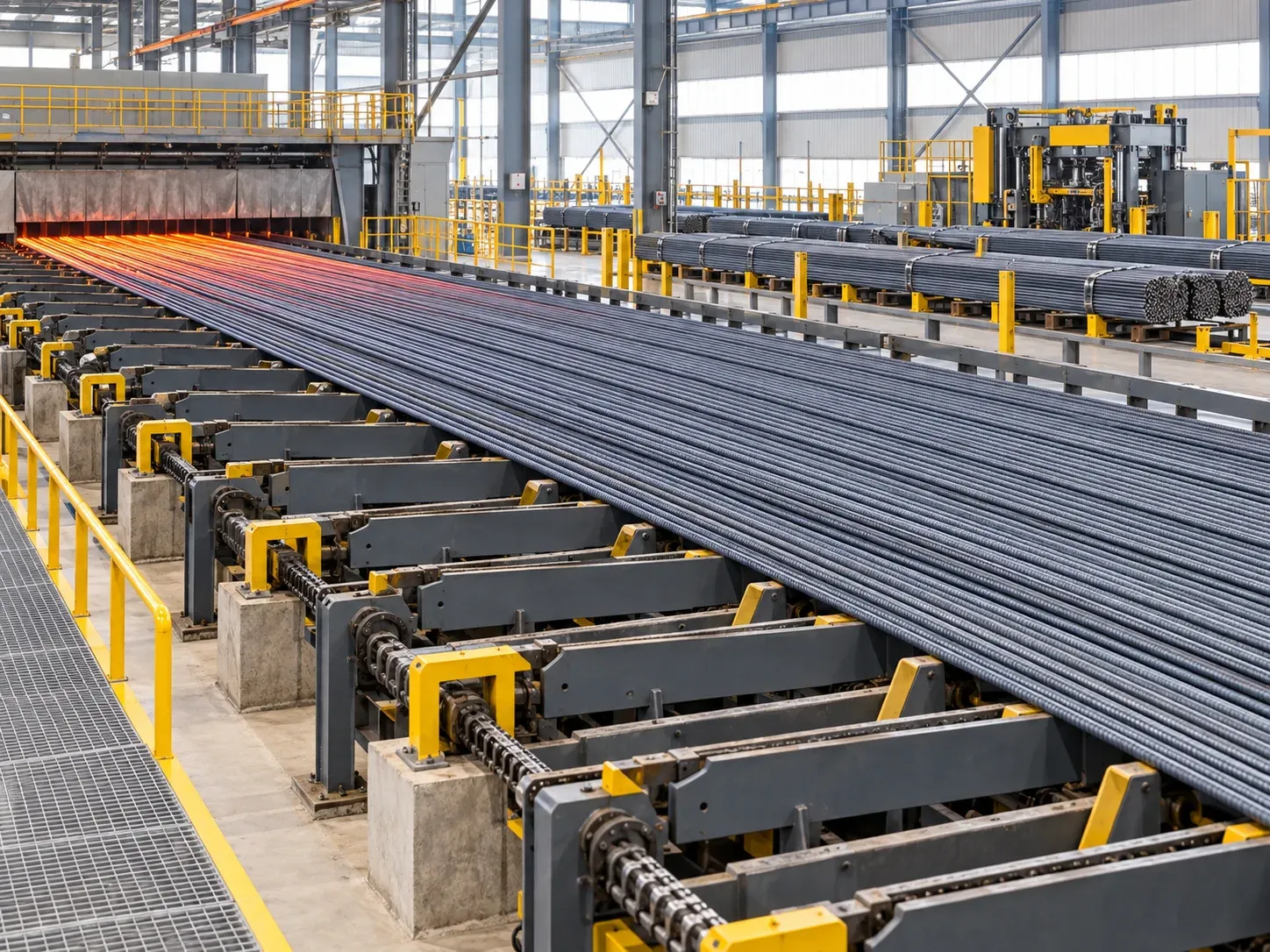
The furnace heats billets evenly to rolling temperature. The mill stands reduce the section step by step. The cooling bed brings bars to handling temperature, and shears cut them to length before counting and bundling. Automation can range from manual handling to automatic counting and tying.
What this concept is not
This is a rolling plant concept. Steel melting, if needed, is a separate scope that we discuss in the project phase.
Delivery
Machines ship in containers with foundation and piping drawings. Our engineers support installation and commissioning.
Ordering
Our engineers answer each inquiry with a written scope, drawings or a specification, and a plain list of what is included and what is not. The quote checklist below shows what we need to start.
Compared with a tile production line
This plant concept rolls bar from billet, so everything depends on billet quality and furnace heat. In a tile plant the critical items are the press and kiln; here they are the furnace, the main drives and the roll passes. The two plants also differ in what they need around them: a rolling mill needs a steady supply of billet (bought in or cast on site), fuel for reheating, and large volumes of cooling water, while a tile plant needs clay, feldspar and glaze materials.
Inside the rolling mill family, the product mix sets the stand count. Plain rebar in a narrow size band can run with fewer stands. Adding flat bar and angle means more roll passes, more changeovers and a bigger roll inventory. List every size and grade you plan to roll and we will lay the stands out for that.
Specifications
| Model | MM-MBM |
|---|---|
| Products | Small rebar, flat bar and angle |
| Billet section | about 100–130 mm square |
| Billet length | about 3–12 m |
| Rebar sizes | commonly 8–25 mm |
| Reheating temperature | about 1,100–1,250 °C |
| Number of rolling stands | about 9–17, with roughing, intermediate and finishing groups |
| Finishing rolling speed | about 4–12 m/s |
| Installed power | about 1,500–5,000 kW |
Configurations
| Reference plant scale | Scheme range of roughly 10,000 – 50,000 tons per year, not a guarantee for a given line |
|---|---|
| Plant sections | Reheating furnace, rolling stands, cooling bed, shears, packing and automation by project |
Standard equipment
- Pusher-type reheating furnace with burners
- Horizontal or two-high rolling stands with main drives
- Roller tables and looping or transfer guides
- Flying or cold shear
- Cooling bed with counting and bundling
- Cooling-water circuit and electrical control system
Options
- Walking-beam furnace
- Hot-charging link from a continuous caster
- Tempering or heat-treatment cooling line for rebar
- Automatic bar counting and bundling machine
- Waste-heat recovery from the furnace
- Mill-scale and cooling-water treatment
- Spare roll sets and roll-turning lathe
Frequently asked questions
What annual output can I expect?
Output depends on billet size, products, stands and working shifts. We calculate it from your data rather than quote a range as a guarantee.
Do you supply steel melting equipment?
This product covers the rolling section. Melting is a separate scope we can discuss if you need a full integrated plant.
Can the line roll more than rebar?
Yes, flat bar and angle are possible. Roll sets and stand count must be planned for the product list.
How much floor space does a rolling mill need?
A small bar mill needs a long, narrow building, because billet storage, furnace, stands, cooling bed and bundling sit in a row. Length mainly follows the cooling bed and product length, so we draw the layout once we know bar sizes and output.
Request a quote: Mini Steel Mill & Rebar Rolling Lines
Send your requirement and our engineers reply with the configuration, lead time and a quotation.
Related products
Industrial Manufacturing · Complete line
Complete Sawmill Lines, From Log Deck to Stacking
Industrial Manufacturing · Complete line
Detergent Powder Mixing and Packing Line
Industrial Manufacturing · Complete line
Kraft Paper & Paperboard Machine Lines