Industrial Manufacturing · Complete line
Industrial Manufacturing · Complete line
Low-Voltage Cable Insulation Extrusion Line
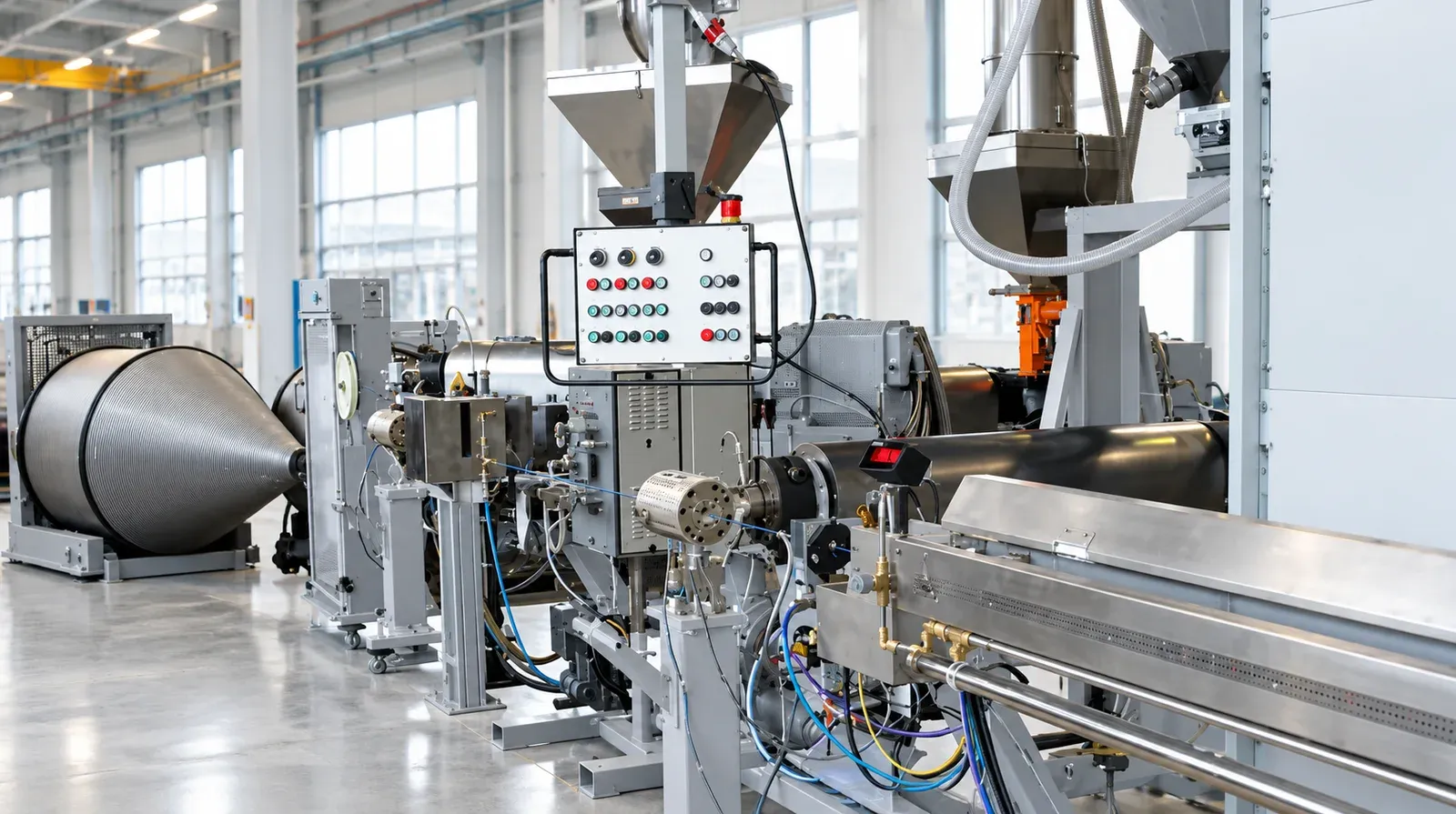
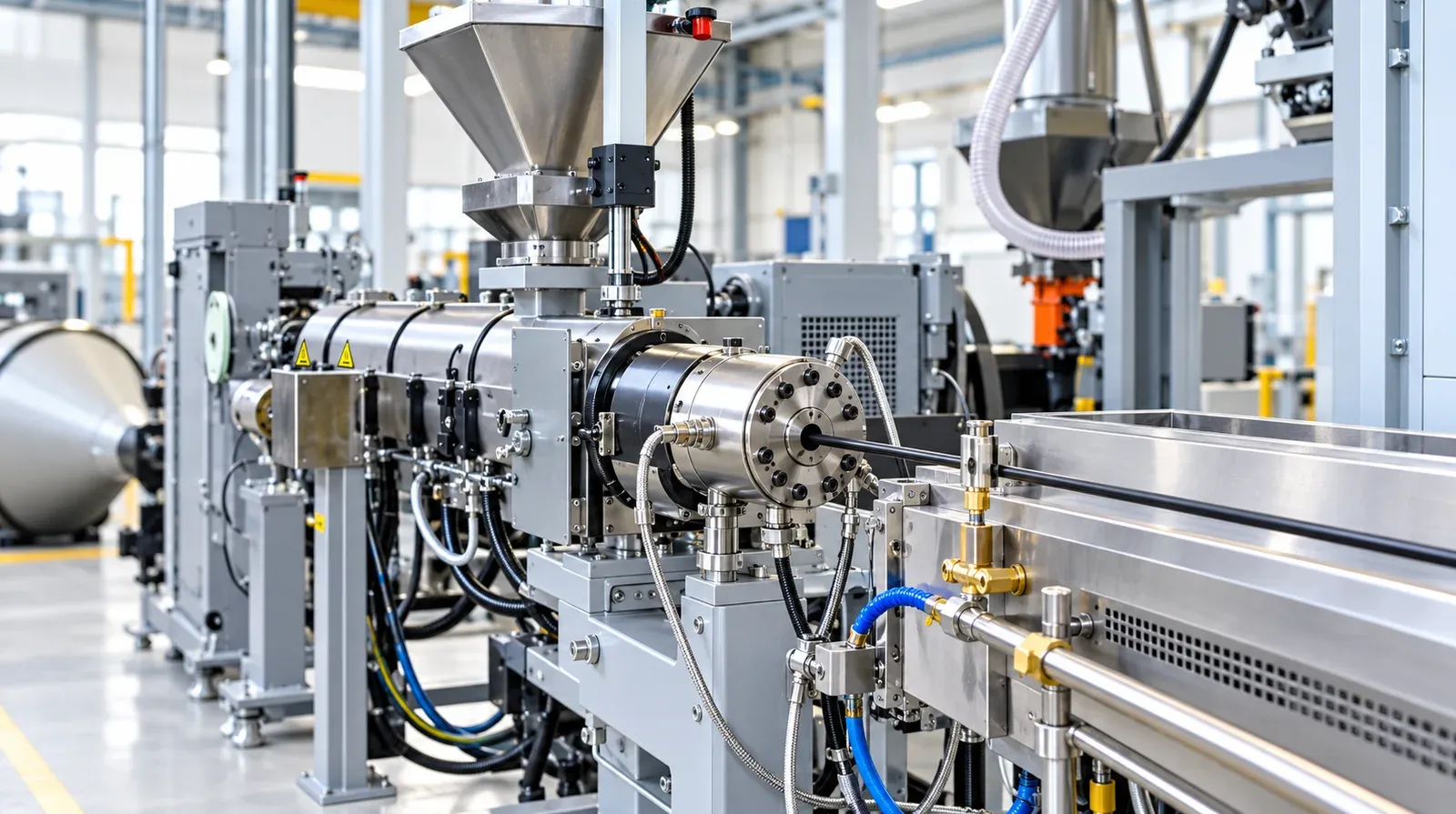
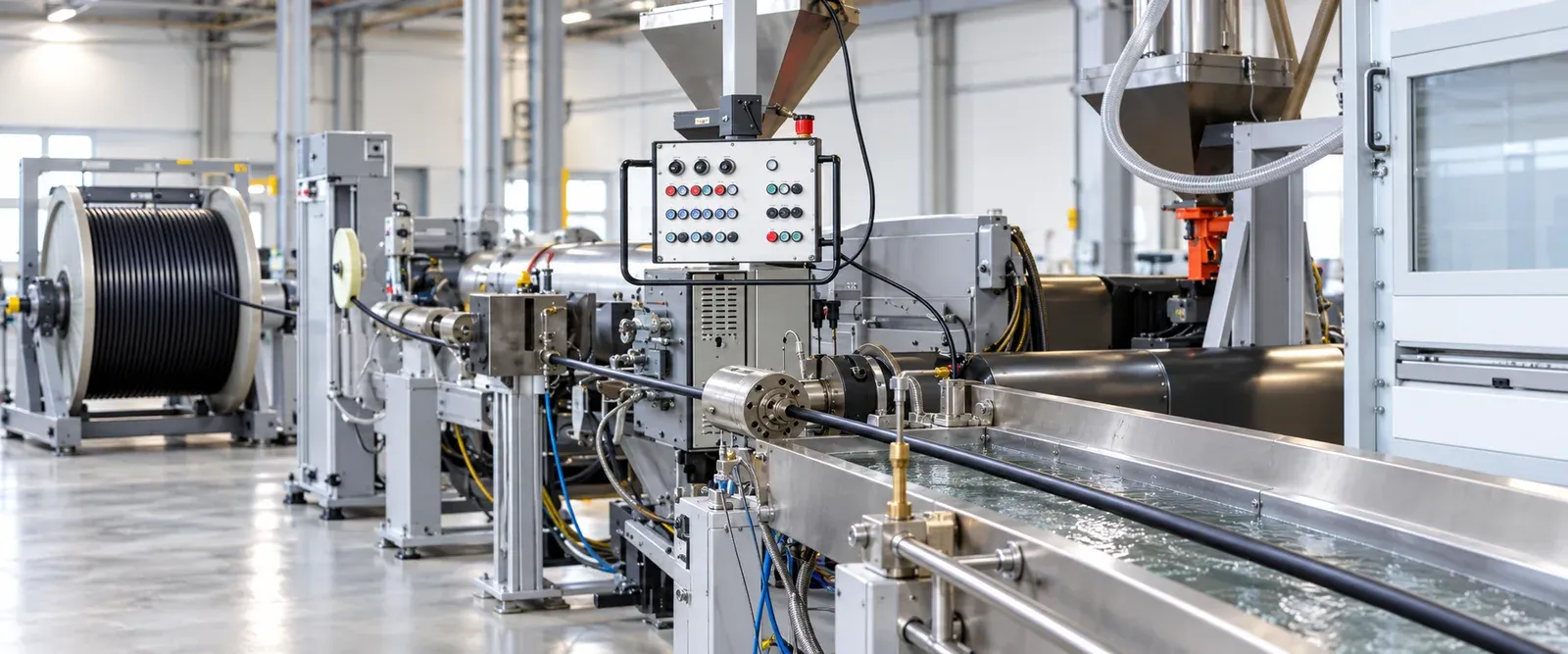
An insulation extrusion line for low-voltage cables, with extruder, cooling, measurement, haul-off and take-up configured for your conductor sizes and compound.
- Model
- MM-LVI
- Product group
- Cable & Battery Production Equipment
- Process
- Low-voltage cable insulation extrusion
- Insulation materials
- PVC, LSOH/HFFR, XLPE
- PVC, LSOH (HFFR) and XLPE compounds
- Standardized line for common low-voltage products
- Extruder, crosshead, cooling and haul-off
- Online measuring and take-up options
- Designed around conductor size and line speed
Overview
What the line does
A cable insulation line takes a bare or stranded conductor, passes it through an extruder crosshead where a polymer insulation is applied, cools it in a water trough, checks its diameter and takes it up on a reel or drum. Our line is built for low-voltage products, where high volumes and repeatable quality matter most.
Compounds
The same line can process PVC for general building wire, low-smoke zero-halogen (LSOH or HFFR) compounds for installations where fire safety matters, and XLPE for cables with higher temperature rating. Each compound needs the right screw design, temperature profile and cooling arrangement, so these are configured per compound.
Sections
Payoff and conductor preheating, material feeding, the extruder and crosshead, a cooling trough, an online diameter and eccentricity gauge, a spark tester, the capstan or haul-off, and take-up. The measuring and testing items vary with the product standard your cables must pass.
What defines the configuration
Conductor material and size, wall thickness, insulation compound, product standard, required line speed and the take-up format. A line for thin building wire looks different from one for larger control cable cores. The size range of the series is 0.5 to 10 mm², but a given order is configured for specific sizes.
What is not included
Wire drawing, stranding, bunching, sheathing, armoring and medium- or high-voltage curing lines are separate equipment. We can supply or advise on them as part of a larger cable plant.
Support
Our engineers provide installation guidance, commissioning support and operator training.
From inquiry to quotation
The quote checklist below covers the details needed. Our engineers reply with a written scope, drawings or a specification, and a clear list of inclusions and exclusions you can compare against other options.
Compared with the battery equipment line
This is a continuous-process line: conductor goes in at one end, insulated core comes out at the other, and the line either runs or it does not. The quality targets are numbers you can measure along the way, such as insulation wall thickness, concentricity and surface finish. Lead-acid battery equipment is the opposite kind of plant: a series of batch and cycle machines (casting, pasting, curing, formation) linked by material handling.
Once you have chosen this type of line, the choice that matters most is the compound. PVC runs at modest temperatures on a standard screw. Halogen-free compounds are shear and temperature sensitive and call for a screw designed for them. Cross-linked polyethylene usually adds a curing stage. Send us your compound data sheet and the cable standard you build to.
Specifications
| Model | MM-LVI |
|---|---|
| Process | Low-voltage cable insulation extrusion |
| Insulation materials | PVC, LSOH/HFFR, XLPE |
| Extruder screw diameter | about 50–90 mm |
| Screw length-to-diameter ratio | about 20:1–26:1 for PVC; longer for XLPE |
| Insulation wall thickness | about 0.5–1.2 mm |
| Line speed | about 50–300 m/min, falling for thicker wall or cross-linked material |
| Melt temperature, PVC | about 150–190 °C |
| Cooling trough length | about 15–40 m |
| Extruder drive power | about 22–75 kW |
Configurations
| Conductor cross-section | 0.5 – 10 mm²; confirmed per order |
|---|---|
| Line sections | Payoff, extruder and crosshead, material feeding, cooling, online measurement, haul-off and take-up |
Standard equipment
- Conductor payoff with tension control
- Single-screw extruder with crosshead and dies
- Hopper loader or material feeding unit
- Water cooling trough with air wiper
- Online diameter gauge
- Capstan haul-off with traverse take-up
Options
- Spark tester
- Double-layer or color-stripe co-extrusion head
- Preheater for the conductor
- Dancer-type payoff and accumulator
- Silane cross-linking water bath or sauna for XLPE
- Automatic reel changeover
- Laser diameter and ovality gauge
Frequently asked questions
Can one line run PVC and LSOH?
Often yes, with changes to the screw, die and temperatures. Compound compatibility is checked against your product list before quoting.
Does the line include wire drawing?
No. Drawing, stranding and sheathing are separate machines, but we can quote a complete cable plant.
What measuring equipment is available?
Online diameter and eccentricity gauges and spark testing are typical options, selected by the standard your cable must meet.
What does the line need besides electric power?
Cooling water, usually in a closed circuit with a chiller or cooling tower, and compressed air for the wiper and some drives. Compounds should be stored dry, since moisture causes bubbles in the insulation.
Request a quote: Low-Voltage Cable Insulation Extrusion Line
Send your requirement and our engineers reply with the configuration, lead time and a quotation.
Related products
Industrial Manufacturing · Complete line
Ceramic Tile & Large-Slab Production Lines
Industrial Manufacturing · Complete line
Complete Sawmill Lines, From Log Deck to Stacking
Industrial Manufacturing · Complete line
Detergent Powder Mixing and Packing Line