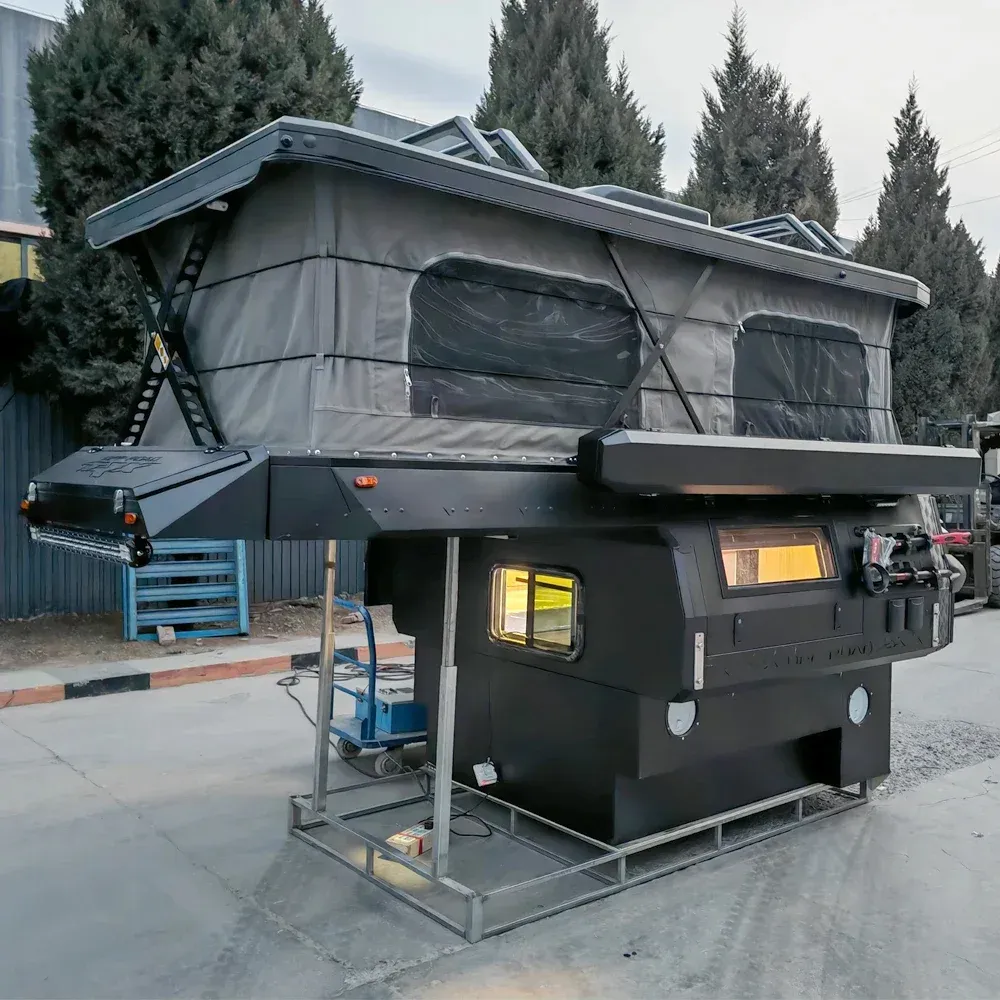
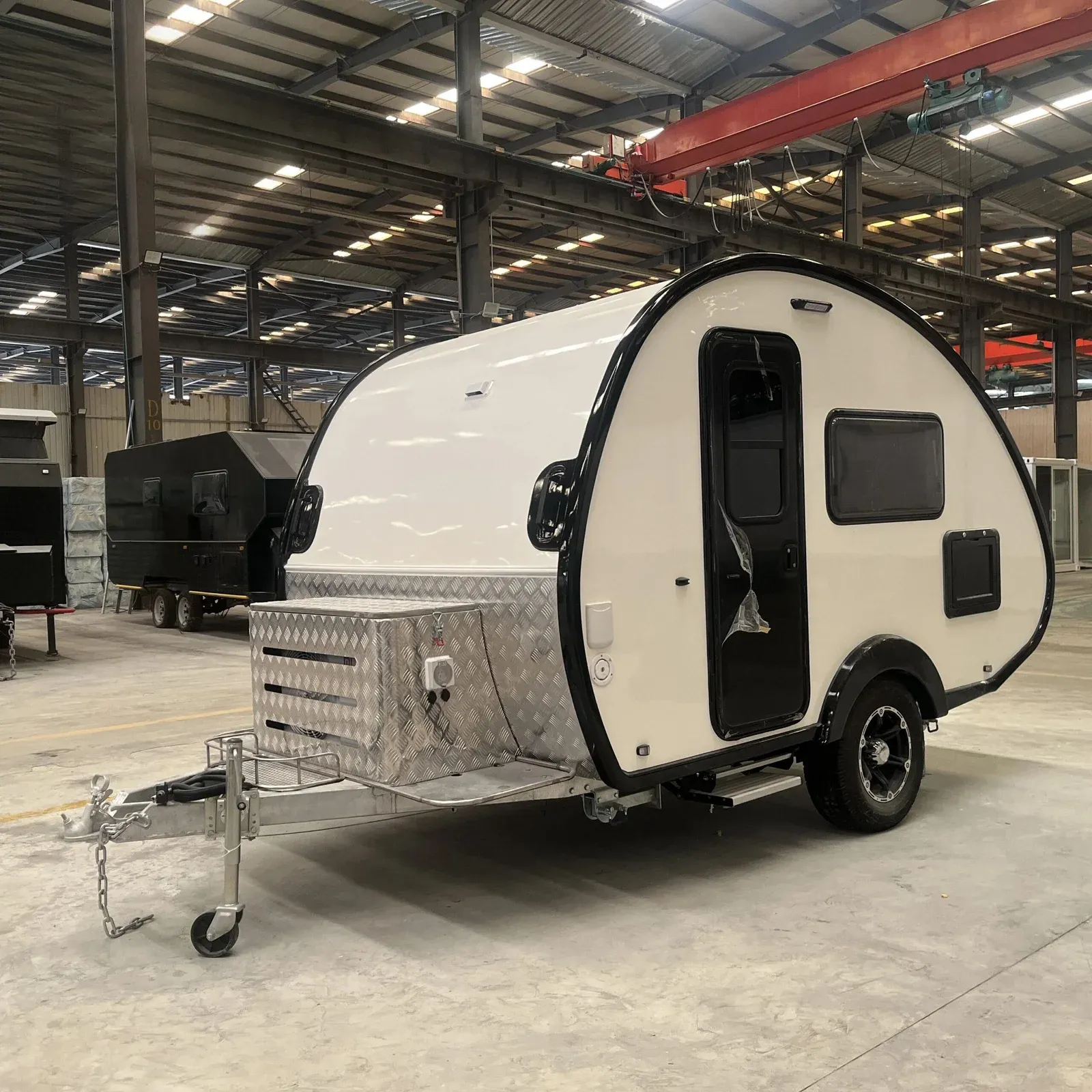
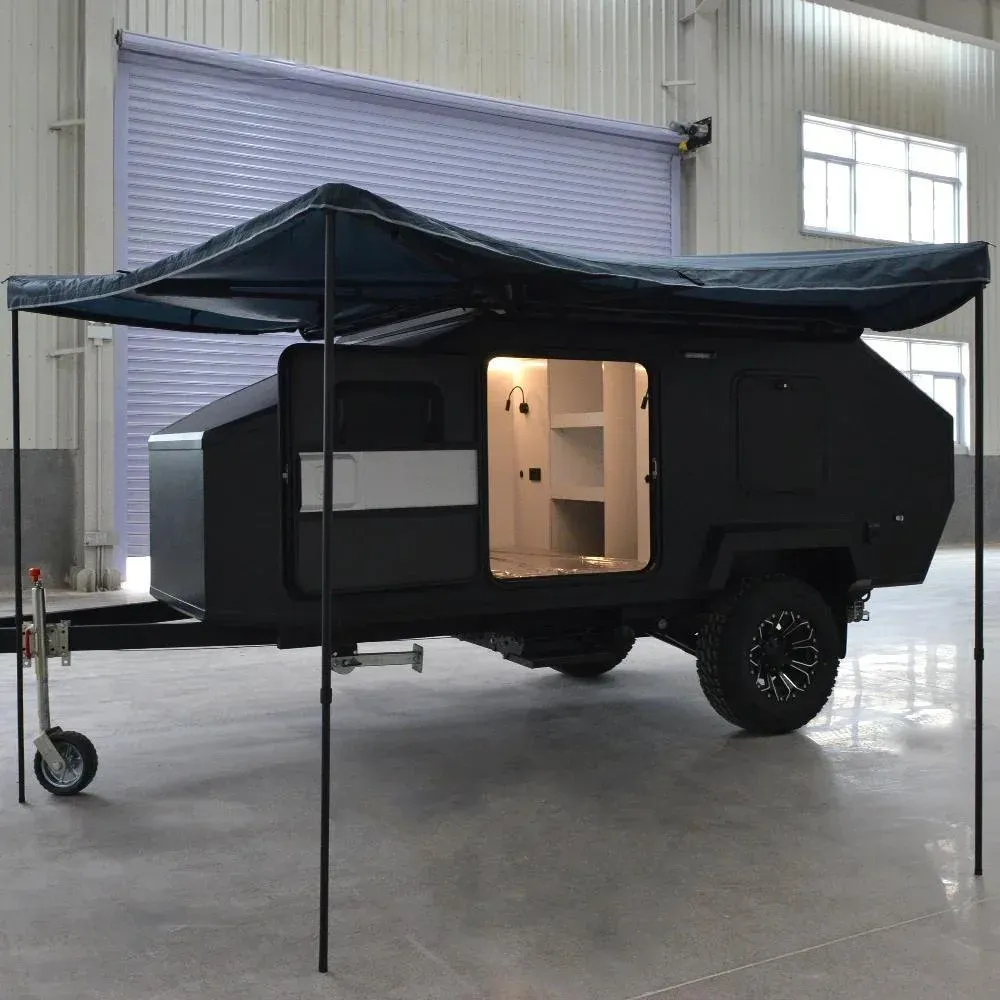
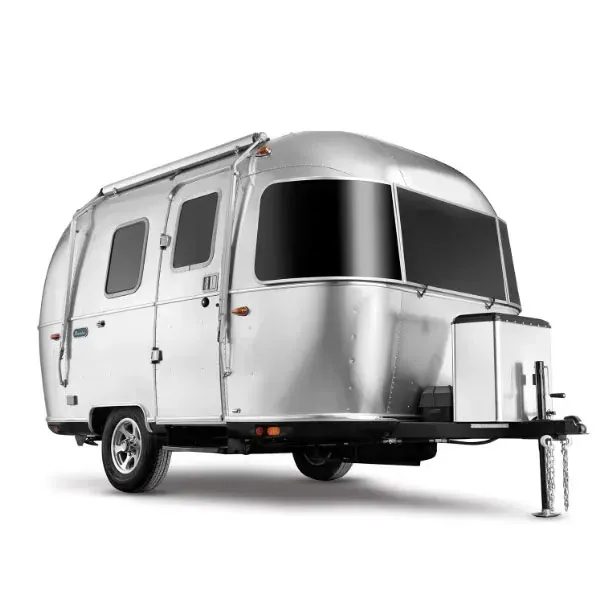
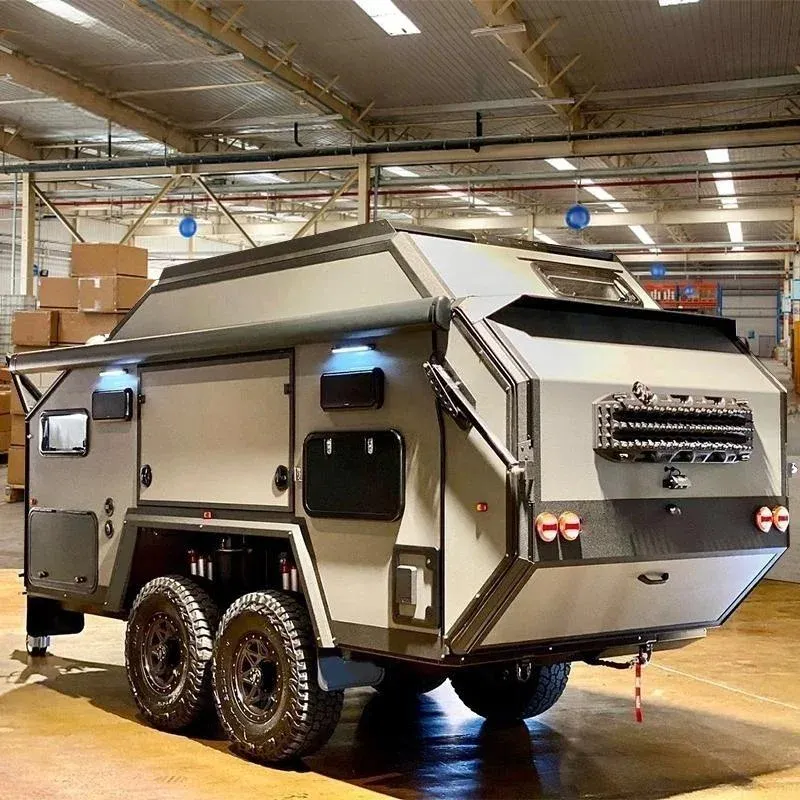
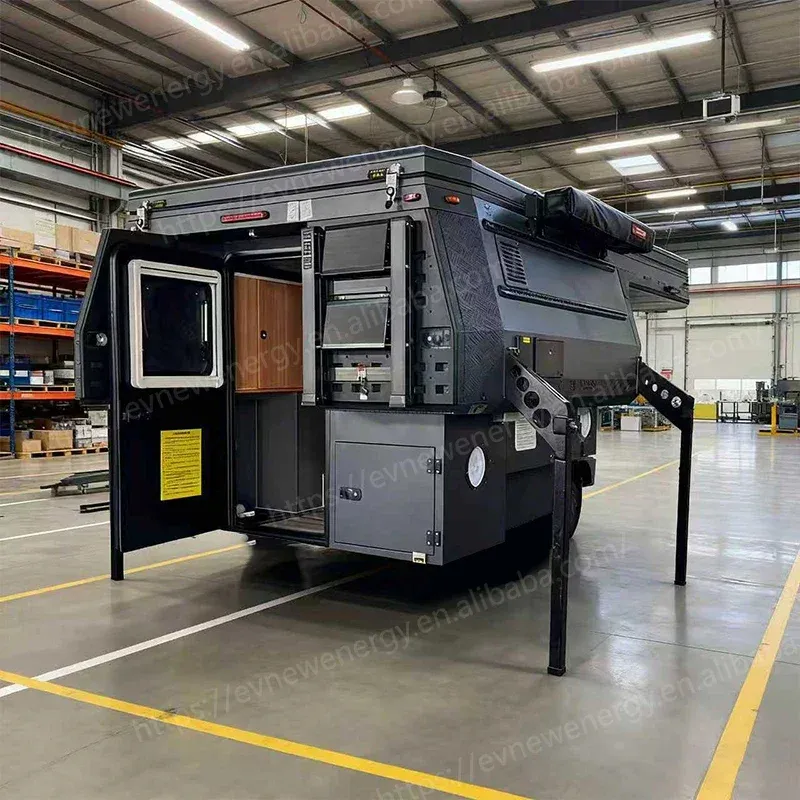
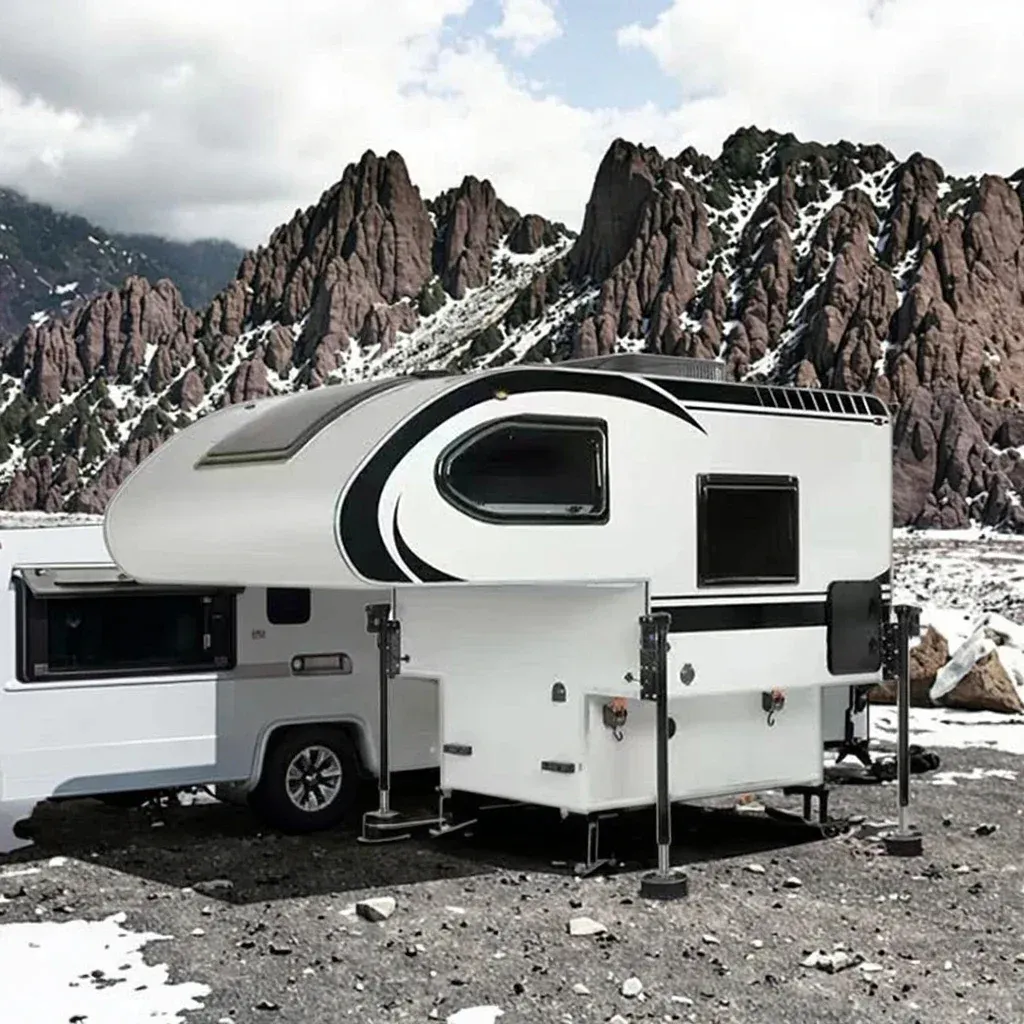
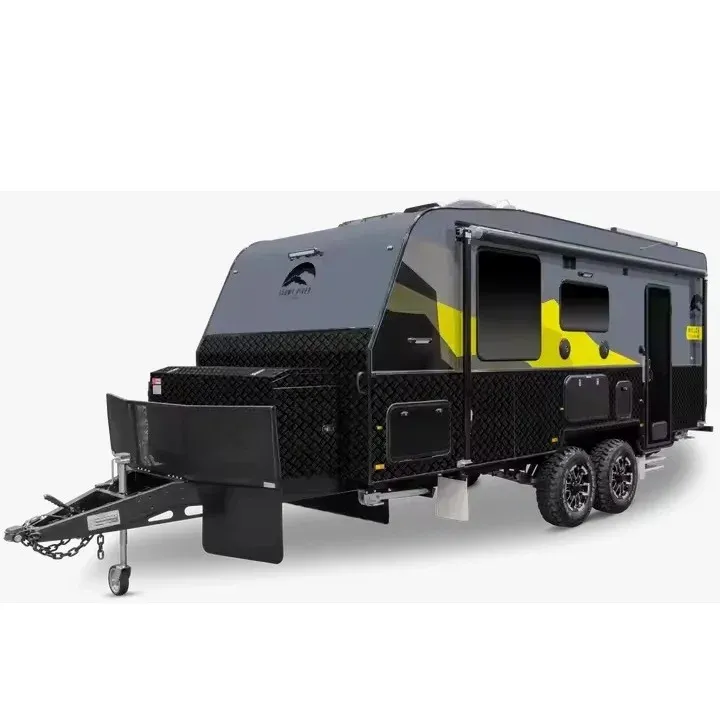
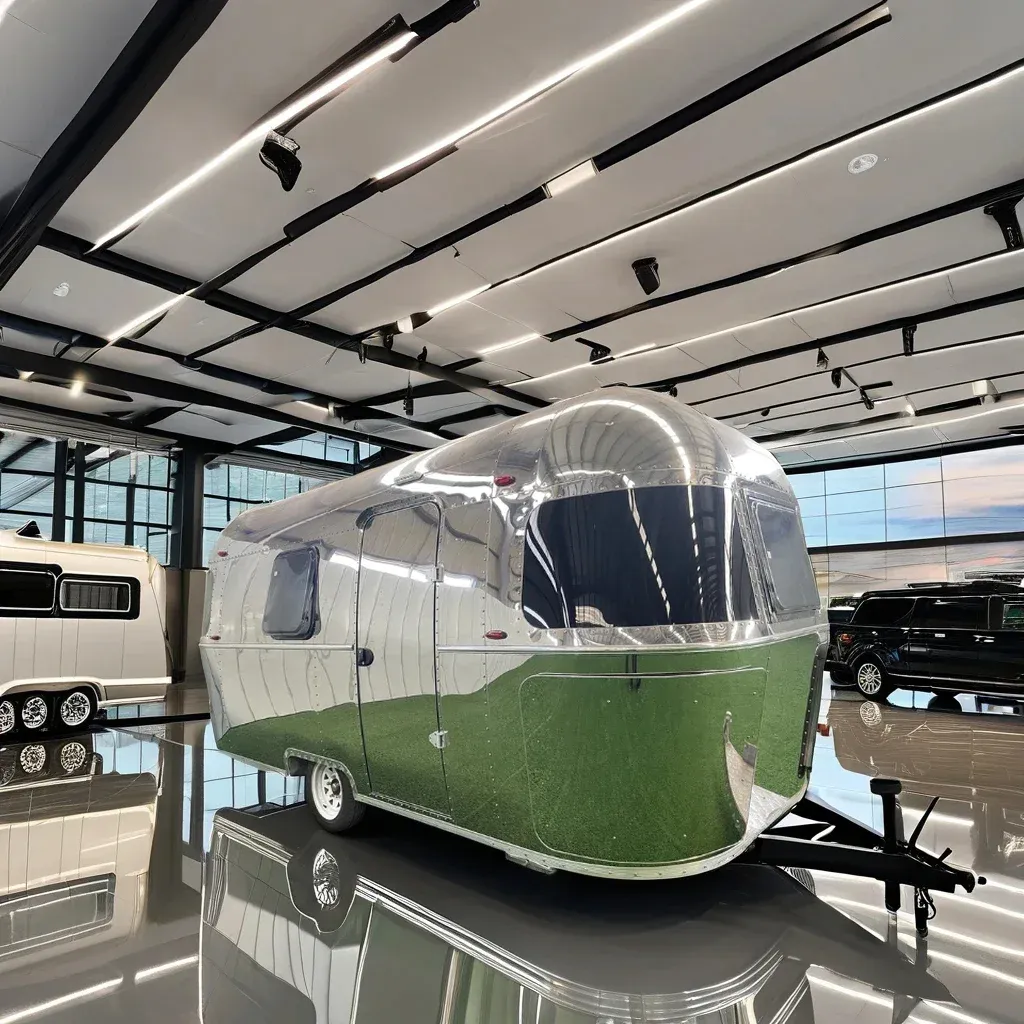
A camper trailer is a compromise between weight, space and comfort, and the right answer changes with your tow vehicle, your roads and the number of people. Our range has nine models in three families: towed travel trailers, expandable hybrids and teardrops, and slide-in truck campers.
Quick comparison
| Model | Length | Sleeps | Payload | Notes |
|---|---|---|---|---|
| Teardrop camper | 4200 mm | 2-4 | 700 kg | Lightest, rear slide-out kitchen |
| Fiberglass mini caravan | 4995 mm | 4 | not stated | Independent suspension, water system |
| Aluminum travel trailer | 5000 mm | family size | 1000 kg | 17-inch wheels, induction cooker |
| Expandable hybrid | 6725 mm | 2-4 | not stated | 575 mm clearance, 200 L water |
| Retro expedition trailer | by layout | 2-4 or 4-6 | 3300 kg | 120 L water, galvanized chassis |
| Foldable slide-in camper | 2840 mm | 2-4 | 550 kg curb weight | Pop-up canopy |
An aluminum slide-in camper, a fiberglass truck camper with bunk beds, and an OEM aluminum camping trailer built to your drawing complete the group.
Towing first
Add the trailer’s loaded weight to what you will carry, then compare it with the tow rating in your vehicle handbook. As typical class values, the teardrop is around 1.2-1.5 t loaded, the 5000 mm travel trailer about 1.9-2.3 t, and the retro expedition trailer needs a 4WD pickup or large SUV rated near 3.5 t. Tongue weight is about 10% of trailer weight, so check the hitch rating too. We give the weights with the drawing.
Choosing the body
Aluminum or fiberglass. Aluminum bodies are light and easy to repair; fiberglass shells give a seamless skin and are popular for compact trailers. The decision is usually about look, price and local repair habits.
Teardrop or hybrid. A teardrop is fully lockable with no setup; a hybrid expands for more living space in about 10-20 minutes. Trailer-rental guides note that canvas pop-up campers must be dried after rain and can be hot in summer sun, so a hard-sided teardrop suits wetter climates better.
Off-road or highway. Independent suspension and high ground clearance help on corrugated roads. For gravel tracks and desert routes, ask about all-terrain tyres, a breakaway system and a spare wheel carrier.
Slide-in or towed. If you already have a pickup, a slide-in camper avoids a hitch and keeps the truck narrow; check bed length (about 1.8-2.5 m typical) and payload.
Power and water
Living off-grid is where a small trailer succeeds or fails, so size the battery and tanks to the trip length rather than to the brochure. The usual setup is a 12 V house battery of 100-200 Ah, with solar as an option, plus a 220 V inlet and breaker. Fresh water tanks range from about 30 L on small campers up to 200 L on the hybrid. Say if your campsite supply is 110 V or 230 V, so the inlet, breaker and sockets match. A gas or diesel heater, a fridge slide and an awning are the options most buyers add after the basics.
What to send for a quote
- Tow vehicle make, tow rating, tongue limit and hitch type.
- Number of sleepers and whether a bathroom is needed.
- Terrain (road, gravel, off-road) and climate.
- Options: solar, air conditioner, awning, heater, fridge.
- Color, graphics and quantity.
- Destination country and plug standard.
For a fixed alternative to a trailer, see the prefab houses group, or the wider Outdoor & Modular Living range. Rental operators and dealers can ask for a fleet quote.