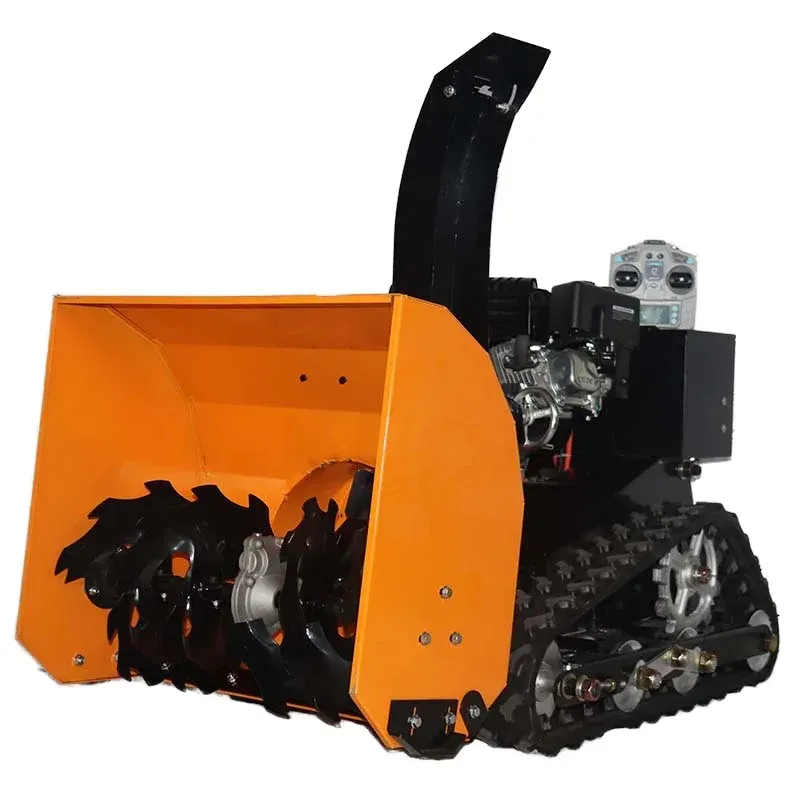
Brush or blower: let the snow decide
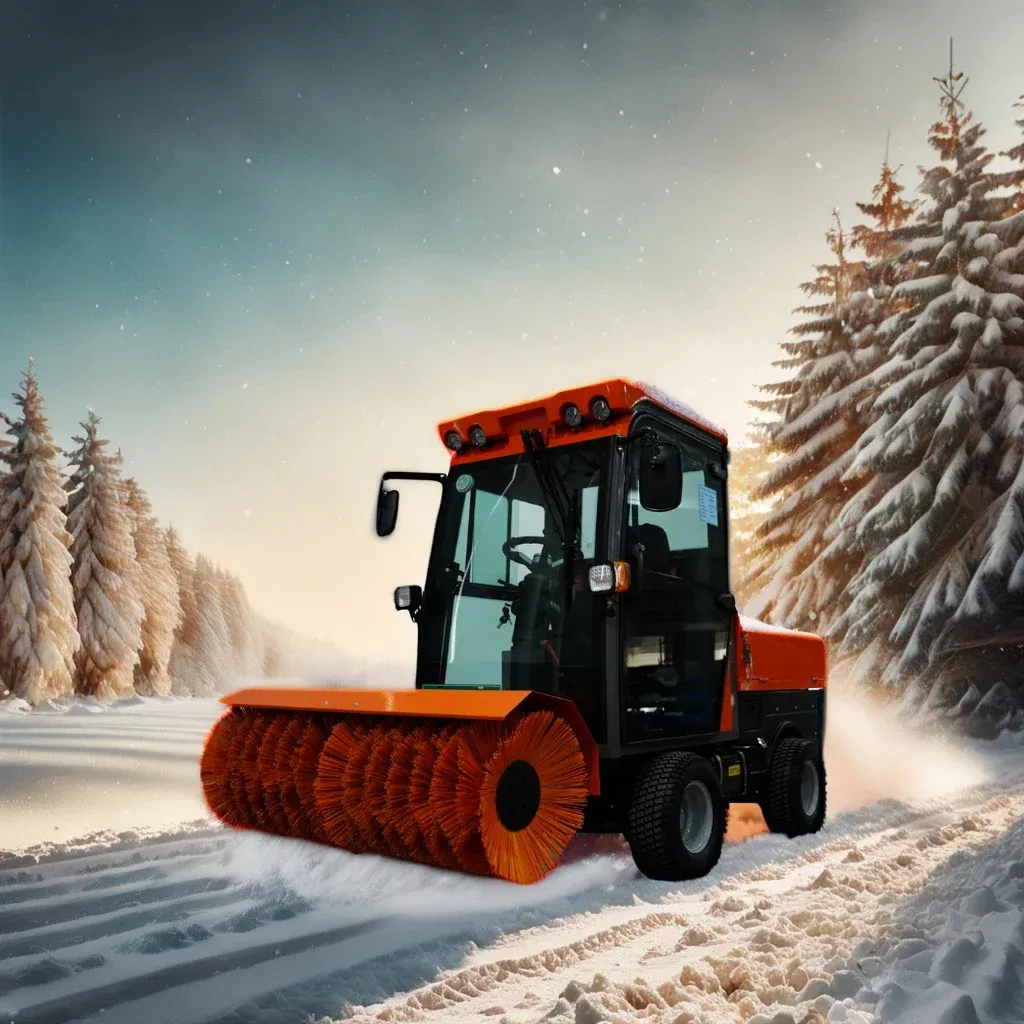
Snow type matters more than machine size. A roller brush sweeps loose snow sideways and leaves a clean, almost dry surface, which is why it is popular on paving, tiles and car parks. It struggles with deep or compacted snow, and a dealer guide for loader-mounted brooms says the same: a broom handles light snow, but deep or heavy snow belongs with a blade, pusher or blower. A blower throws the snow clear instead of pushing it into a windrow, so it clears deep falls and leaves less to remove afterwards.
| Machine | Cutting width | Power | Suits |
|---|---|---|---|
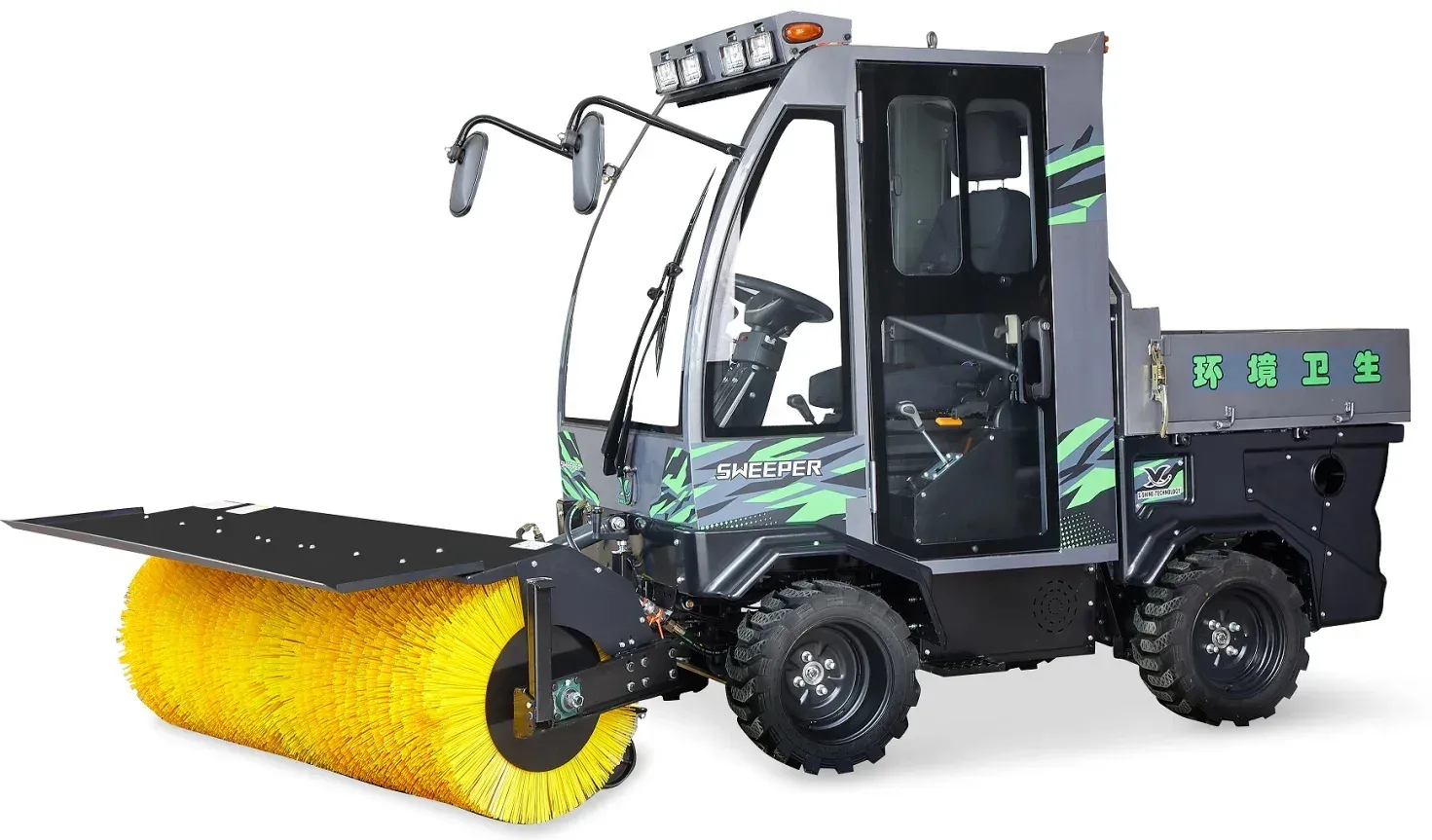
| 25 HP roller-brush sweeper | 140 cm brush | 25 HP, 739 cc | car parks, station forecourts, pavements |
| 4WD ride-on blower-head machine | head fitted to a 920 kg vehicle | gasoline, 20 L tank | campuses, industrial yards |
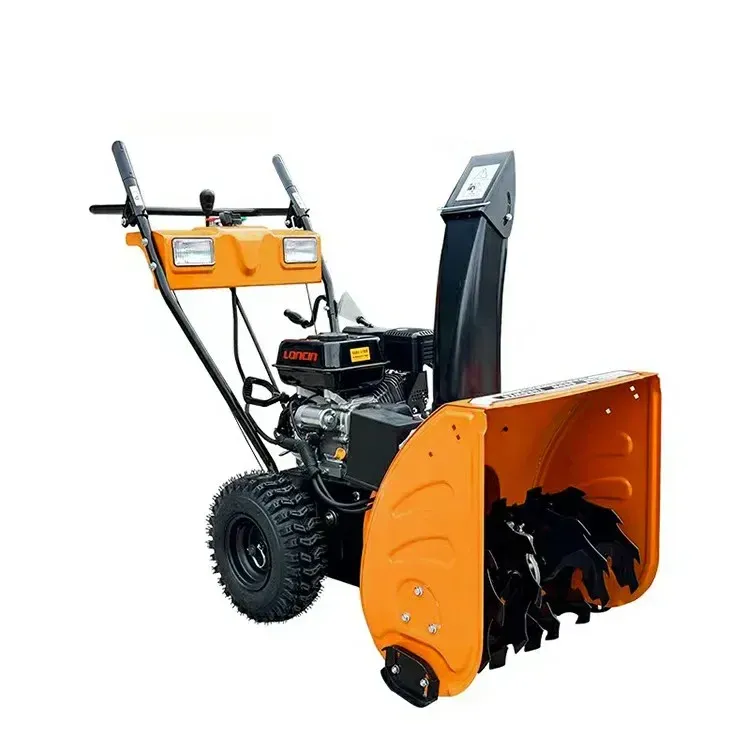
| Mini remote blower | 56 cm | 6.5 HP | paths, steps, slopes |
| Tracked remote blower | 620 or 1000 mm | gasoline, 226 kg | banks, yards, steep ground |
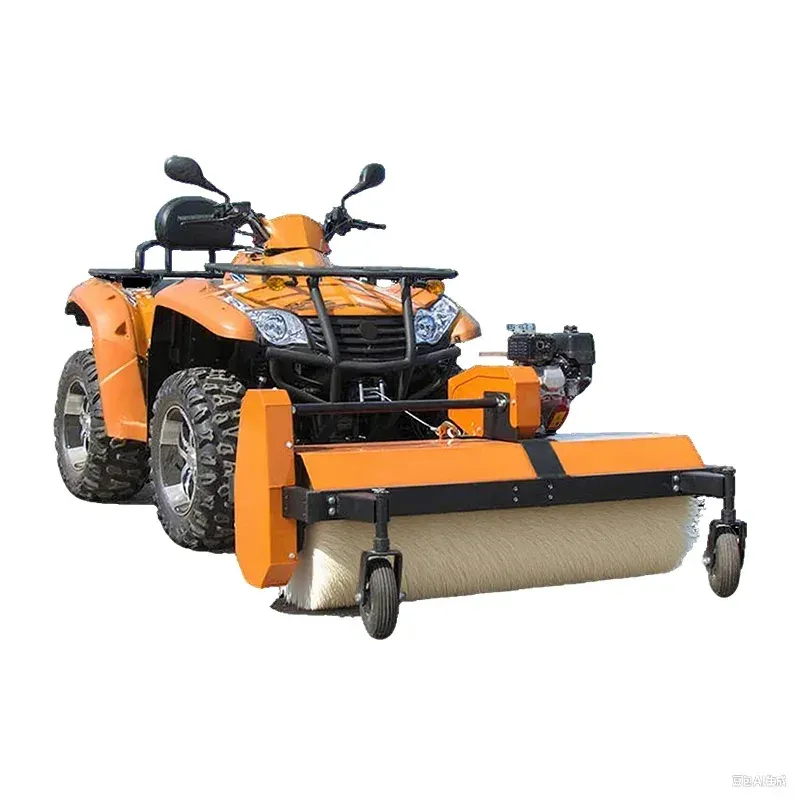
| Heavy brush attachment | about 850 kg unit | tractor-driven | municipal fleets with a tractor |
Ride-on, remote or attachment
A ride-on machine suits an operator who clears the same wide areas every morning; the seat and steering wheel cut fatigue. The 25 HP sweeper has a 15 L tank and a roller brush that turns at 360 rpm. The 4WD ride-on carries a blower head that lifts 300 mm and angles by 15 degrees, plus a rear bucket for salt or sand. Its stated fuel use is about 3.5 L/h.
Remote machines solve a different problem. Where the surface is steep, narrow or near a road, the person controlling a 226 kg tracked machine stays on stable ground. The mini blower works about 4 hours per tank. If you already run a tractor, the brush attachment turns it into a snow sweeper without buying another engine, and the same brush can sweep dirt and debris out of season.
Think about where the snow goes as well as how it is lifted. A brush pushes it to the side of the lane, so you need space for the pile; a blower can throw it several metres, and the remote blowers give chute control so you can aim it away from doors, cars and drains. On a narrow site with no spare ground, that difference decides the purchase.
Run time matters on a big site. Clearing before opening hours usually means one or two hours of continuous work, so check the tank size and fuel use against the area you must finish, and keep a spare fuel can nearby.
Checks before ordering
- Cold start: battery capacity and oil grade at your lowest temperature.
- Tyres or tracks: snow tyres with optional chains for steady traction on ice.
- Surface: brushes leave pavers cleaner, but a blower helps on drifts higher than the brush can lift.
- Salt and grit: a rear bucket is useful for treatment after clearing.
- Storage: brush bristles flatten if the machine sits on them all summer, so lift the head.
What to send for a quote
- Area to be cleared and the usual snowfall depth
- Surface type, steepest slope and obstacles such as kerbs and bollards
- Powder, wet or compacted snow
- Whether a driver, remote control or a tractor attachment suits you
- Lowest temperature and fuel available
- Destination country
For summer sweeping of the same site, see the street sweepers page, or the wider vehicles and transport range.