Why a workshop buys an aligner
Alignment sets the wheel angles to the vehicle maker’s values. The three primary angles are camber, caster and toe, and getting them right prevents uneven tyre wear and a car that pulls to one side. For a tyre shop it is one of the few services with a clear before-and-after printout, so the machine pays back through work that is hard to do by eye.
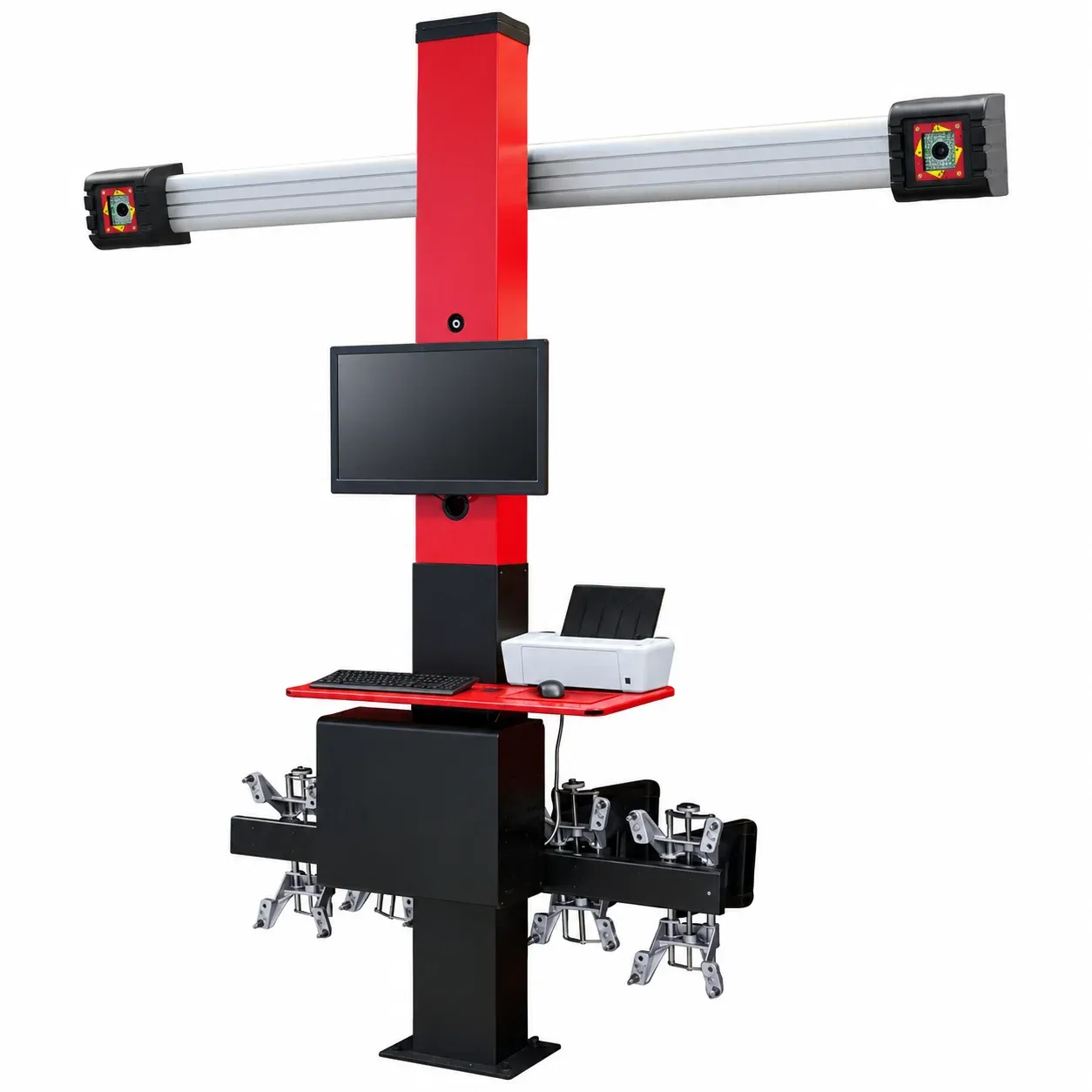
The 3D camera wheel alignment system works with passive targets on each wheel and a camera beam or column that reads them. Because the targets hold no electronics, there are no cables or sensor heads to drop, which is the common service problem with older sensor-type machines.
Camera, sensor or touchless
| Technology | Speed | Space | Suits |
|---|---|---|---|
| 3D camera with passive targets (our system) | fast | needs a dedicated bay and clear sight lines | busy tyre and repair shops |
| Sensor-head (CCD) | slower | copes with tight or shared bays | smaller general garages |
| Touchless | fastest for checks | drive-through lane | service lanes, dealerships |
The comparison above follows one workshop-equipment guide. Its practical warning is worth repeating: a 3D aligner works best where lighting is steady and nothing blocks the cameras. Pillars, a low ceiling, direct sunlight or a shared bay can slow the job more than a cheaper specification ever saves.
What is in the box
The standard set is a camera beam or column, four wheel targets with clamps, a computer cabinet with monitor, a vehicle specification database, printer or digital report output, plus a steering wheel holder and a brake pedal depressor. Typical options are an alignment lift or level rack with turnplates, a vehicle positioning aid, a camera relocation kit so one beam serves two bays, ADAS calibration accessories, and extra clamps for large rims. Clamps for rims from about 10 to 24 inches are typical on this class of machine.
Software and reports count as much as the hardware. The specification database lets the technician pick the vehicle and see the target values, and the printed or digital report gives the customer proof of the before and after readings. Ask whether the database can be updated for the models common in your country.
Rider equipment
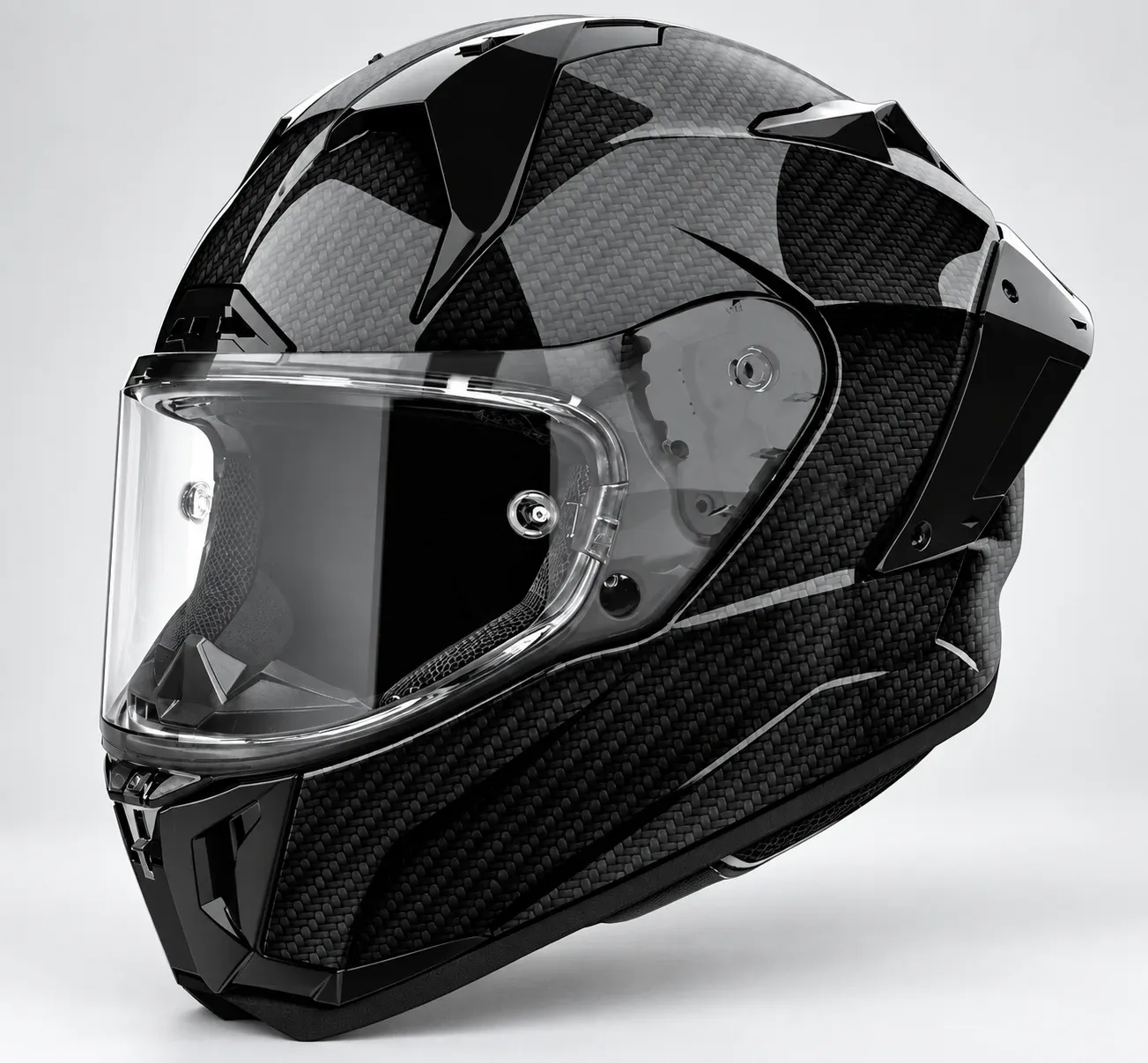
The carbon-shell full-face motorcycle helmet is for road and track riders. It has a clear visor, removable washable liner, chin strap, vents and a breath guard; tinted visors, anti-fog inserts and custom graphics are options. A carbon shell is typically lighter than a plain moulded one, with full-face shells commonly weighing 1,200 to 1,500 g. Check the label for your market: guides to helmet standards point out that ECE 22.06 and DOT differ in the tests they require, and that a helmet sold without the right mark is not certified for that market.
What to send for a quote
- Types of vehicles you align: cars only, vans, light trucks
- Bay size, ceiling height and whether the bay is shared
- Existing lift or rack, and the one you would like
- Local power: voltage, frequency and socket type
- Need for ADAS calibration accessories
- For helmets: sizes, colours, visor choice and the approval label your market requires
Back to the vehicles and transport industry, or compare with the golf carts page if you also equip a fleet depot.