Agriculture & Livestock · Single machine
Agriculture & Livestock · Complete line
Modular Cocoa Fermentation Box and Solar Dryer Unit
A post-harvest module for cocoa farms and co-operatives: a three-section wooden fermentation box and a movable half-tunnel solar drying shed, sized for about 300 kg per cycle.
- Model
- MM-CFD300
- Product group
- Cocoa & Crop Dryers
- Batch size
- About 300 kg per fermentation and drying cycle
- Fermentation unit
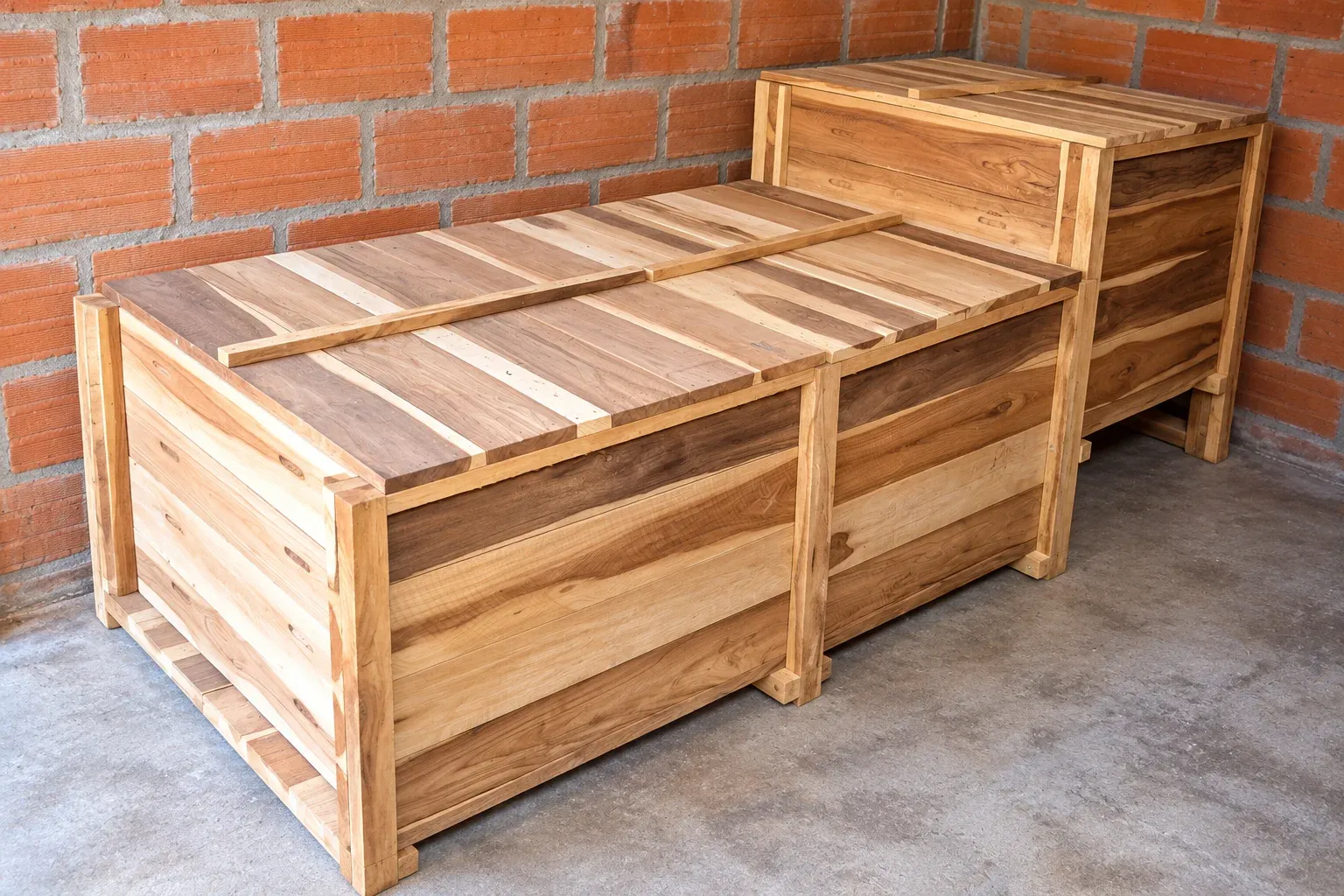
- Three-section wooden box
- Three-section wooden fermentation box
- Beans moved between sections during fermentation
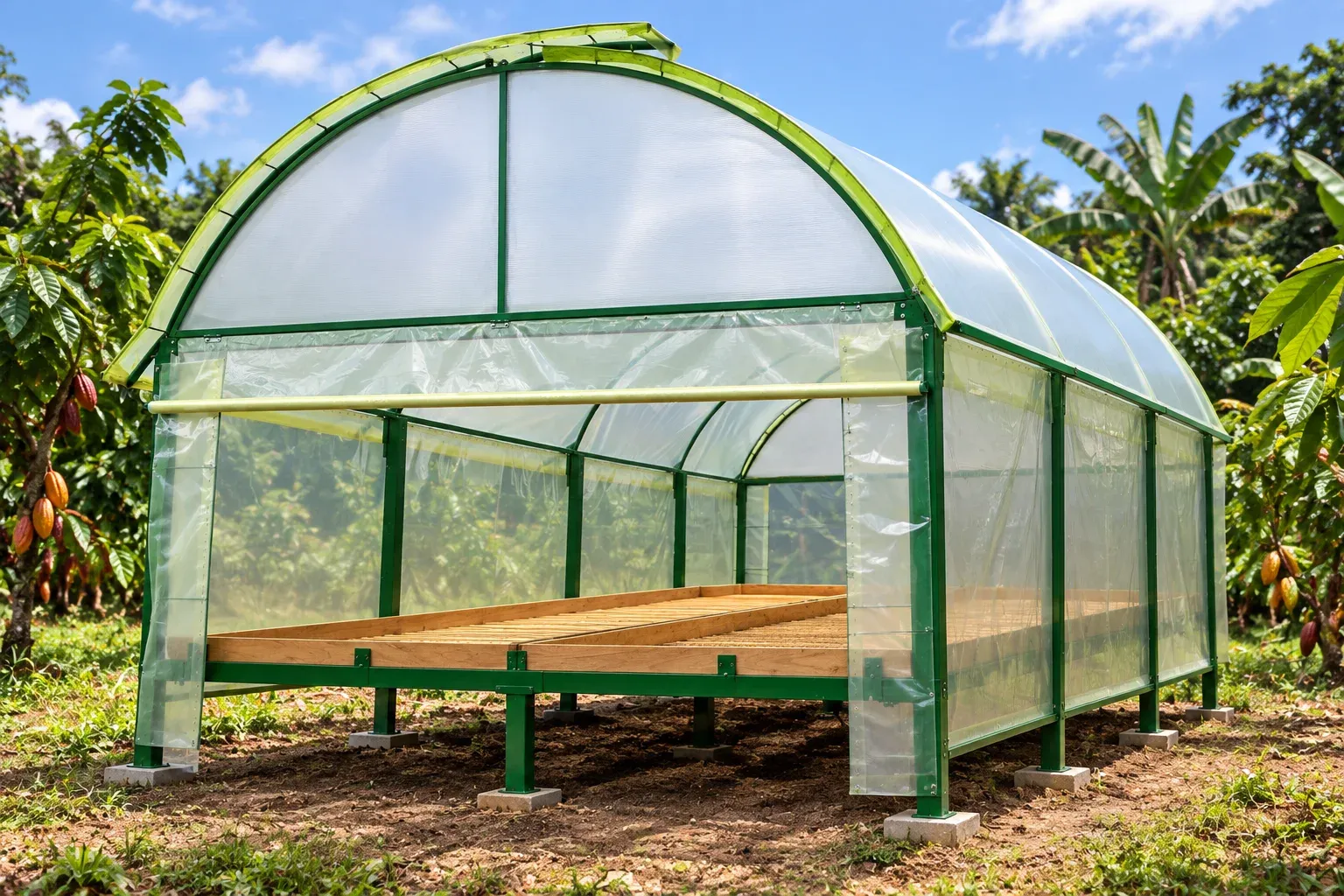
- Half-tunnel shed for sun drying
- Adjustable ventilation openings
- About 300 kg per cycle
Overview
Why fermentation and drying matter
Cocoa quality is largely decided after harvest. Beans must be fermented in a controlled way, then dried slowly and evenly. Poor fermentation or damp storage leads to off-flavors and mold, and buyers pay less for it. This unit gives small producers a clean, repeatable way to do both steps.
The fermentation box
The box is made of wood and has three sections separated by sliding boards. During fermentation, beans are moved from one section to the next, which turns the mass and brings fresh air through it. You can follow the process section by section.
The drying shed
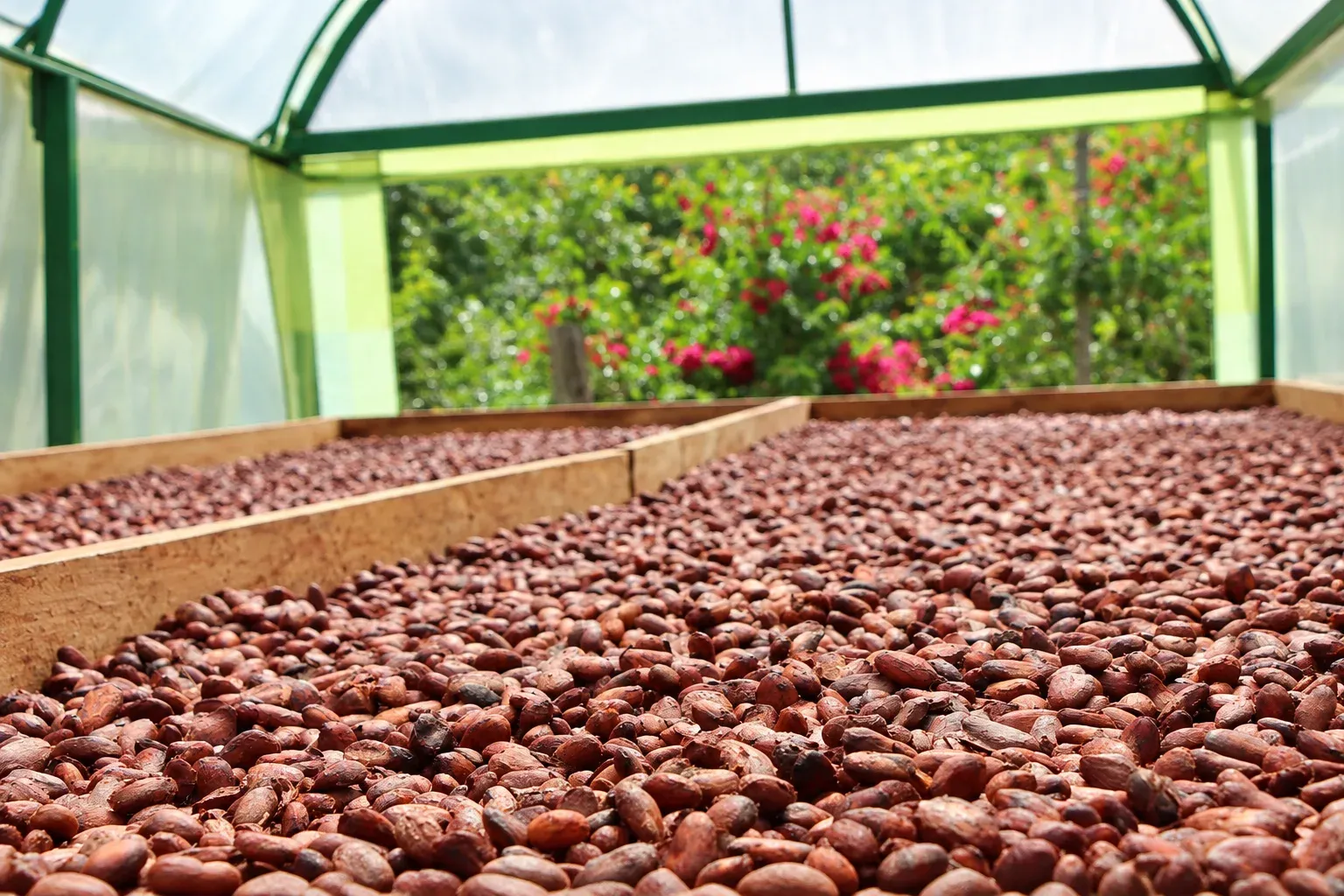
The dryer is a half-tunnel shed with drying beds and openings that can be adjusted for ventilation. Its footprint is about 2.5 m wide by 6 m long, with a center height of about 2.55 m. The shed covers the beans from rain and keeps insects and animals away, while the sun does the drying. The shed can be moved to suit the plot.
Capacity
The unit is designed around about 300 kg of beans per fermentation and drying cycle. The real figure depends on the bean variety, the moisture at harvest and the weather, so please treat it as a planning size.
Where it is used
Co-operatives, estates and small buying points that want to raise bean quality without fuel-fired dryers. Where rain is frequent, a heated dryer can be added.
Choosing a configuration
- Wood species and local material options
- Number of boxes and sheds for your volume
- Covering material for the shed
- Site layout and drainage
Training and use
Fermentation is a skill. We include a short operating guide covering how to load, when to turn and how to judge dryness, and your local extension officers can adapt it to the bean variety you grow.
How to choose between this module and a gas dryer
This module is a low-energy option: the fermentation box handles the first stage and the half-tunnel shed finishes drying with sun and air. It suits co-operatives where sun is dependable for most of the harvest, fuel is costly and about 300 kg per cycle (the sized batch) matches how beans arrive from a group of farms.
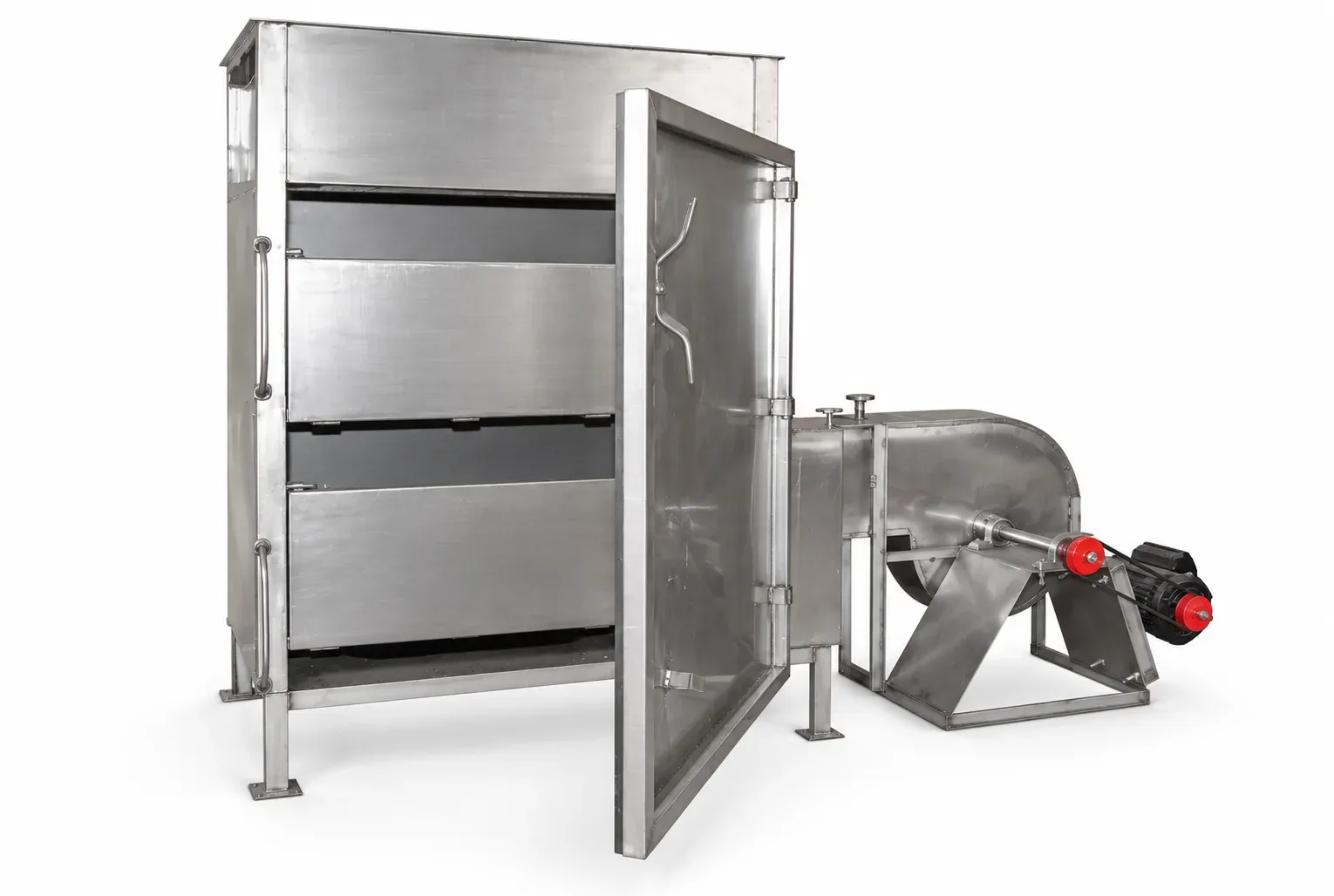
Our three-tier stainless steel gas dryer (MM-CGD3) treats about 240 kg wet beans in total at a time and does not rely on weather. It uses gas and a fan, costs more to run, and suits sites with wet-season harvest peaks or a buyer who needs a steady finishing schedule. It dries beans only; it does not ferment them.
The sun module needs space (the shed footprint is about 2.5 m by 6 m), regular turning labor and a clean base, but few moving parts. Many farms start with the box and shed and add a gas dryer later for rainy weeks. Daily bean arrivals, rain pattern and local labor decide the right combination.
Specifications
| Model | MM-CFD300 |
|---|---|
| Batch size | About 300 kg per fermentation and drying cycle |
| Fermentation unit | Three-section wooden box |
| Drying shed footprint | About 2.5 m wide x 6 m long, 2.55 m center height |
| Fermentation time | typically 5–7 days with turning |
| Box wood | commonly hardwood or treated timber with slatted or drilled bases |
| Section depth | about 0.5–0.9 m per section |
| Turning schedule | usually every 24–48 hours |
| Drying time in the sun | about 5–10 days depending on weather |
| Final moisture target | commonly about 7% |
| Layer depth when drying | typically 3–5 cm on drying beds |
Configurations
Standard equipment
- Three-section wooden fermentation box
- Drainage slots or holes in each section
- Half-tunnel frame with cover film or sheeting
- Drying beds or mesh racks
- Ventilation openings with adjustable closures
Options
- Extra box sections
- Second half-tunnel shed
- Plastic or net floors for beds
- Bean turning rakes and shovels
- Moisture meter
- Rain cover for fermentation box
Frequently asked questions
Does the unit need electricity?
The box and the solar drying shed work without power. If you add fans or a heater, we discuss the electrical supply.
How much does one unit process?
It is sized for about 300 kg per cycle. Several units can be combined for larger volumes.
Can it be built from local timber?
Yes, where the local species suits the box design. We check the species before building.
Does fermentation work in any weather?
The box is covered and the beans heat themselves, but cold or very wet weather slows it. Keep the beans covered and turn them on schedule; the cover design can be adjusted to your climate.
Request a quote: Modular Cocoa Fermentation Box and Solar Dryer Unit
Send your requirement and our engineers reply with the configuration, lead time and a quotation.
Related products
Agriculture & Livestock · Complete line
Fish and Pet Feed Extruder Line, 120-250 kg/h
Agriculture & Livestock · Complete line
Flat-Bottom Steel Grain Silo System
Agriculture & Livestock · Complete line
Herringbone Milking Parlor for Dairy Farms