Three construction methods, three kinds of site
Storage tanks differ less in what they hold than in how they arrive. A tank molded in one piece is delivered whole and lifted onto its base. A panel tank arrives flat and is bolted together where it will stand. That single difference usually decides the choice before material even comes into it.
| Type | How it is made | Typical size | Suits |
|---|---|---|---|
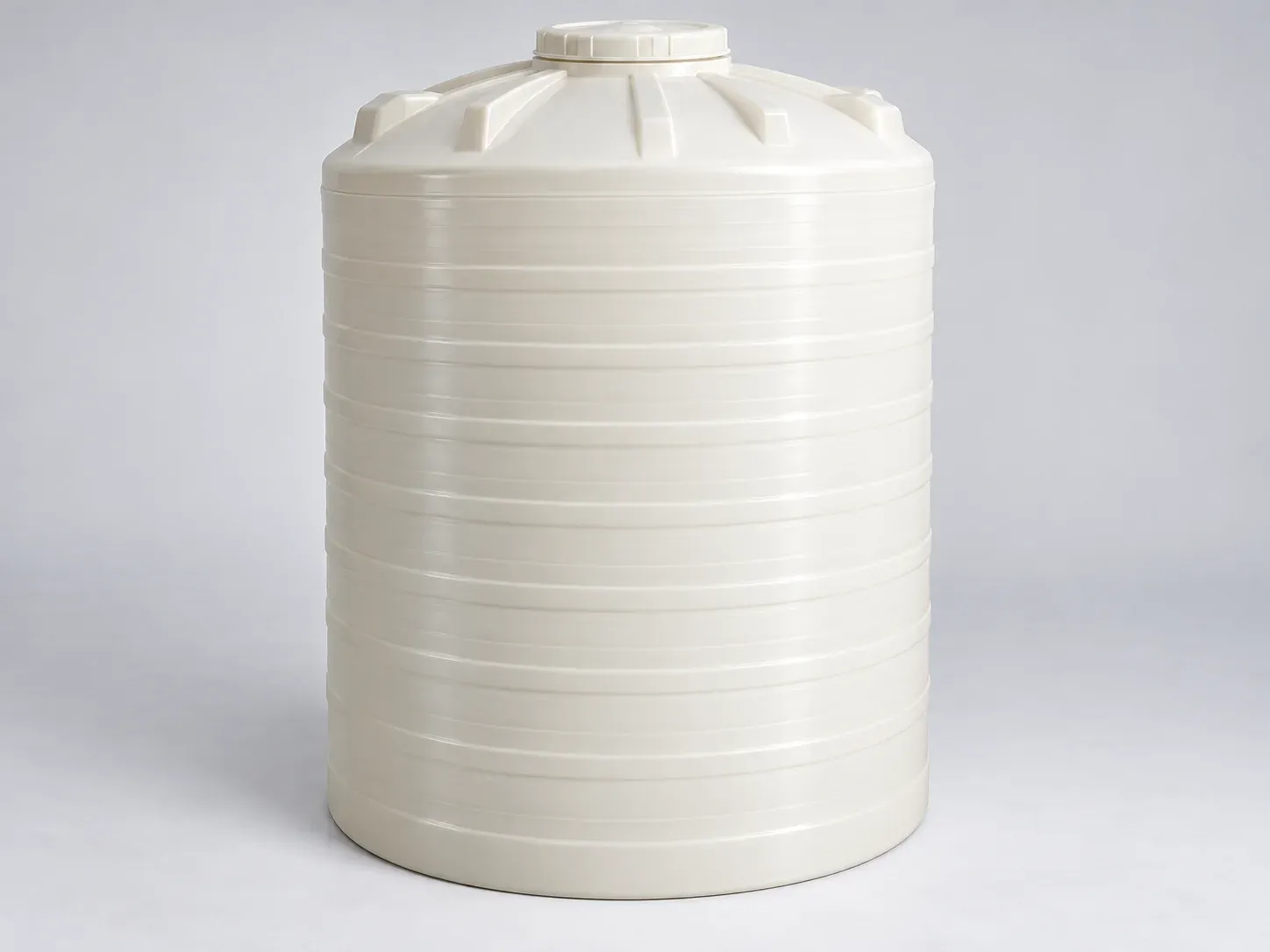
| Vertical rotomolded PE | One-piece molded polyethylene, no wall seams | 1-30 t nominal | Farms, houses, small plants with open access |
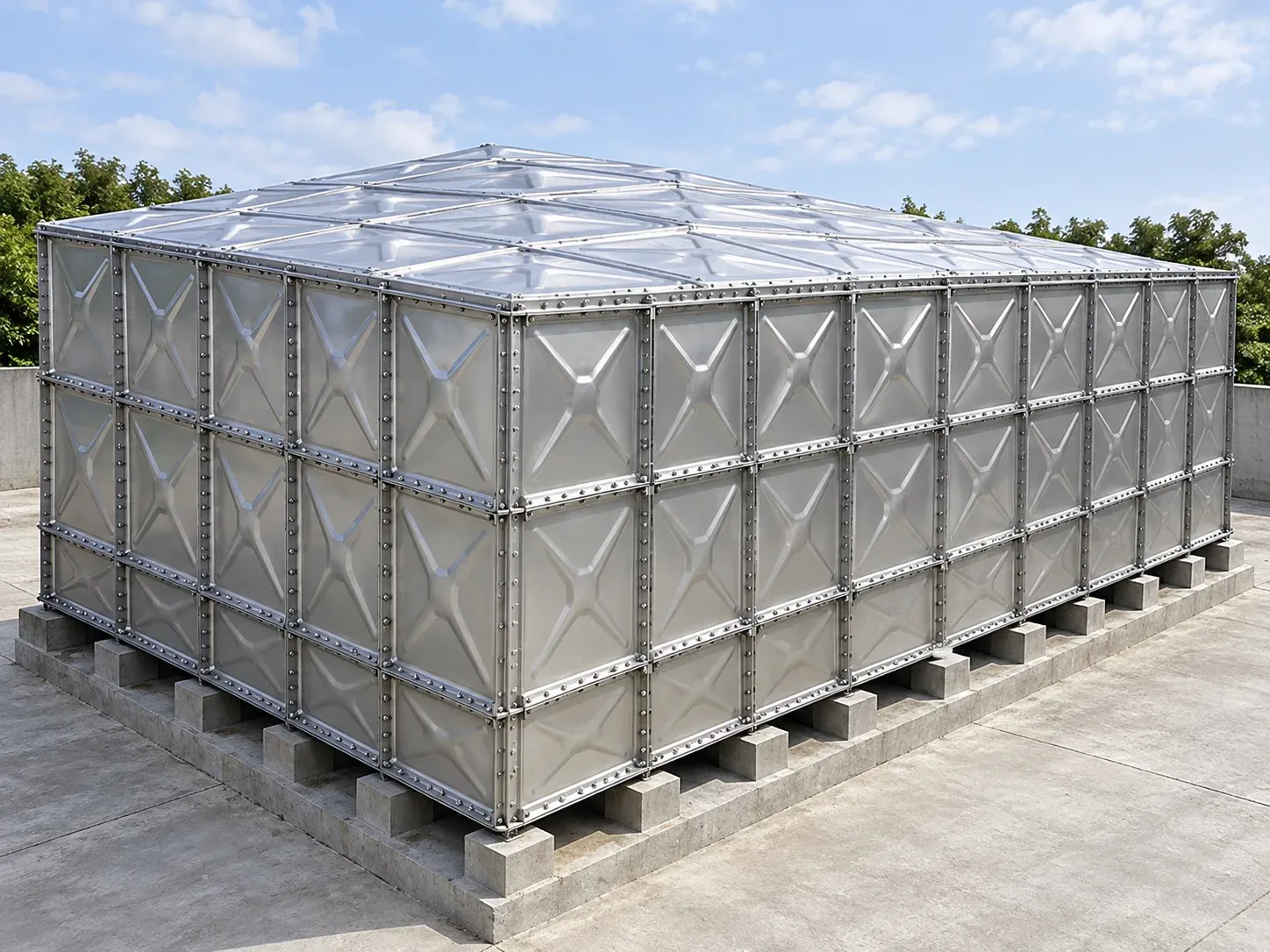
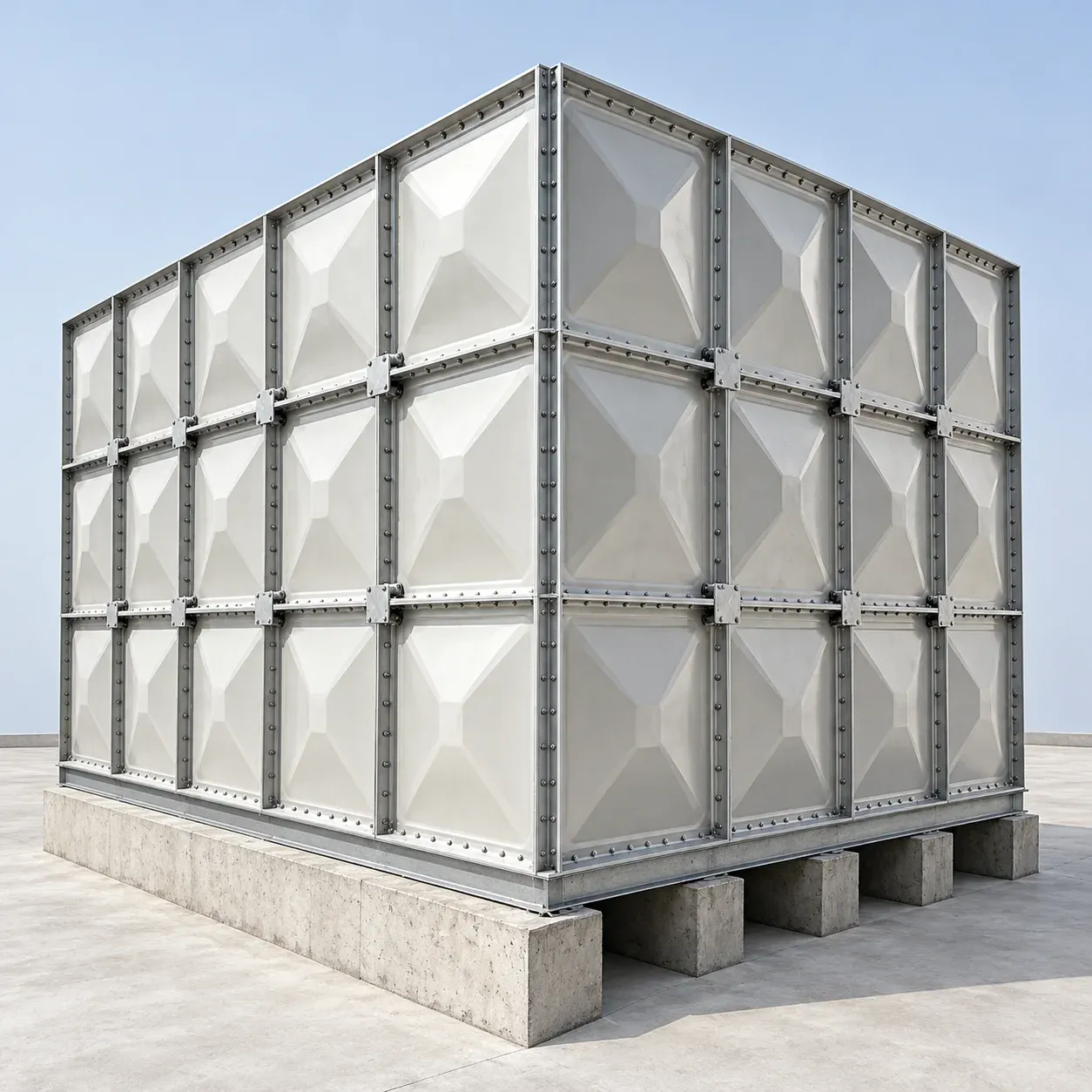
| Modular GRP/SMC panel | Molded glass-fiber panels bolted with gaskets | A few m³ to several hundred m³, about 1-4 m high | Buildings, fire reserves, irrigation reservoirs |
| Bolted stainless steel panel | SS304 or SS316/316L panels, EPDM seals | A few m³ to several hundred m³, up to 5 m high | Hotels, hospitals, food and process sites |
Choosing in order
1. Can a whole tank reach the site? If a truck, crane and a clear footprint exist, one-piece PE is the simplest. If the tank goes in a basement, up a stair or onto a roof, use panels.
2. How much water? Above the top of the PE series (30 t), panel tanks are the practical route. Their capacity is set by the panel count, not a catalogue model.
3. What will it hold? Clean water in moderate climates suits any of the three. Warm process water or mildly aggressive liquids need the resin or grade checked. PE has a density rating of about 1.0-1.5 g/cm³, depending on wall design, which matters for heavier liquids.
4. Sunlight and algae. Opaque walls or a black outer layer keep light out. GRP can be supplied with opaque panels, and PE with a black outer layer.
5. Hygiene priority. Where regular cleaning and tight hygiene control are expected, stainless is the usual preference. Ask for SS316L if chlorides are high.
Panel tanks need a flat concrete slab or steel beams (about 300-600 mm high for the stainless type) and tie rods on taller units. Include the foundation in the budget.
Sizing and siting notes
Size for more than one day of use. A building reserve is commonly set against the longest mains outage you expect, and a fire reserve is set by the fire engineer, not by the tank supplier. Leave room around a panel tank for a person to walk its sides, because the bolted joints should be looked at during routine inspection. For a one-piece tank, plan a level, compacted pad that spreads the full weight of the water, since a full 10 t tank carries roughly ten tons on its base. Fit the overflow to a safe drain, and screen the vent against insects.
Related equipment
Storage is half of a water system. Pair it with a packaged treatment plant or an RO unit, and add a booster pump set where the tank is not above the outlets. The main water treatment category lists the rest.
What to send for a quote
- Volume needed, and the space or footprint available
- What is stored, and its temperature range
- Indoor, outdoor or rooftop; door and lift sizes if panels go inside
- Base type, and whether the site can take a slab
- Fitting positions: inlet, outlet, overflow, drain, level gauge
- Local potable-contact approval required, if any
Send these and we return a layout and a quote.