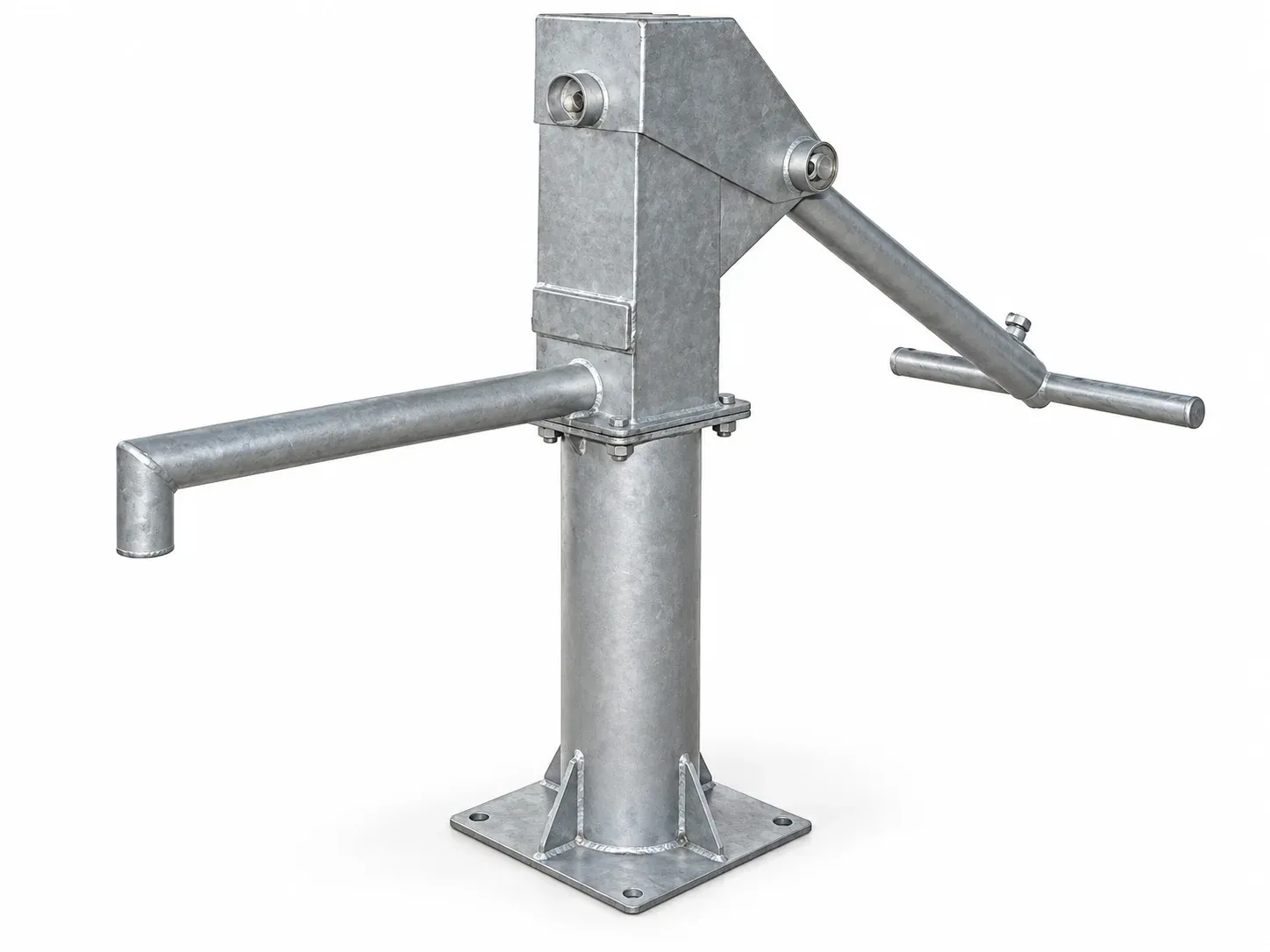
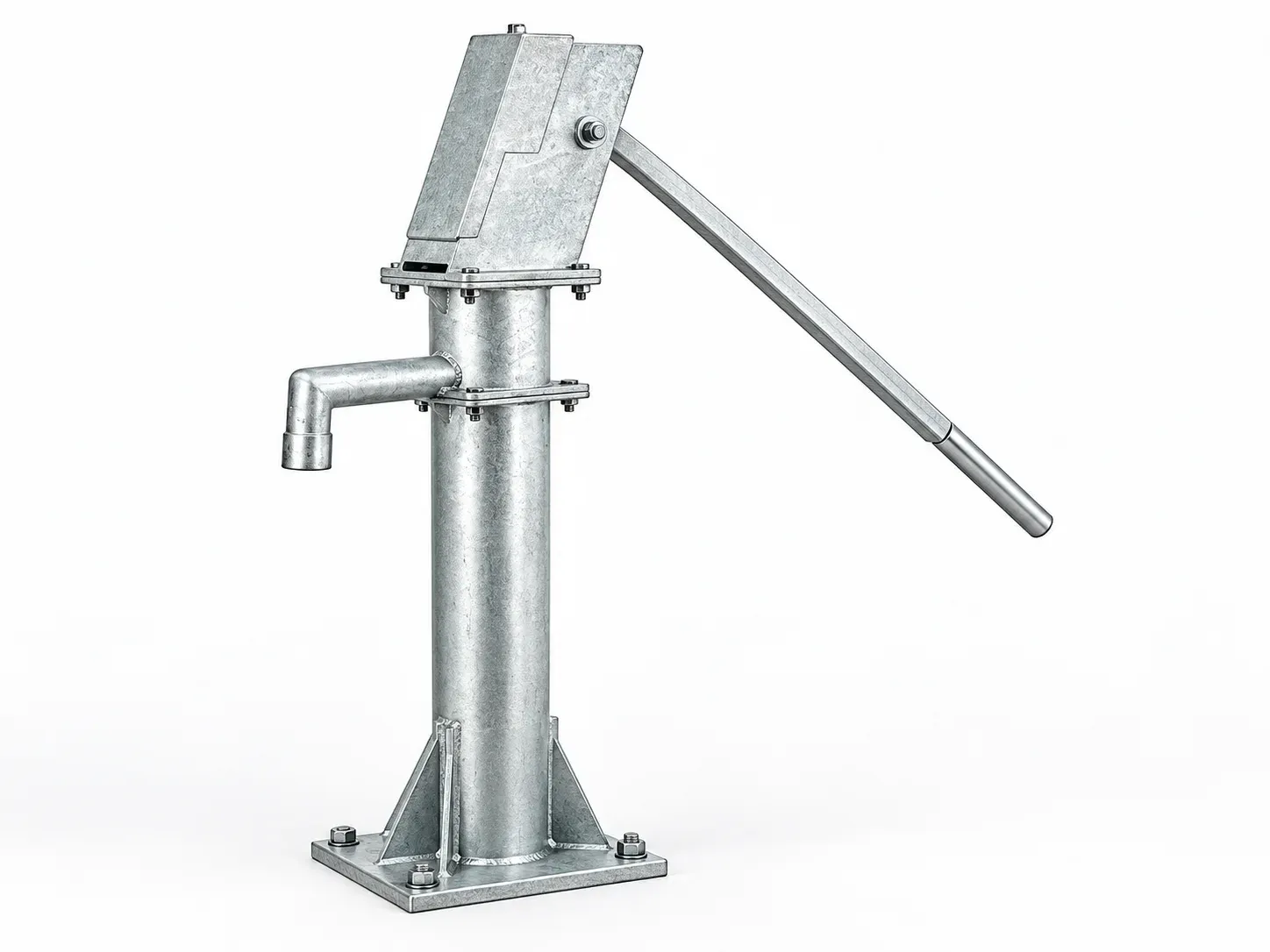
Two designs behind most village pumps
Hand pumps remain the backbone of rural supply in many countries because they need no fuel and no grid. The two designs on this page are both public-domain patterns that national programmes have standardised on. They differ in how they are built and how they are repaired, and that difference should drive the purchase.
| India Mark II type | Afridev type | |
|---|---|---|
| Cylinder | 63.5 mm bore, cast iron with brass lining | 50 mm single-acting PVC, brass liner |
| Output | 15 L per 40 strokes | 0.44 L per stroke |
| Rising main | 32 mm NB galvanized pipe | 63 mm PVC |
| Rods | 12 mm galvanized steel | 10 mm galvanized or stainless steel |
| Lift | Static water level to about 45 m | About 25-45 m by cylinder setting |
| Head weight | About 35-60 kg | About 15-30 kg |
| Service | Pull pipes and rods | Lift plunger and foot valve through the main |
Product pages: India Mark II type deep-well pump and Afridev type village pump.
Matching pump to place
Choose the Mark II type when the pump will take heavy daily use and your programme already stocks steel rods, GI pipe and the tools to handle them. It is the heavier, more traditional build.
Choose the Afridev type when repair capacity is thin. The PVC wet parts do not rust in aggressive water, and the lighter head is easier to carry to remote sites. The trade is that PVC pipe wants careful handling in transport and installation.
Reference guidance from RWSN describes the Afridev as corrosion resistant and suited to community maintenance, with a recommended lift of 45 m for the standard version. Treat lift as a design limit, not a target.
Spares and who looks after the pump
Most failures in the field are not design faults but missing spares and no one responsible. Order a spare seal and bearing kit for each pump, and for the Mark II type consider a spare cylinder and a repair tool set for the village mechanic. For the Afridev type, a fishing tool to retrieve a dropped plunger and foot valve is on our option list. Agree before installation who collects user fees, who calls the mechanic and where the spares are stored; a pump with a clear owner keeps running far longer than one that belongs to everybody.
Do not skip the surrounding works
A pump is only as good as the well beneath it. Set the cylinder about 3-10 m below the lowest dry-season water level. Build a concrete apron around 1.5-2 m across with a drainage channel so spilled water does not run back toward the casing. In areas with iron or fluoride, ask about a water-quality kit; for larger demand per site, a packaged treatment plant or storage tank with a powered pump is the next step up.
What to send for a quote
- Borehole depth, casing inside diameter and static water level (dry-season value)
- Number of pumps and number of users per pump
- Preferred type and rod material (galvanized or stainless)
- Whether you need spares, repair tools or an apron mold set
- Destination country, for shipping planning
Share the drilling record with our team and we configure rods and pipe to the well. More water systems are on the water treatment page.