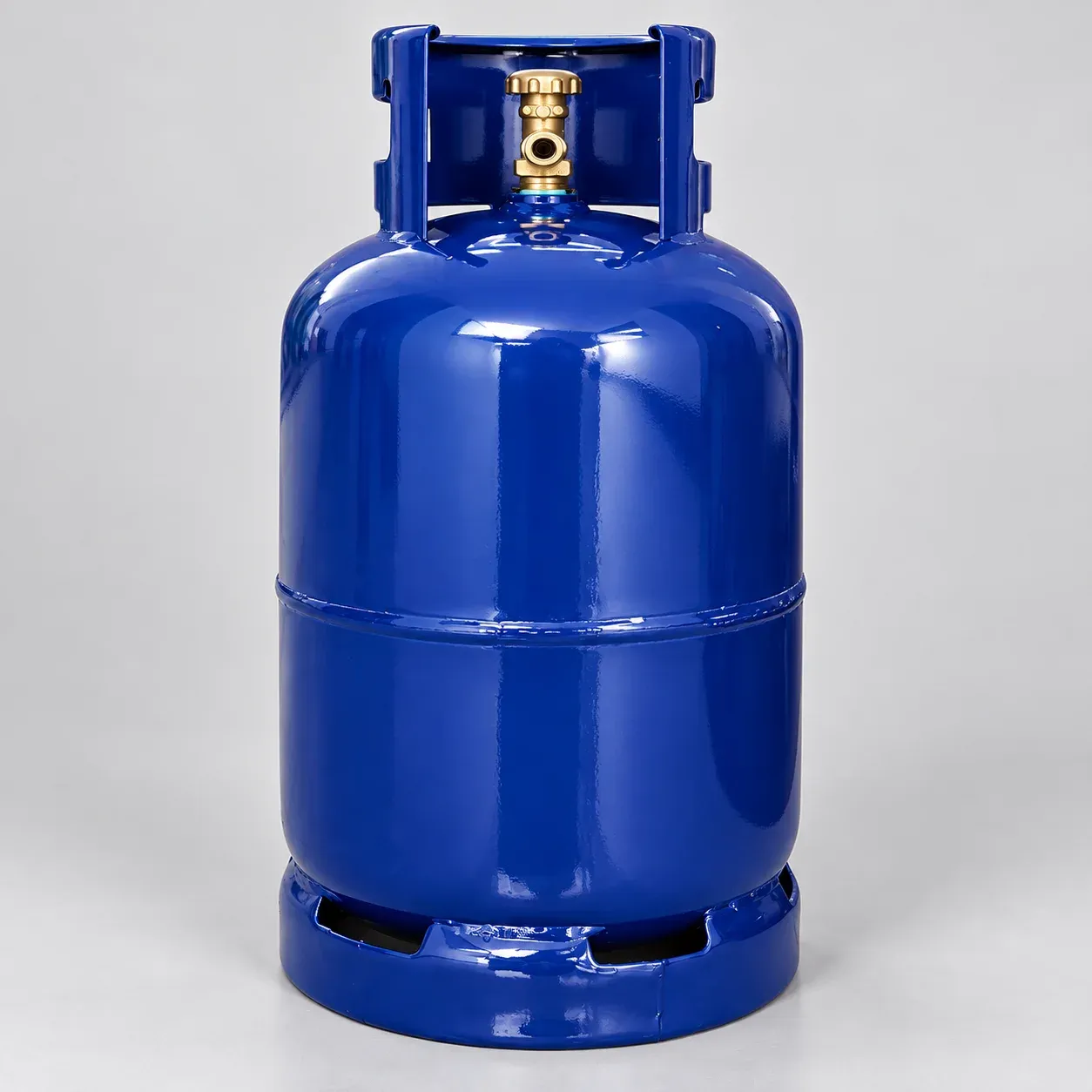
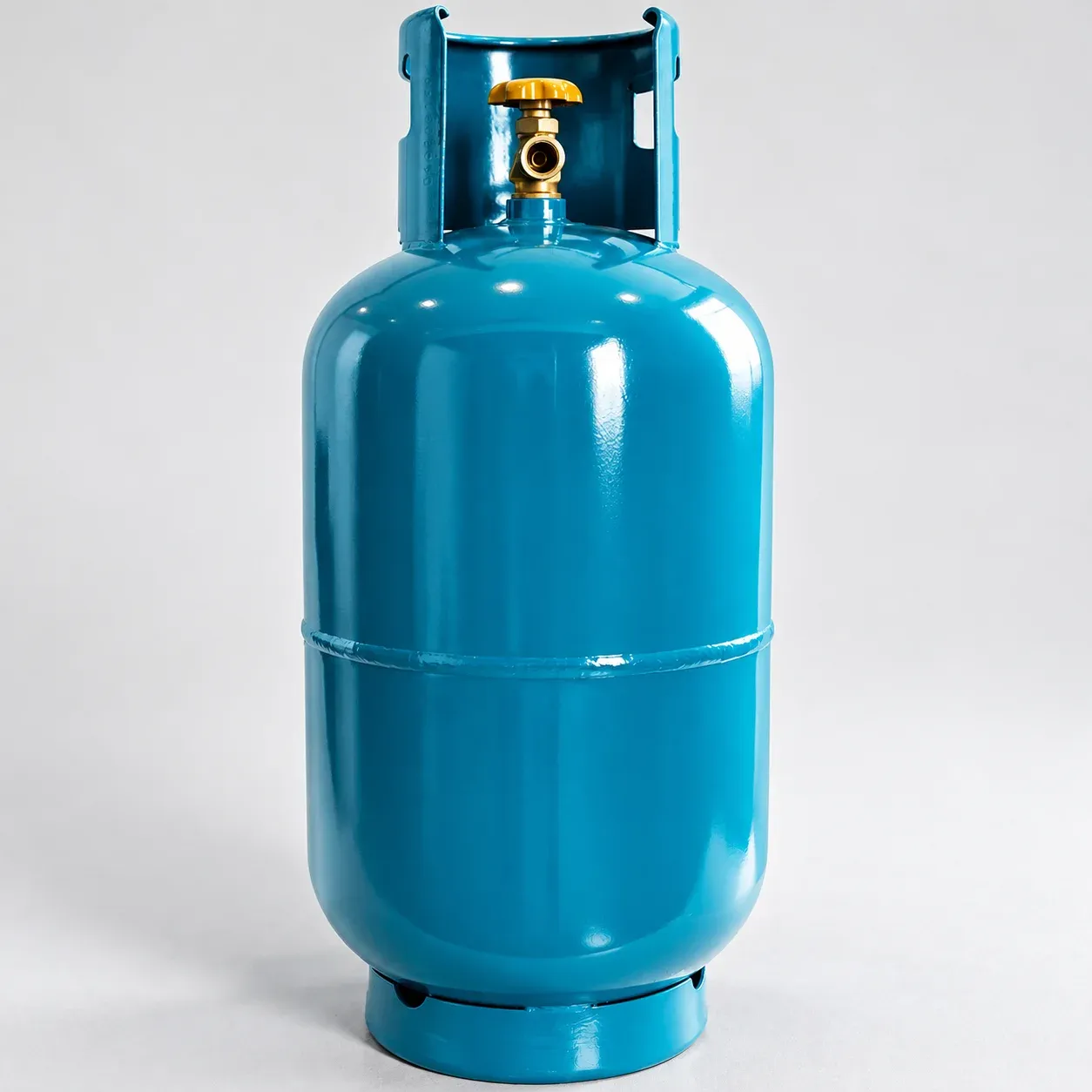
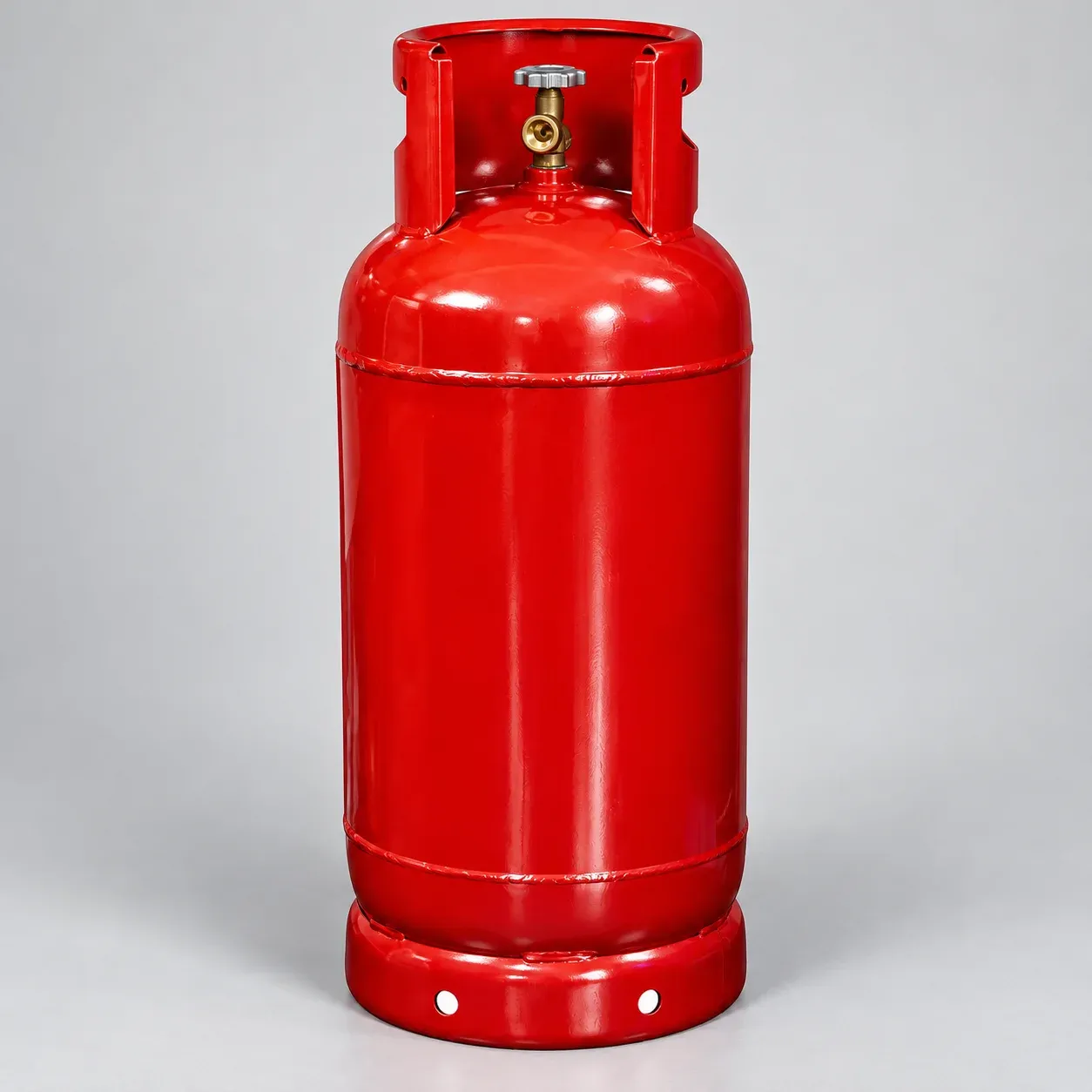
An LPG cylinder is a simple object, but small decisions in the spec decide whether it fills, seals and passes inspection in your country. The three sizes below cover most cooking-gas markets.
Comparing the three sizes
| 12.5 kg | 15 kg | 45 kg | |
|---|---|---|---|
| Typical user | Household cooking | Household, small shop | Restaurant, canteen, hotel kitchen |
| Water capacity | 26.5 L | about 33-36 L | about 100-118 L |
| Outer diameter | 300 mm | about 310-320 mm | about 380-400 mm |
| Height with guard | about 570-620 mm | about 600-700 mm | about 1,150-1,300 mm |
| Shell wall | 2.5 mm | about 2.5-3.0 mm | about 3.0-3.5 mm |
| Empty weight | about 12-15 kg | about 14-17 kg | about 35-45 kg |
| Product | 12.5 kg model | 15 kg model | 45 kg model |
All three are welded steel, low-pressure LPG service. The hydrostatic test pressure runs about 2.6-3.3 MPa depending on the national standard, and for the 12.5 kg model the design pressure is about 1.6-2.1 MPa.
How to choose
Think about the user, then the filler. A household moves a 12.5 or 15 kg cylinder by hand and wants it to last a month or so. A kitchen burning gas all day wants the 45 kg size to cut the number of changes. But the filling plant matters as much: if your distributors only have a 12.5 kg filling line and hose pattern, a 15 kg cylinder is a logistics problem, not a product improvement.
Check vapor draw for big users. LPG leaves the cylinder as vapor, so a cold day or a heavy burner load can pull the pressure down. Our 45 kg model is described at about 1-1.5 kg/h from one cylinder in mild weather; if the kitchen needs more, plan a two-cylinder manifold.
Leave room in the fill. Cylinders are filled by weight, never to the brim of their water capacity, so the liquid can expand when warm. That is a rule for the filler, but it explains why water volume is always larger than the gas weight.
Valve first. The valve decides compatibility with regulators and refill plants. Ours is fitted to the destination standard, and the test marking is also set per market. Printing on the shell, color and foot ring or guard options are available on request.
Handling and transport notes
LPG is stored as a liquid under its own vapor pressure, so a cylinder is never filled to its full water capacity: the filler leaves vapor space for expansion in warm weather, and the fill is controlled by weight. For export, plan on cylinders traveling empty and being filled in the destination country by a licensed filler. Check early whether that country needs a specific valve thread or a recertification date stamped on the shell, because these rules differ widely and an unsuitable valve is the commonest reason a batch cannot be used on arrival.
What to send for a quote
- Size (12.5, 15 or 45 kg) and quantity per size.
- Valve type and thread, with a photo or drawing if it is a local pattern.
- National standard and test pressure required, and any inspection marking.
- Shell color, brand printing and label areas.
- Foot ring and guard needs.
- Port, container type and whether pallets are required.
LPG is a mix of propane and butane, and the blend varies by season and country, which is another reason to confirm pressure class with your gas supplier. See the Power & Energy range for gas generator sets and cable that often ship with the same project.