Fuel first, engine second
For diesel you pick a kVA number. For gas you start with a fuel report. Pipeline natural gas is fairly steady in composition. Landfill gas and digester biogas are not: they carry carbon dioxide, moisture, hydrogen sulphide and sometimes siloxanes, and the mix drifts as a site ages or as feedstock changes. An engine that suits one site may be wrong for the next, so a quote follows from your analysis and flow, not from a model number.
Three gas fuels compared
| Fuel | Typical character | What drives the design |
|---|---|---|
| Natural gas | Steady methane, low contaminants | Supply pressure, duty (standby or continuous) |
| Biogas (digesters) | Methane often higher and cleaner than landfill gas | Moisture and hydrogen sulphide removal |
| Landfill gas | Lower methane, variable, can corrode | Gas treatment, flare interlock, shorter service intervals |
Public landfill-gas sources report that most landfill power projects use reciprocating engines, with turbines for the largest sites and microturbines for small ones. Reciprocating engines are the usual match for the unit sizes most sites can feed.
What our set is
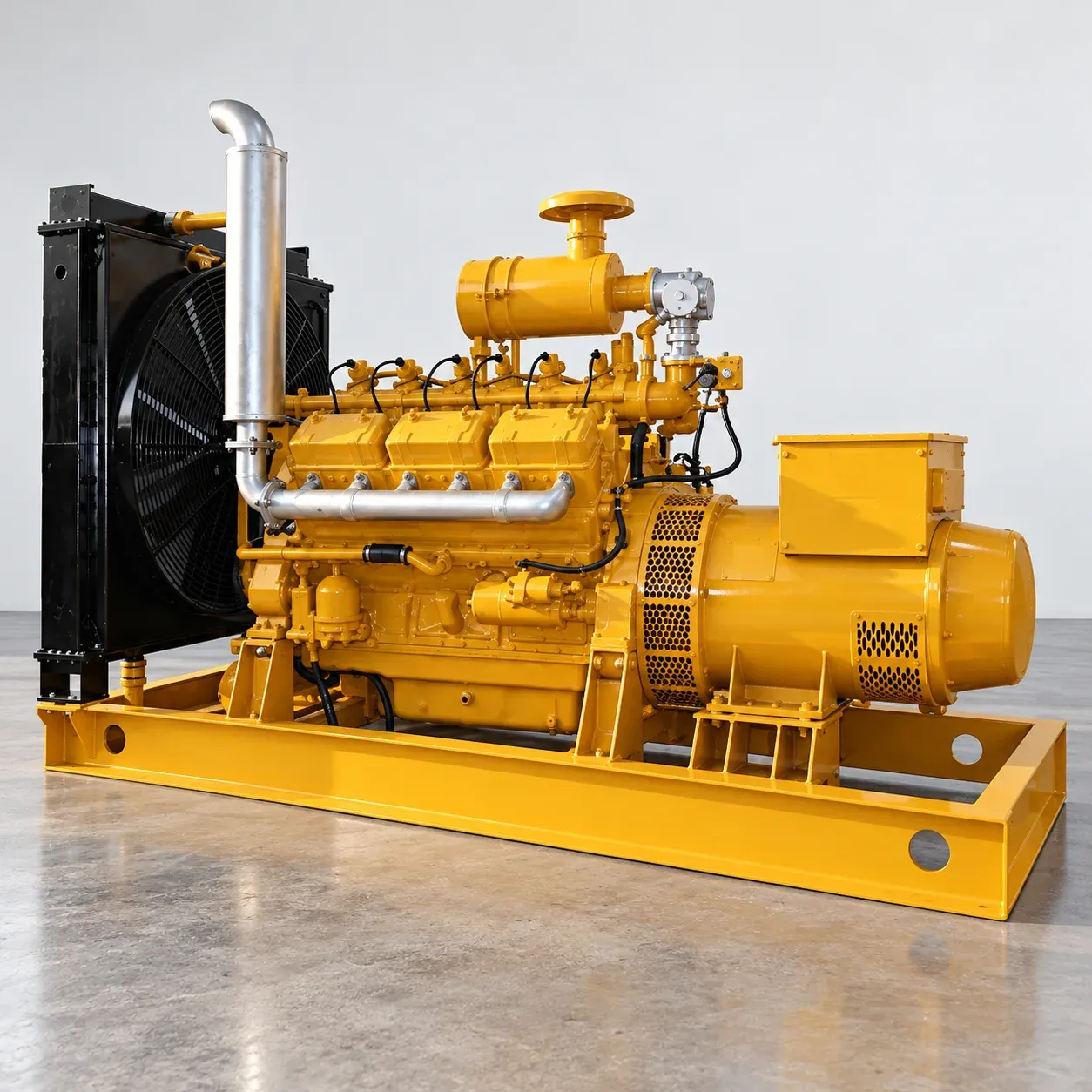
The landfill gas and methane generator set is built around a gas engine on a common frame with a gas train, control panel and protections. Voltage options are 230, 380 or 400 V, and engine speed options are 1,000, 1,500 or 1,800 r/min to match 50 or 60 Hz. Typical engine-set electrical efficiency is about 36 to 42 percent, with unit sizes of roughly 200 kW to 2 MW. Container housing, heat recovery, gas drying and an activated carbon filter for hydrogen sulphide and siloxanes are listed options.
Matching the set to the gas
- Gas flow: a small flow supports only a small engine. Several smaller engines can follow a changing supply better than one big one.
- Contaminants: high hydrogen sulphide or siloxanes call for a treatment skid before the engine.
- Grid or island: grid export needs a synchronising controller and, where required, export limits.
- Environment: hot, dusty or high-altitude sites reduce output and affect cooling.
Running and maintaining a gas set
Landfill gas wears an engine faster than clean fuel. Our product page lists an oil change interval of about 500 to 1,000 running hours on landfill gas, well short of the longer intervals common on clean natural gas, so plan a spares list and a service contract with the first order. A set runs best near its rated load, and a flare or secondary consumer should take whatever gas the engine cannot. Heat is the other output: roughly 40 to 45 percent of the fuel energy can be recovered as hot water or steam, which can pay for itself if a nearby process or building needs it.
What to send for a quote
- A recent gas analysis: methane %, carbon dioxide, oxygen, hydrogen sulphide, moisture.
- Gas flow available (m³/h) and delivery pressure.
- Output wanted, voltage, frequency, phases.
- Grid connection or stand-alone use.
- Altitude, ambient temperature and whether you want a container.
Our biogas and landfill gas generator set guide goes through gas cleanup and sizing in detail. If the gas supply is unreliable, a diesel generator is a common backup, and the full range sits on the Power & Energy page.