Power & Energy · Complete line
Power & Energy · Complete line
Landfill Gas and Methane Generator Set
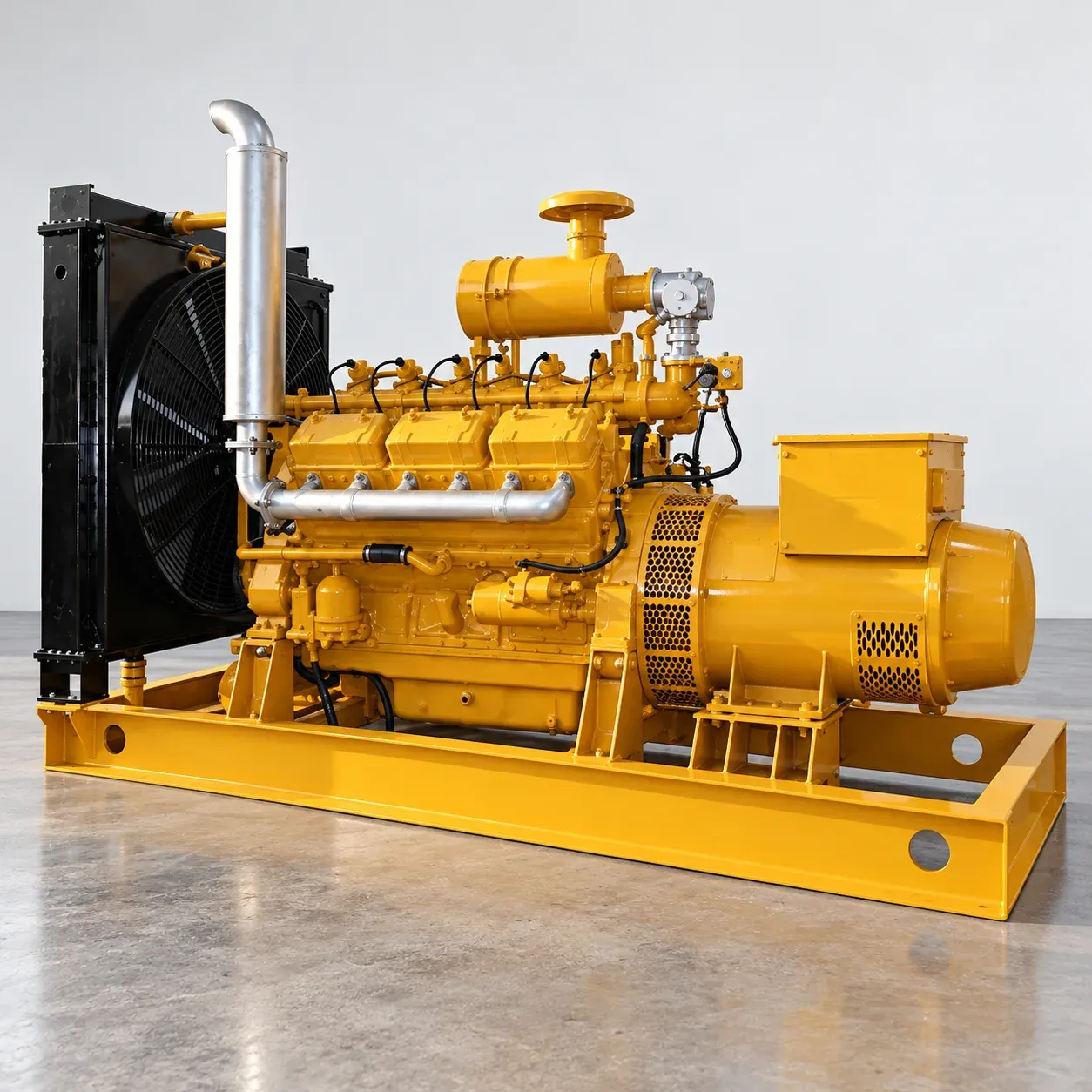
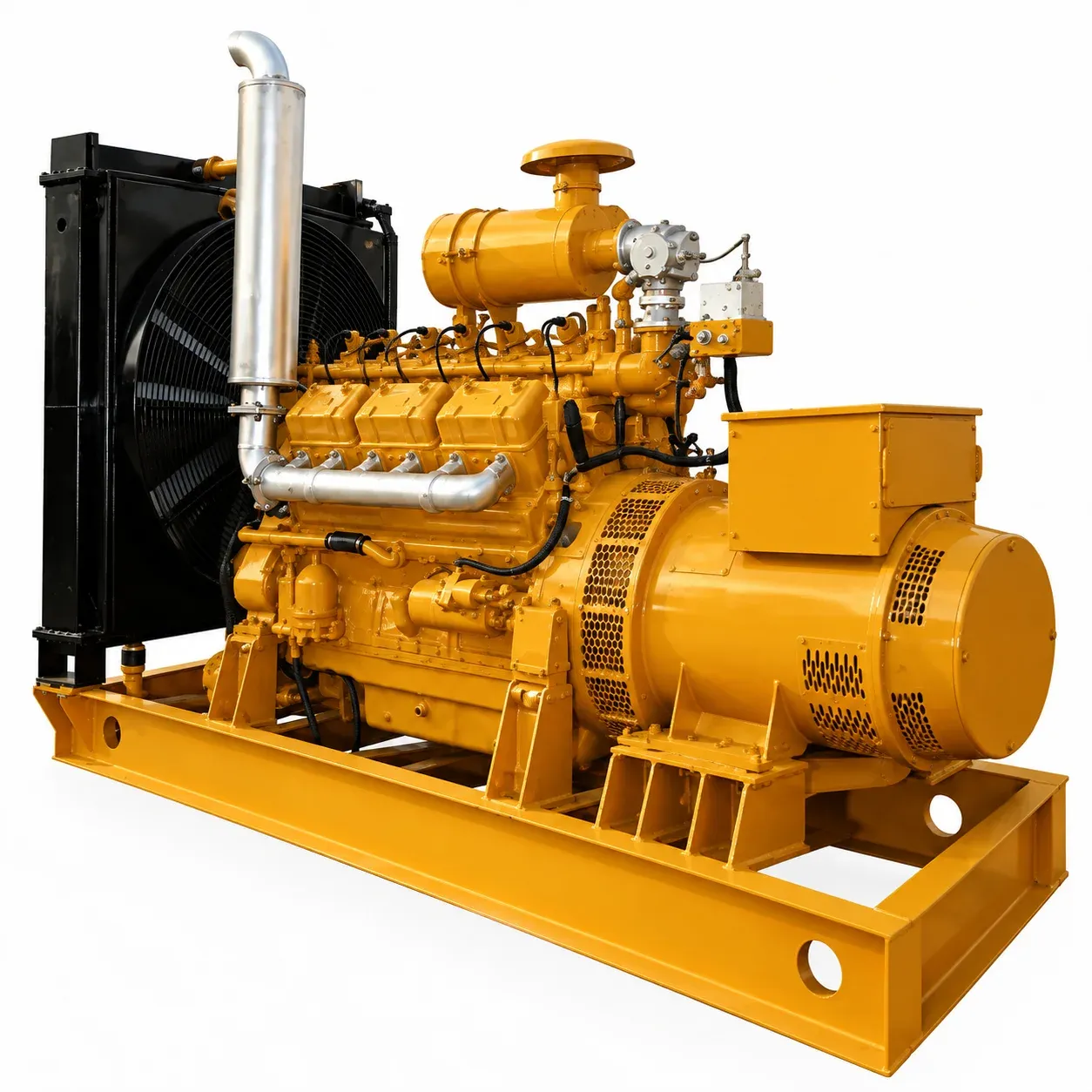
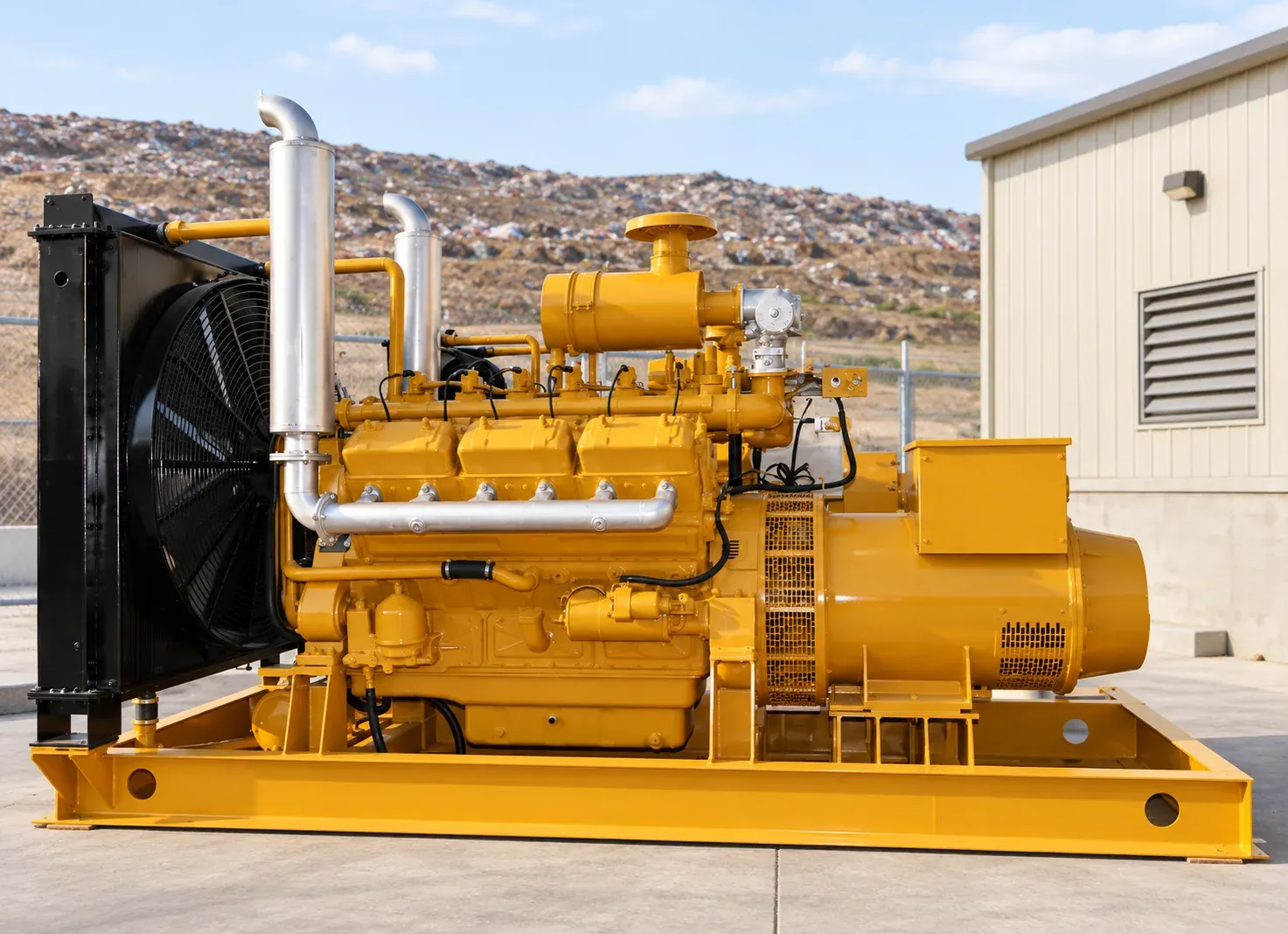
A gas engine generator set for landfill gas and other methane sources. Output, voltage and speed are configured to your gas supply and grid.
- Model
- MM-LFG
- Product group
- Gas & Biogas Generator Sets
- Fuel
- Landfill gas / methane
- Voltage options
- 230 V / 380 V / 400 V
- Built for landfill gas and methane fuel
- Voltage options: 230, 380 or 400 V
- Engine speed options: 1,000, 1,500 or 1,800 r/min
- Sized from your gas flow and composition
- Container-ready for site installation
Overview
How it works
Landfill gas is produced as organic waste breaks down, and it consists mainly of methane. A gas engine burns this fuel to drive a generator, turning a pollutant and fire risk into electricity. The same type of set can also run on methane from digesters or other biogas sources.
Why the gas matters
The output of a gas set depends far more on the fuel than on the nameplate. Methane content, gas flow, moisture, hydrogen sulfide and siloxane content all affect how much power the engine can deliver and how often it needs service. For this reason the rated output is set from a gas analysis of your site, and the gas pretreatment needed (drying, filtering, desulfurization) is part of the design.
Electrical and engine options
The set can be built for 230 V, 380 V or 400 V output and for engine speeds of 1,000, 1,500 or 1,800 r/min. The speed and frequency are chosen to match your grid or loads. Rated power, frequency and engine details follow from your gas data and appear on the quotation.
Where it is used
Customers include landfill operators, municipalities, wastewater plants and farms with digesters. The power can be used on site or exported to the grid where rules allow.
Configuration and delivery
Gas pretreatment, voltage and grid synchronization, container or open-frame installation, and exhaust, cooling and heat recovery options are selected to suit the site. The set is built in our factory and prepared for container shipping, and our engineers can guide installation and commissioning.
Landfill gas compared with natural gas and biogas sets
Landfill gas is not the same fuel as pipeline natural gas. It carries less methane, contains carbon dioxide, moisture, hydrogen sulphide and sometimes siloxanes, and its composition changes as the landfill ages. A gas engine set must therefore be specified for the actual gas, not for a generic rating. Where a natural gas set can be selected from a catalogue, a landfill gas set is selected from analysis results and the expected gas flow.
The main practical differences are three. Output is limited by gas available: a site producing a few hundred cubic meters per hour supports only a small set. Maintenance is more frequent because the gas is more corrosive. And safety interlocks are stricter, with a flare or a backup line for when the engine is shut down. If your gas comes from a digester, such as wastewater or manure, methane content is often higher and cleaner than landfill gas, which changes the engine settings and the cleaning skid. A recent gas analysis and flow record are the basis for engine size, cleaning steps and container layout.
Specifications
| Model | MM-LFG |
|---|---|
| Fuel | Landfill gas / methane |
| Voltage options | 230 V / 380 V / 400 V |
| Engine speed options | 1,000 / 1,500 / 1,800 r/min |
| Electrical efficiency of gas engine sets | about 36–42 % |
| Methane content of landfill gas | about 40–60 % by volume |
| Lower heating value of landfill gas | about 14–22 MJ/Nm³ |
| Unit size per engine | about 200 kW to 2 MW |
| Gas supply pressure at the engine | about 50–200 mbar after the gas train |
| Thermal output available for heat recovery | about 40–45 % of fuel energy |
| Oil change interval on landfill gas | about 500–1,000 running hours, depending on gas cleaning |
Configurations
Standard equipment
- Gas engine with generator on a common frame
- Gas train with pressure regulator, filters and safety shut-off valves
- Engine and generator control panel with protection relays
- Cooling radiator or heat exchanger set
- Exhaust silencer and flexible connections
- Flare safety interlock inputs
- Spare parts list and commissioning manual
Options
- Container housing with ventilation and fire detection
- Combined heat and power heat recovery module
- Gas drying and cooling skid
- Activated carbon filter for H₂S and siloxanes
- Grid synchronizing and export-limit controller
- Remote monitoring
- Gas analyzer for methane and oxygen
Frequently asked questions
What gas information do you need before quoting?
The methane content, the available gas flow and the main contaminants such as hydrogen sulfide. A recent gas analysis report is the best starting point, and the engine and any pretreatment are selected from that data.
Can the set be installed in a container?
Yes. We can supply the set in a container or as an open-frame unit for an existing building. The choice depends on your site, climate and noise requirements.
Do you supply spare parts?
We can supply a recommended spares list with the set, including filters, spark plugs and service items. Parts support is included in the quotation.
Does the engine run on biogas from a digester too?
Yes, but settings and gas cleaning differ from landfill gas. Biogas usually has higher methane and fewer contaminants, so the engine and fuel train are adjusted to the analysis.
Request a quote: Landfill Gas and Methane Generator Set
Send your requirement and our engineers reply with the configuration, lead time and a quotation.
Related products
Power & Energy · Complete line
100 kW Axial Flow Hydro Generator Set
Power & Energy · Complete line
100 kW Inclined-Jet Hydro Generator Set
Power & Energy · Complete line
200 kW Francis Hydro Turbine Generator Set