Water Treatment & Storage · Complete line
Water Treatment & Storage · Complete line
Groundwater Treatment Plant with Iron Removal and UF
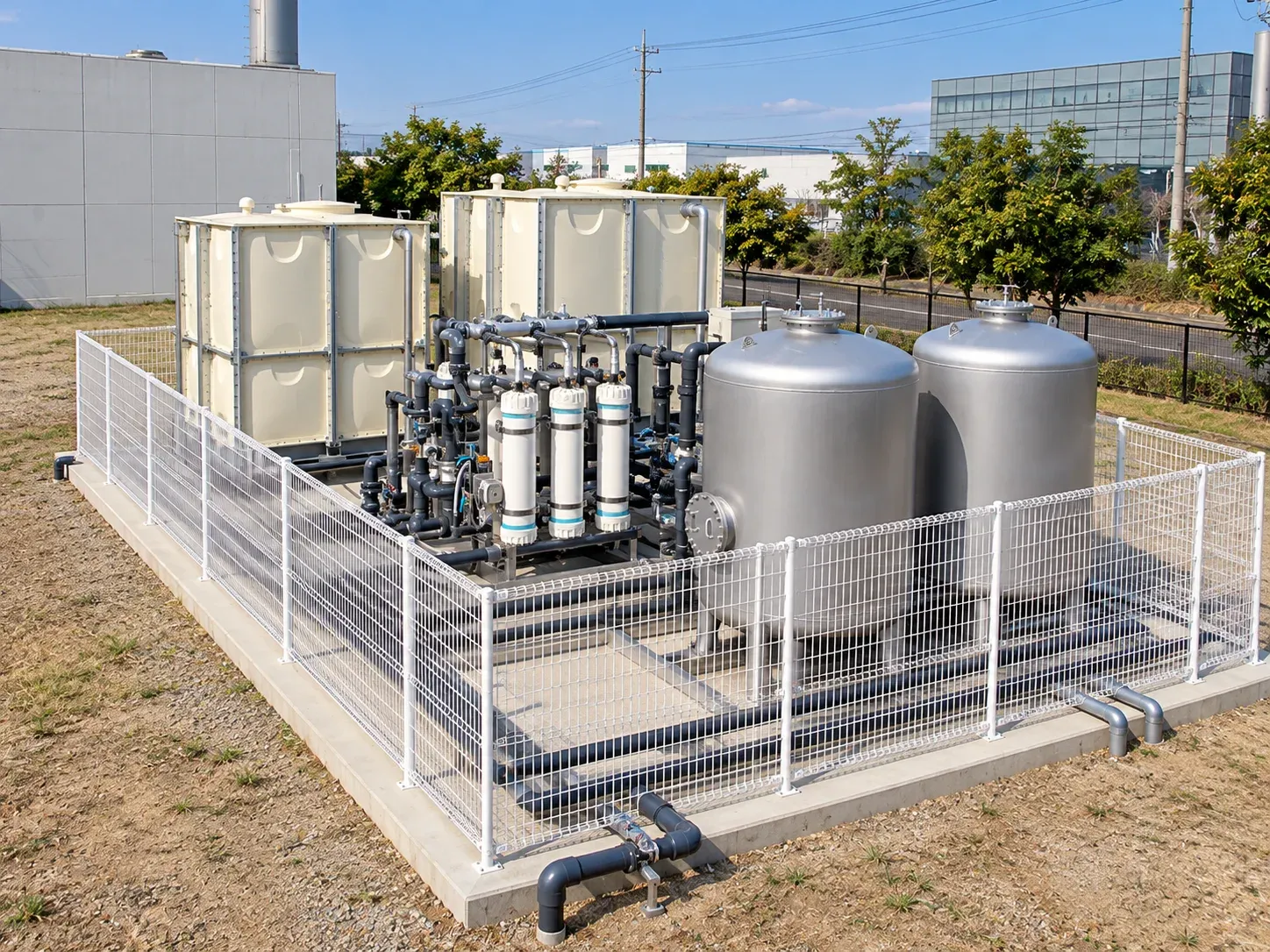
An integrated plant for well water: chlorination, iron and manganese removal, activated carbon filtration, ultrafiltration and final chlorination, with automatic backwash.
- Model
- MM-GWU
- Product group
- Packaged Water Treatment Plants
- Process
- Chlorination, iron/manganese removal, activated carbon, UF, final chlorination, automatic backwash
- Sizes
- 3 t/h, 6 t/h, 9 t/h
- Iron and manganese removal, carbon filter and UF in one plant
- Three sizes: 3, 6 and 9 t/h
- Automatic backwash
- Chlorine dosing at inlet and outlet
- Built for deep well and borehole water
Overview
How it works
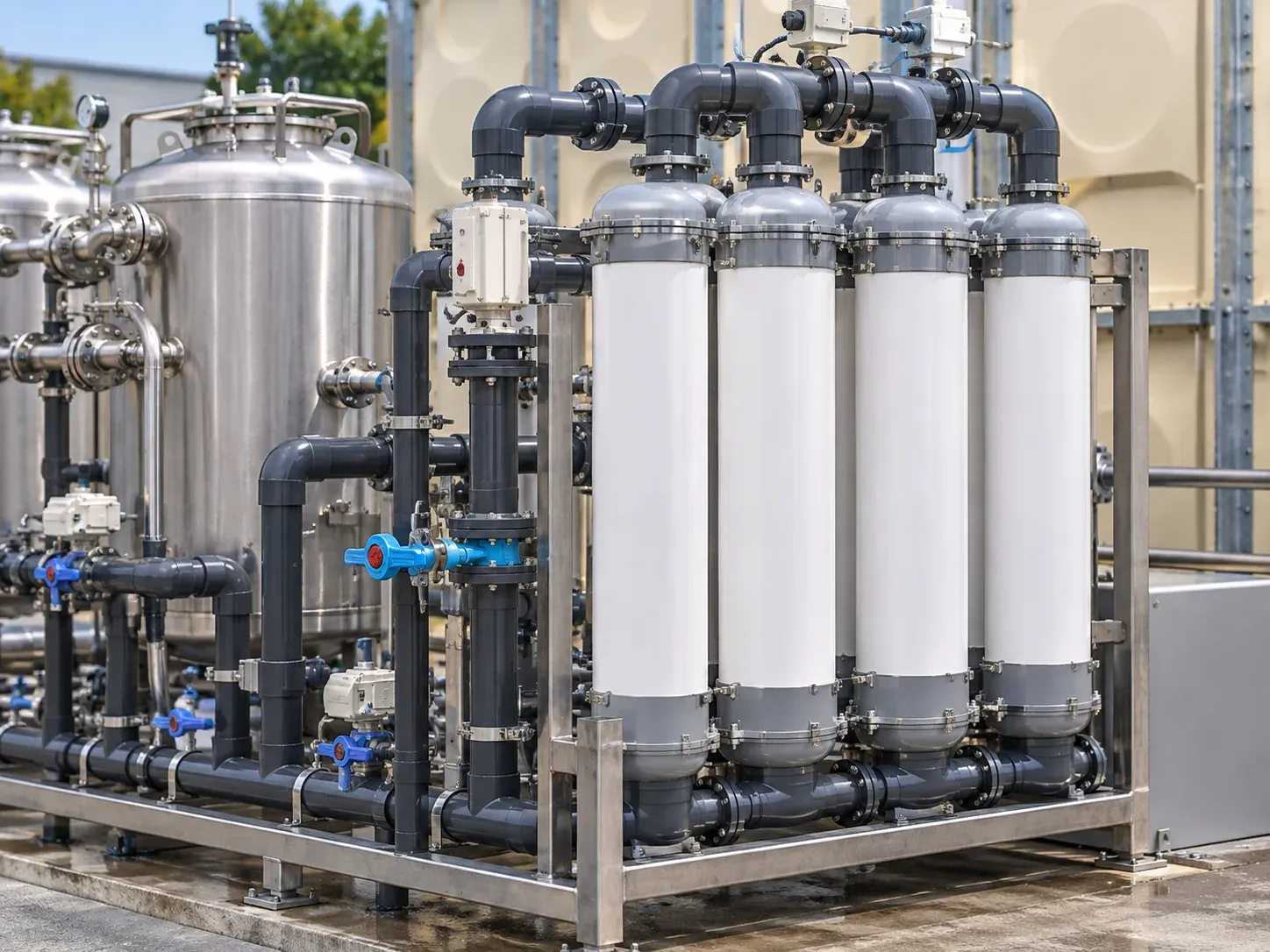
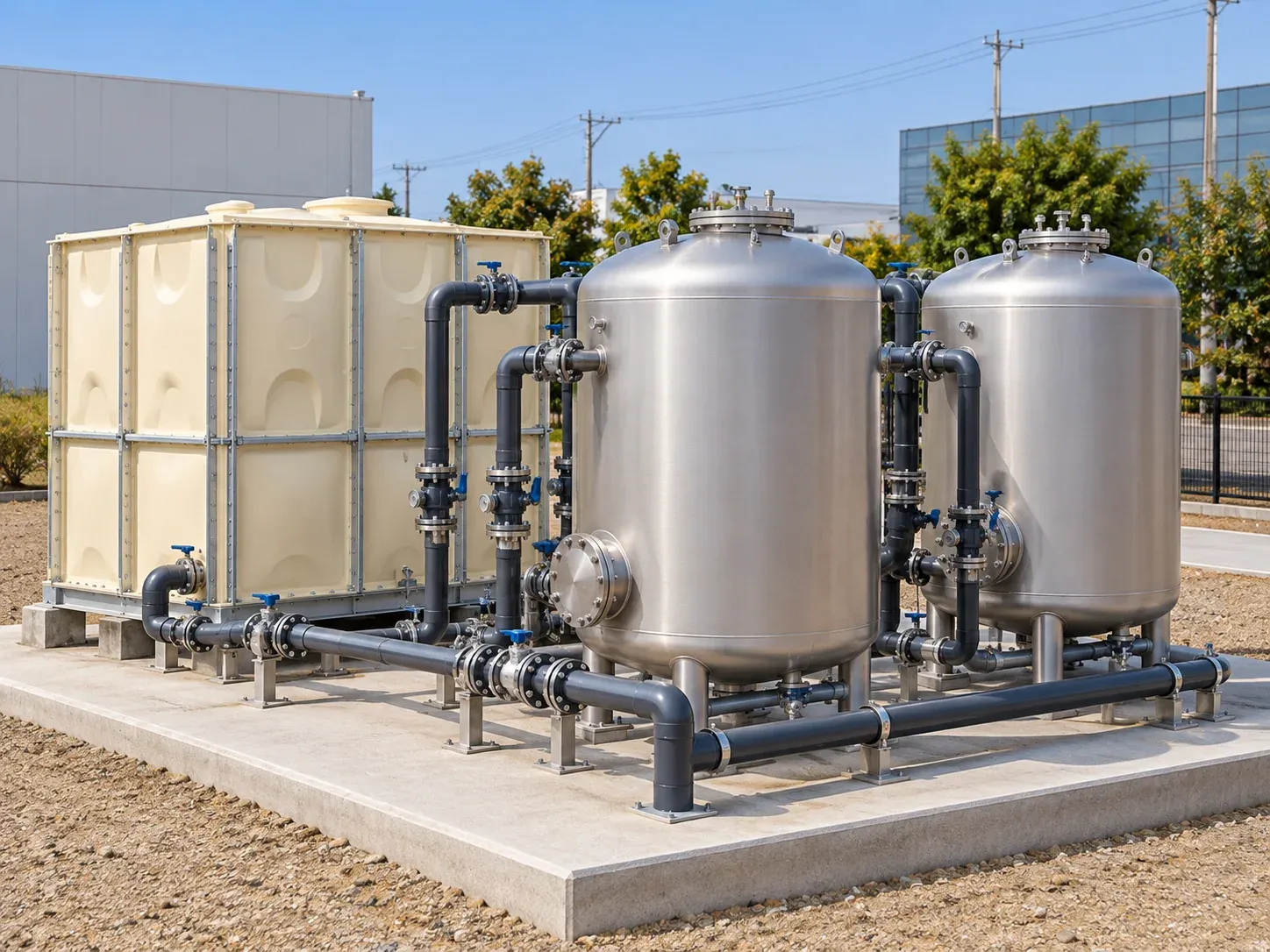
Groundwater often carries dissolved iron and manganese, which turn the water brown or black when they meet air. Our plant first adds chlorine to oxidize them, then removes the particles in an iron and manganese filter tower. An activated carbon tower takes out odor and organic matter. Ultrafiltration (UF) membranes then remove fine particles and most microorganisms. A final chlorine dose protects the water in the network.
Three sizes
The plant comes in 3, 6 and 9 t/h versions. The larger models use more UF modules (2, 4 and 6), larger pumps (circulation 1.1, 2.2 and 3.7 kW; backwash 1.5, 3.7 and 5.5 kW), bigger backwash tanks (2, 4 and 6 t) and wider filter towers (Ф600, Ф800 and Ф900 mm). Backwash runs automatically.
Pick the size from daily demand, not from the peak hour alone. At 3 t/h the plant makes about 70 m³ per day if it runs around the clock, which serves roughly 500–1,000 people at 70–150 L per person per day. The 6 t/h and 9 t/h models double and triple that. Because the towers, pumps and backwash tank all step up together, a bigger pump alone will not raise the output.
A treated water tank in front of the network lets the plant run steadily and still cover the morning and evening peak. If demand is likely to grow, choose the larger model now; the filter towers are the part that cannot be upgraded later.
How it differs from surface water plants
This route has no coagulation and settling step, because well water usually has low turbidity. It is smaller and simpler than the surface water plant, and a better match when the main problem is iron, manganese and organics. It assumes clear water, so a well that pumps sand or turns turbid after rain should be mentioned in the inquiry. If your source is a river or lake, our surface water plant is the right model instead.
Choosing a configuration
- Iron, manganese, turbidity, ammonia and organic content of the well water
- Size needed against daily demand
- Disinfection residual target
- Where the backwash wastewater goes
- Power supply and clear water tank scope
Delivery and installation
We build the plant in our factory and ship it ready to install. Meeting local drinking water rules depends on your source water and operation, so the target is agreed in the proposal and testing the treated water is recommended. Our engineers support installation and training.
Specifications
| Model | MM-GWU |
|---|---|
| Process | Chlorination, iron/manganese removal, activated carbon, UF, final chlorination, automatic backwash |
| Sizes | 3 t/h, 6 t/h, 9 t/h |
| UF modules | 2 / 4 / 6 (for 3 / 6 / 9 t/h) |
| Circulation pump | 1.1 / 2.2 / 3.7 kW |
| Backwash pump | 1.5 / 3.7 / 5.5 kW |
| Backwash tank | 2 / 4 / 6 t |
| Filter tower diameter | Ф600 / Ф800 / Ф900 mm |
| Raw-water iron handled | about 0.3–10 mg/L |
| Raw-water manganese handled | about 0.1–2 mg/L |
| UF membrane pore size | about 0.01–0.1 µm |
| UF flux | about 40–80 L/(m²·h) |
| UF recovery | about 90–95% |
| Backwash water | about 3–10% of production |
Configurations
Standard equipment
- Raw water pump
- Chlorine dosing set
- Iron and manganese removal filter
- Activated carbon filter
- Ultrafiltration modules with circulation pump
- Automatic backwash controls
Options
- Aeration tower
- Final disinfection by UV
- Treated water tank and booster pump
- Chemical cleaning unit for UF
- Online turbidity and chlorine meters
- Backwash water recovery tank
- Containerized housing
Frequently asked questions
How do I choose between the 3, 6 and 9 t/h models?
Choose by the hourly water demand and the hours you want the plant to run. The daily volume and peak demand decide the size.
What happens to the backwash water?
Automatic backwash produces wastewater that needs a drain or settling pit. The volume and layout are set during the design.
Do you supply spare membranes and media?
Yes. UF membranes, filter media and dosing parts can be supplied as spares, and the manual lists replacement intervals as a guide.
How often does the UF need chemical cleaning?
Usually every few months, depending on the water. Automatic backwash handles daily fouling. A periodic chemical clean restores the flux, and the cleaning steps are part of the manual.
Request a quote: Groundwater Treatment Plant with Iron Removal and UF
Send your requirement and our engineers reply with the configuration, lead time and a quotation.
Related products
Water Treatment & Storage · Complete line
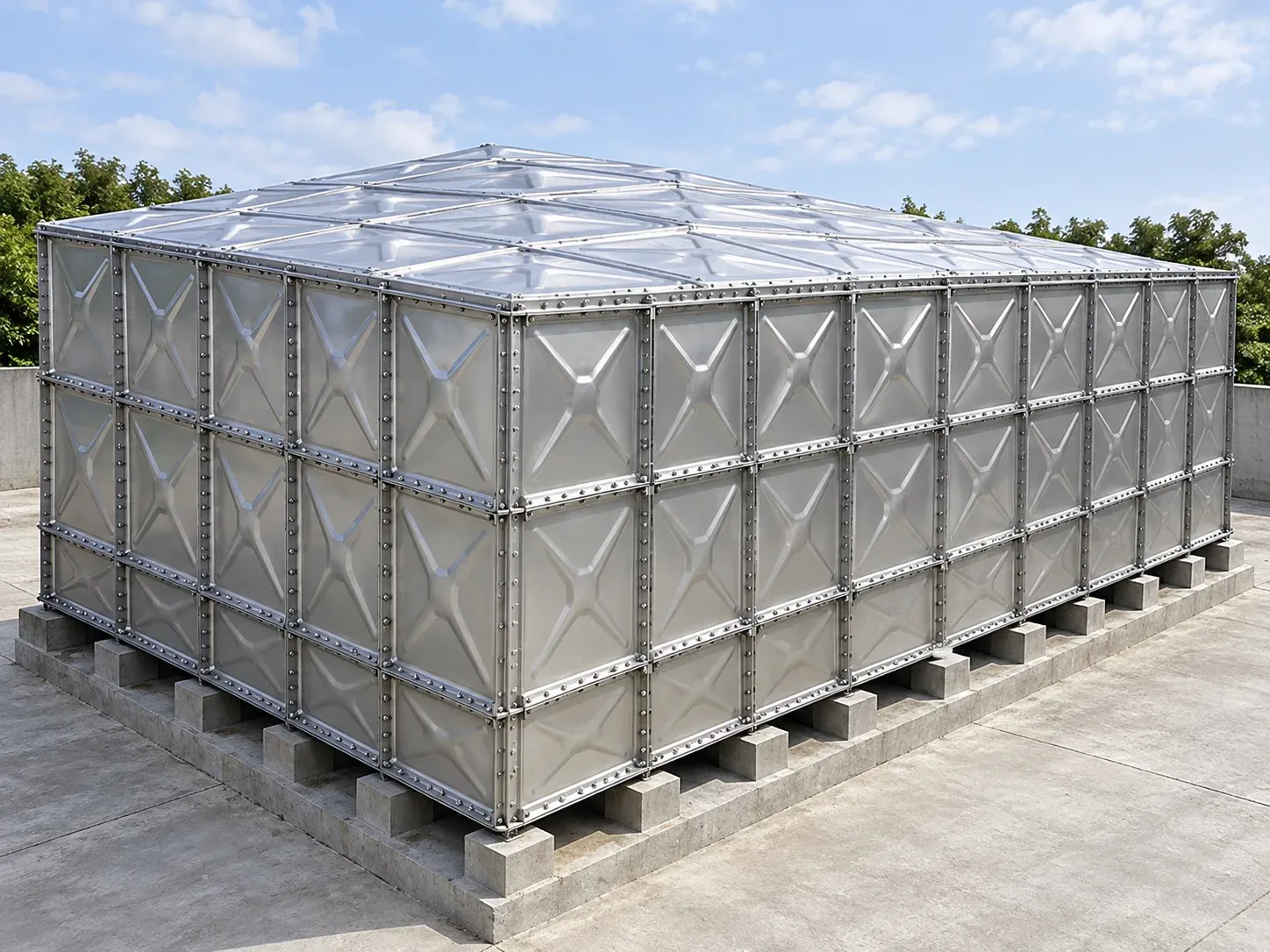
Bolted Stainless Steel Sectional Water Tank
Water Treatment & Storage · Complete line
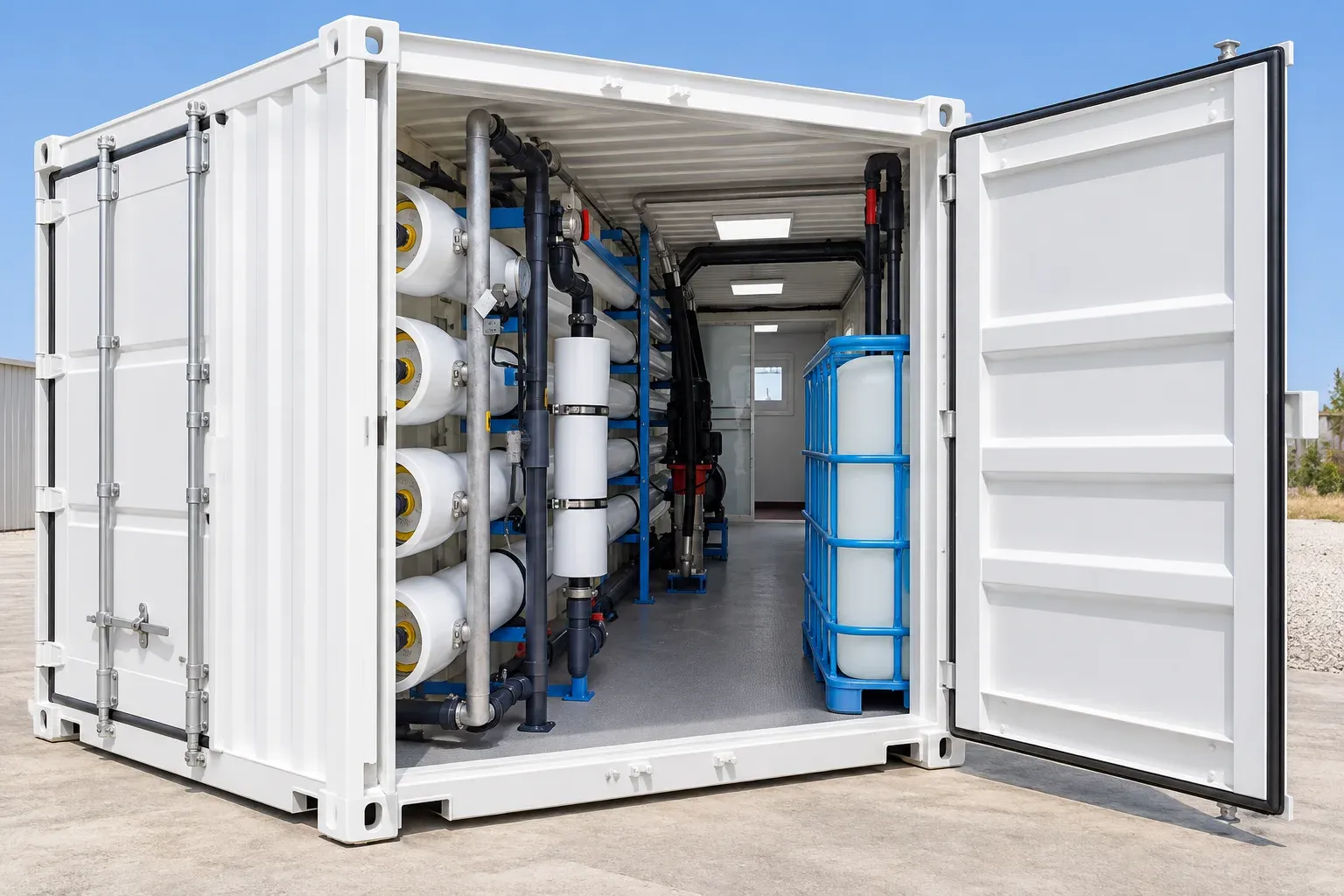
Containerized Brackish Water RO Plant, 10 m³/h
Water Treatment & Storage · Complete line
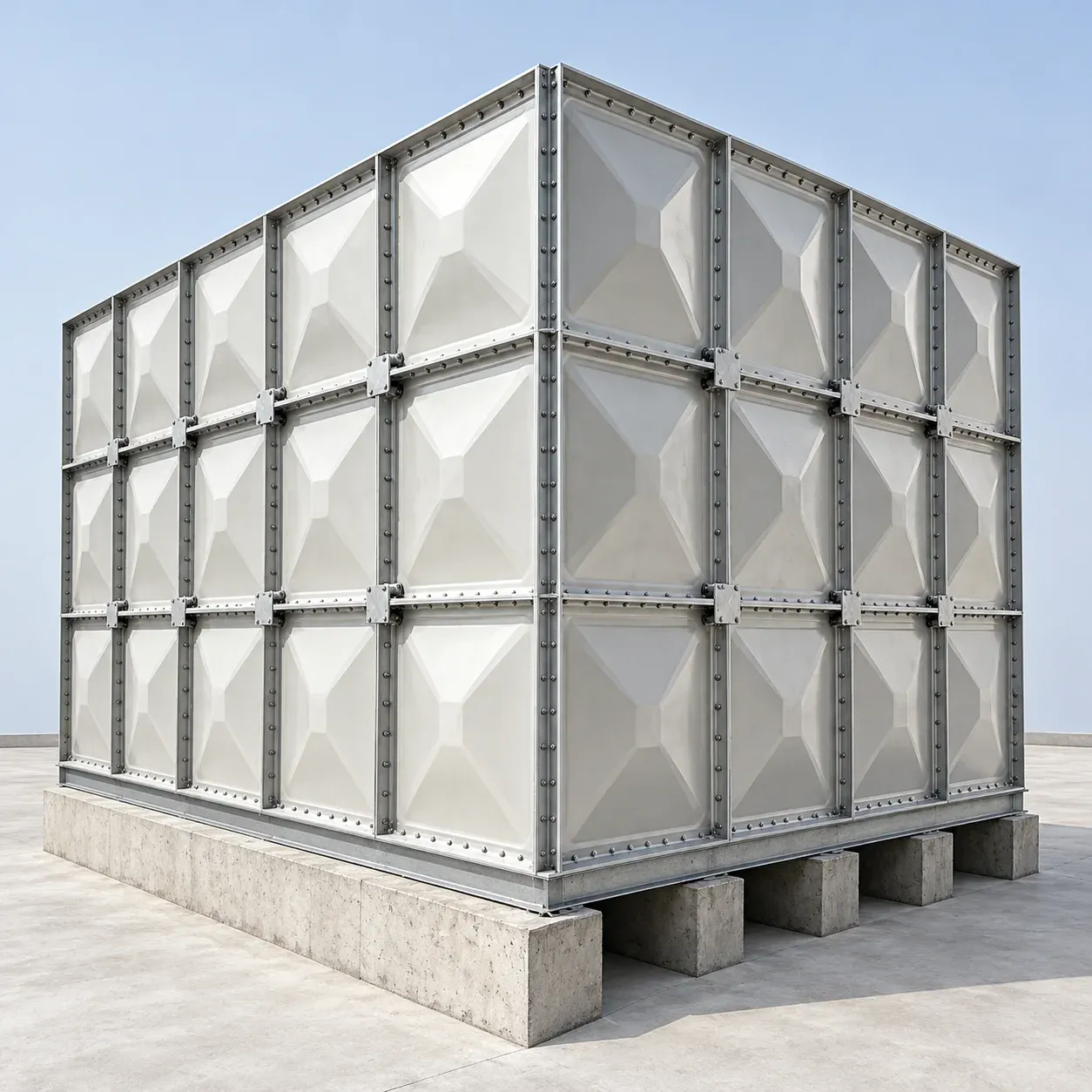
Modular GRP/SMC Panel Water Tank