Material Handling · Single machine
Material Handling · Single machine
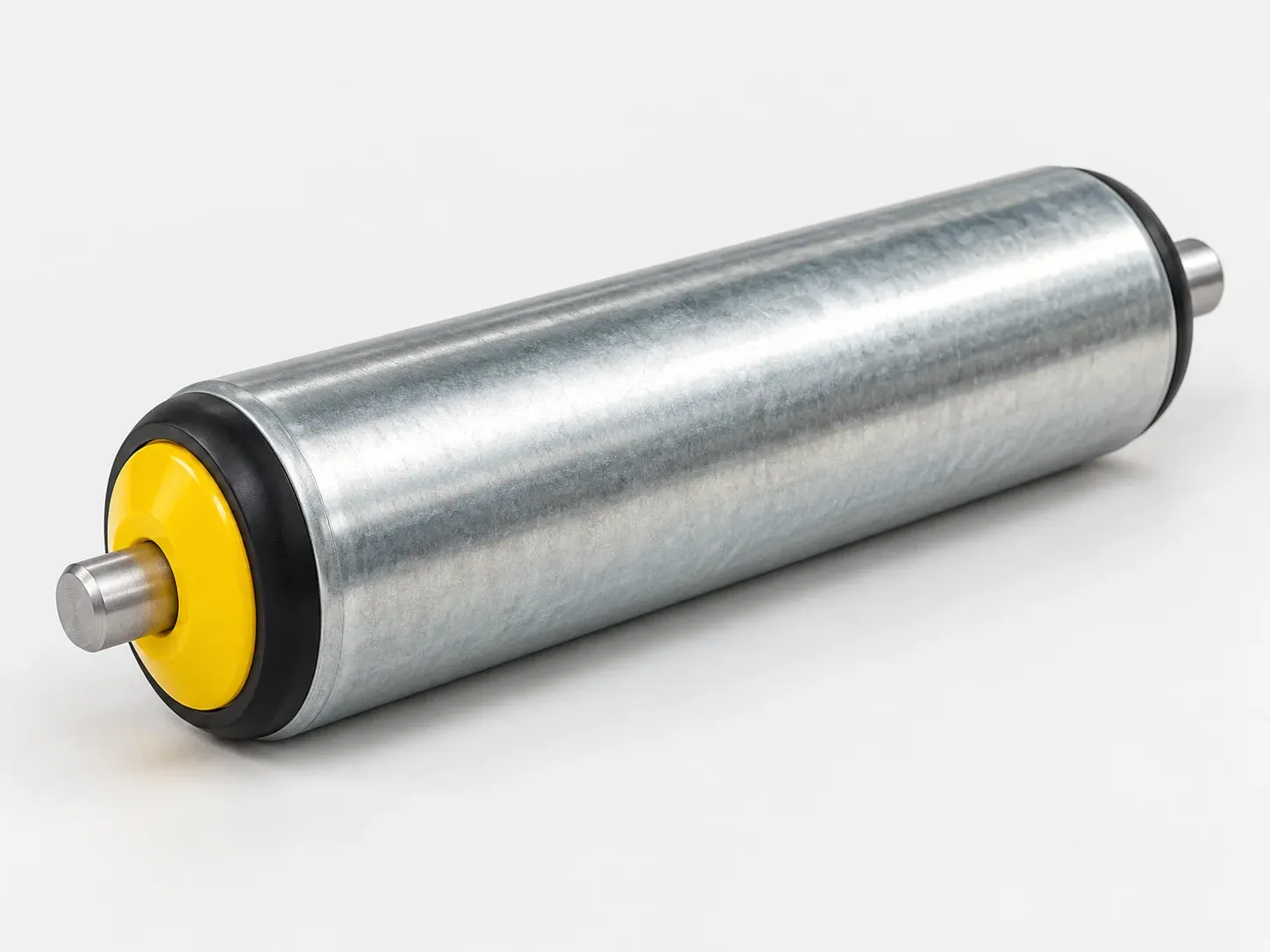
General-Purpose Conveyor Rollers and Roller Modules
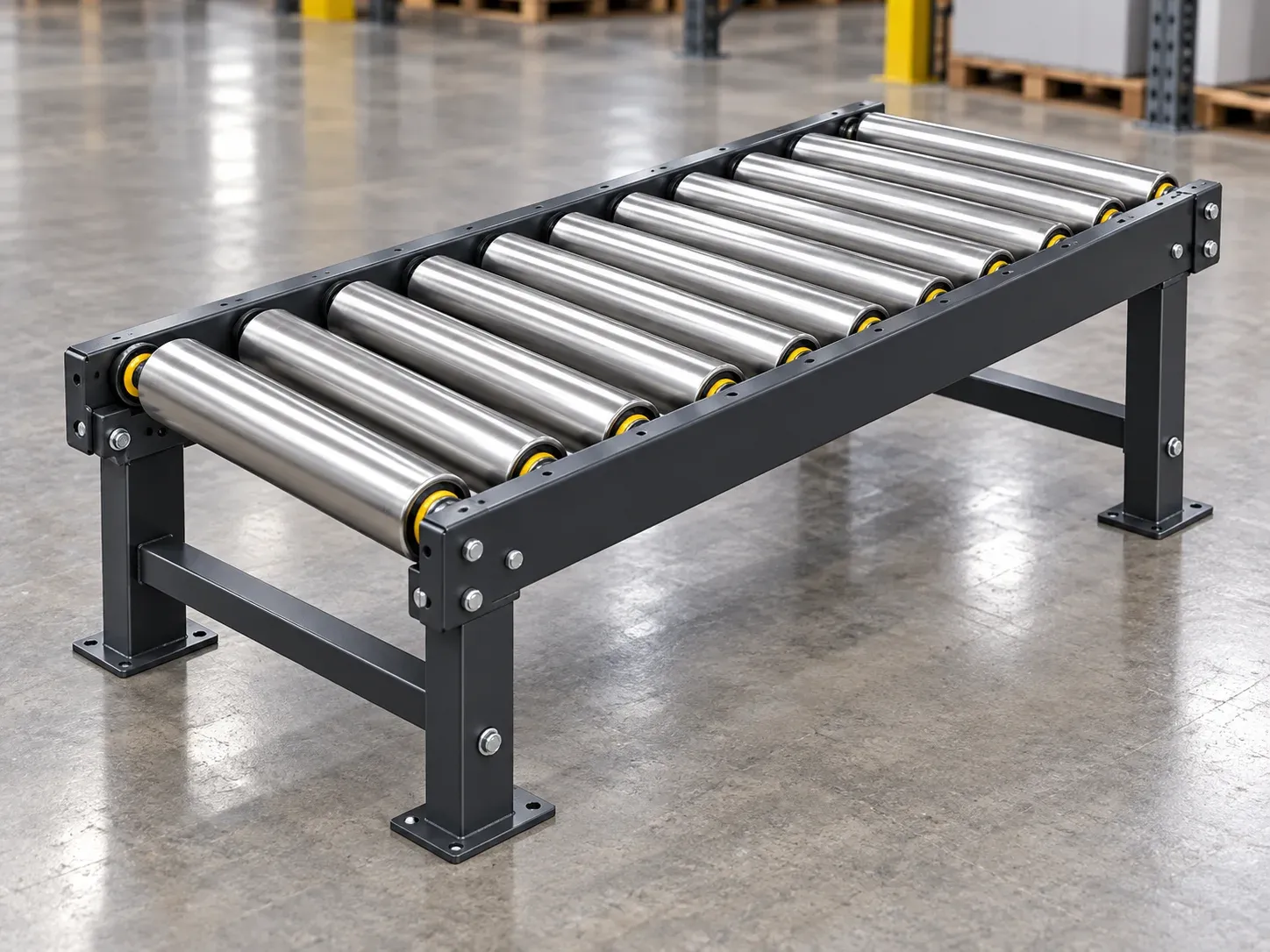
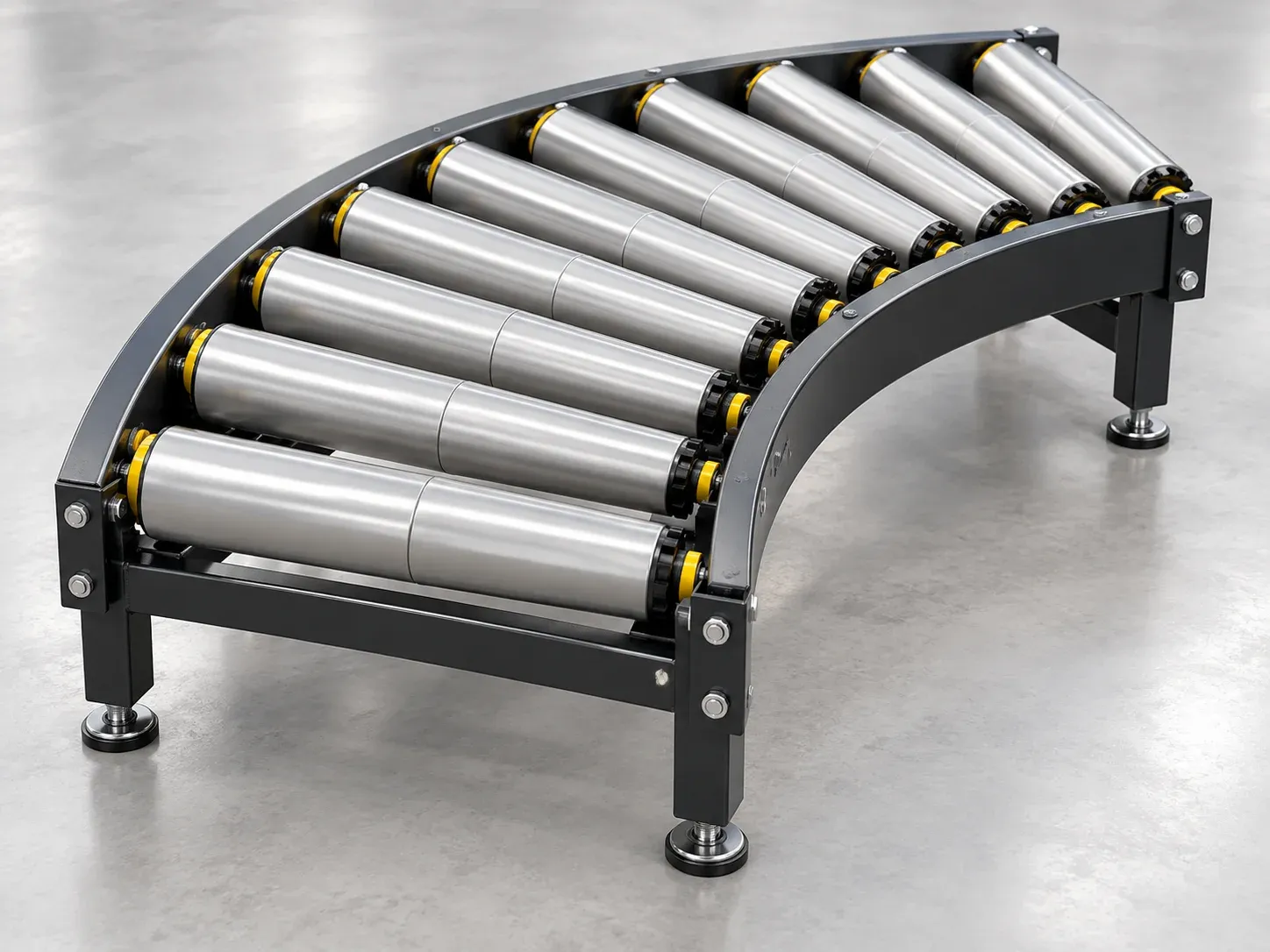
A range of conveyor rollers and roller modules for unit-load lines: plain rollers, powered rollers and straight or curved conveyor sections.
- Model
- MM-CVR
- Product group
- Conveyor Rollers & Modules
- Application
- General-purpose conveying of unit loads; powered, unpowered and inclined lines
- Plain and powered rollers
- Straight and curved roller modules
- Tapered rollers for curves
- For cartons, totes and pallets
- Sized to your load and line speed
Overview
What the range covers
A roller conveyor moves boxes, totes, trays and pallets on a row of rollers. We build the rollers themselves and the modules around them. A line can mix plain rollers that are pushed or run on a slope, rollers driven by a belt or chain, and powered rollers that carry their own motor. Curve sections use tapered rollers so that the load keeps its orientation around the bend.
How the line is put together
Rollers are mounted in side frames at a pitch chosen for the smallest item that will travel on the line. At least a few rollers must always be under the load, so small items need a closer pitch than pallets. Drive options depend on how you want to control the line: continuous drive from one motor, or zones that start and stop on demand. We help you choose the drive after we know your layout.
Where it is used
Distribution centers, packing halls, assembly lines and factory transfer points. The same range handles light cartons and heavy pallets, but the roller size, wall thickness and axle design change with the load, so one roller is never a fit for every duty.
Choosing a configuration
- Roller diameter, tube material and surface
- Axle type and end fixing
- Pitch, line length and width between frames
- Unpowered, belt-driven or motor-driven operation
- Straight, curved or inclined sections
- Operating environment such as dust, moisture or cold
Ordering
Ratings are given for the exact roller or module quoted, not for the whole range, and they depend on the load, the underside of the item, the line speed and the layout. A sketch of the layout speeds up the quotation.
Operating cost factors
Roller conveyors are cheap to run, but the total cost depends on how the line is set up. Roller pitch is the first factor: too wide a gap makes small cartons tip, too narrow a gap adds rollers and drive load for no gain. The second is bearing quality; sealed bearings last longer in dusty or wet plants and keep noise down on long lines.
Powered sections use energy only when running. Zone-controlled lines, where each segment drives only while a load is on it, cut power use and noise compared with a line that runs all day. Chain drive is cheaper to install but needs lubrication and guards, while motorized rollers cost more up front and need very little service.
Plan spares by roller type: a few rollers, drive belts or chains, and a motorized roller if the line has them. Wear is mostly at the load contact and the bearings.
Specifications
| Model | MM-CVR |
|---|---|
| Application | General-purpose conveying of unit loads; powered, unpowered and inclined lines |
| Roller diameter | commonly 38–89 mm for unit-load lines |
| Tube material | galvanized steel, stainless steel, aluminum or plastic |
| Roller pitch | set so at least three rollers support the shortest load |
| Load per roller | light duty about 30–150 kg, heavier on thicker tubes |
| Bearings | sealed deep-groove ball bearings |
| Powered drive | 24 V DC motorized rollers, or chain or belt drive to unpowered rollers |
| Line speed | about 0.1–0.5 m/s on accumulation and sorting lines |
Configurations
| Roller families | Standard cylindrical rollers and tapered rollers for curve sections; roller diameter, axle end, material and drive method are set per line |
|---|
Standard equipment
- Rollers with sealed bearings
- Spring-loaded or fixed axle ends
- Side frames in steel or aluminum
- Cross-members and support legs
- Mounting hardware
- Drive guards on powered sections
Options
- Zinc plating or stainless steel tubes
- Polyurethane or rubber-lagged rollers
- Tapered rollers for curves
- Motorized rollers with controller
- Brake or accumulation zones
- Side guide rails and stands
Frequently asked questions
Can you supply rollers only, without frames?
Yes. We can supply rollers alone for your own frames or complete modules with frames, depending on what you need.
How do I choose the roller pitch?
Pitch follows the shortest item on the line, so that several rollers always carry it. Send the item size and we will propose a pitch.
Are spare rollers available?
Yes. We recommend ordering a few spare rollers and drive parts with the first shipment, and a parts list can be suggested for your line.
How do I choose roller diameter and pitch?
Send the smallest and heaviest load, its bottom surface and the line speed. Roller diameter follows load and span, and pitch follows the shortest carrier length so that three or more rollers always support it.
Request a quote: General-Purpose Conveyor Rollers and Roller Modules
Send your requirement and our engineers reply with the configuration, lead time and a quotation.
Related products
Material Handling · Single machine
Steerable Follower Machine Skate
Material Handling · Single machine
Straight-Line Follower Machine Skate