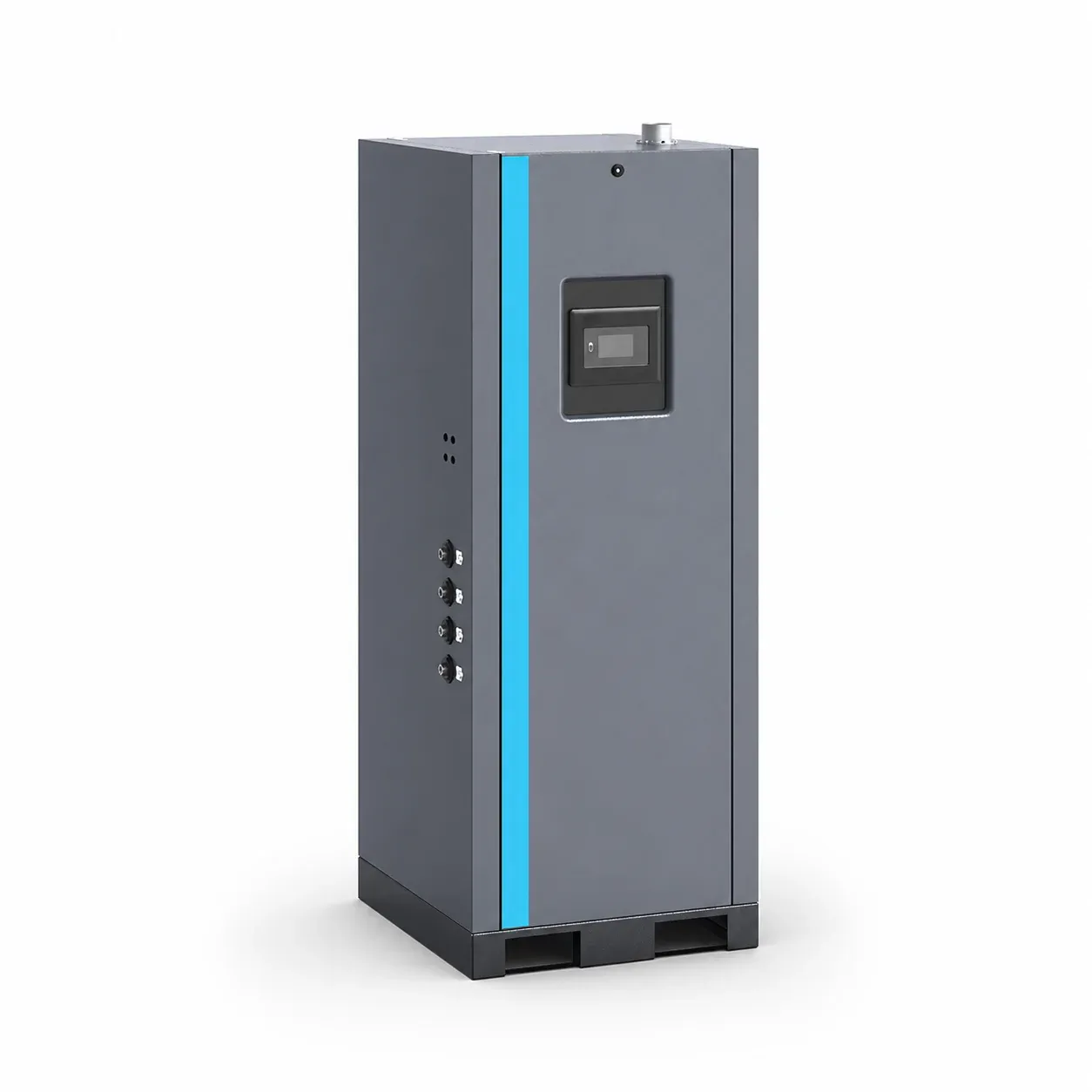
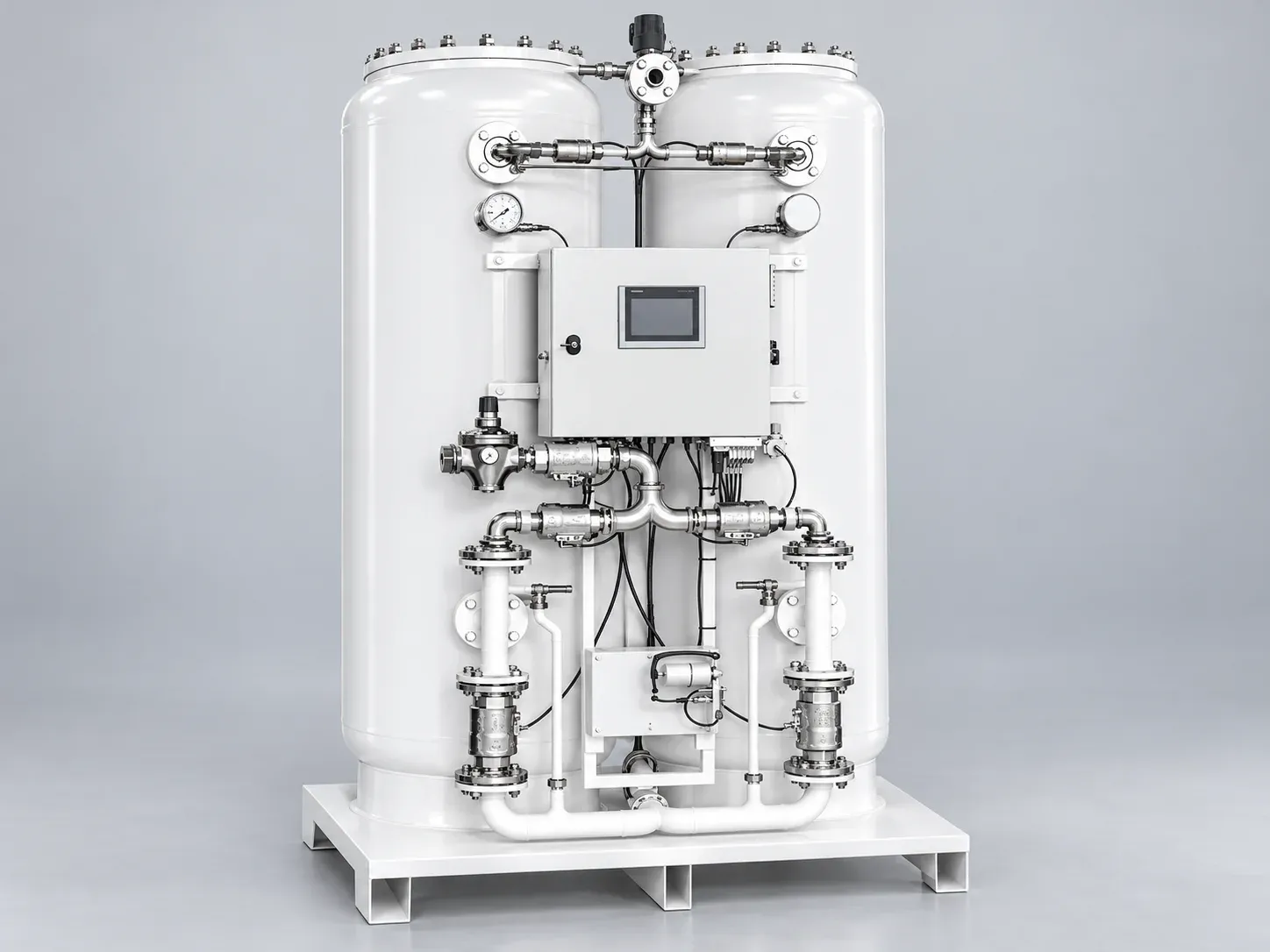
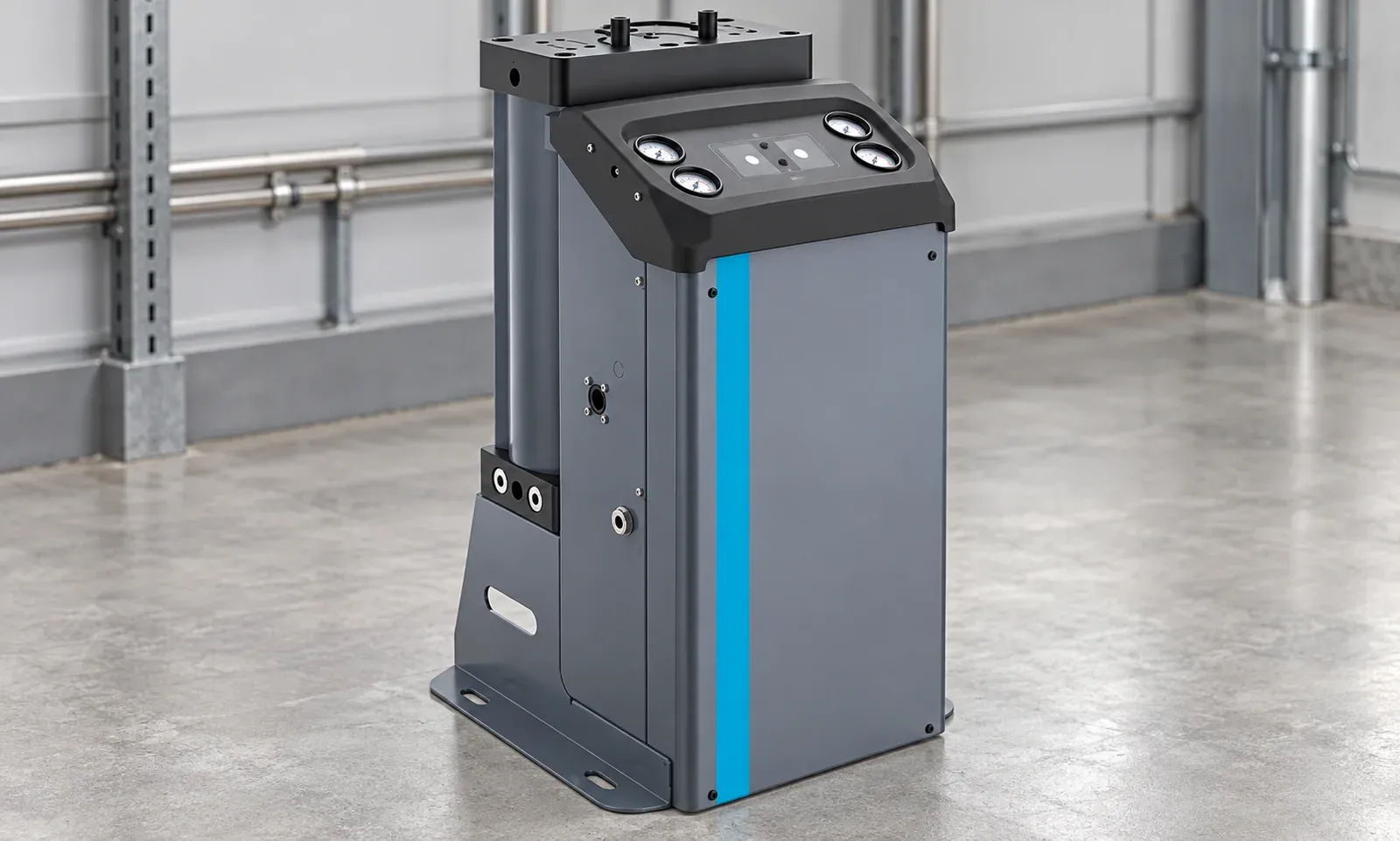
Three machines, two gases
Pressure swing adsorption pulls oxygen or nitrogen out of ordinary compressed air. Two towers filled with a molecular sieve take turns: one adsorbs under pressure while the other is vented and regenerates. Our catalogue splits into three machines, and the right one depends on who will use the gas.
| Family | Gas | Flow range | Typical purity | Best for |
|---|---|---|---|---|
| Medical PSA oxygen systems | Oxygen | 1.8 to 433.40 m³/h across the series | About 90 to 96% | Hospitals, clinics, field facilities |
| Industrial PSA oxygen generator | Oxygen | Sized per project | About 90 to 95% | Cutting, furnaces, water treatment, cylinder filling |
| Compact PSA nitrogen generators | Nitrogen | 0.3 to 18.8 Nm³/h across the series | Up to 99.999%, depending on model and flow | Packaging, laser cutting, labs, pharma |
Sizing a hospital oxygen plant
Start from beds, not from machine catalogues. An average bed draws roughly 3 to 6 L/min, and ventilated patients draw more. As an example only: 100 beds at 5 L/min is 500 L/min, or 30 m³/h. Add margin for ventilators and growth, then choose a series size above that. The medical systems come as a stand-alone unit, a frame-mounted skid or a containerized plant, which helps when no building is ready.
The generator is only part of the supply. The air compressor, dryer and filters, oxygen receiver, analyzer, alarms and piping all belong in the scope, and so does a backup source. If you are still weighing generators against delivered cylinders, our PSA oxygen generator vs cylinders guide goes through that choice.
Industrial oxygen: watch the power bill
For process use the question is energy. A typical industrial unit draws about 0.35 to 0.6 kWh per Nm³ of oxygen, with outlet pressure around 0.2 to 0.5 MPa. If you need cylinders filled, a booster takes the gas to about 15 MPa. Because purity sits at 90 to 95%, confirm that your burner, ozone or aeration process is happy with the remaining argon and nitrogen.
Nitrogen: purity decides the flow
A compact nitrogen cabinet can reach 99.999%, but not at its maximum flow. Packaging and food work usually needs less than that, so a lower purity gives you more gas from a smaller machine and a smaller compressor. Air use is about 2 to 6 Nm³ of air per Nm³ of nitrogen, so the compressor is often the biggest cost. Allow 5 to 15 minutes at start-up before purity settles.
Siting, power and format
A PSA plant needs clean, dry, cool air. Put the compressor in a ventilated room, keep the intake away from exhaust and dust, and leave service space around the towers. In hot or dusty climates a containerized plant keeps the machinery in its own protected shell, which is often easier than building a plant room. Ask for the motor voltage and frequency to match your grid, for example 400 V 50 Hz or 480 V 60 Hz, and plan a stable supply: the towers on the oxygen units swap roughly every 30 to 60 seconds, so a power dip upsets purity until the unit settles again. A buffer tank and an online purity analyzer smooth these swings and give a clear alarm.
What to send for a quote
- Gas needed, peak and average flow, and the purity or standard you must meet.
- Delivery pressure, and whether a booster or cylinder filling is wanted.
- Site voltage and frequency, ambient temperature, altitude and humidity.
- For hospitals: bed count, ventilator count, and any existing piping and backup.
- Whether you already own a compressor, dryer and receiver.
- Format wanted: cabinet, skid or container.
Labs that use these gases may also want our laboratory equipment group, or you can go back to Medical, Lab & Gas.