Short answer: a silent diesel generator is a standard set fitted with an insulated canopy, so you pay for lower noise, weather and tamper protection, and in return you accept tighter service access and a cooling margin you must check. Choose open frame only when the set will stand in a purpose-built plant room, and choose container or trailer housings when the site, not the noise limit, decides the question.
The four housings in one table
| Housing | Typical use | Noise at 7 m | Cooling | Service access | Moves easily? |
|---|---|---|---|---|---|
| Open frame | Plant room, factory generator hall | Highest; engine is exposed | Best; free air around the radiator | Best | Crane or forklift |
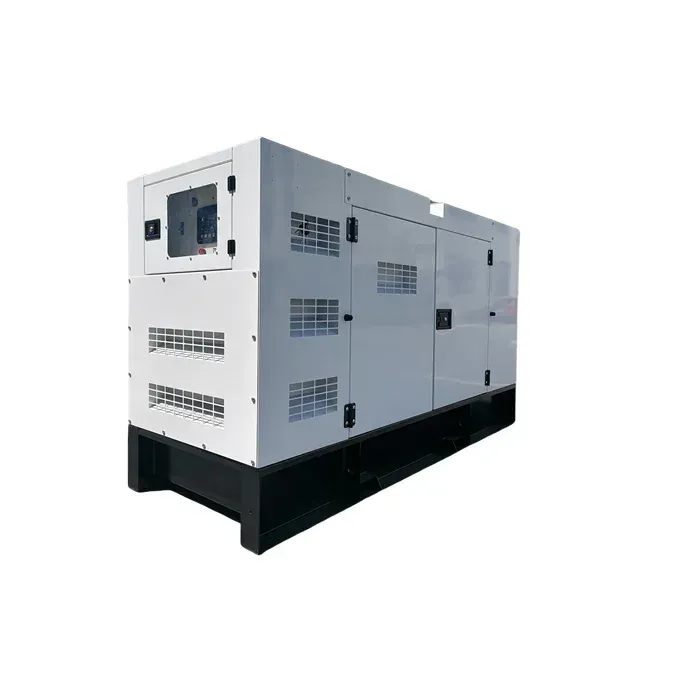
| Silent canopy | Outdoors beside a building, shops, clinics, homes | About 62 to 78 dB(A) on our product pages, by size | Airflow forced through louvres | Good, via doors | Forklift or skid |
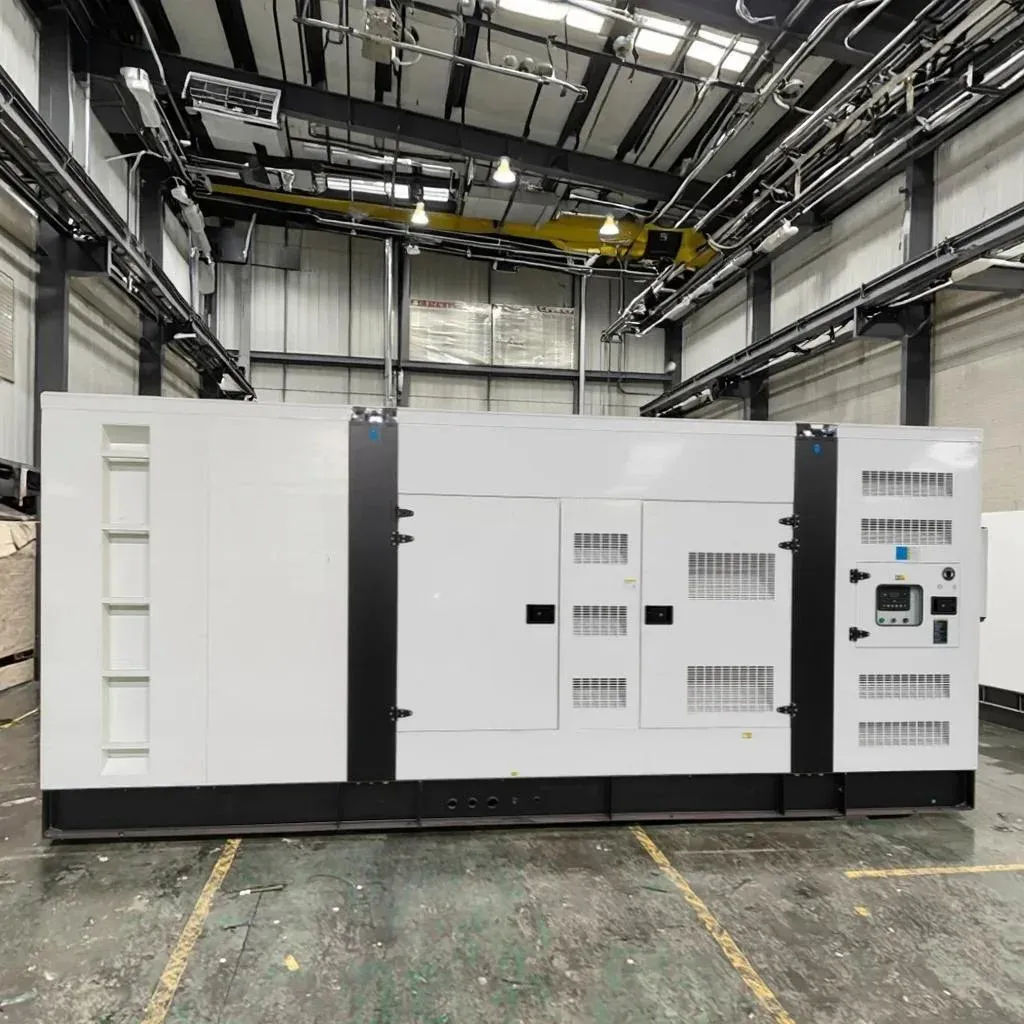
| Container | Permanent outdoor plant, projects, harsh weather | Low, depends on attenuators | Needs designed inlet and outlet | Walk-in, good | Crane, lorry |
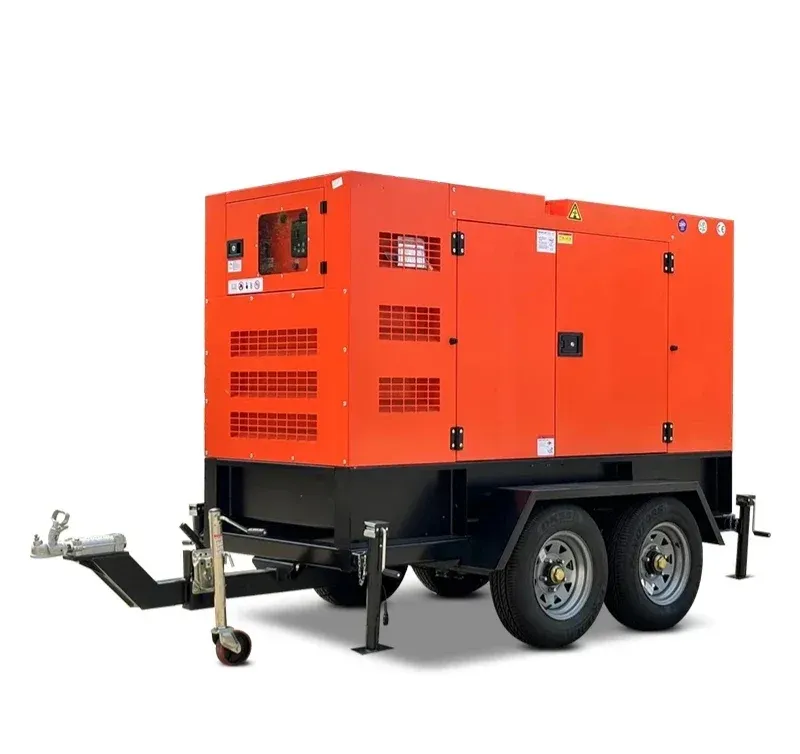
| Trailer | Construction, events, mining camps | Open, silent or super silent | As canopy | Good | Towable |
Sound ranges are typical values from our product pages, not guarantees.
What dB(A) at 7 m actually tells you
Manufacturers quote sound pressure level at a fixed distance, usually 7 m, in dB(A), which weights frequencies the way the ear hears them. One published canopy datasheet lists 74 dB(A) at 1 m and 64 dB(A) at 7 m for a small set, so the same machine is about 10 dB quieter at 7 m than at 1 m.
Distance helps a lot. In open ground with nothing to reflect sound, the level drops by about 6 dB each time you double the distance from a point source. Walls and buildings change this.
Example: a canopy set is rated at 68 dB(A) at 7 m. In an ideal open field it would be about 62 dB(A) at 14 m, about 56 dB(A) at 28 m and about 50 dB(A) at 56 m. If your local rule limits night noise at the boundary to 45 dB(A), a set 56 m away is still above it, so you would need a barrier or a larger setback.
For context, the WHO night noise guidelines for Europe give a target of 40 dB Lnight outside. Get your local limit before you order.
Cooling and derating inside a canopy
In an open set the fan pulls air straight through. A canopy forces it through inlet louvres and a discharge opening, and the sound-absorbing lining adds resistance, so the radiator sees warmer air and has less margin on hot days.
Good designs allow for this, but ask:
- At what ambient temperature is the output rating valid, with the canopy fitted?
- What happens at altitude? Output falls as air gets thinner, and our 500 kVA page notes that hot climates or high altitude may need derating.
- Can the discharge air leave freely, or will it recirculate into the inlet in a tight yard?
Where outdoor air stays above 40 C (104 F) for weeks, as in the Gulf or the Sahel, this matters more than the dB figure.
Cost drivers, not prices
A canopy adds steel, insulation and a silencer; a container adds more steel plus attenuators; a trailer adds axles and brakes. Open frame saves the enclosure but may need a plant room and ducts. Compare installed cost.
Maintenance, theft and weather
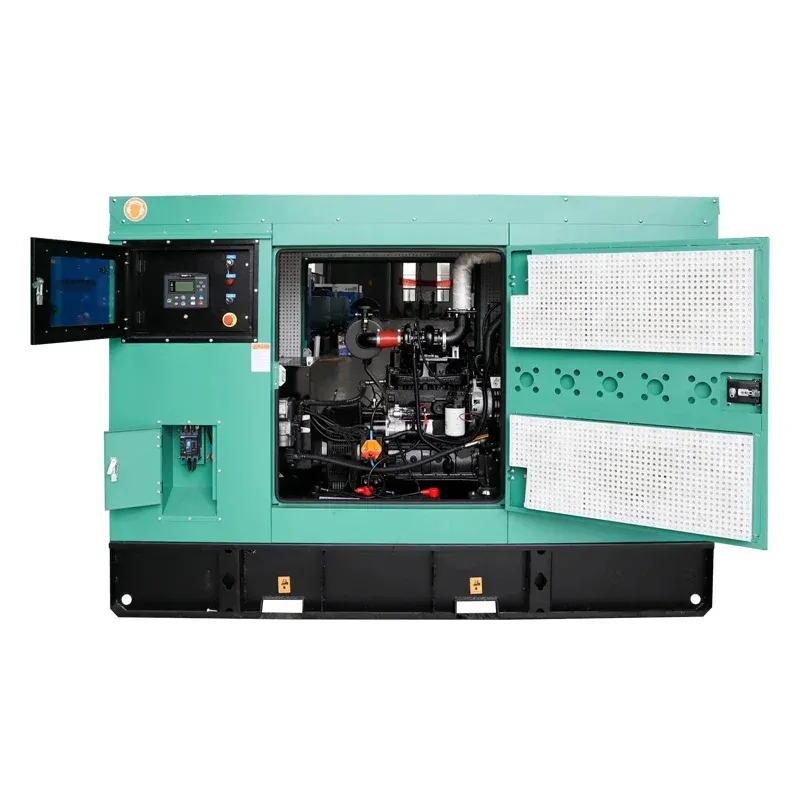
An open set is the easiest to service: you can reach every filter, belt and valve cover. A canopy needs doors that open fully and clear space around it. In our 20 to 250 kVA range the canopy is an option; without it you get an open frame.
On security, a locked canopy protects the batteries, diesel and controller from casual interference and the weather. Open frames are exposed to rain, dust and sun, and they need a roof or room. A canopy does not make the set theft-proof, so fixed sites still need anchor bolts and a fence.
When open frame is the better choice
- A plant room with its own acoustic treatment and ventilation, where a canopy would be a second enclosure.
- A hot climate where you want the best cooling margin and the building already controls boundary noise.
- Sets that need frequent service, such as heavy prime-power duty.
A canopy is the better buy next to homes, shops and clinics. Our 10 kVA super silent set suits such sites.
ATS and remote start
Housing does not change the control logic. Any set can start automatically on a mains failure if it has an auto-start controller and, for full changeover, an automatic transfer switch. Transfer takes seconds, so check the figure with your supplier if a server room or medical device cannot tolerate a break. Remote start and GSM monitoring let you read fuel level, hours and alarms without opening the door. The 10 kVA set lists ATS and remote panel options, and the 500 kVA model lists a synchronizing panel for two sets in parallel.
Buyer checklist
Tell the supplier:
- Total load in kW and the largest motor to start, voltage and frequency (for example 400 V 50 Hz or 480 V 60 Hz).
- Maximum ambient temperature and altitude.
- The noise limit and the distance to the nearest building.
- Duty: standby, prime or continuous, and ATS, remote start and tank size.
Check on the quote:
- Noise in dB(A) at 7 m, and the load and standard it was measured at.
- Rated output at your site temperature with the housing fitted.
When not to buy a canopy
Skip the canopy if the set is in a sound-treated room or you need maximum cooling in extreme heat. Skip open frame if the set stands in a yard near people. If you do not yet know the load, read our diesel generator sizing guide first. For sets that run on gas rather than diesel, see the biogas and landfill gas guide.
Our range by housing
The 20 to 250 kVA range offers a canopy option, and the 180 kVA mobile set comes silent, super silent or open frame on a trailer. See all under Power and energy. For a quote, send your load list, site temperature and noise limit via the contact page.