What a skate set does
A machine skate is a low wheeled carrier that goes under the base of a machine so it can be rolled instead of lifted. The machine is first raised a little with a jack, the skates are placed under its support points, and the machine is lowered onto them. From there it can be moved to a new position, through a door, or onto a new foundation without a crane. The method is common in factories where a press, lathe or printing line has to be relocated, and it only works if the floor, the route and the load distribution have been planned beforehand.
The three units we supply
| Unit | Role | Steering | Typical carrier height |
|---|---|---|---|
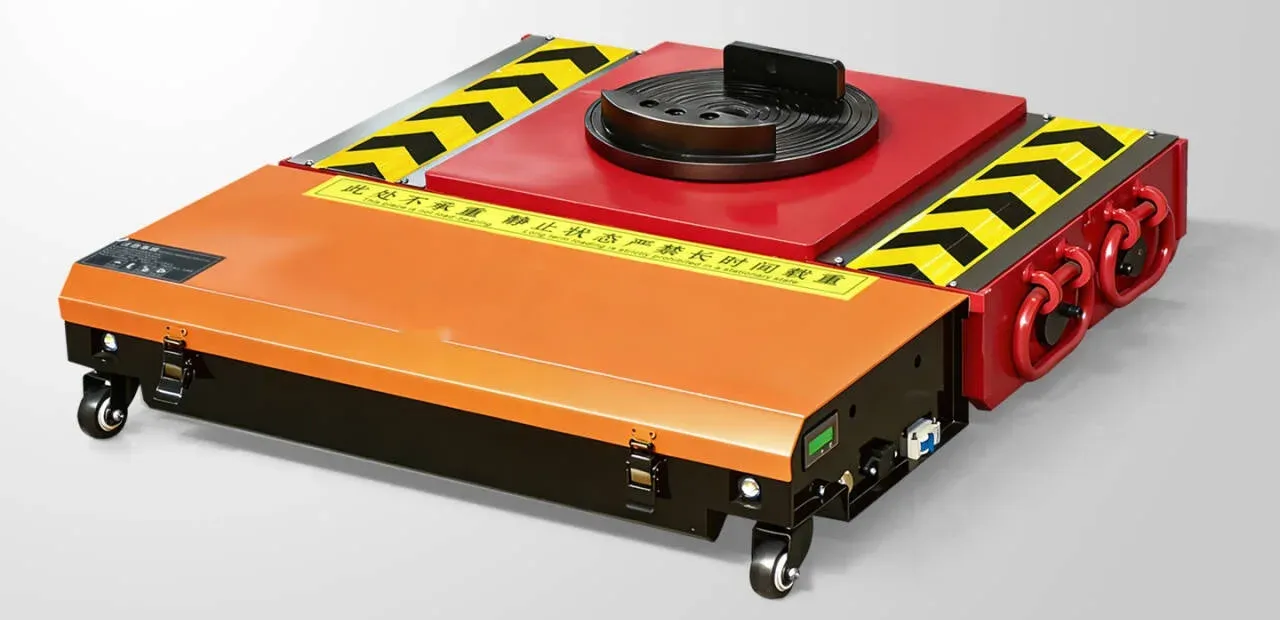
| Battery-powered machine skate | Drives and carries part of the load | Remote control, with emergency stop | about 80 to 200 mm |
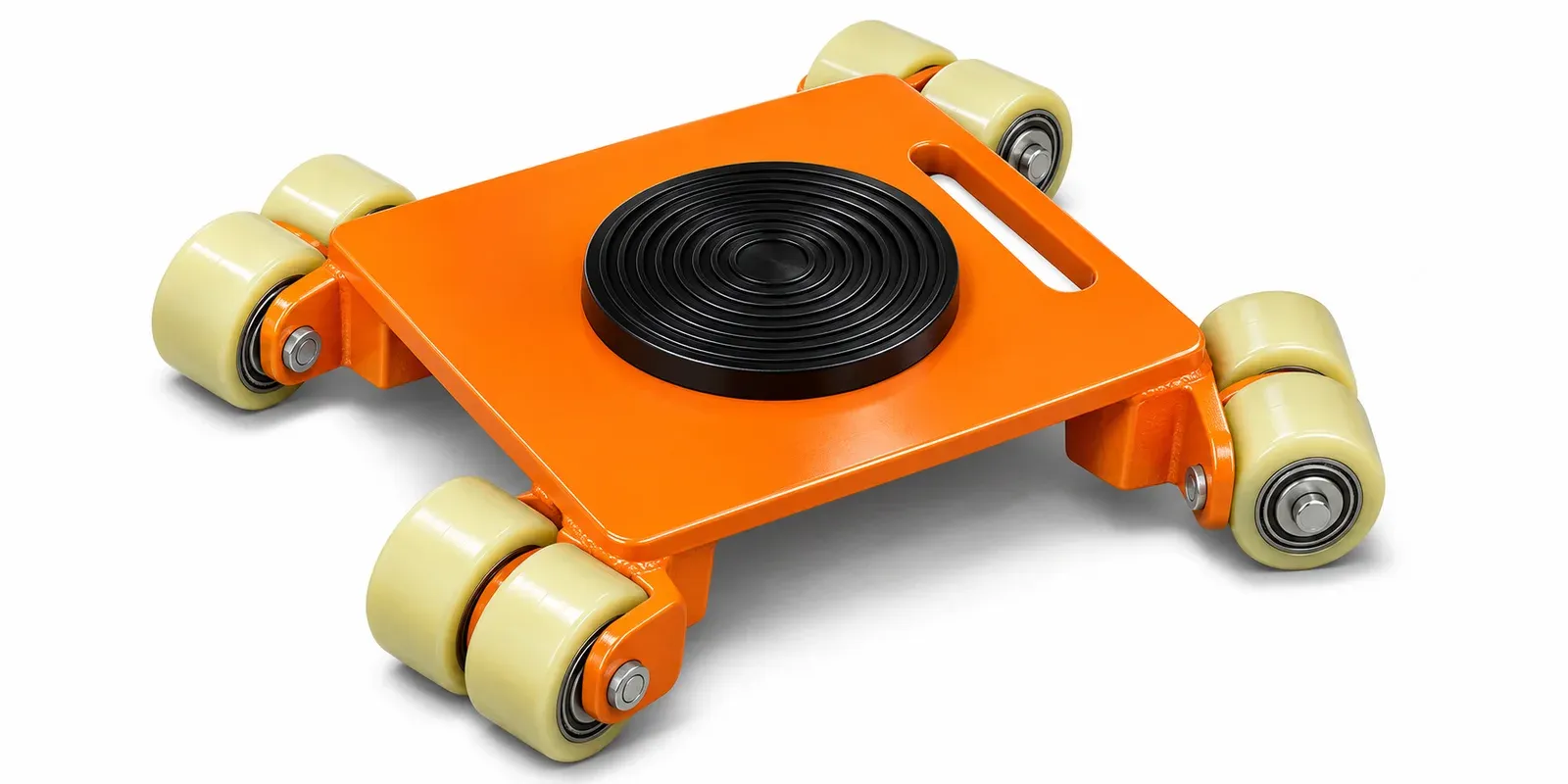
| Steerable follower skate | Carries a support point, swivels on a turntable | Tow bar, by hand or tractor | about 90 to 220 mm |
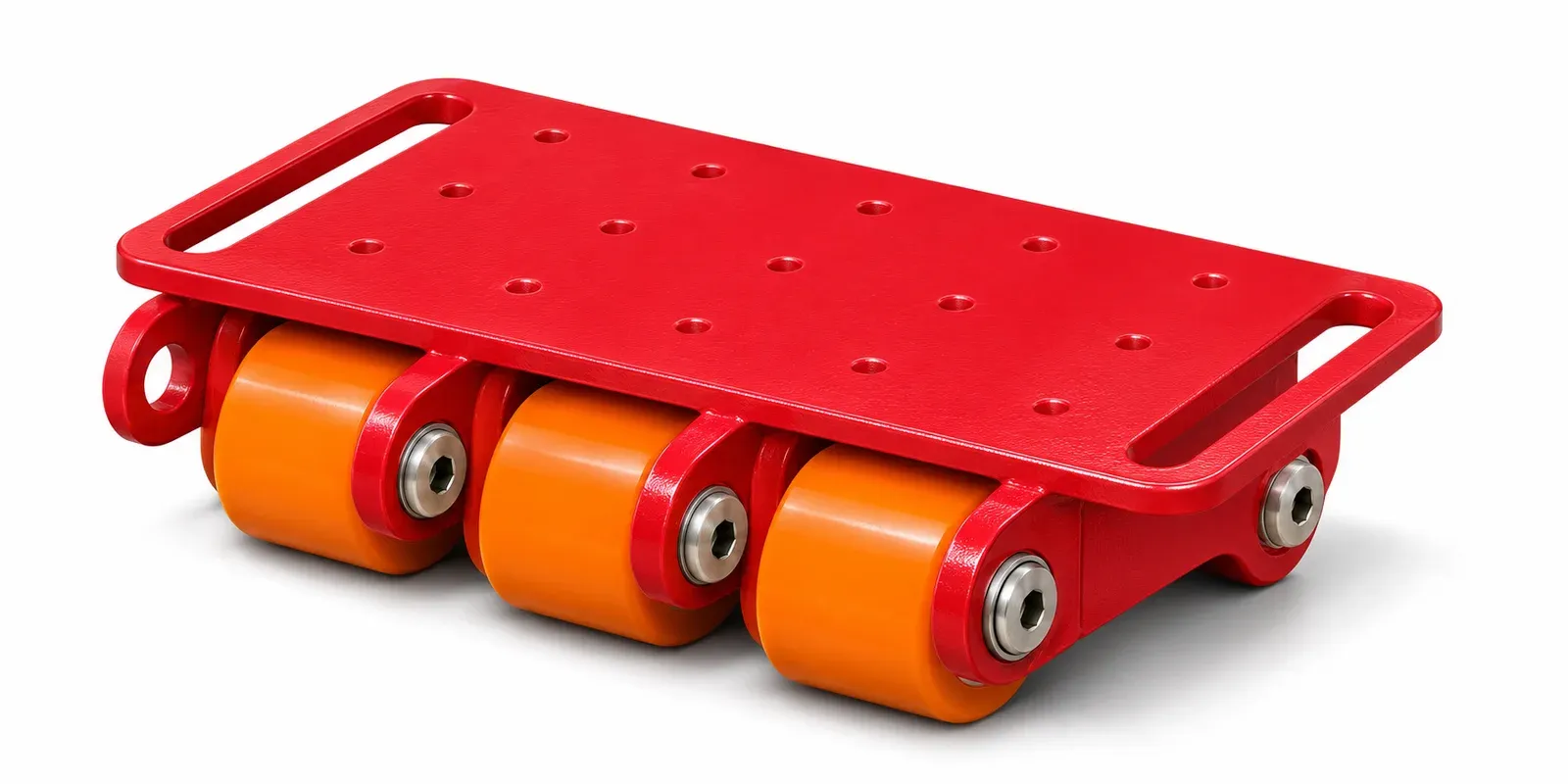
| Straight-line follower skate | Carries a support point on in-line wheels | None | about 80 to 200 mm |
The heights are general class values; actual height and rated load per unit are set for each project. Our product pages state no fixed capacity because the number depends on how the set is arranged, so we quote ratings for the exact units in your order.
Choosing the arrangement
Start from the machine. Count its support points, find where its centre of gravity sits and read the clearance under the base. A machine with three or four feet usually wants one powered skate and followers at the other points. If the route is a straight corridor, straight-line followers are enough and cheaper. If there is a turn, one or two steerable followers let the machine pivot without dragging wheels sideways across the floor.
Wheel material matters too. Polyurethane treads protect floors and run quietly; harder wheels carry more but mark the surface. A concrete floor with fine tile on top calls for a different set from a bare steel plate floor. The longer guide to planning a move, including a worked load-sharing example and a comparison with rollers and cranes, is in machine skates: moving heavy machinery safely.
Conveyor sections that stay in place after the machine is installed are covered under conveyor rollers; for the full list of what sits in this industry see material handling.
Before the move
Walk the route with a tape measure first. Check door widths against the machine plus the skates, look for floor drains, expansion joints and cable trenches, and decide how the machine will be stopped if something goes wrong. A move should be done by trained people with a clear plan, and the powered skate should only be driven at creep speed with the area cleared. If the floor has a weak section, bridge it with steel plate rather than hoping the wheel pressure spreads out.
What to send for a quote
- Machine weight and the position of its centre of gravity
- Number and position of the support points, and the clearance beneath
- Route length, door and corridor widths, turns, ramps and floor joints
- Floor type and its stated bearing capacity
- Whether the move is one-off or repeated
- Power preference and charging arrangements for the powered skate
- Photographs or a drawing of the machine base
Send these through the quote form and we propose a matched set with heights and ratings listed for each unit.