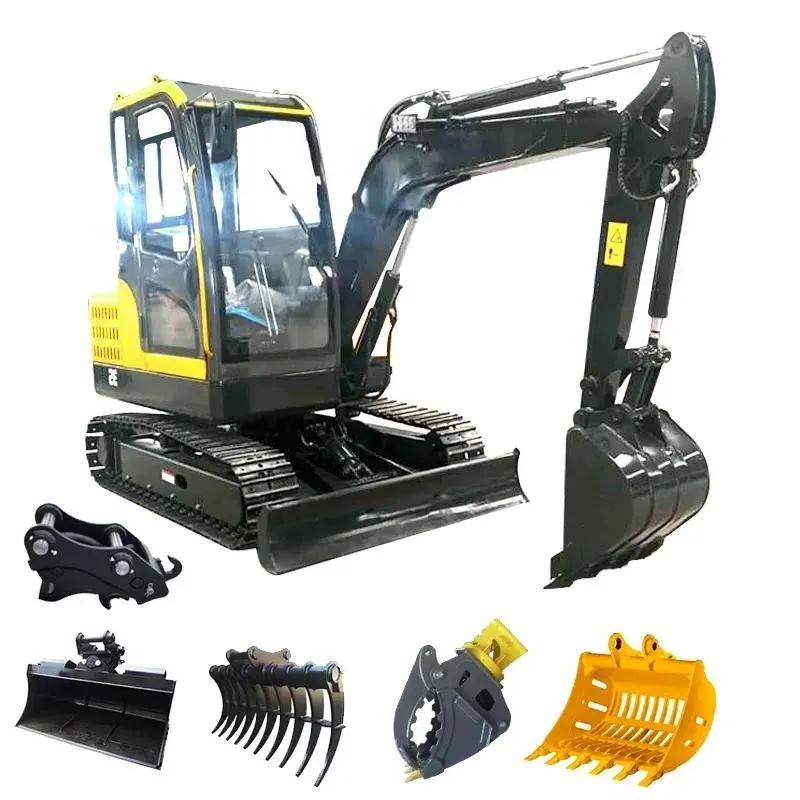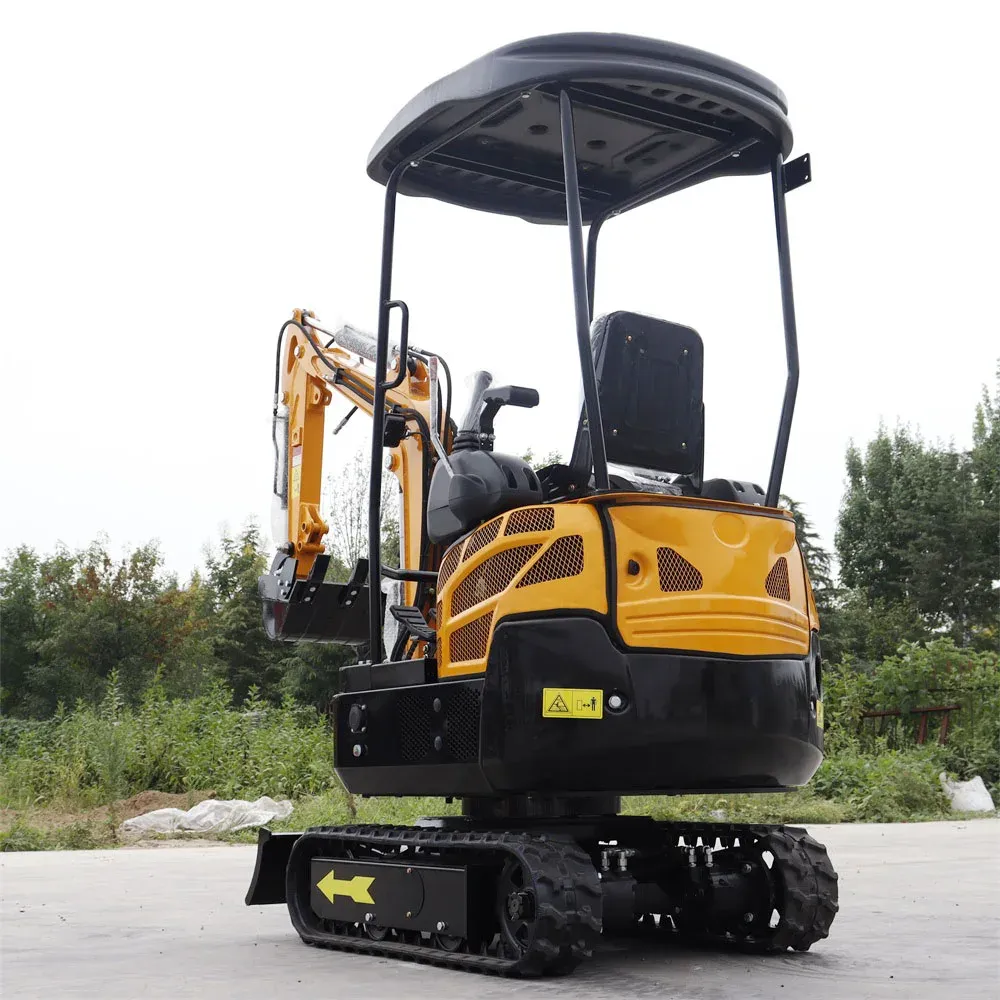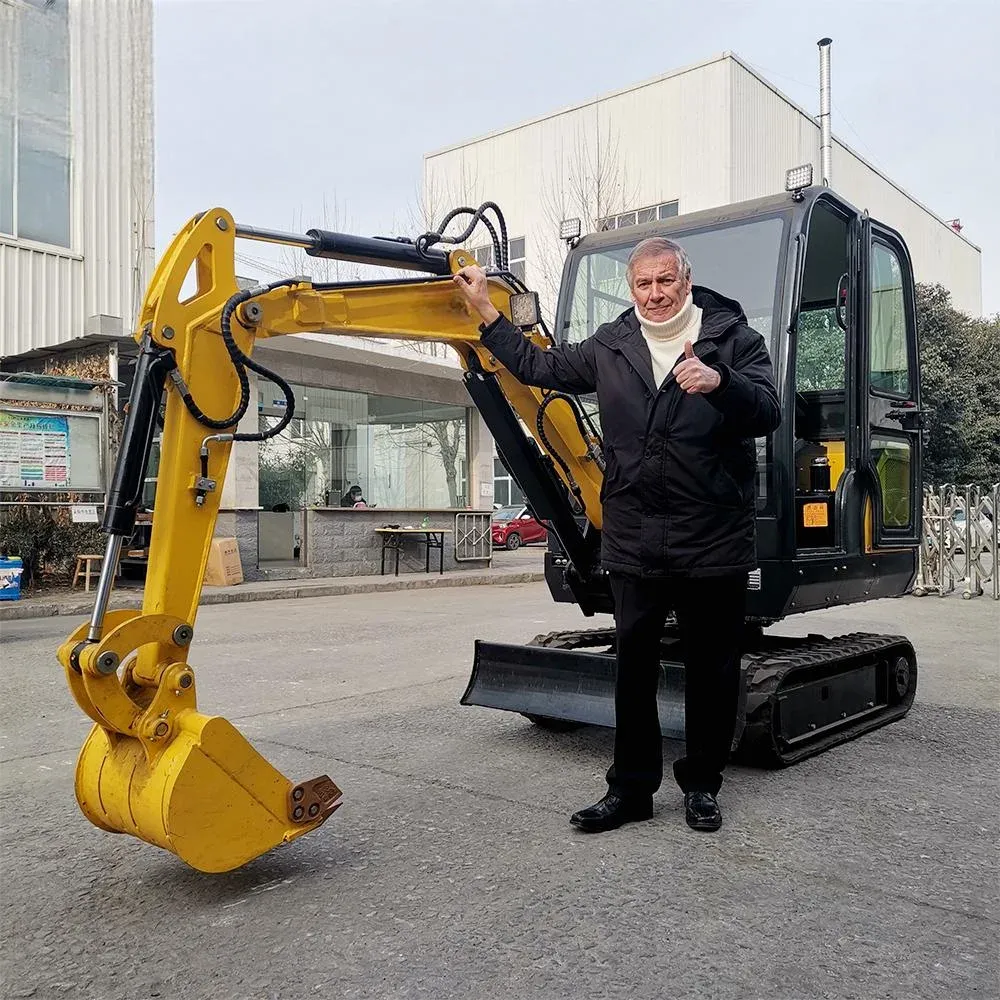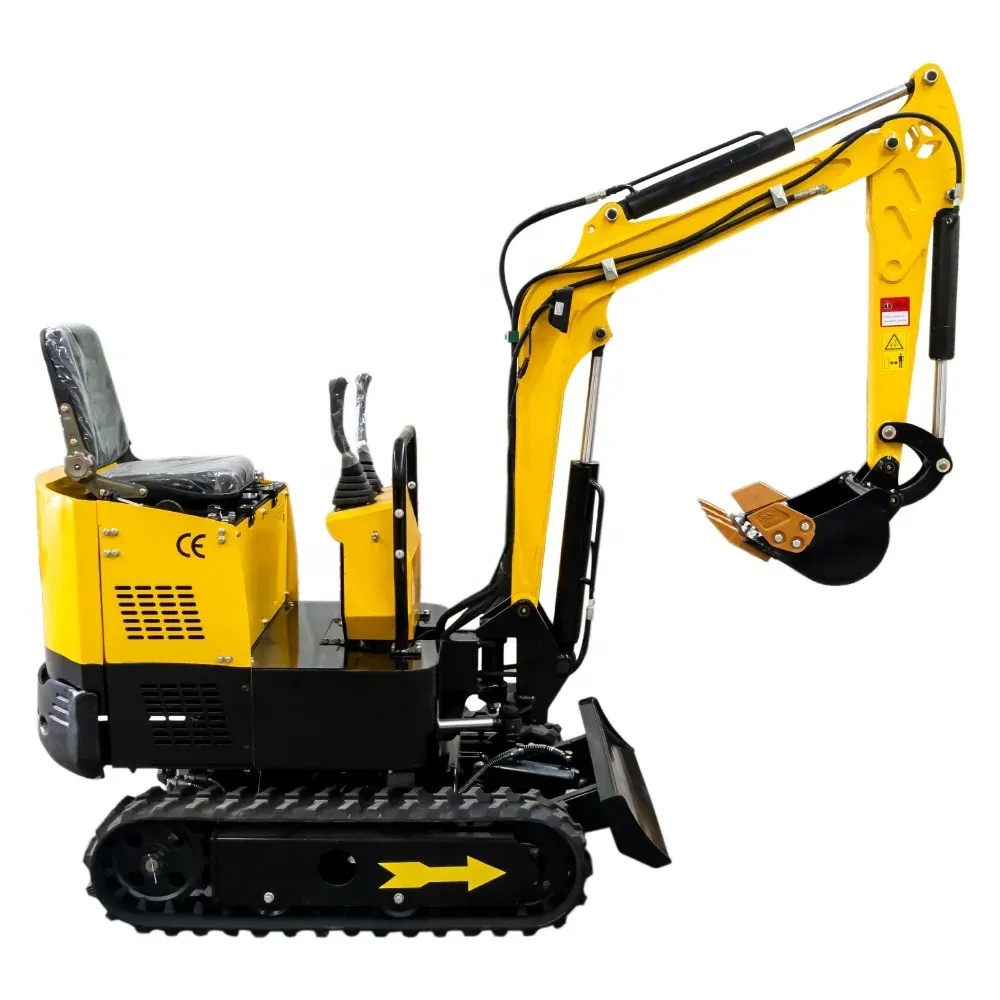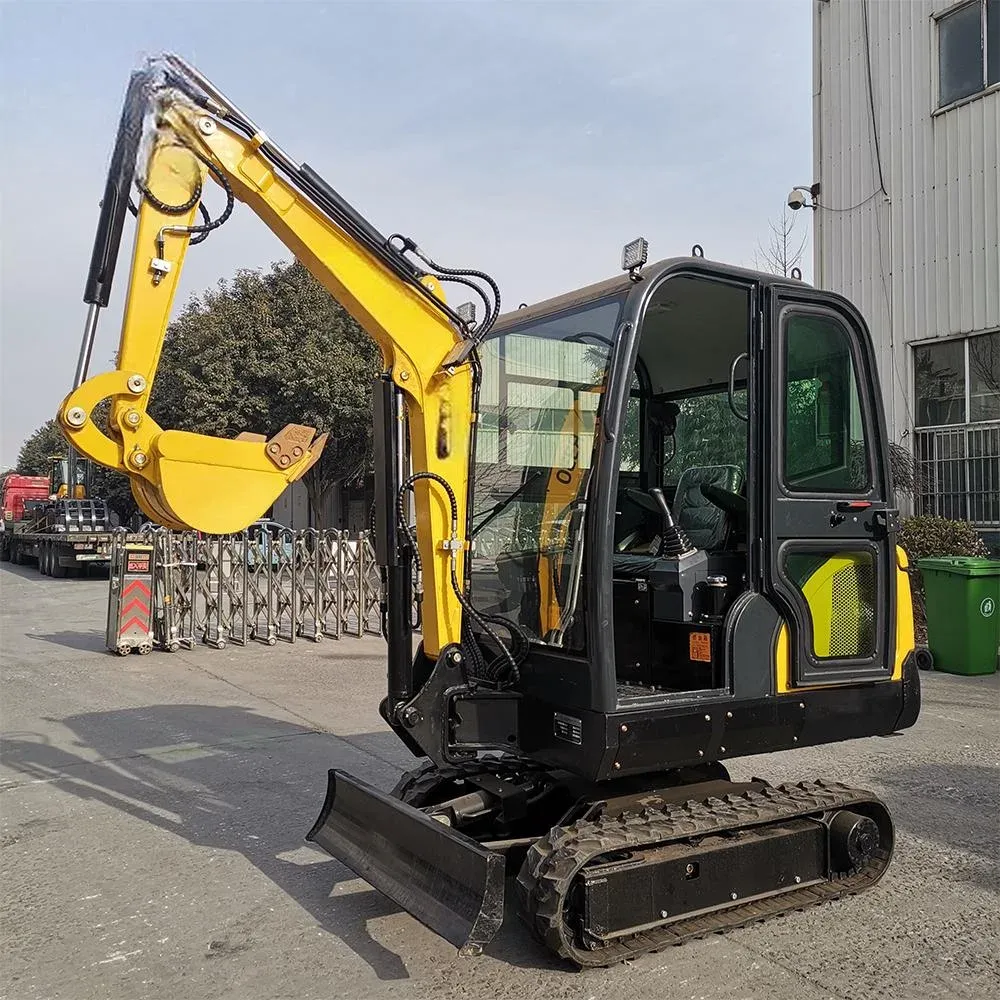
Short answer: Choose a mini excavator by the deepest trench you must dig and the narrowest access you must pass, then take the smallest weight class that covers both. In practice that means about 0.8 to 1.5 t for gardens, farms and indoor work, 2 to 3 t for trenches and small foundations, and 4 to 6 t when you load trucks or dig all day.
Mini excavator size classes at a glance
Where “mini” ends depends on who you ask: most dealers stop at 6 or 7 t, while one major maker’s used-equipment guide counts machines up to 10 t. The ranges below are typical values to help you shortlist; the exact spec sheet decides, because two machines of equal weight can differ in boom, hydraulics and counterweight.
| Class (operating weight) | Typical dig depth | Typical bucket | Moves on | Typical jobs |
|---|---|---|---|---|
| 0.8 to 1 t | 1.2 to 1.5 m (4 to 5 ft) | 0.02 to 0.04 m³ | Small trailer, pickup | Gardens, post holes, indoor work |
| 1.2 to 2 t | 1.5 to 2.2 m (5 to 7 ft) | 0.04 to 0.08 m³ | Small or light plant trailer | Farm ditches, cable and pipe runs |
| 2.5 to 3 t | 2 to 2.7 m (6.5 to 9 ft) | 0.08 to 0.12 m³ | Plant trailer | Drains, small foundations, truck loading |
| 4 to 6 t | 3 to 3.8 m (10 to 12.5 ft) | 0.15 to 0.25 m³ | Plant trailer or low-loader | Services, roadworks, daily production |
Dig depth, reach and lifting
Three figures matter: maximum dig depth, reach at ground level and dump height. Our models show how they scale. The 1 t attachment machine digs to 1,400 mm with a 2,400 mm radius, the 1.5 t battery machine to 1,550 mm, and the 2.5 t hydraulic machine to 2,050 mm with 3,860 mm reach and 3,300 mm dump height. Rated depth is the best case, so keep a 0.2 to 0.3 m margin.
Lift capacity falls as the load moves away from the machine, so read the maker’s lift chart at your working radius and stay well under the rated figure (one guide suggests no more than 75 percent). For tight sites choose zero or reduced tail swing. Rubber tracks protect lawns and paving; steel tracks grip better on rock.
Transport and access
Machine weight is not shipping weight: add attachments, fuel or battery, and the trailer. A 1 to 1.5 t machine usually rides on a small trailer behind a pickup; 2.5 t and above need a plant trailer and often a heavier tow vehicle, and licence rules differ by country. The tracks, not the body, usually set the minimum gate width. For export, ask for packed dimensions.
Attachments and hydraulic flow
Weight tells you if the machine is stable; hydraulic flow tells you if an attachment works. Typical auxiliary flow is about 15 to 25 L/min on 1 t machines, 20 to 30 L/min on the 1.5 t class and 35 to 50 L/min near 2.5 t. An auger for 100 to 300 mm post holes suits the small end; a breaker, thumb or wide trenching bucket suits the middle and upper classes. Ask whether a quick coupler is included.
Electric vs diesel mini excavator
| Point | Battery-electric | Diesel |
|---|---|---|
| Runtime | About 3 to 4 hours on a smaller pack, up to a shift on larger ones; less in hard work | A full shift on one tank, refuel in minutes |
| Noise and fumes | Quiet, no exhaust; fits indoor and urban work | Louder; needs ventilation indoors |
| Servicing | No engine oil, filters or fuel system | Regular engine servicing |
| Power supply | About 2 to 3 hours on a fast charger, overnight on a standard one | Needs fuel storage and transport |
| Purchase cost | Usually higher for the same weight class | Usually lower |
Maker guides follow the same pattern: electric for short, quiet, near-the-charger work; diesel for long shifts and remote sites. Most runtime claims come from makers, so ask for runtime in your own conditions.
Example: sizing for a 120 m pipe trench
This is an illustrative calculation. A trench is 0.6 m wide, 1.5 m deep and 120 m long, so the volume is 0.6 x 1.5 x 120 = 108 m³. Needed depth is 1.5 m plus a 0.25 m margin, so at least about 1.75 m.
- The 1 t machine (1,400 mm) and the 1.5 t battery machine (1,550 mm) both fall short on depth, whatever the bucket.
- A 2.5 t machine with a 0.08 m³ bucket, 80 percent filled, moves about 0.064 m³ per cycle. At 3 cycles a minute that is about 11.5 m³ per hour; allowing for positioning, about 9 m³ per hour is realistic, so about 12 hours, or 1.5 working days.
Cycle times are assumptions; soil and operator skill change them. A size step up often saves more labour than it costs in transport.
Buyer checklist: what to tell a supplier
- Deepest trench depth and width, and the soil type.
- Narrowest gate or door, and the trailer you will use.
- Daily digging hours, and whether a power supply is nearby.
- Electric or diesel, local voltage and frequency, and climate.
- Attachments wanted (auger, breaker, thumb) and their size.
- Cab or canopy, rubber or steel tracks, and delivery port.
On the quote, confirm operating weight, dig depth, auxiliary flow, battery capacity or engine rating, what is standard or optional, and packed dimensions.
Trade-offs to accept
A bigger machine digs deeper but needs wider access, a larger trailer and more fuel; a smaller one is cheaper to move but struggles in hard ground. Our electric 0.8 to 3 t range compares seven weights on one platform, the 1.5 t battery model suits farm and garden digging, the 1 t attachment machine is built for augers and breakers, and the 2.5 t hydraulic machine covers trenches and truck loading. Browse the full construction and mining range.
For crushing projects read jaw crusher vs impact crusher; for small loaders see skid steer vs compact track loader. Send your trench size and access width through the contact page and we will suggest a class.