Short answer: a combine harvester price is driven first by size class (mini, tractor-driven or self-propelled), then by header type and crop, engine power in kW, tracks or wheels, grain tank and cleaning system, and finally by freight, duty and spare parts. Public price lists mostly describe large machines, so for small and mid-size farms the useful question is what each option adds to the quote and how many hectares per day it gives you.
What the public price figures actually describe
Most pages quote large machines. One US equipment auction company puts new combines at roughly USD 100,000 to 500,000 and used ones at USD 100,000 to 150,000, and notes that size, attachments and electronics such as GPS mapping push the price up. An Indian price list for 2026 shows machines of about 100 HP with 4.4 m cutters at INR 15 to 35 lakh, depending on horsepower, cutter width and features. Price follows capacity, but these figures do not help a farmer with 5 to 50 hectares of paddy. Treat any online number as context only.
The cost drivers, in the order they matter
| Cost driver | What changes | Effect on price and use |
|---|---|---|
| Size class | Mini (about 1 m cut), tractor-driven (about 0.8 m), self-propelled mid-size (about 2 m) | Largest factor; also sets hectares per day |
| Drive | Own engine vs tractor PTO | Tractor-driven avoids a second engine but needs a suitable tractor |
| Engine power (kW) | More kW feeds more crop per second | Costs more and burns more fuel; matters in heavy or wet crops |
| Crop and header | Cutter bar for rice and wheat, row units for corn | Each extra header is a separate item |
| Tracks or wheels | Rubber crawler vs tires | Tracks help in soft ground, cost more, add wear parts |
| Grain tank and unloading | Bag outlet, small tank, larger tank with auger | Bigger tank saves trailer trips, adds weight and cost |
| Cleaning system | Fan and sieve, adjustable | Better cleaning lowers grain loss |
| Cab and options | Canopy or cab, straw chopper, moisture meter | Comfort and residue handling; useful in hot climates |
| Shipping and parts | Packing, freight, duty, wear parts | Often forgotten when comparing ex-works quotes |
Size class: three different machines
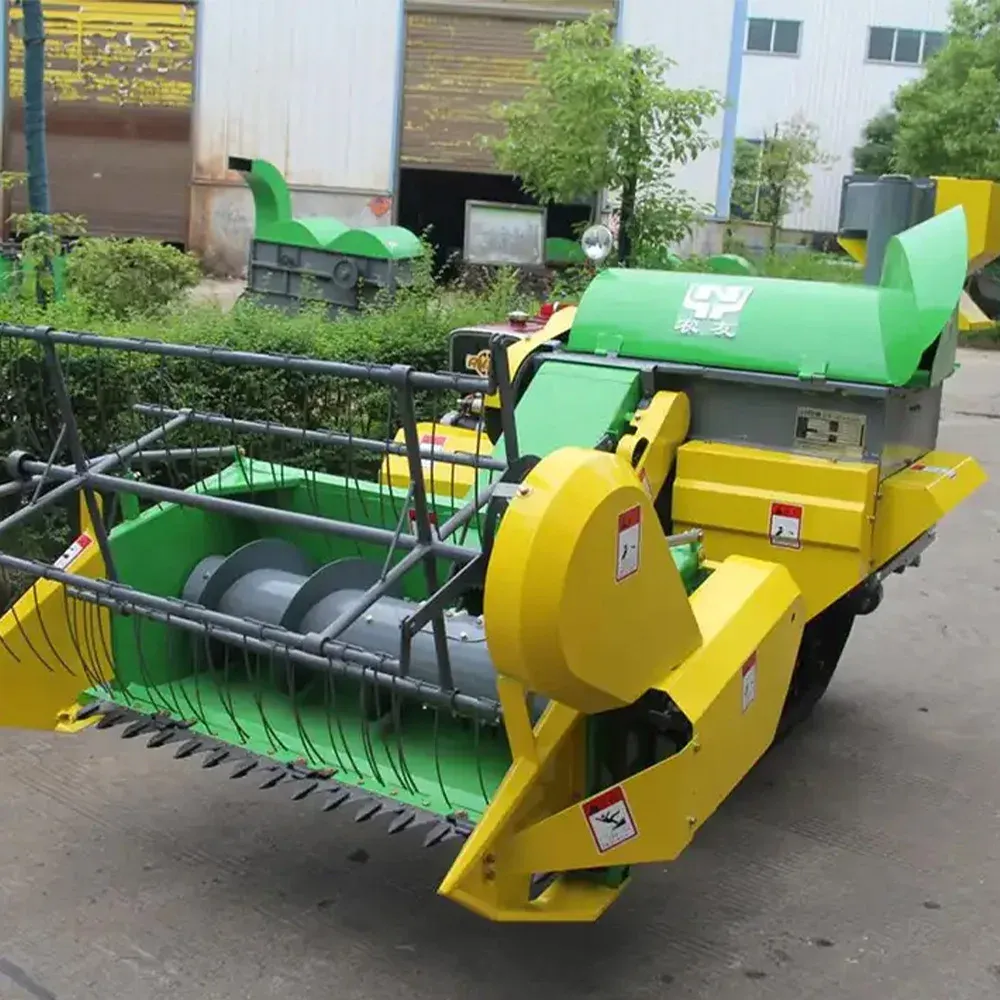
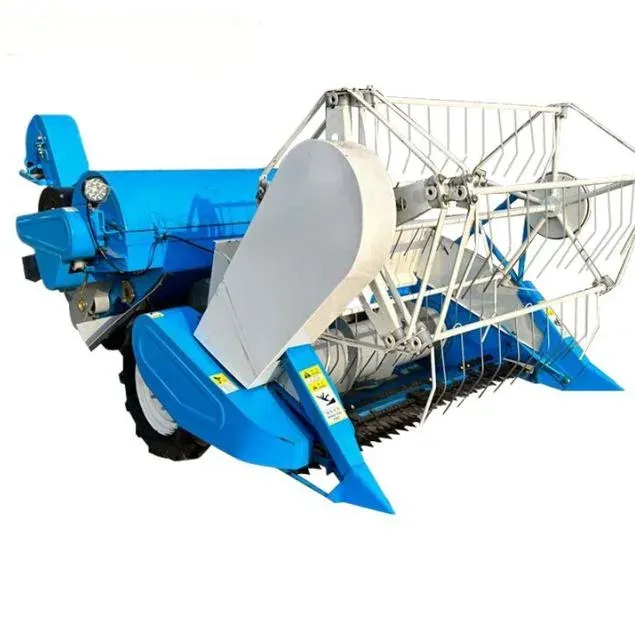
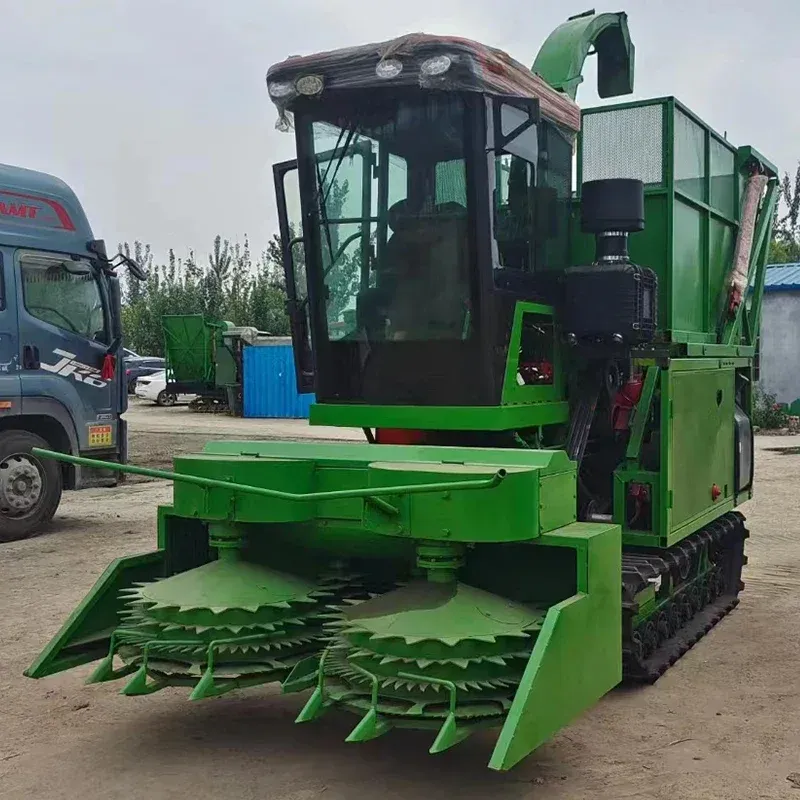
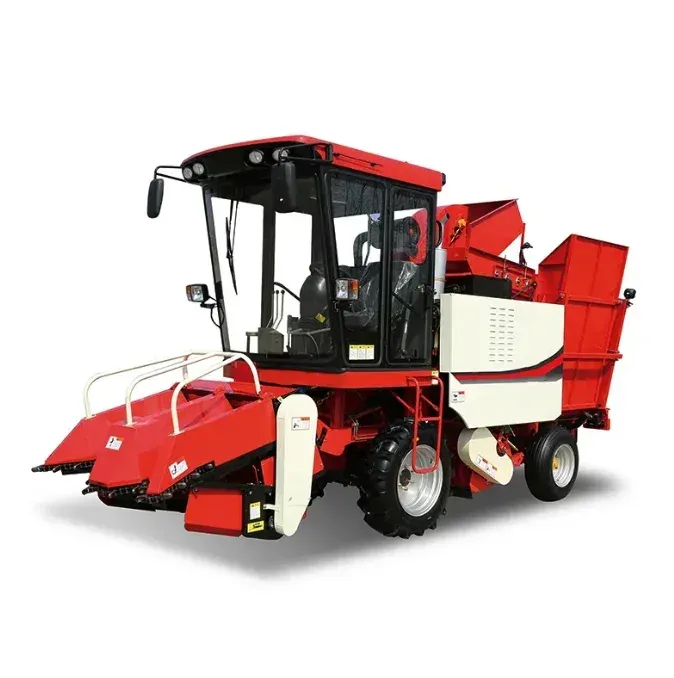
The mini rice and wheat combine cuts 1,000 mm, weighs 1,000 kg and is built for small paddy and wheat fields. The tractor-driven mini grain combine cuts 800 mm, weighs 650 kg and runs from a 15 to 80 HP tractor, so you buy the harvesting unit without a second engine. The 92 kW multi-crop combine has a 2,360 mm header, 7 kg/s feeding capacity and weighs 4,280 kg. For corn on mid-size farms, the 5-row self-propelled corn combine cuts 2,060 mm and weighs 4,250 kg.
A heavier machine needs wider gates, a flat-bed truck and a trailer alongside; a mini machine goes into terraces and narrow bunds. Pick the class your field geometry allows, then compare prices inside it.
Header, crop and engine kW
A combine is priced with the header it ships with. A cutter bar suits rice and wheat; corn needs row units that snap the ears. A multi-crop machine such as the 92 kW model takes a different header per crop, spreading capital cost over more hectares, but each header is a line on the quote and needs storage. Engine kW matters because the threshing unit needs power for wet or heavy crops; do not pay for kW you cannot use, or under-buy for a thick crop.
Tracks, tank and cleaning
In wet paddy a wheeled machine can bog down, so tracks are often worth their extra cost and wear. A larger grain tank reduces unloading stops but adds weight and cost; a bag outlet is cheaper on small farms. For cleaning, ask how fan and sieves are adjusted between crops, since grain loss costs more over a season than most price gaps.
Worked example: matching the machine to the hectares
Example: a contractor has 60 ha to cut in a 15-day window, working 7 productive hours a day. Required capacity is 60 / (15 x 7) = about 0.57 ha/h. Using the typical field capacities on our product pages, a mini self-propelled combine at 0.1-0.2 ha/h would need roughly three to six machines, a tractor-driven unit at 0.1-0.3 ha/h two to six, and a 92 kW class machine at 0.4-0.8 ha/h one to two. One larger machine can then cost less than several small ones and needs fewer operators. If the 60 ha were 40 plots of 1.5 ha with narrow access, the small machines would win. This is an illustration, not a promise of output.
Landed cost and spare parts
An ex-works price is not what you pay. Add packing, freight, port and clearance charges, import duty and local taxes, then a first-season set of spares: cutter blades, belts, chains, sieves and filters. A machine 2,650 mm wide needs container planning, so ask for the packing plan. A spare-parts package is worth more than a lower price without parts support.
Buyer checklist: what to tell the supplier
- Crops, row spacing for corn, and hectares per season.
- Field size, bund width and soil softness (tracks or wheels).
- Tractor make, kW or HP and PTO type for a tractor-driven unit.
- Grain handling: bagging, small tank or tank with auger.
- Which headers are included and what extra headers cost.
- Packing size, port, delivery terms and a season-one spare-parts list.
- Climate: dust, humidity and heat affect air filters and cab choice.
Honest trade-offs
A tractor-driven combine has the lowest entry cost but ties up your tractor. Self-propelled is not limited by tractor power, but it is a second engine to maintain. A multi-crop machine saves buying several, but header changes take time. A used machine lowers the cheque, but wear is unknown.
If you send crops, hectares and port, our engineers can give a written quote and a short recommendation for your fields. See the wider agriculture and livestock range for other farm machinery.